 Augusta University
 Toni Baker
It’s called icing sugar spleen, when the usually purplish organ looks like it has been dipped in unhealthy white icing, and the surface is bumpy and thick.


It’s called icing sugar spleen, when the usually purplish organ looks like it has been dipped in unhealthy white icing, and the surface is bumpy and thick.

The National Science Foundation, Combinatorics Program of the Division of Mathematical Sciences, has awarded funding to Augusta University's Dr. Guangming Jing for his research proposal, "Density and Edge Coloring."

More than a quarter century after the Gulf War, female veterans who saw combat have nearly a twofold risk of reporting more than 20 total medical symptoms, like cognition and respiratory troubles, than their fellow female veterans who were not...

Traditional stroke treatments like clot-dissolving tPA and surgical removal of big clots in the brain are good choices as well when the stroke results from SARS-CoV-2 infection, investigators report.
A group of tiny RNA that should attack the virus causing COVID-19 when it tries to infect the body are diminished with age and chronic health problems, a decrease that likely helps explain why older individuals and those with preexisting medical...
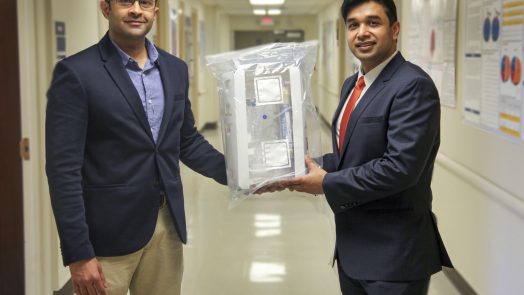
Cytokine storms created by COVID-19 are causing major organ destruction and death, and for the first time in the United States, when patients begin to show signs of trouble, physicians are replacing the usual filter in a kidney dialysis machine with...

Women who don’t survive this rare and aggressive uterine cancer have high expression of a group of 73 genes, a score scientists say can help identify these women and improve their outcome.
Mathematical modeling can take information reported about the coronavirus, including the clearly underreported numbers of cases, and compute a more realistic picture of the virus’ infection rate, numbers that will enable better prevention and...
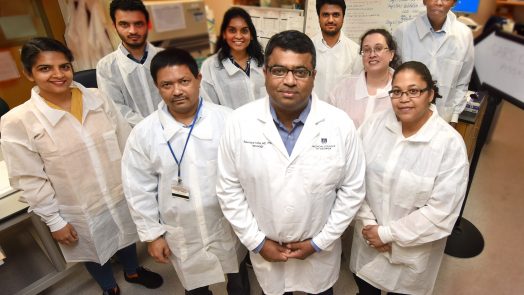
The Georgia Esoteric and Molecular Laboratory at the Medical College of Georgia Department of Pathology is now offering a new coronavirus test with expanded capacity to the entire state.

Investigators at the Medical College of Georgia and Augusta University Health System are exploring the potential of magnetic stimulation to help assess its efficacy and safety.
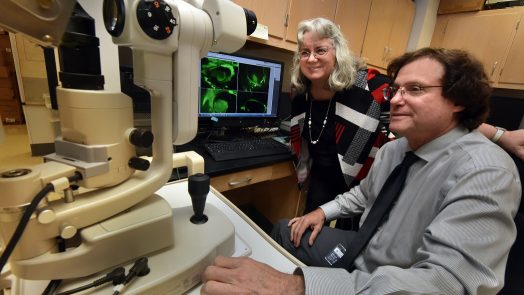
A species of a lipid that naturally helps skin injuries heal appears to also aid repair of common corneal injuries, even when other conditions, like diabetes, make healing difficult, scientists report.

In response to the COVID-19 pandemic, Augusta University will initiate a series of guidelines to “ramp down” research, as is being done at other leading universities in Georgia and throughout the United States.
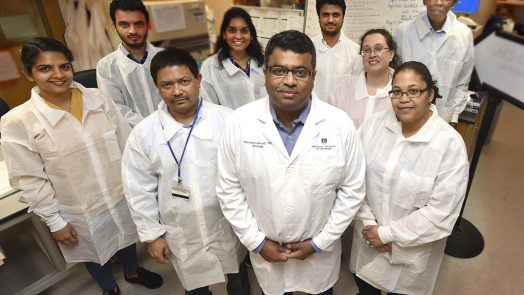
“We want patients and physicians in our community to have timely access to information that will ultimately benefit us all by helping limit spread of the virus,” says Dr. Ravindra Kolhe, director of the GEM Lab.

We’ve all heard the expression “sleep like a baby.”
Unfortunately, as children get older, some develop bedtime issues that make those days of sleeping so deeply and soundly seem like a distant memory.
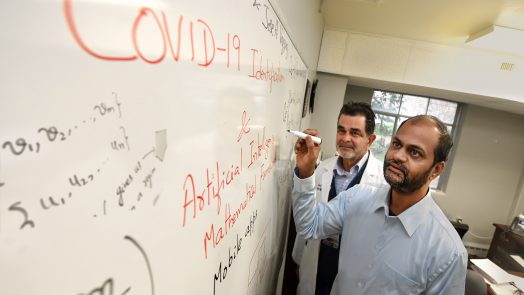
A coronavirus app coupled with machine intelligence will soon enable an individual to get an at-home risk assessment based on how they feel and where they’ve been in about a minute, and direct those deemed at risk to the nearest definitive testing...

The Department of Radiology and Imaging at the Medical College of Georgia at Augusta University has named two new section chiefs.
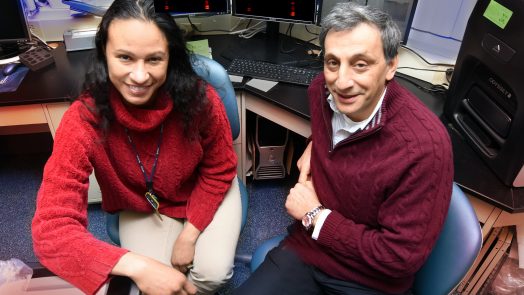
Excessive weight around our middle gives our brain’s resident immune cells heavy exposure to a signal that turns them against us, setting in motion a crescendo of inflammation that damages cognition, scientists say.

Aggressive colorectal cancers set up an interactive network of checkpoints to keep the immune system at bay, scientists report.
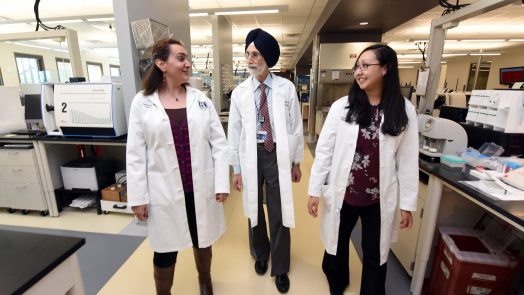
About 10% of patients who come to complex care hospitals may have low levels of folate and other indicators of malnutrition, investigators say.
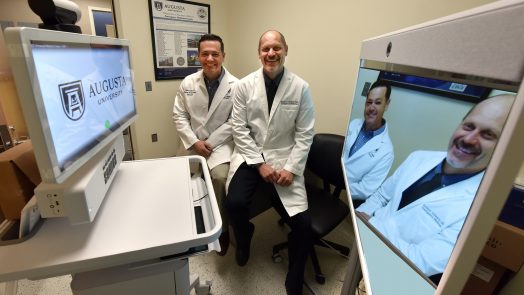
Emergency medicine physicians at the Medical College of Georgia at Augusta University are helping rural hospitals better treat patients by establishing tele-emergency departments.
 Si-Long Chen
 Staff
 Jennifer Hilliard Scott