 Augusta University

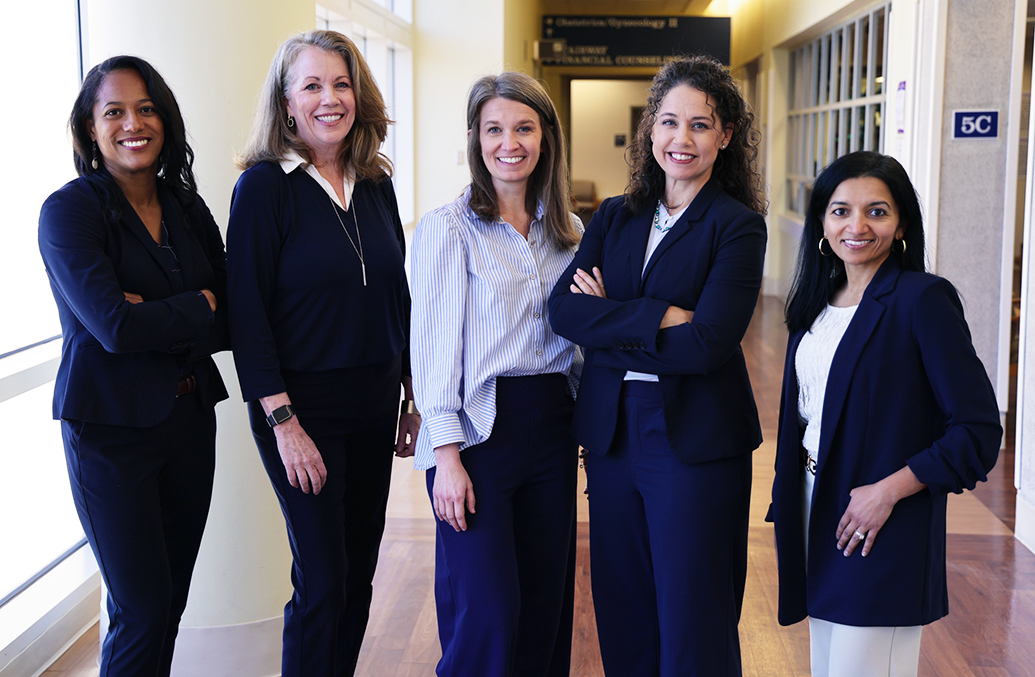
 Hannah Litteer
“Just knowing that everything we’ve done has brought us to this point is incredibly exciting and humbling.”
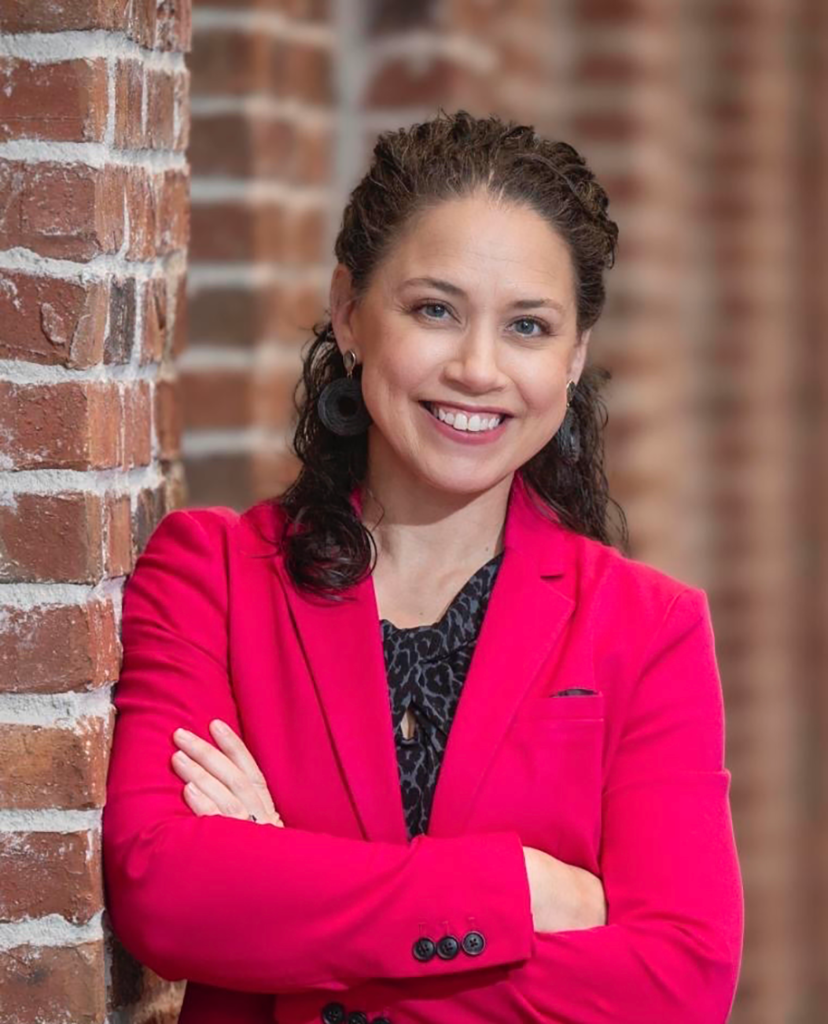
Marlo Vernon, PhD, director of the Center for Rural Health
For Marlo Vernon, PhD, years of building community partnerships and developing programs to address some of Georgia’s most pressing public health challenges have culminated in a season of growth.
An associate professor in the Department of Health Management, Economics, and Policy at Augusta University’s School of Public Health, Vernon has recently helped secure more than $5.6 million in new funding for maternal health and substance use prevention initiatives, received a Golden Helix Community Award from Georgia Life Sciences and been named director of the School of Public Health’s Center for Rural Health.
Together, these accomplishments represent an important next step in the work Vernon and her colleagues have spent years developing alongside communities throughout Georgia.
“Just knowing that everything we’ve done has brought us to this point is incredibly exciting and humbling,” Vernon said.
Expanding access to maternal healthcare
Among the largest of Vernon’s new projects is a four-year, $4 million Rural Maternity and Obstetrics Management Strategies, or RMOMS, grant from the Health Resources and Services Administration (HRSA).
The project, which the research team is calling GMAPS, short for Georgia Maternal and Infant Health Access, Protection and Support Network, will serve 13 rural counties in East Georgia: Burke, Elbert, Greene, Jackson, Jefferson, Lincoln, McDuffie, Morgan, Oglethorpe, Walton, Warren, Washington and Wilkes. The goal is to strengthen the network of care available to pregnant women, mothers, babies and families in communities where accessing maternal health services is limited.
“In our East Central Health District, which is 13 counties, the only obstetrical providers are in Richmond and Columbia counties, and the only delivery hospitals are in Richmond County,” Vernon explained. “It’s one of the reasons we have problems with maternal health outcomes in our state, and more and more hospitals are cutting out delivery services, which just leads to more complications and more difficulty in accessing care in a timely fashion.”
Rather than approaching maternal health as a single issue, GMAPS will address multiple variables that can affect the health of mothers and babies, from provider availability and prenatal care to food insecurity, transportation and housing.
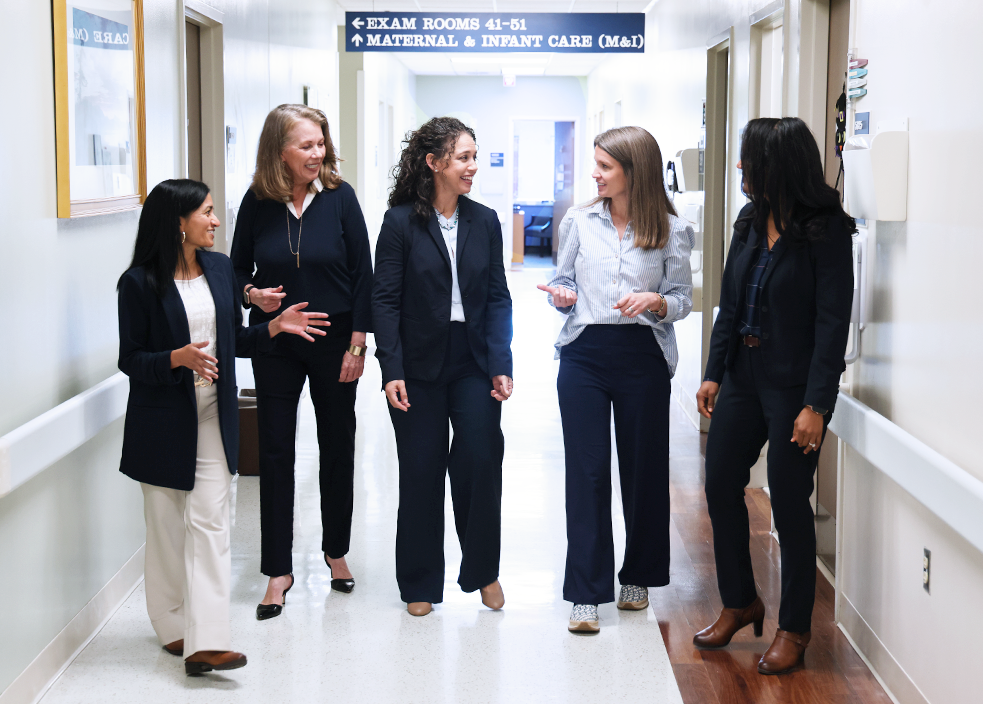
That’s where the many community and clinical partners come in – Wellstar MCG Health, Jefferson Hospital, the Dr. Paulette P. Harris Literacy Center at Augusta University, Golden Harvest Food Bank, the Augusta Regional Perinatal Center, federally qualified health centers, two regional Area Health Education Centers and others will all have a part to play in bringing maternal health resources to these areas.
“We’re trying to build these networks and tools and ensure access to services so women don’t fall through the gaps,” Vernon said. “We want to provide pathways for them to best support their health and their family’s health.”
“It’s really a unique experience where you see a problem, and you know you can work with a group to come up with a solution.”
Jennifer Plueger, SPH community programs coordinator
Strategies will include expanding group prenatal care and encouraging family medicine providers to provide more prenatal services. The team also plans to explore a dyadic care model that would allow mothers to receive postpartum follow-up alongside their babies during well-child visits.
Mobile health services could also bring prenatal and postpartum care directly into rural communities, while collaborations with the MCG Center for Digital Health will help support workforce education, outreach and engagement.
The project’s first year will largely focus on planning and assessing community needs.
Jennifer Plueger, the community programs coordinator for GMAPS, explains that meeting people where they are and then providing tailored help is essential.
“We often see champions in rural communities who are doing the work, but oftentimes, it’s siloed work because they’re beyond capacity. One person may have 14 jobs that they’re trying to juggle on top of patient care and on top of all the responsibilities that they hold,” she said.
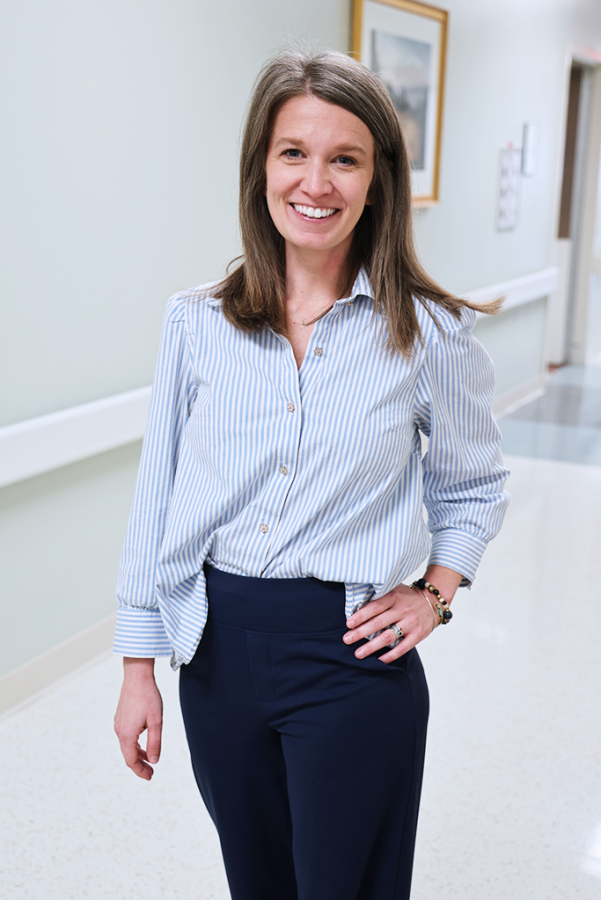
Plueger describes her role in the project as that of a “connector” – helping identify community aid groups, understanding existing resources and needs and bringing organizations together.
“We ask them what do they need to make sure things aren’t falling through the cracks, and over the years we’ve created our own little collaboration team, so when this call did come out, we were able to ‘shoulder tap’ them because we know the people that are doing the work and we know the connections that can be made,” she said.
The funding is especially meaningful because the team spent several years refining its proposal. This was the third time the project had been submitted for approval, and although the most recent application was not initially selected despite receiving a near-perfect score, additional federal funding later became available, and the team was offered the grant.
For Plueger, this meant an opportunity to expand and continue work the team and its partners had already begun.
“It’s really a unique experience where you see a problem, and you know you can work with a group to come up with a solution. To see the way that God aligned everything, just for me personally, is a unique experience to see and be part of,“ she said. “Just knowing that we’re going to have HRSA’s support and funding to bolster the work is exciting for us, for our stakeholders and, most importantly, for our community members and moms.”
The grant started on Sept. 30, and over the course of the project, the team plans to examine outcomes such as the number of women who receive adequate prenatal and postpartum care, whether mothers with pregnancy-related conditions receive appropriate follow-up and whether infants receive timely well-child visits, vaccinations and developmental care.
Preventing substance use among rural youth
Vernon is also leading two new five-year Partners in Prevention Project 2.0 grants supporting substance use prevention efforts in Burke and Jones counties.
“I love waking up and doing what I’m doing every day.”
Amy Szoka, SPH project coordinator
Each award provides $160,000 annually, representing $800,000 over five years per county and $1.6 million combined.
The projects continue work previously led by Martha Tingen, PhD, and will focus primarily on preventing alcohol, vaping and other substance use among middle school students.
The initiative will work with Clifton Ridge Middle School in Jones County and Burke County Middle School, which were selected based on data that showed that their substance use was significantly higher than the state average.
Amy Szoka, project coordinator for both counties and an internationally certified prevention specialist, said the communities themselves helped identify these priorities.
“We have heard so much from our community about vaping being such a big issue,” she said. “It continues to be a huge concern for parents.”
One prevention strategy the team will use is called “positive social norms,” and it’s an approach designed to emphasize the large proportion of students who are making healthy choices rather than focusing exclusively on the smaller percentage engaging in substance use.
“If we see that in the past 30 days there was, let’s say, 8% of students who reported they’ve been drinking, instead of focusing on, ‘Oh my goodness, there’s 8% of students doing this,’ we focus on the 92% who do not,” Szoka said. “It’s an innate thing that a lot of us want to fit in, so we try to focus on the positive to try to help the students feel like they want to be a part of the majority, and to want to continue making positive decisions.”
The projects also incorporate evidence-based vaping prevention education in schools – but students are only one part of the equation.
Through the Substance Abuse and Mental Health Services Administration’s “Talk. They Hear You.” campaign, the team intends to reach parents and caregivers through resources, town halls, billboards, public service announcements, social media, community events and other outreach.
“Parents’ attitudes influence children’s attitudes,” Vernon said. “If we can impact attitudes and behaviors around vaping and substance use from both sides, we’re hoping to really make some strides in that area.”
Another priority is sustainability. Instead of relying solely on SPH team members to run the programs and deliver messaging, the team will train teachers and community members to implement interventions themselves, which will allow the programs to continue even after the grants end.
For Szoka, who has worked in substance use prevention since 2013, these projects combine her professional expertise with a longstanding passion for working with young people.
“I love waking up and doing what I’m doing every day,” she said. “It’s super important to me. That’s why when Dr. Vernon said, ‘Do you want to write another version of the grant?’ I said, ‘Let’s do it.’”
Recognition comes full circle
Amid the new funding, Vernon also received recognition for the community-focused work that helped make these projects possible.
Georgia Life Sciences honored her with a Golden Helix Award recognizing community engagement, following a nomination by Michael Moore, PhD, from AU’s Office of Innovation Commercialization.
Vernon views the honor as recognition not simply of her individual work but of the teams and partnerships she’s been a part of that strive to improve health outcomes across Georgia.
It also carries special personal significance.
As a doctoral student eight years ago, Vernon presented her dissertation research at the same organization’s conference and received an award for her poster.
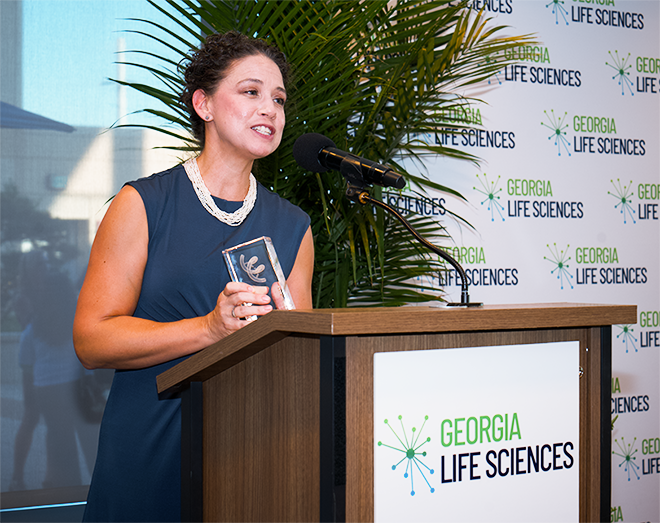
“To be back up on that stage, having won that eight years ago, and now receiving this award was kind of a really neat full circle moment,” she said.
Building a lasting home for rural health research
“It’s the feeling of reaching the top of the mountain, but then realizing there is a much bigger mountain to climb.”
Marlo Vernon, PhD
Now, Vernon will have an opportunity to build upon those individual projects on a broader scale as the newly named director of the School of Public Health’s Center for Rural Health.
The center’s vision is to improve health in rural Georgia by bringing together research, community partnerships and practical solutions that can be implemented, evaluated and sustained within the communities they are designed to serve.
Georgia is 67% rural by land area. The communities outside Atlanta carry the highest burden of preventable illness in the state and the lowest access to research-backed interventions. Augusta is positioned geographically and institutionally to lead this work – no other Georgia university has the combination of public health expertise, community relationships and institutional reach to do what this center is designed to do.
And the center is not a new idea. It is the formalization of work already underway — with a track record, a research portfolio, active community partnerships and an experienced director. What formalization provides is the infrastructure, the visibility and the institutional backing to scale it.
AU already has a significant portfolio of externally funded rural health research, established community partnerships and faculty expertise. Re-energizing the Center for Rural Health creates an opportunity to connect work that has often been organized around individual investigators, projects and grant cycles.
The center will build upon existing work in five interconnected areas: maternal and child health; Food is Medicine initiatives; behavioral health and recovery; women’s health across the life course; and cancer prevention, screening and survivorship.
Many of Vernon’s newest projects fit directly into that framework. GMAPS expands rural maternal and child health efforts, while Partners in Prevention 2.0 strengthens behavioral health and substance use prevention work in rural communities.
Under her leadership, the center is positioned to serve as an infrastructure connecting faculty expertise, rural community partnerships, evaluation resources and grant development. The initial plan is to establish a network of affiliated faculty and strategic rural partners, develop a Community Advisory Board and build a targeted grant pipeline. Following that, the aim is to expand collaborative research and community engagement before growing into multi-site initiatives and pursuing sustainable external and philanthropic support.
The model could help ensure that relationships and infrastructure built through one grant continue long after an individual funding cycle ends, while positioning AU to pursue larger, multi-site and center-level opportunities.
It is a continuation of the philosophy already at the heart of Vernon’s work: Rather than entering a community with a predetermined solution, researchers begin by listening, identifying local strengths and bringing the right people and resources together.
And although the awards, recognitions and new leadership role mark significant milestones, Vernon sees them less as a finish line and more as an opportunity to put years of preparation into action.
“It’s the feeling of reaching the top of the mountain, but then realizing there is a much bigger mountain to climb,” she said. “We’ve laid the groundwork and now we’re putting it into practice, which is a little daunting, but also really exciting because we can make some real changes.”

 Stephanie Hill

 Stacey Eidson

 Haley Crain

 Staff