 Augusta University

 Tim Rausch
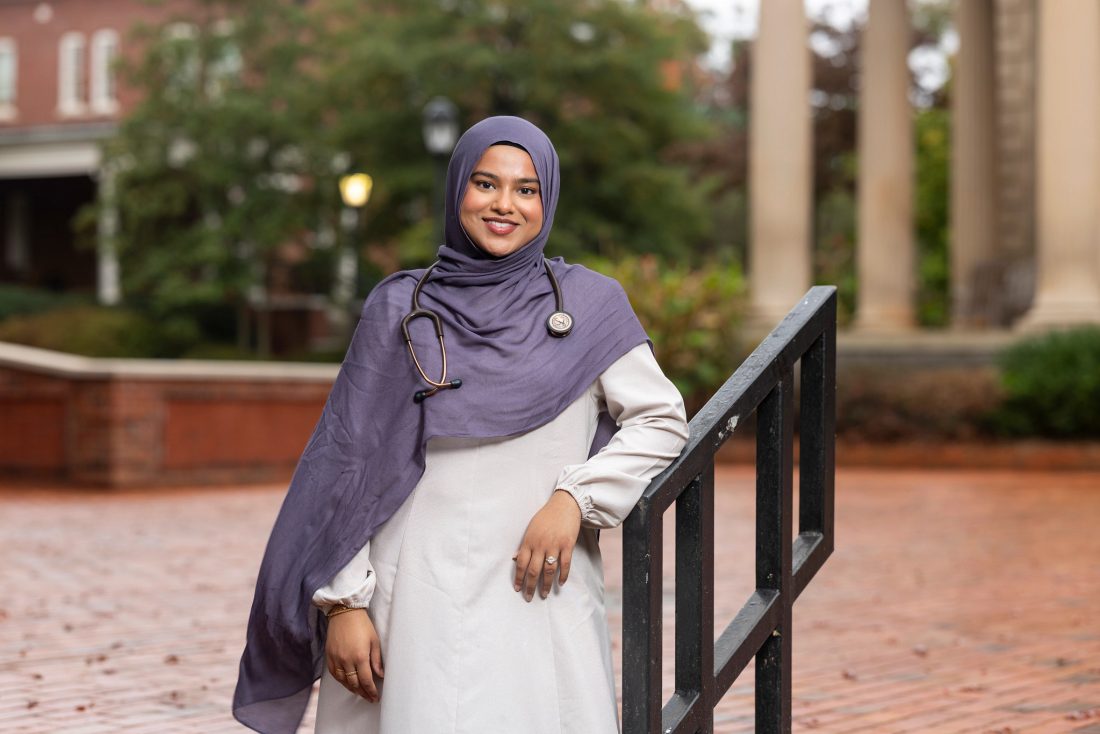
Afsha Hossain, a fourth-year Medical College of Georgia student whose work has focused on improving healthcare access for underserved communities, has been named a 2026 Pisacano Scholar, a national honor for those wanting to be family physicians.
“I’m taking it as an opportunity to learn what my potential can be as a future family physician, to learn the breadth of all that I can do and how I can better advocate for my patients and the communities that I serve,” Hossain said.
Hossain becomes the second MCG student ever selected as a Pisacano Scholar.
“I’m really hoping that it makes me a better leader and a more competent physician as I go through residency,” she said.
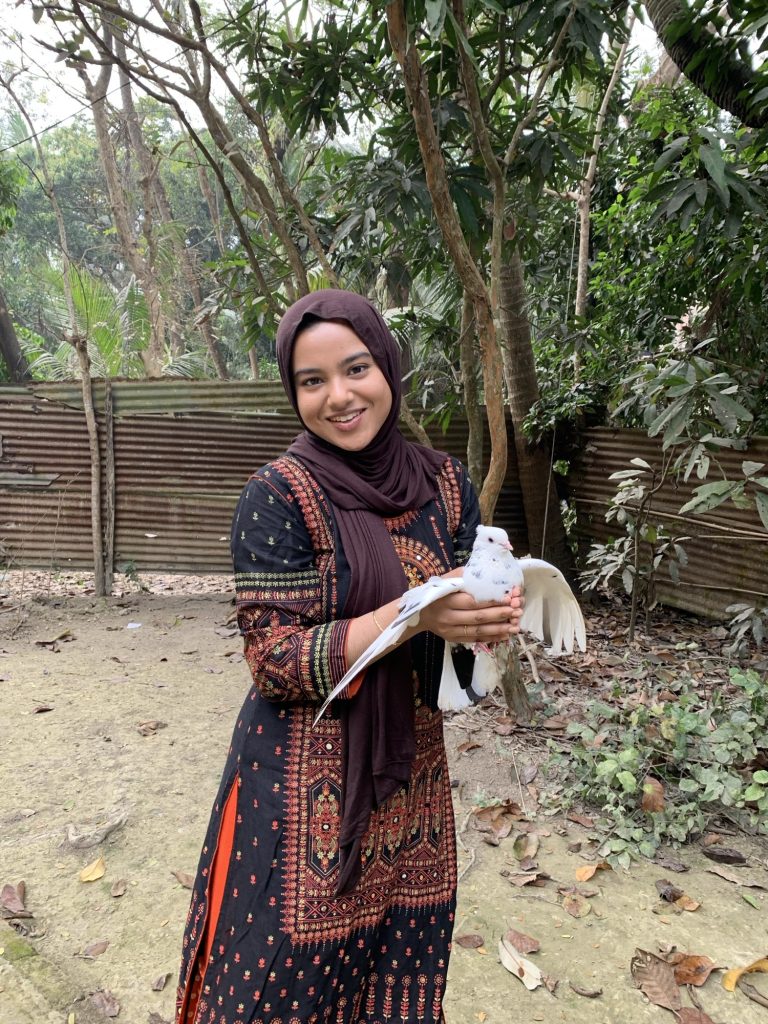
The Pisacano Leadership Program, named in honor of Nicholas J. Pisacano, MD, a family medicine physician who championed the specialty, is awarded to medical students who meet certain leadership and academic criteria. It allows them to participate in symposia and educational programs and provides them with mentorship from current family medicine doctors.
Hossain is one of only 10 students from across the country to be named a 2026 scholar and the only scholar selected from a school in Georgia.
“Afsha’s commitment to caring for underserved populations is rooted in her own experiences as the daughter of Bangladeshi immigrants and the first member of her family born in the United States,” said David Hess, MD, dean of the Medical College of Georgia. “From volunteering in clinics serving refugees, uninsured patients and individuals experiencing homelessness to her work with the Athens Free Clinic and community-based research initiatives, she is laser focused on improving access to care for those who need it most.”
A path shaped by access to care
Hossain was valedictorian of Berkmar High School in Lilburn, Georgia for the class of 2018. She then studied human health at Emory University and completed a minor in nutrition science.
Growing up, she recalled, her parents lacked health insurance but applied for Medicaid so Hossain and her brother could receive care.
“I saw my mom, with her limited English and not really knowing how to navigate these complicated healthcare systems, working to get health insurance for my brother and I,” Hossain said. “They went without for a while until they had no other choice but to seek healthcare.”
Growing up in a Bangladeshi immigrant family in metro Atlanta, surrounded by other low-income immigrant and minority families, Hossain saw firsthand how language barriers, financial limitations and family circumstances could influence health and access to care long before someone entered a doctor’s office.
She knew she wanted to help address those problems but had not decided whether to do so through public health or medicine. Volunteer work at free clinics helped her make that decision.
Before medical school, she volunteered at Shifa Clinic in Duluth, Community Advanced Practice Nurses in Atlanta and Clarkston Community Health Center. She also worked as an emergency department scribe during a gap year while continuing her volunteer service.
“I realized what I found most rewarding was connecting with people one-on-one, building these relationships and being able to actually get these families and these people the care and resources that they needed,” Hossain said.
She said she chose MCG in part because the Athens campus offered a small, close-knit learning environment where students could develop relationships with faculty. Its small-group curriculum also allowed her to connect classroom instruction with the patient circumstances she had encountered through her service.
Remaining close to her family was another priority.
“Family is really big to me,” Hossain said.
Finding family medicine
Hossain entered medical school with interests in several specialties, including obstetrics and gynecology, pediatrics, psychiatry and family medicine. Clinical rotations, conferences and leadership programs helped her recognize that family medicine would allow her to pursue many of those interests while developing long-term relationships with patients.
“I can still do women’s health. I can still deliver babies if I want. I can still see kids and do pediatrics, and there’s a lot of psychiatry in there as well,” Hossain said. “I can follow patients throughout their entire lifespan and build a really strong, trusting relationship with my patients.”
That approach became tangible through her work at the Athens Free Clinic, where she helped care for uninsured and underserved patients. One patient, a woman about Hossain’s age who was participating in the recovery program, returned to the clinic over a two-year period.
As the patient became more comfortable with the care team, she began sharing more about her life and her goals.
“We got to celebrate the small wins with her,” Hossain said. “It was beautiful seeing that relationship change over time, her opening up more and more, and us knowing her background and being able to better counsel her so she could implement changes that were feasible for her.”
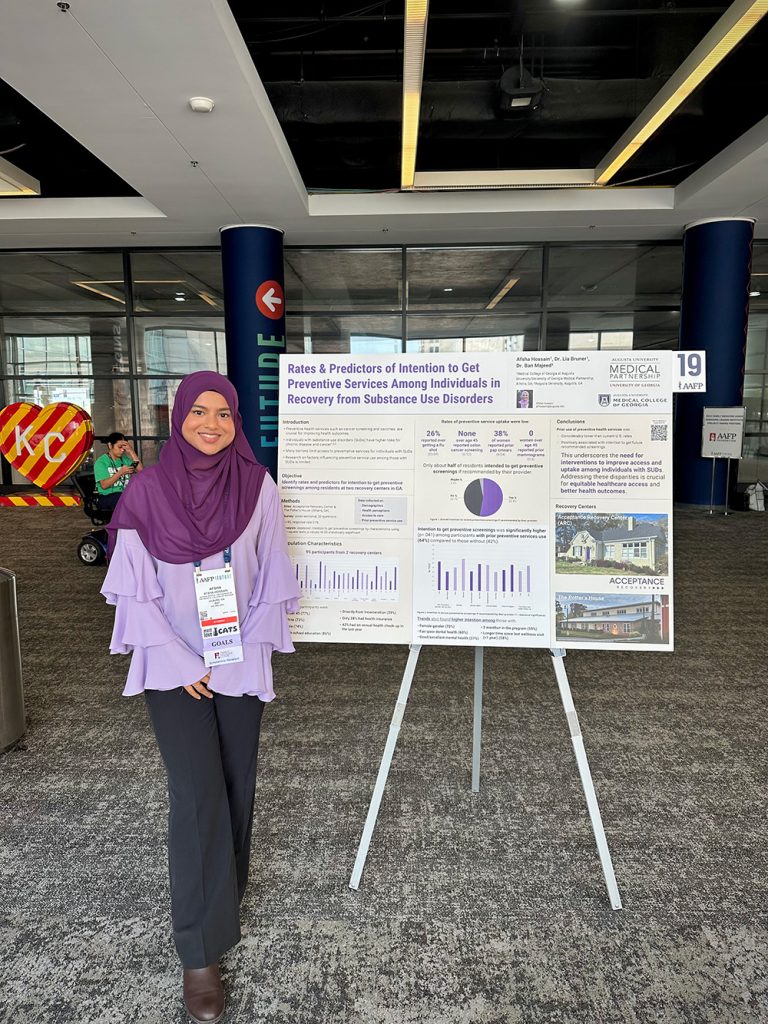
Beyond direct patient care, Hossain has also pursued community-based research examining barriers to preventive healthcare among individuals in substance use recovery, with the goal of identifying opportunities to improve access to routine screenings and primary care.
Hossain has also promoted family medicine, mentorship, advocacy and student involvement as vice president of the Family Medicine Interest Group, student director of the Georgia Academy of Family Physicians and National Board member of American Muslim Medical Student Association. She was previously recognized with a 2025 American Academy of Family Physicians (AAFP) Family Medicine Leads Scholarship, further reflecting her longstanding commitment to the specialty.
Hossain is now interviewing for family medicine residency programs. Although she has applied to programs in several parts of the country, she hopes to continue her training in Georgia.
“Georgia is where I was born and raised,” she said. “This is the community I feel the most connected to and that I want to give back to.”
Her family remains in the state, and she sees Georgia as the place where she can have the greatest long-term impact.
“Georgia is where my roots are,” she said. “That’s the community that I really want to help transform as a physician.”

 Aaron Smith
 Jaylon Brooks
 Erin Weeks
 Staff