Augusta University
 Stacey Eidson
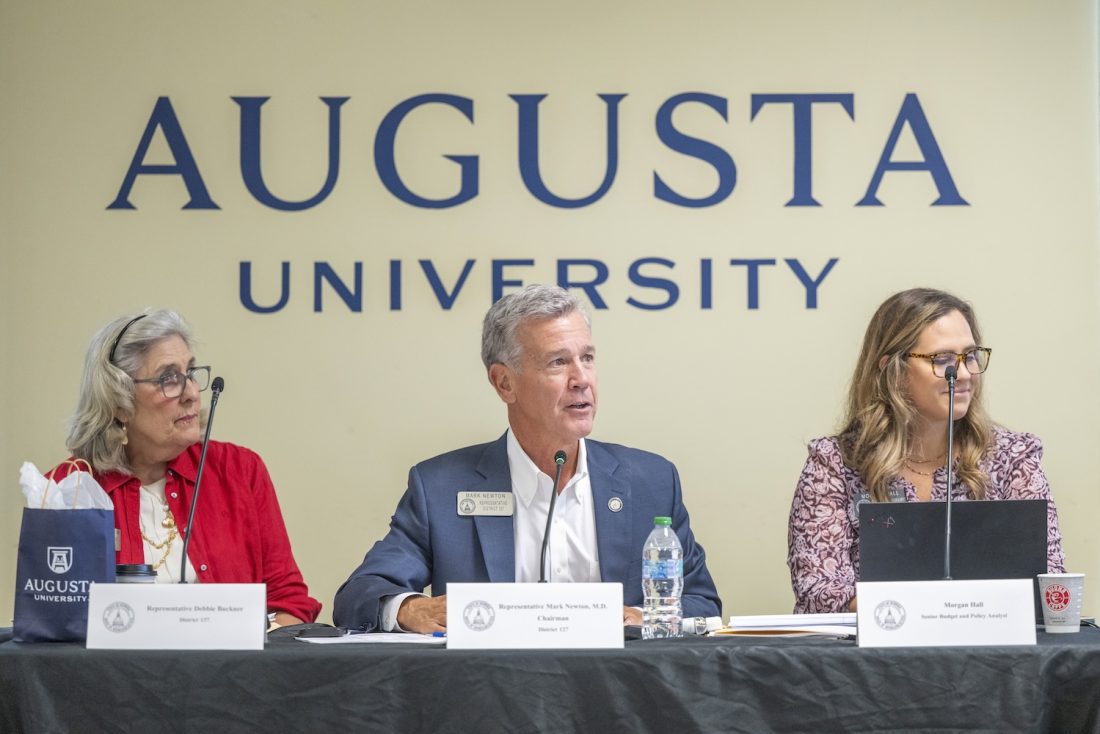
The House Blue-Ribbon Study Committee on Community Health and Healthcare Oversight, chaired by State Rep. Mark Newton, R-Augusta, held its second meeting at Augusta University on Aug. 12 to discuss Georgia’s overall healthcare landscape.
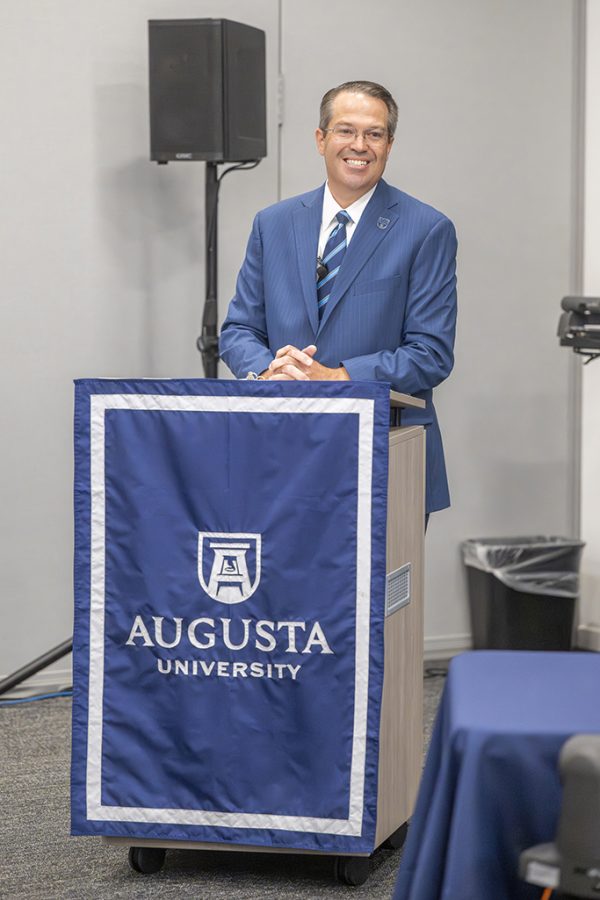
Augusta University President Russell T. Keen, along with several faculty members from the Medical College of Georgia, discussed pathways and policies to improve the recruitment and retention of the next generation of physicians in Georgia.
Those presenting to the committee included MCG Dean David Hess, MD; MCG Vice Dean Kelli Braun, MD; Associate Dean for Regional Campuses Kathryn Martin, PhD; and Senior Associate Dean for Graduate Medical Education and Designated Institutional Official Natasha Savage, MD.
“You are sitting at the birthplace of medical education in the state of Georgia,” Keen told the committee. “In 2028, we will celebrate 200 years of educating physicians and improving lives across our state through healthcare, research and discovery.”
“Chairman Newton, thank you for the opportunity to host today’s meeting and for bringing this important conversation to Augusta, where educating Georgia’s healthcare workforce is central to our life-changing, lifesaving mission,” Keen added. “You understand the challenge, not only as a policymaker, but as a physician, and as a Medical College of Georgia graduate, who spent his career helping people in our community.”
Keen said MCG is not only training physicians throughout Georgia, but it is also focused on translational research. Augusta University is currently developing a new 150,000-square-foot Translational Research Building on its Health Sciences Campus to offer medical students advanced labs, a vivarium and collaboration spaces to elevate medical research.
“With 304 students in our entering class, MCG is one of the largest medical schools in the nation. Nearly two centuries of experience and a statewide educational footprint gives us both a distinctive capability and a profound responsibility to help meet Georgia’s physician workforce needs.”
Augusta University President Russell T. Keen
“Our students are learning medicine and they are practicing it. They are experiencing it through research, clinical training and patient care,” Keen said. “With 304 students in our entering class, MCG is one of the largest medical schools in the nation. Nearly two centuries of experience and a statewide educational footprint gives us both a distinctive capability and a profound responsibility to help meet Georgia’s physician workforce needs.”
Keen said the committee’s work is important because Georgia’s physician workforce shortage is well documented with too many families traveling too far and waiting too long for care.
“But Georgia is not without solutions,” he said. “We have strong institutions, committed partners and proven programs that are already producing results.”
Hess explained that there are only two academic medical centers (AMCs) in Georgia: Wellstar MCG Health and Emory University. States with similar populations have a lot more AMCs. For example, there are five in Ohio and four in North Carolina.
“This is a big disadvantage in developing specialized fellowships,” Hess said, explaining AMCs are where the majority of medical students, residents and fellows train throughout the country.
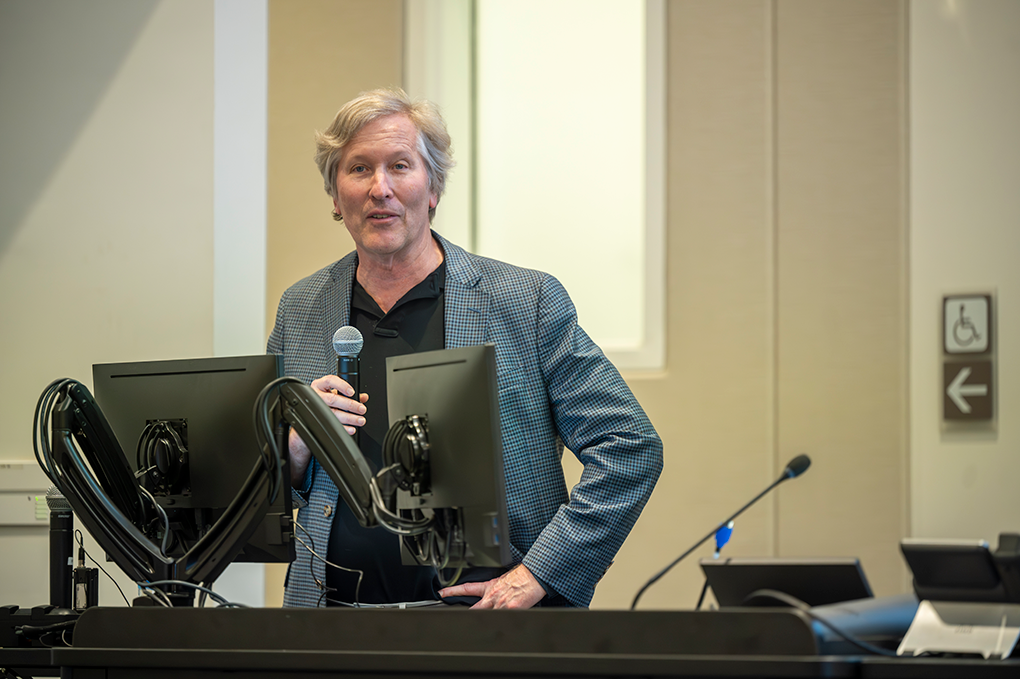
“There’s a basic principle you have to remember: Where you train is where you’re likely to practice.”
Medical College of Georgia Dean David Hess, MD
MCG is unique in that it offers a statewide medical education network with nine regional campuses across Georgia, including cities such as Albany, Thomasville, Brunswick, Savannah, Dalton, Marietta and Rome, Hess said.
“There’s a basic principle you have to remember: Where you train is where you’re likely to practice. That’s why we have students in cities like Albany,” Hess said. “If they never go to Albany, they’re probably never going to practice there. So, this is the principle of regional campuses.”
Braun, who was recently named the new vice dean for academic affairs for MCG, said she is a perfect example of a doctor who was fully trained and stayed in Georgia.
“I’m from Liberty County. I was in the second graduating class from the second high school in Liberty County. It was a Title I high school. Only 60% of my school actually even went off to college. So, we realized very much about our statewide impact,” Braun said, adding she earned her medical degree from MCG in 2004, completed her residency in obstetrics and gynecology in Augusta and joined the MCG faculty in 2008. “MCG is 100% committed from undergraduate, to medical school, to graduate education, to our statewide impact and addressing the need for physicians.”
“This past year, a third of our class came from underserved counties within the state. And we hope to continue to increase that number.”
Medical College of Georgia Vice Dean Kelli Braun, MD
MCG works hard to reach students in every corner of the state, Braun said.
“Where you live significantly impacts not only your health outcomes, but also your educational opportunities, and educational access and opportunities to be prepared for medical school,” she said. “So, we take geographic location into consideration at MCG. It’s part of our selection criteria for matriculating students. This past year, a third of our class came from underserved counties within the state. And we hope to continue to increase that number.”
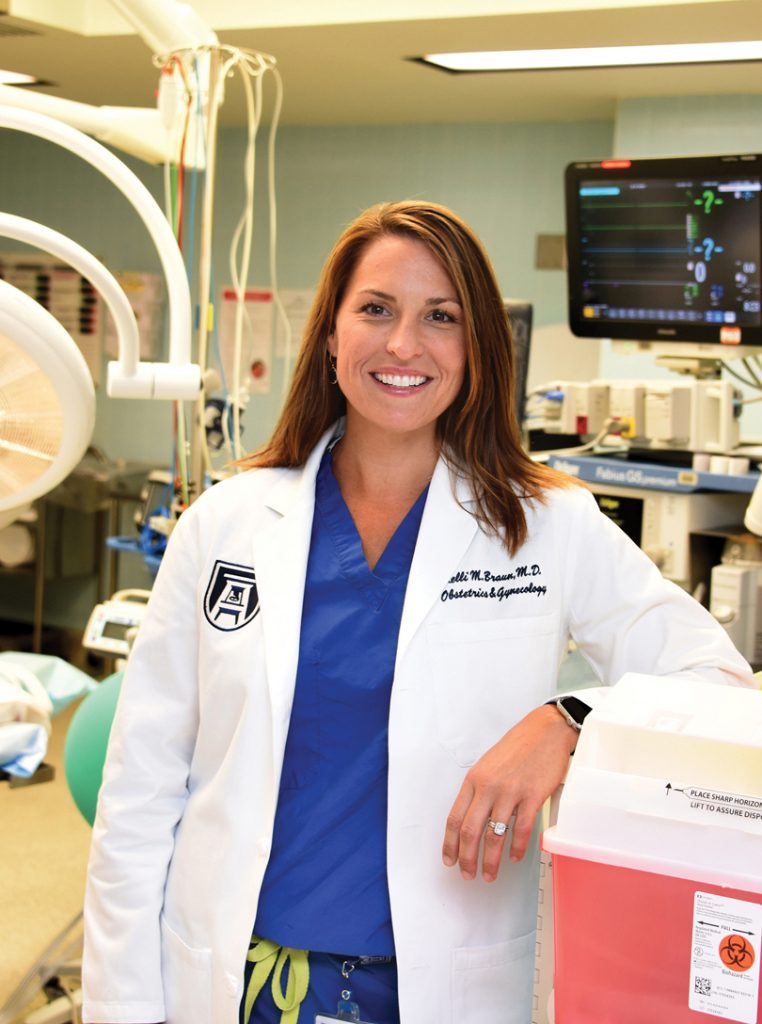
It is important to reach those potential medical students and help them understand there is a pathway to becoming a physician, Braun said.
“Students who commit to serving, or doing their clinical rotations, on our Northwest Campus (Rome/Dalton) or Southwest Campus (Albany/Thomasville), we actually give them admissions consideration because they are committing to serving those populations,” she said. “We have also developed what’s called the Assurance in Medicine (AIM) Program, where we support rising junior undergraduate students from regional institutions within the state to get them MCAT support, professional identity formation and clinical opportunities to help them successfully matriculate to MCG.”
Augusta University also offers the MCG 3+ Primary Care Pathway Program, which allows students who commit to primary care practice in rural or underserved Georgia to graduate in three years and immediately enter a residency in Georgia in either family medicine, internal medicine, pediatrics, psychiatry, emergency medicine, obstetrics and gynecology or general surgery. In exchange for service, these Peach State Scholars will receive a scholarship to cover their tuition, enabled by funds from philanthropy and the state, Hess said.
“The economic impact of MCG 3+ is $7.2 million a year,” Hess said. “The annual cohorts have steadily increased since the program was launched from eight in 2021 to 15 in 2026. And the first group of Peach State Scholars completed their residency training this year.”
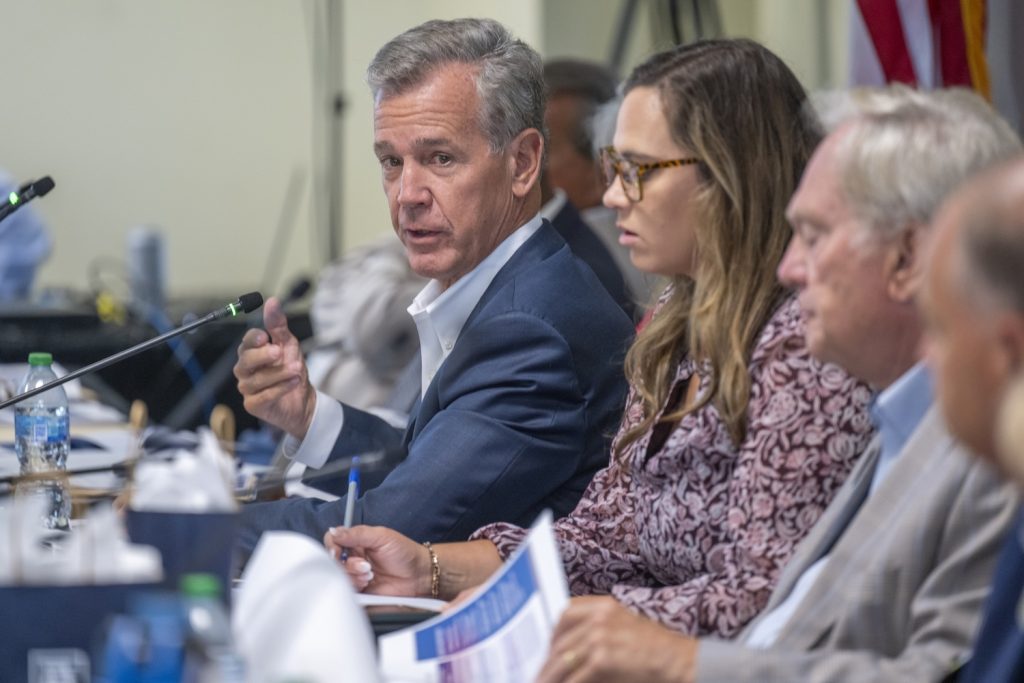
“You look at these regional campuses that are getting students exposed to rural areas and rural Georgia, and frankly the joys of taking care of Georgians in those areas, and then they want to come back and stay there after their medical school and after their residency.”
State Rep. Mark Newton, R-Augusta
Newton thanked the faculty at MCG for helping improve the recruitment and retention of the next generation of physicians in Georgia.
“Georgia ranks 40th in the nation for physicians per capita,” Newton said, adding that the state’s population has grown significantly over recent decades, which has fueled the need for more doctors, particularly in rural areas. “You look at these regional campuses that are getting students exposed to rural areas and rural Georgia, and frankly the joys of taking care of Georgians in those areas, and then they want to come back and stay there after their medical school and after their residency.”


 Hannah Litteer
 Aaron Smith
 Denise Parrish