 Augusta University
 Hannah Litteer
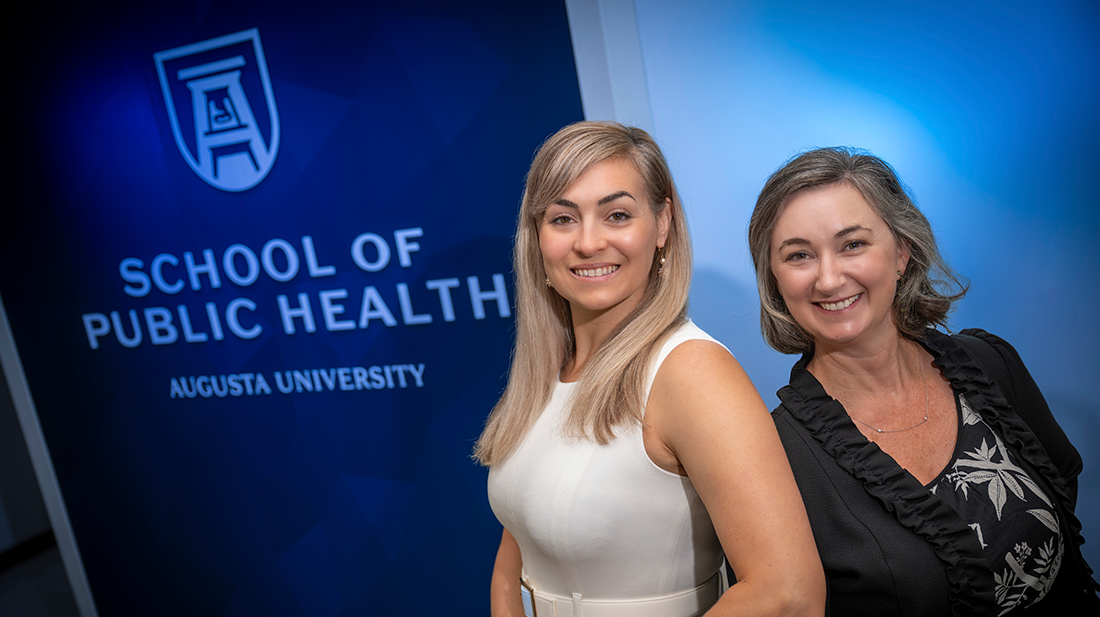
Adults with intellectual and/or developmental disabilities (IDD) and adults with cerebral palsy are more likely to visit the emergency department for falls. This finding comes from a recent study published in Annals of Family Medicine by three researchers within the School of Public Health at Augusta University.
“Fall-Related Emergency Department Visits Among Adults With and Without Intellectual and Developmental Disabilities or Cerebral Palsy,” was led by Natalia Cantet, PhD, a former postdoctoral researcher at SPH who now works at the University of Michigan, and was co-investigated by Augusta University faculty Teal W. Benevides, PhD; Deborah Jehu, PhD; and University of Michigan faculty Michelle A. Meade, PhD; Michael McKee, MD; and Haylie Miller, PhD.

Cantet said the idea for the study was formed over a simple cup of coffee after she and Benevides sifted through data of emergency room visits from 2019.
They noticed there were higher injury-related visits for people with IDD ages 18-80 across 21 states in the U.S. It was Miller, a falls-related expert in IDD, who told them the culprit could be falls.
“There’s a lot of literature about falls for the older adult population, and there’s some evidence of falls in the cerebral palsy population, but there wasn’t a study that looked at the broader picture,” Cantet explained. “So having coffee with Dr. Benevides in Ann Arbor, and presenting the data to a larger team of clinician researchers with different expertise resulted in this paper.”
The study was part of a larger grant awarded to Meade and McKee by the National Institute on Disability, Independent Living, and Rehabilitation Research that focuses on social inequities of people with disabilities.
“Our research project specifically was examining social determinants of health using large scale data and evaluating health-related disparities in people with intellectual and developmental disabilities,” said Benevides, a professor in the Department of Community and Behavioral Health Sciences at SPH who was in charge of the securing the grant funding for AU’s branch of the project.
Jehu also works in the Department of Community and Behavioral Health Sciences as an associate professor, and her research centers on improving cognitive and mobility assessments and therapeutic interventions in aging populations to reduce falls. Her role in the study was to analyze how people with IDD and people with cerebral palsy are falling at a similar rate to older adults.
“A history of falling is one of the strongest predictors of future falls,” she said. “Looking at this data and seeing that participants had an accelerated fall likelihood by 20 to 30 years is alarming. It also highlights a gap in awareness that many physicians may not fully recognize.”
Jehu explained that while physicians may treat co-occurring conditions that come along with IDD or cerebral palsy, they may not be aware of increased risk of falls in younger-aged individuals.
Additionally, the data in the study doesn’t represent people with IDD or cerebral palsy who fell and didn’t report it, or had injuries so severe, they were admitted in the hospital. The potential for even higher numbers of fall-related injuries highlight the urgency of further research and assessments needed on this topic.
“By publishing these findings, we’re hoping to reach the clinicians who care for these individuals and are in a position to act,” Jehu said. “This is a descriptive study, so it doesn’t tell us why these falls are happening, but it does highlight the need for clinicians to conduct comprehensive fall-risk assessments to identify contributing factors and implement strategies to help prevent future falls.”
The next steps for this research are to examine the severity of falls and what is most injured among people with IDD and people with cerebral palsy. They plan to use more recent emergency department data, and want to incorporate recurring visits for fall-related injuries into their study as well.
Because each of the authors have different research interests and professional backgrounds, they contribute equal parts to a greater whole, ultimately leading them to discover what’s been looked over all these years – and will hopefully be the catalyst for reducing the number of fall-related injuries among people with IDD and people with cerebral palsy.
“This is a very good example of interdisciplinary work at hand, because I don’t think there’s two people with the same expertise in this team,” Cantet said.


 Stacey Hudson
 Milledge Austin
 Felicia Baskett
 Karen Fulton