 Augusta University


 Jennifer Hilliard Scott
Why men and women develop high blood pressure differently has puzzled scientists for decades.
Men are more likely to develop hypertension earlier in life, while women’s risk rises after menopause, yet the biological reasons behind those differences remain largely unknown. A researcher at the Medical College of Georgia at Augusta University believes part of the answer may be found in an unexpected place: the gut.
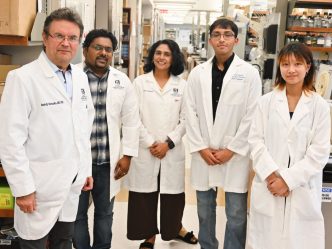
With support from a new five-year, $3.5 million grant from the National Heart, Lung, and Blood Institute, Justine Abais-Battad, PhD, assistant professor in MCG’s Department of Physiology, is investigating how the gut microbiome interacts with the immune system and sex-related biology to influence blood pressure and kidney health.
“We know these differences exist, but we still don’t fully understand what drives them,” Abais-Battad said. “Our goal is to determine whether the gut microbiome is an important piece of that puzzle.”
The project grew out of years of research examining salt-sensitive hypertension, a form of high blood pressure in which blood pressure rises abnormally in response to the sodium we consume in our diets. As researchers studied how diet influenced hypertension, they found themselves increasingly drawn to the gut microbiome, the vast community of bacteria and other microorganisms that live in the digestive tract.
What they discovered surprised them.
While diet did shape the microbiome, differences between males and females were often even greater.
“It became clear that there was something fundamentally different about the male and female microbiome,” Abais-Battad said.
Since then, her laboratory has found consistent differences in the microbial communities of males and females and is working to determine whether those differences help explain why hypertension and kidney disease develop differently between the sexes.
Rather than focusing on individual bacteria, the team is investigating the biologically active compounds microbes produce and how those compounds affect inflammation, immune responses and cardiovascular health. Some compounds appear to protect against high blood pressure and kidney injury, while others have been linked to inflammation and cardiovascular disease.
The research also builds on Abais-Battad’s longstanding interest in the role of the immune system in hypertension. Her studies have shown that immune cells behave differently in males and females and may contribute to differences in disease risk and severity. Increasingly, evidence suggests that the microbiome and immune system work together in ways that influence both blood pressure and kidney damage.
“The immune system and the microbiome don’t operate independently,” she said. “We’re trying to understand how these systems communicate with one another and how those interactions ultimately affect blood pressure and kidney health.”
The grant will also allow researchers to explore a fundamental question: whether genetics or hormones play the larger role in shaping sex differences in the microbiome. Early findings suggest both are important, but in different ways.
A major component of the project will extend those discoveries beyond the laboratory through a collaboration with Xiaoling Wang, MD, PhD, professor in Augusta University’s Department of Population Health Sciences and leader of the Georgia Twin Study. By combining animal models with decades of human health data and newly collected microbiome samples, the researchers hope to determine whether the same biological processes identified in the lab occur in people.
Ultimately, the work could uncover new ways to prevent and treat hypertension and identify microbiome-based markers that signal disease risk before symptoms appear.
Although scientists have only recently begun to understand the microbiome’s reach, Abais-Battad believes its influence extends far beyond digestion.
“There’s still so much we don’t know,” she said. “But we’re beginning to appreciate that the bacteria living in and on our bodies affect nearly every aspect of our health. Understanding how they contribute to hypertension could open the door to entirely new approaches for preventing and treating cardiovascular disease.”

 Chris Curry

 Jamison Guice

 Felicia Baskett

 Valerie Emerick