 Augusta University
 Hannah Litteer
For cancer survivors, the end of treatment doesn’t mark the end of their cancer journey. Follow-up services and scans are important in making sure the cancer stays in remission.
But one in five cancer survivors in the U.S. live in rural areas, which often have longer distances to healthcare providers, lower reported income and education levels and lack of health insurance coverage and preventative screenings. All of these factors contribute to cancer mortality rates being higher and five-year survival rates being lower in rural areas compared to their urban counterparts, according to an NIH study.
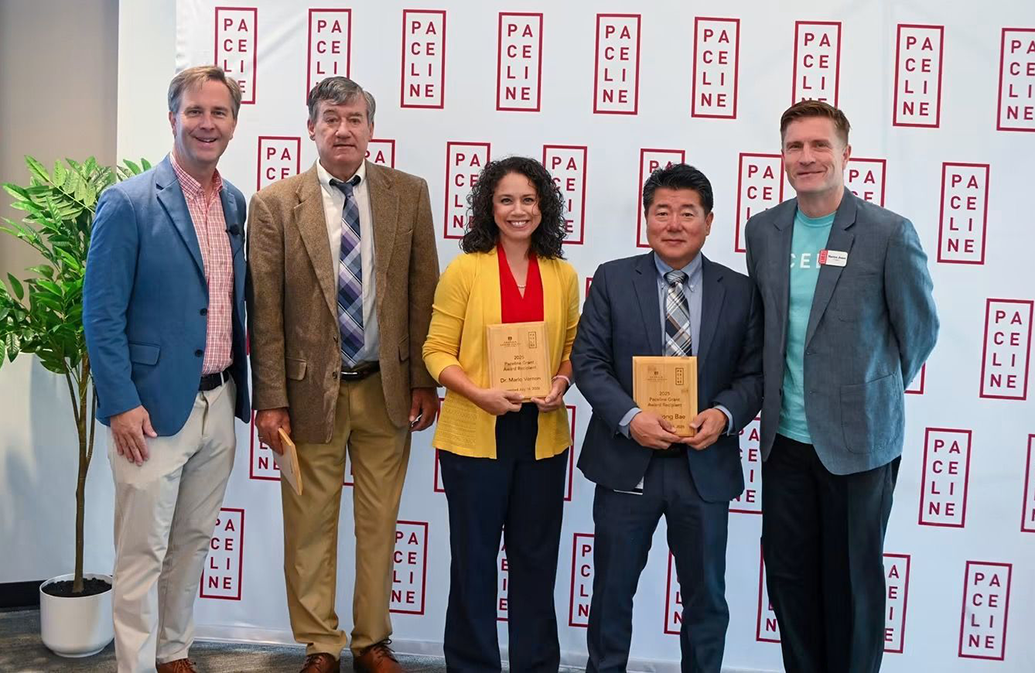
In the hopes of addressing these challenges and improving rural cancer survivorship, a group of researchers at the School of Public Health have been awarded a $50,000 PACELINE grant that will help them gather qualitative data about the healthcare barriers patients face in rural Greensboro in Greene County, Georgia.
This was chosen as the initial focus area because it is largely rural and lies about halfway between Augusta and Atlanta, meaning patients who live there often have to drive considerable distances for specialized oncology care.
Working to improve cancer survivorship
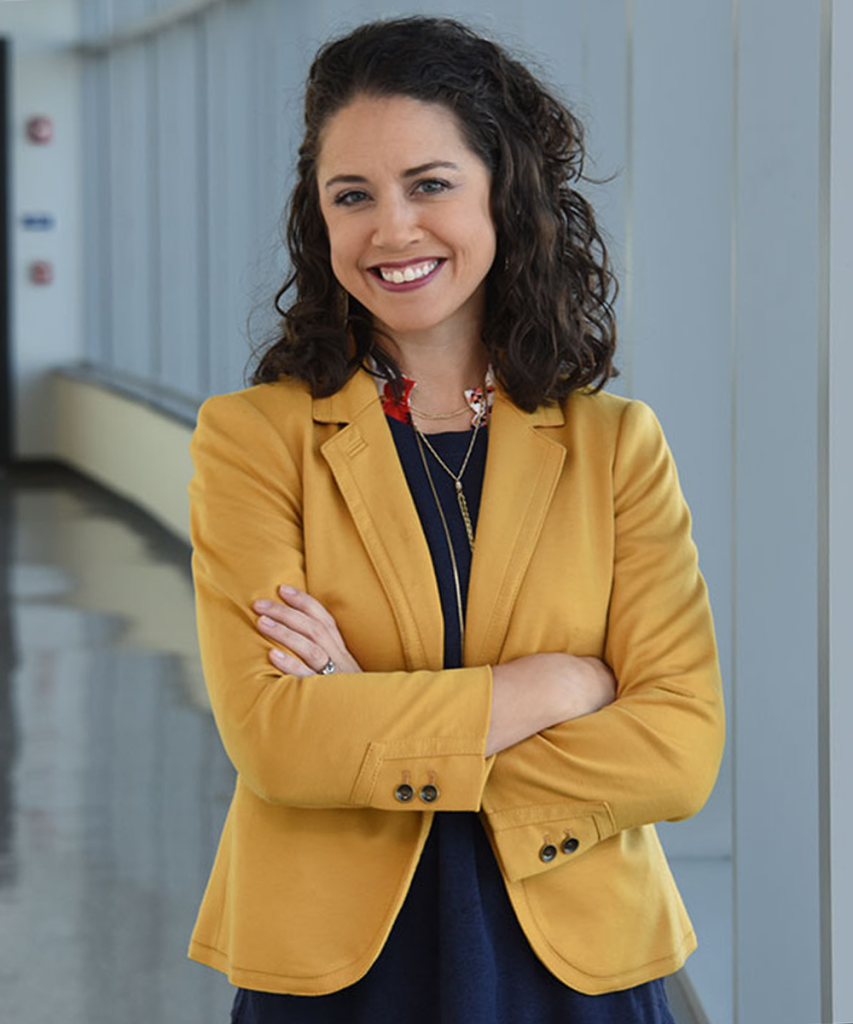
Sejong Bae, PhD, professor and chair of the Department of Biostatistics, Data Science, and Epidemiology at SPH, is serving as the contact principal investigator of the study. Steven Coughlin, PhD, a professor and program director in Department of Biostatistics, Data Science, and Epidemiology and Marlo Vernon, PhD, an associate professor in the Department of Health Management, Economics, and Policy, are multiple-PIs. David Ringer, MD, a Medical College of Georgia at Augusta University graduate and CEO of Oconee Valley Healthcare, serves on the Greensboro community advisory board and also plays a big role in facilitating the research.
“We’ve published many articles on healthcare access, quality of life, mental and physical health and medical-financial hardship among cancer survivors in Georgia and across the U.S. We examined mortality rates for breast, colorectal, prostate and lung cancer in Georgia, and found there were several rural counties that stood out with higher mortality rates in a cluster about halfway between Augusta and Atlanta,” Coughlin said. “We thought that potential barriers for cancer survivors who live there were financial, transportation and the distance to medical care facilities like the Georgia Cancer Center or Winship Cancer Center in Atlanta.”
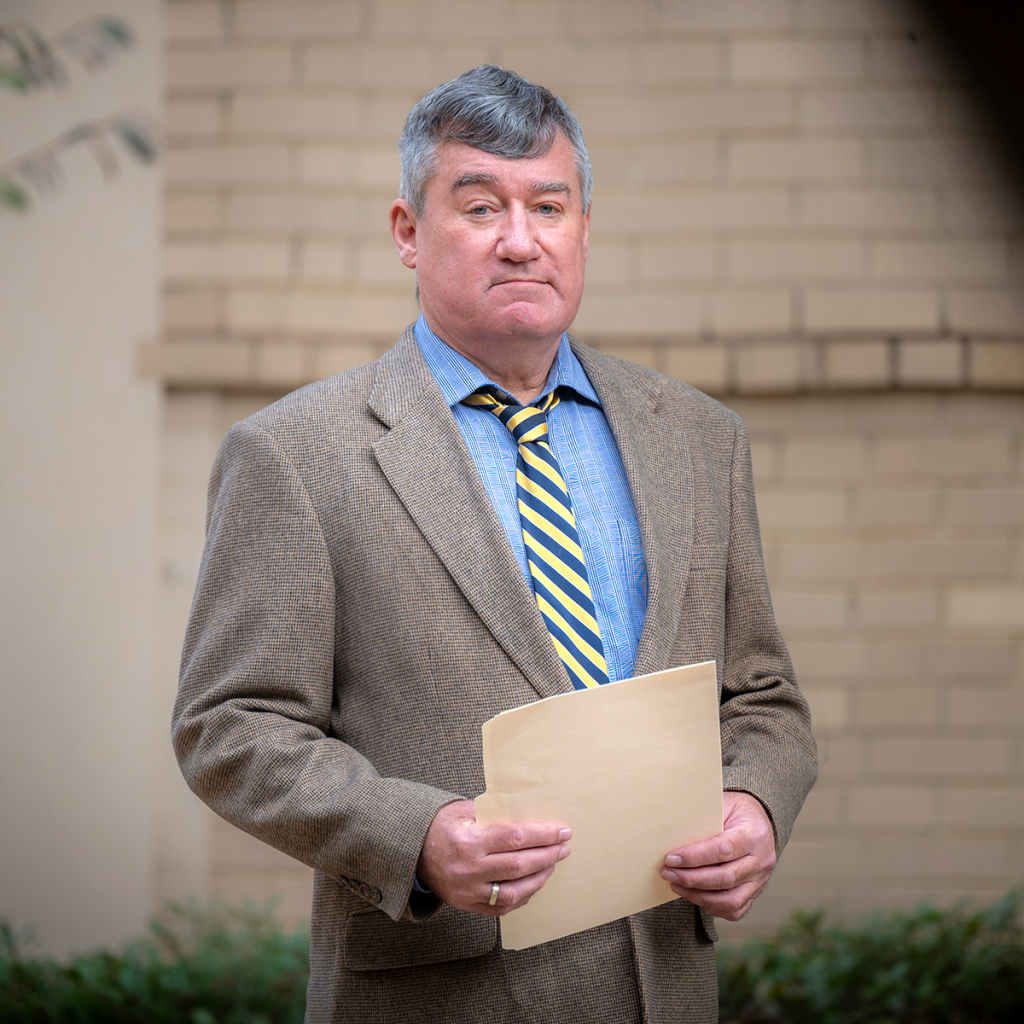
This led Coughlin to meet with healthcare executives and physicians in these counties, including Greene County, and establish a community advisory board to help them communicate what healthcare obstacles their patients and cancer survivors are facing. The focus is on breast, colorectal, prostate and lung cancer because they are among the most common types of cancer in the U.S. and worldwide.
The research team will ask patients and healthcare providers what their challenges are, what services have helped or could help them, how providers would integrate expanded services into their care, how a patient navigator could help the process, etc.
“We’ll share what the patients report and what the healthcare providers report with our community partners, and that’ll be very useful for them in planning healthcare in their local community,” Coughlin said.
This preliminary data will be gathered throughout the duration of the grant, July 2026 – June 2027. The goal is for this to directly influence another, larger grant the team is working to obtain.
They’re in the process of submitting a National Institutes of Health R01 grant proposal aimed at improving cancer survivorship in rural areas, but they need preliminary data to bolster their application. When Bae heard about the PACELINE grant opportunity, a lightbulb switched on inside his head.
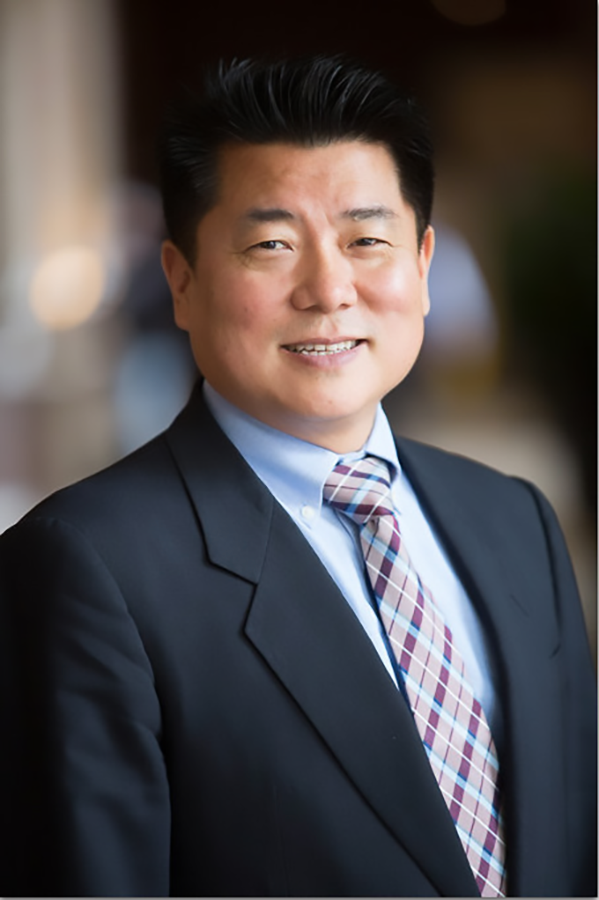
“Having actual preliminary data in the area of research really helps boost the chance of getting funded, so I threw out an idea to Dr. Coughlin and Dr. Vernon,” Bae recalled. “I said, ‘This is a great opportunity. Let’s work together to get this PACELINE grant so we have feasibility and the preliminary data.’ I got their agreement, and we submitted for the grant together.”
If the study continues to be funded, the team plans on expanding the scope of the study to other rural Georgia counties, and they will investigate the feasibility of hiring nurse practitioners to serve as nurse-patient navigators for the study, assisting with follow-up care and surveillance for patients.
“Some cancers share inherited genetic risk factors. As a result, certain survivors of breast, prostate, or colorectal cancer may be at increased risk for developing another of these cancers, which is why genetic evaluation and appropriate screening can be so important. If you are diagnosed with one of those types, you need to be sure you’re keeping up with your screenings, and a patient navigator would help ensure these screenings are getting done at an appropriate time,” Vernon said.
Telehealth is also a possibility. The Georgia Cancer Center at Augusta University has started to use telehealth services to screen patients for dermatologic and colorectal cancer, which could make a major difference in survival rates for rural counties.
“That’s one of the things we’re going to talk to the patients about: If they prefer face-to-face or if telehealth would be okay because in some instances, people prefer an in-person visit rather than virtual. So if we’re setting up survivorship care, we need to know how they are actually going to use the service we’re offering,” Vernon explained.
“We go into these communities and we have an idea of what the solution is, but oftentimes they’re the ones who come up with the best solution because they live in their communities and know what they need first-hand,” she continued. “So, for us, I think the most important thing is being respectful of the community and finding a way to serve them rather than to come in and tell them what they need.”
A personal perspective
Coughlin is an expert epidemiologist who has devoted his career to investigating a broad array of population health concerns, including cancer epidemiology. He has published more than 30 articles and a book on cancer survivorship alone. Now, he unfortunately has the rare experience of being on both ends of the research spectrum as both a patient and investigator.
Back in June, he was diagnosed with stage 1 hepatocellular carcinoma with a LI-RAD 4 tumor, which is an early-stage liver cancer where a singular tumor is confined to the liver.
His diagnosis began with a positive alpha-fetoprotein blood test last December. It was only slightly elevated, but when Coughlin’s gastroenterologist repeated the test in June and noticed it had increased, she ordered an MRI.
“I had already had one six months before, so I kind of felt like I was being over screened, but it surprised me by coming back positive for a small tumor,” Coughlin recalled. “Based upon the radiological evidence, they felt that it was highly likely that it was hepatocarcinoma, and it was later confirmed to be a LI-RAD 5 tumor, or definite hepatocarcinoma.”
After Coughlin met with a surgical oncologist and interventional radiologist to discuss next steps, they presented his case to a multidisciplinary tumor board who ultimately decided on treating the tumor with Y90 embolization.
“Y stands for yttrium. It’s a radioactive element. The Y90 embolization involves inserting a catheter in the femoral or radial artery and then inserting it into the hepatic artery in the liver to treat the tumor with the yttrium.”
Coughlin had a trial run of this procedure a few weeks ago where they threaded the catheter into the seventh bifurcation of the hepatic artery, where his tumor is located – it was very successful.
“They released a radioactive tracer that has a short half-life, and made sure that when they do the actual procedure, that the radiation won’t go into my lungs or other organs like the intestine,” Coughlin said. “My interventional radiologist was very pleased and enthusiastic. So, when they insert the Y90 emboli, which are microscopic vesicles made of glass or resin that contain the radioactive material, it’ll wipe out the tumor.”
He had his full radiation treatment on August 26th.
“The procedure was very successful and I am very happy to have it over with,” Coughlin said, relieved.
He will have a follow-up MRI in a few months to make sure the treatment worked and no additional tumor growth has happened and then continue to have MRIs every four months for the rest of his life.
This experience has provided Coughlin with an extra layer of understanding of what cancer patients and survivors go through, and further highlights the importance of community-based public health research to improve outcomes for cancer patients and survivors in real-life settings.
And with cancer survivors being at a high risk for cancer recurrence, Coughlin also wants to emphasize the importance of prevention screenings and early detection.
“My providers are saving my life, and I’m very grateful to the surgical oncologists, interventional radiologists, my GI doctor and the nursing personnel for really helping me out,” he said. “I’m fortunate that we have excellent resources here at the Georgia Cancer Center and Wellstar MCG Health for people like myself, and I thought that my story would offer hope to other cancer patients and cancer survivors because I’ve learned a lot about treatment options for early stage hepatocarcinoma, and they include curative treatments.”
Coughlin’s medical team included Interventional Radiologist Hanping Wu, MD, an associate professor at MCG; Surgical Oncologist Steven Colquhoun, MD, a professor and Floyd C. Jarrell, Jr. MD Distinguished Chair in Surgery at MCG; and Gastroenterologist Vera Zaraket, MD, as assistant professor of medicine at MCG.
He attributes his positive attitude to the compassionate care he’s received from them and the support he’s received from his personal community.
“I attend church and have a strong support group of family, friends, church members and my employer,” he said. “Dr. Bae has been really terrific, and my situation is very positive because I have very strong support.”
SPH’s Paceline team: AUSPH4GCC
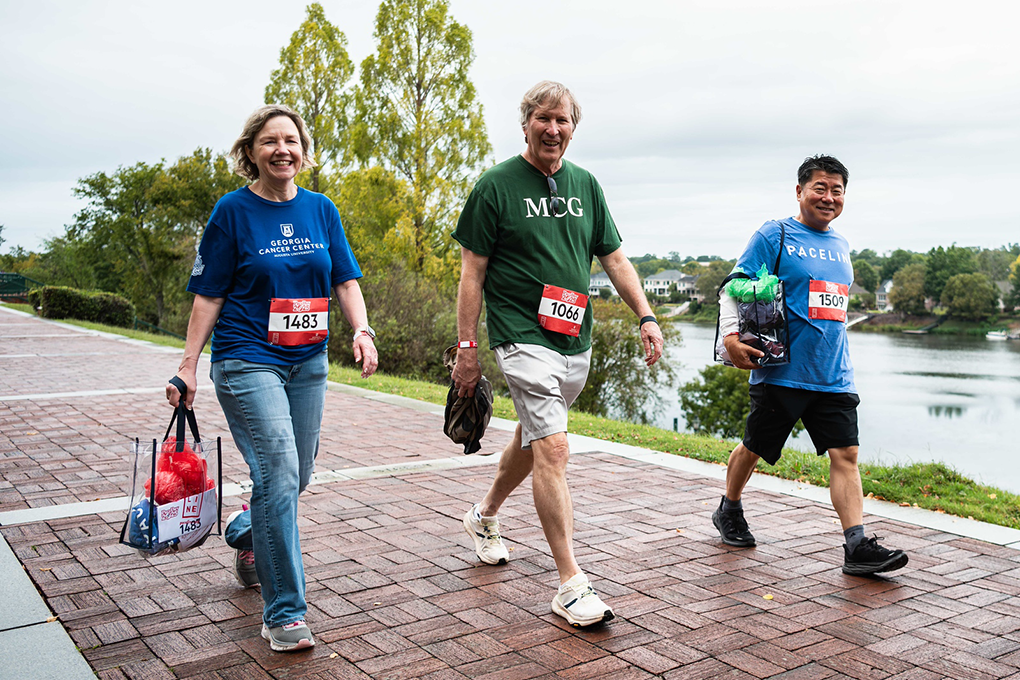
PACELINE is an Augusta-based movement and nonprofit organization dedicated to raising funds to support innovative cancer research at the Georgia Cancer Center.
With Bae serving as team captain, the SPH PACELINE team, AUSPH4GCC, has a goal of raising $1,800, and they’ve already raised more than $1,300.
“I walk for PACELINE and have been a team captain since joining AUSPH last year. Cancer touches all of us. It’s not distant. It’s woven into our families: our parents, grandparents, in-laws, aunts, and uncles. For me, it’s my dad, my father-in-law, my grandparents, and extended family. These are not just statistics. They are the reason cancer research matters and why this work is so deeply personal,” Bae explained.
To support the cause and help fund grants like the SPH team’s, visit its page on the PACELINE website.

 Milledge Austin
 Denise Parrish
 Stephanie Hill
 Morgan Hayes