 Augusta University
 Staff
StaffAugusta area high school students toured and explored the Medical College of Georgia’s physiology labs this summer with the inaugural ROAR Summer Research Program.
Five students from the local community participated in a four-week research camp where they partnered with mentors, toured labs, engaged in workshops and asked the ultimate research question: What would you do with $2 billion dollars from the National Institutes of Health (NIH)?
With their principal investigators, students learned about specific lab research such as the role of kidney function regarding hypertension and pre-eclampsia complications. They were able to see equipment that is commonly used in labs and what a lab space really looks like as well as the dynamics of being a researcher.
One participant commented, “Hearing about individuals’ research projects, learning about what everyone was working on was interesting and showed that there’s a lot you can do in research. Everyone was very passionate about their projects.”
While the students in the program were not all interested in research, after engaging in this program, many noted they would consider it either as a career choice or incorporate research into their educational pathway.
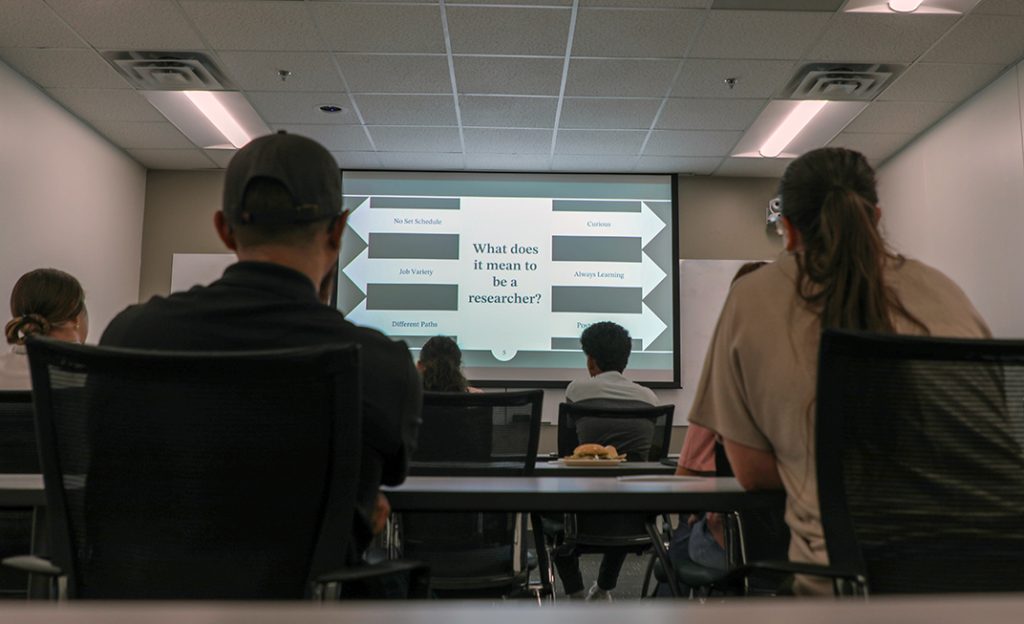
Outside of the lab, mentees engaged in professional development workshops, allowing this program to be collaborative across campuses and approaches to research. A panel of researchers from undergraduate to PIs discussed their path to research. Amanda Behr, PhD, department chair and professor for Augusta University’s Medical Illustration graduate program in the College of Allied Health Sciences, shared the importance and utilization of art. Brilynn Janckila, PhD, a professional writing consultant for the Center for Writing Excellence, helped prepare students for the future by sharing advice on resume building and cold emailing.
One student said they plan to utilize the lessons of the workshops in their research journey, noting they enjoyed putting together a poster outline because it was helpful to know how to design one since they will be doing that in the future.
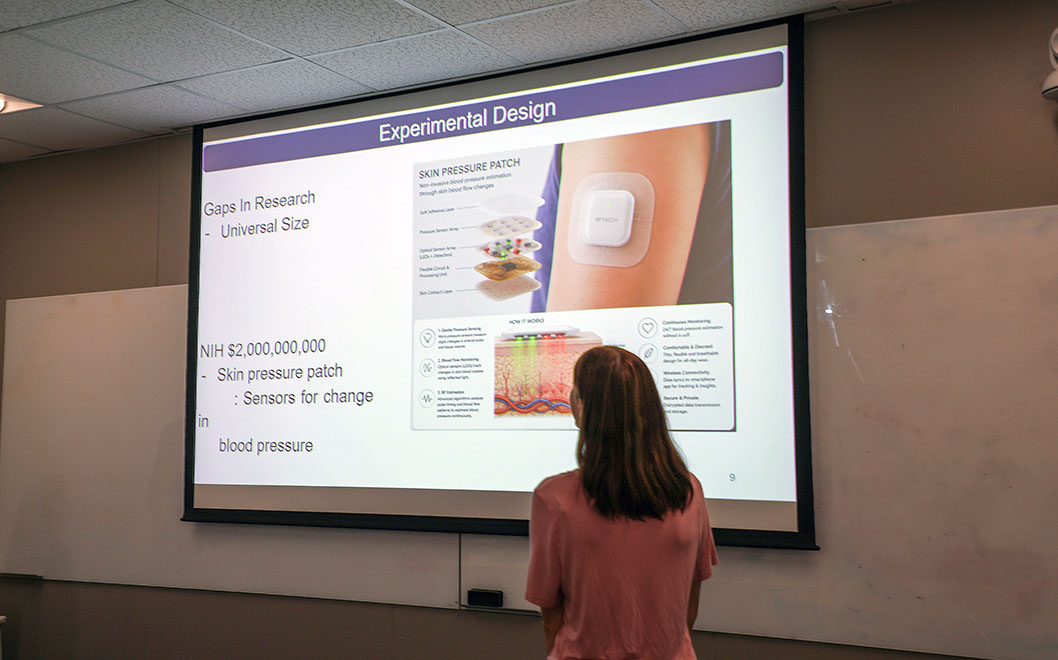
At the end of the program, students made presentations including personal information about themselves, what they discovered about research and answered that question about what they would do if awarded $2 billion dollars for research.
One student noted that hypertension rates among youth are rising and there are limited mechanisms for tracking blood pressure, especially tools that are not bulky or possibly embarrassing to use in public. Thus, the student proposed a skin pressure patch to detect blood pressure changes as their $2 billion NIH project.
The ROAR Summer Research Program was funded through an NIH grant for Jennifer Sullivan, PhD, who is dean of The Graduate School. The ROAR team, which included Sullivan’s Career Enhancement Core members of Daria Ilatovskaya, PhD, Denisha Spires, PhD, and Brittany Pinkerton, PhD, promoted hypertension awareness through various avenues within the scientific realm and grassroots in the area.


 Paige Tucker
 Valerie Emerick
 Stephanie Hill
 Jamison Guice