 Augusta University
 Anna Freeman
At the Georgia Cyber Center at Augusta University, innovation extends beyond cybersecurity labs.
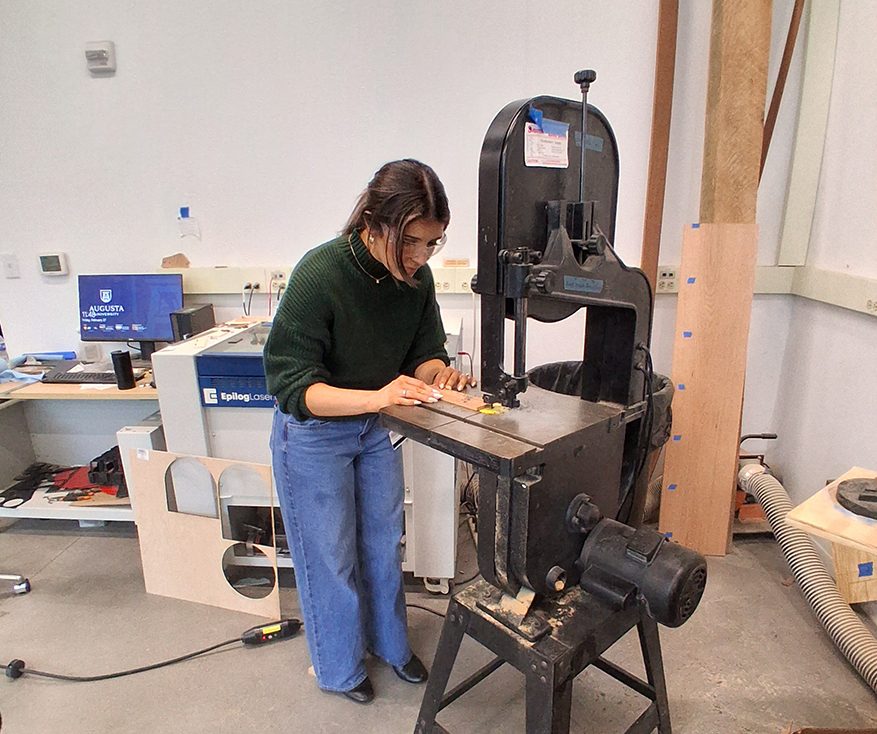
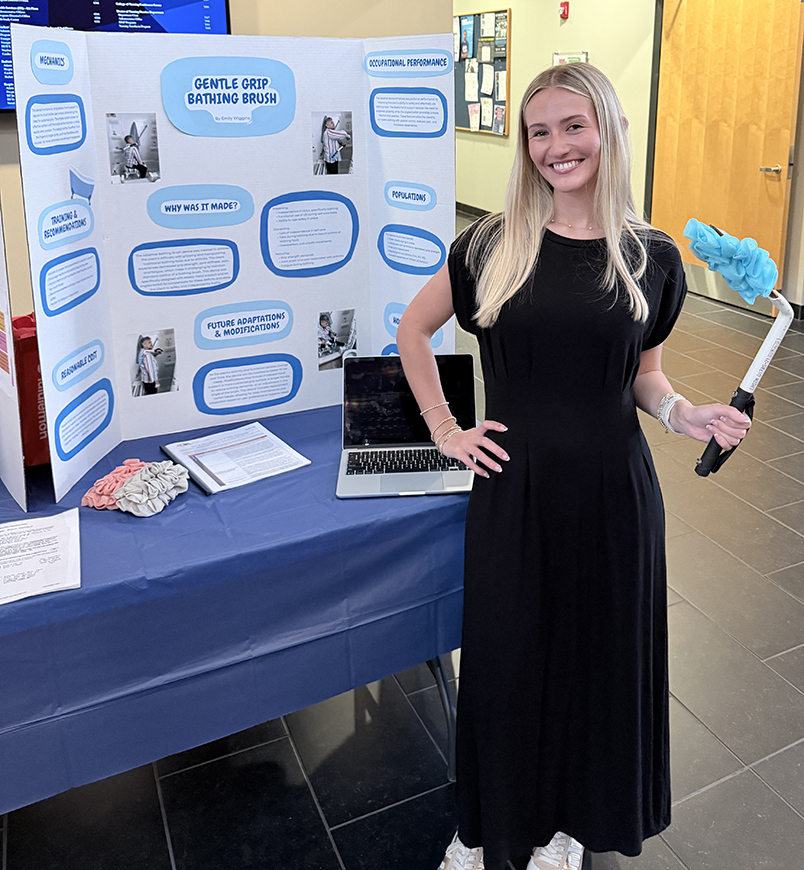
Inside the Garage Makerspace, students from the College of Allied Health Sciences’ Occupational Therapy program are designing and building assistive devices aimed at improving everyday life. The work is part of a hands-on class project that challenges students to create customized solutions for individuals they know or are currently working with.
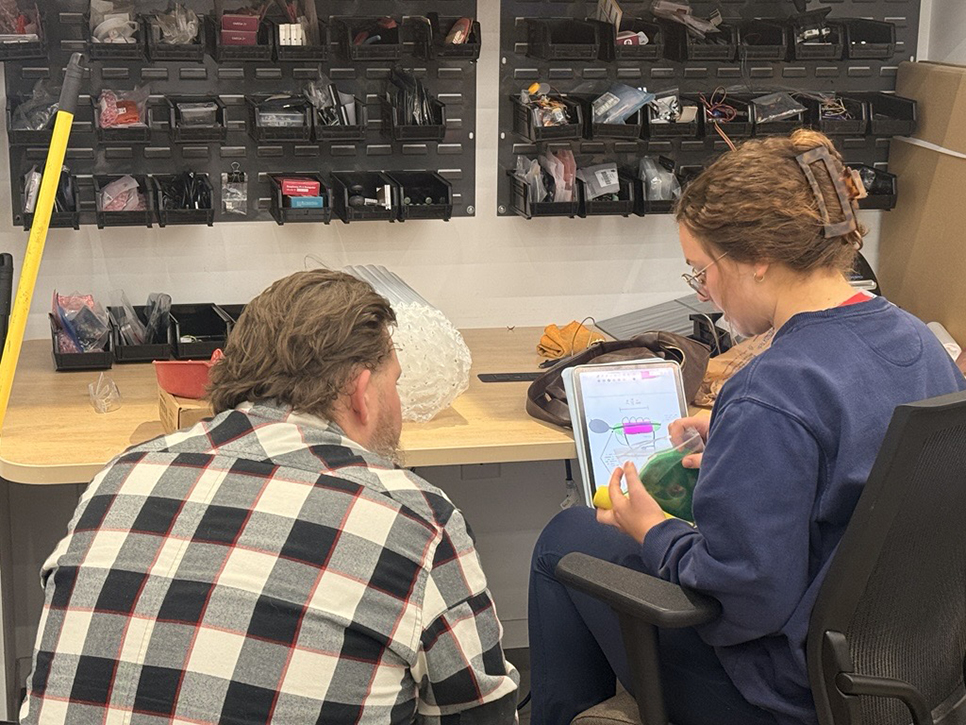
Each project begins with a specific need with the goal of not only identifying solutions, but also creating them.
Some students are developing tools to help individuals zip jackets or tie shoelaces more independently. Others are creating more specialized devices, including modified knee and leg braces designed to help someone recovering from an injury return to activities like kicking a soccer ball.
“This type of innovation is exactly what we envisioned when we opened our doors almost eight years ago,” said Eric Toler, the executive director of the Georgia Cyber Center. “It is easy to come up with good ideas, but extremely difficult to turn an idea into a prototype that solves a real-world problem. We are blessed to have the Garage Makerspace on campus, which enables our incredible OT students create solutions that improve patient lives.”
The Garage Makerspace provides access to tools that allow students to bring their designs to life. Using equipment such as bandsaws, 3D printers and computer-aided design software, students can prototype and refine devices tailored to individual users.
For many, the experience marks their first time translating a clinical concept into a physical product.
“Occupational Therapy is all about providing our patients with resources and tools, whether they be physical or mental, that will allow them to engage in activities that bring them personal joy, satisfaction and feelings of dignity and independence,” said OT student Tori Wise. “This semester, all of the students collaborated with an individual in the community who is experiencing an impairment or deficit of some kind, to design a device that would aid that person in performing a specific activity with increased safety, efficiency and ease.”
The OT collaboration is one of several initiatives currently underway in the Garage Makerspace under the academic entrepreneurship. Staff members Aidan Manahan and Daniel Reed are also leading projects while mentoring students.
Manahan is developing a custom split-flap counter for a local entrepreneur, combining mechanical design with digital fabrication. Reed has been producing lithophanes and illuminated lightboxes for Philanthropy and Alumni Engagement, creating visual displays that highlight key moments and milestones.
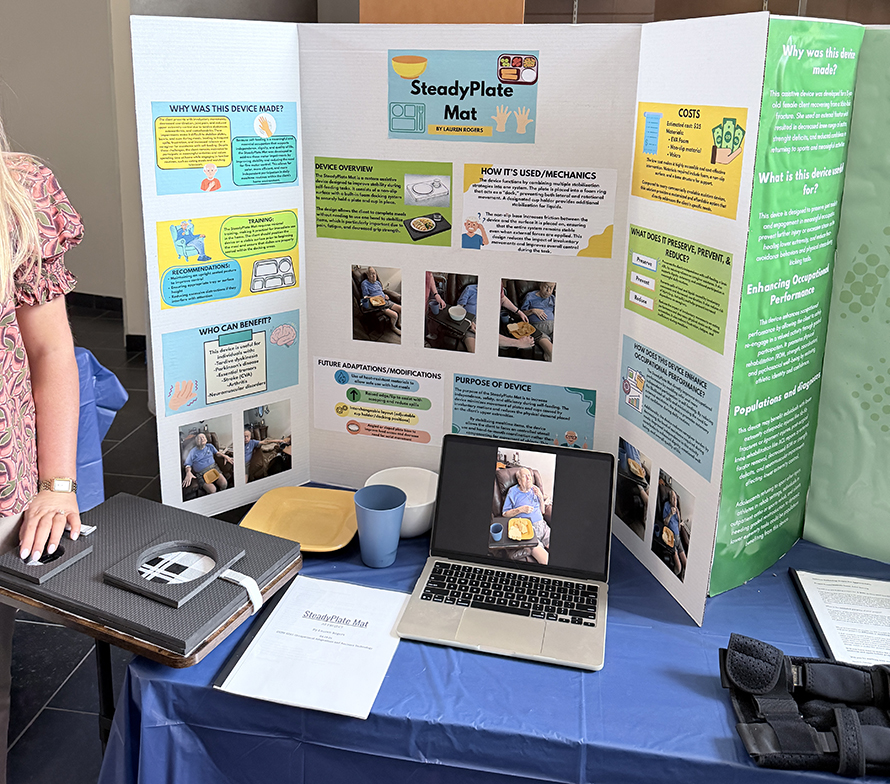
Both have worked closely with OT students, providing guidance on materials, design adjustments and fabrication techniques. The collaboration between the Makerspace and the OT program emphasizes a patient-centered approach.
Students begin by understanding the daily challenges individuals face, then design solutions to improve mobility, function or participation in meaningful activities. Along the way, they build skills in problem-solving, collaboration and adaptive thinking.
The process reflects challenges commonly faced in practice because no two patients have identical needs and standard equipment is not always the best fit. By developing basic design and fabrication skills, students gain additional ways to support patient independence.
“The person I worked with has total blindness, and she loves to bake and cook. I identified certain aspects of cooking/baking that she had the most trouble doing independently and took my ideas to the Garage, where the staff helped bring my ideas to life,” Wise said. “The staff at the Garage provided me with great guidance and support in designing my device. Together, we created an adaptive cutting board that includes multiple elements to make meal preparation more efficient and safer for individuals with vision impairments.”
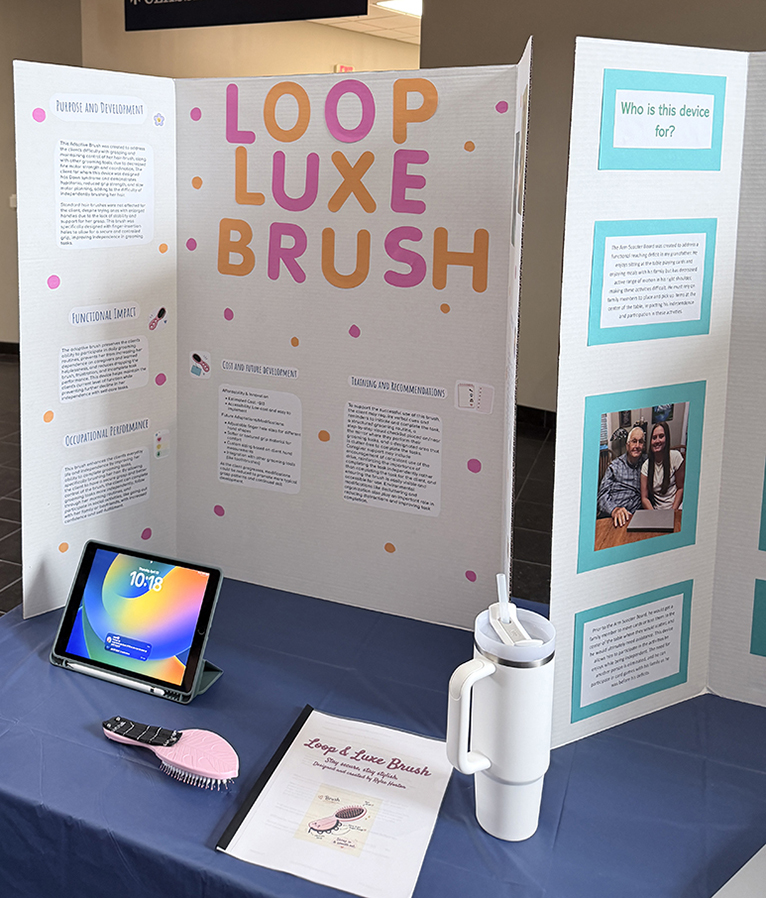
While technology plays a key role, the focus remains on the people the devices are intended to help.
“Student innovation thrives when ideas meet action. Through the efforts and collaboration of The Garage Makerspace Innovation Team at Augusta University, students are not only encouraged to think creatively, but are also given the tools, guidance and space to turn bold ideas into real-world solutions,” said Aaron Cummings, the facilitator for the Makerspace. “It’s also a great opportunity to support students within different disciplines not typically represented in a fabrication space.”

 Hannah Litteer
 Haley Crain
 Tyler Wooten
 Jamison Guice