 Augusta University
 Nina Sligar
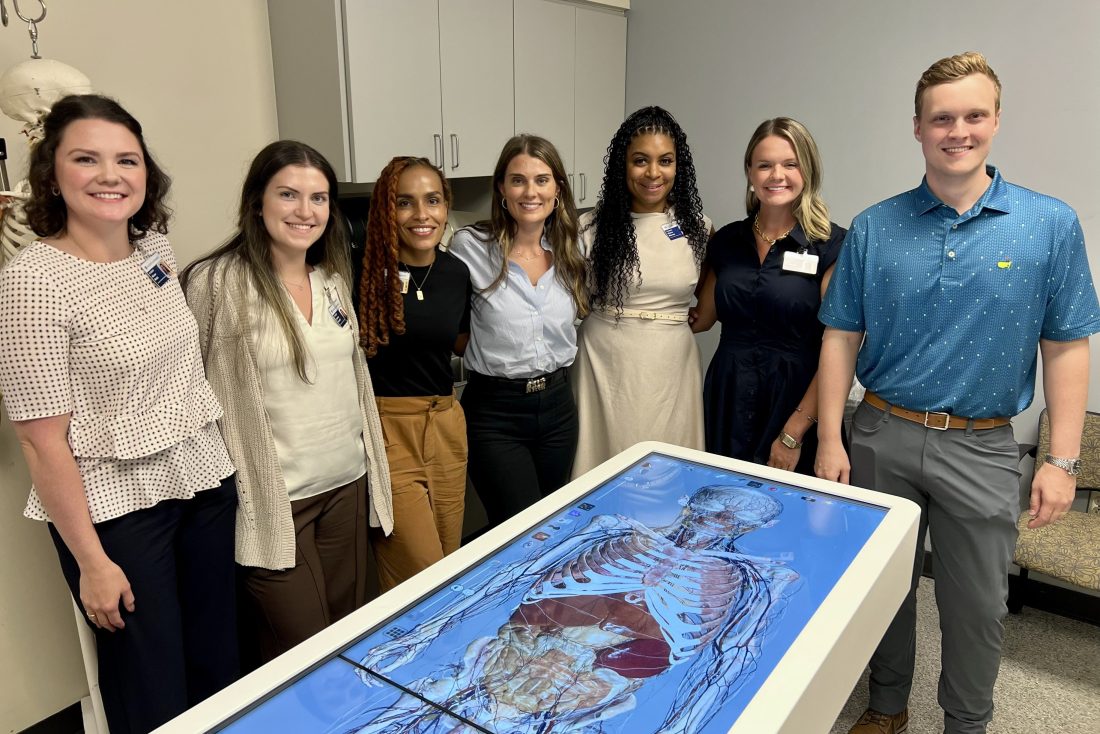
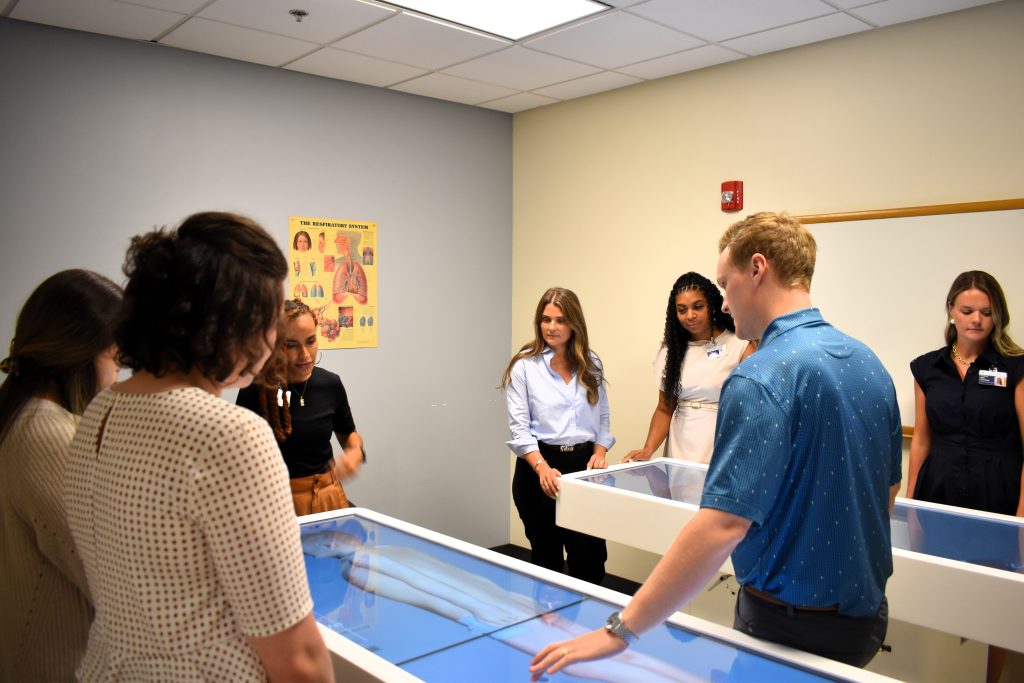
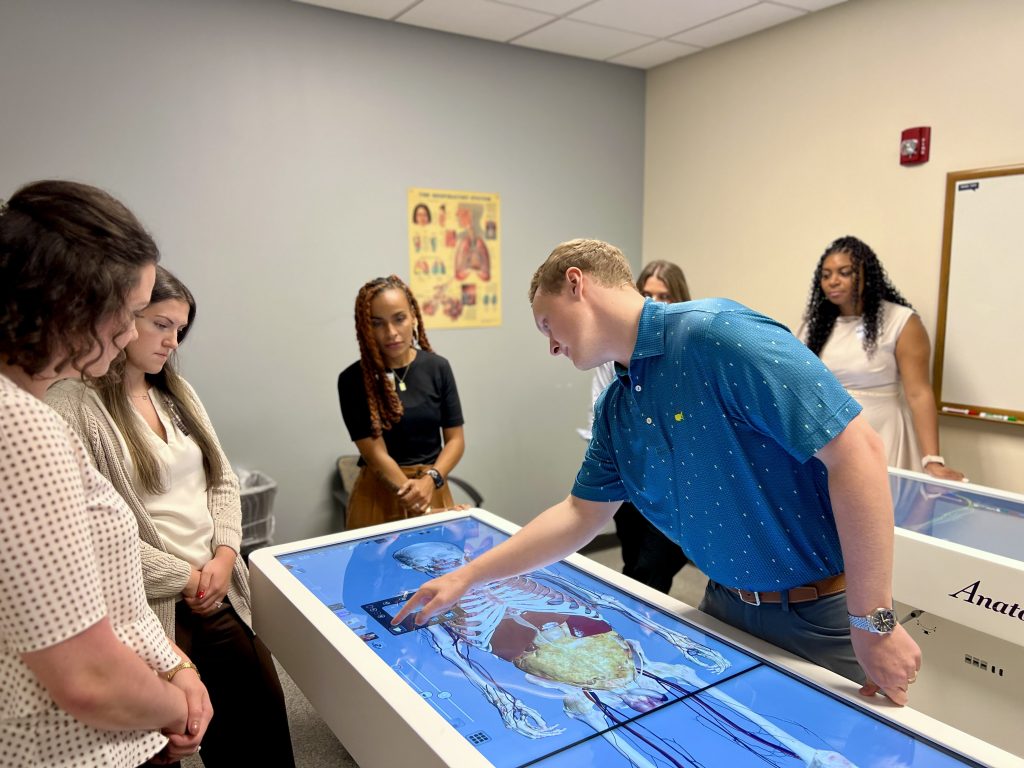
Preparing the next generation of nursing professionals requires excellent faculty, dedicated students, and of course, access to innovative technology that can help elevate nursing education. At Augusta University’s College of Nursing, the Nursing Anesthesia Program (NAP) utilizes cutting-edge technology known as Anatomage Tables.
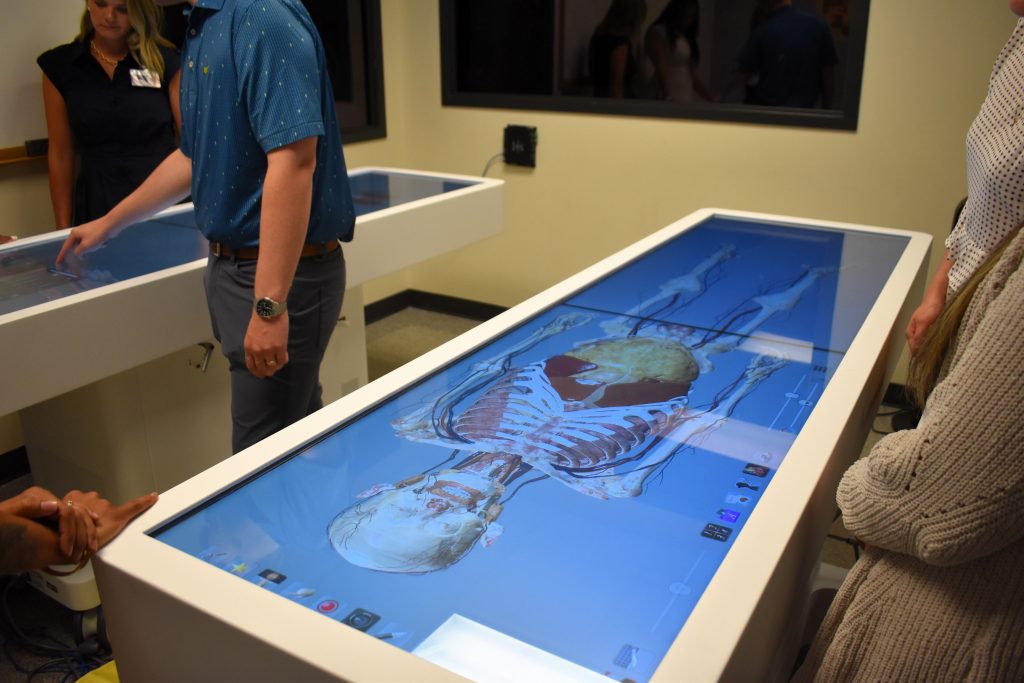
An Anatomage Table provides a digitized human cadaver to aid in the education of healthcare professionals. “By incorporating the Anatomage Table, institutions can enhance learning outcomes, lower laboratory costs, and establish technological leadership,” according to Anatomage.
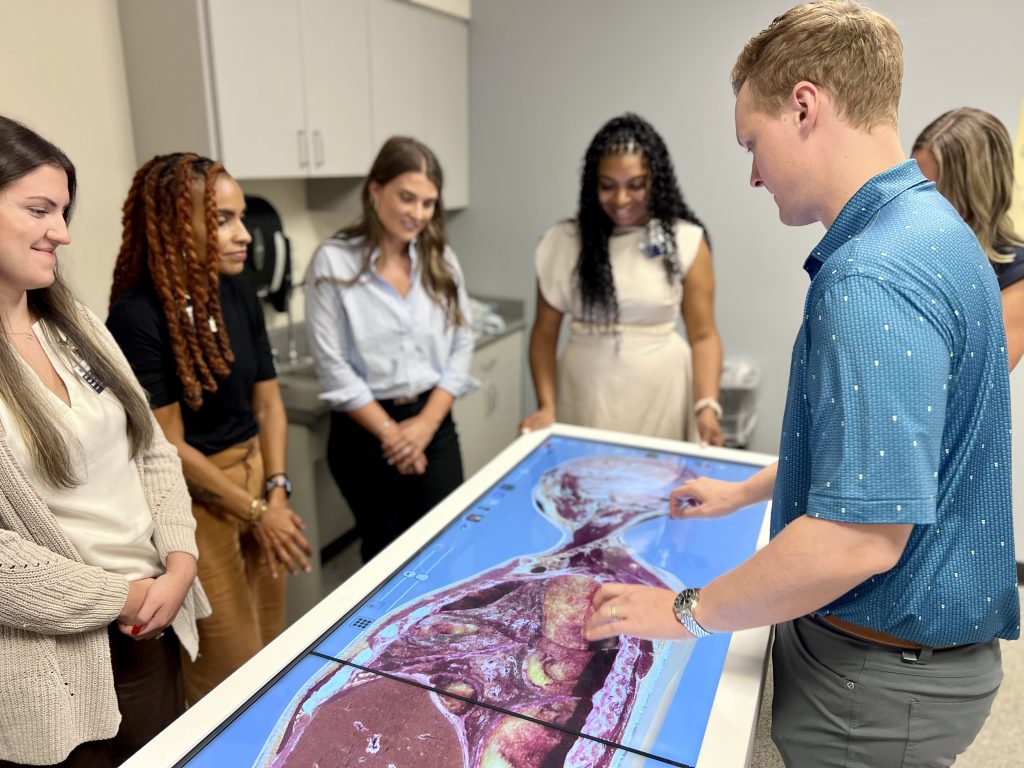
Assistant professor Michael Wilson, DNAP, regularly teaches with the table and has been instrumental in expanding its use within the program.
“When I got our first lab practical ever administered with the table, it was a huge success and landmark for the university,” said Wilson.
NAP is a leader in integrating high-fidelity simulation and is the first CRNA program in the nation to have two Anatomage Tables. Less than 10% of programs have access to even one piece of this state-of-the-art training equipment.
Integrating the table
While the table seems complicated, integration into academic use has been streamlined in an efficient and understandable way.
“The company has amazing experts that meet with you to show you how it all works,” explained Wilson. “After going through the two training sessions, basic and advanced, you are pretty proficient.”
Wilson already had a background in anatomy and physiology when he came to the college, from previously serving as a teaching assistant at Augusta University with Debra Saul’s undergraduate students.
“There’s no guesswork with the table. On a traditional cadaver, putting a needle through a tiny structure can lead to student confusion. But with the table, it allows me to ask much more detailed anatomy than I could before.”
When Wilson joined the department, he was immediately identified by his peers as a good candidate for teaching students with the table.
“I am the biggest nerd in the department; I’ve been building computers my whole life.”
Everyone believed he’d be interested in utilizing the tables, and they were correct.
“It was a natural fit and is now one of my favorite things to teach!”
Improving upon the cadaver
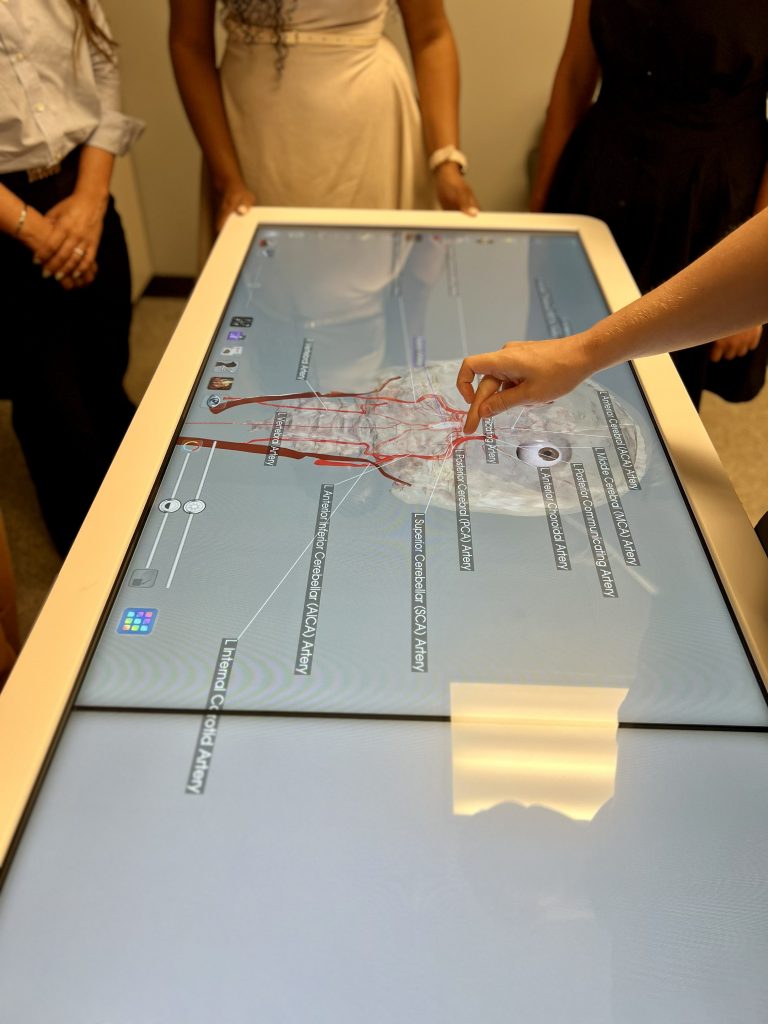
The table allows for helpful functionalities such as spinning, zooming, making structures transparent or highlighting them, all while allowing the user to save their progress and even upload content that can be shared across professors and universities.
According to Wilson, the capabilities of the Anatomage Table significantly improve upon the use of a traditional cadaver. The table allows for the study of unique diseases like lymphoma or lung cancer, cuts down on dissection time, and unlike cadavers, the bodies used will not expire.
Wilson explained that dissecting traditional cadavers can make identification and study difficult when it comes to the smallest structures of the human body.
“Nerves are so hard to dissect on a cadaver, but with the table I can remove everything but the giant chain of nerves,” he said. “It makes something that seems so nebulous suddenly so concrete; taking nerves from a hidden thing under the surface, tiny little strands and fibers, to something that’s pathways are easy to display.”
Along with identification, the table offers at least eight full cadavers, which far exceeds the two available in a typical lab. Each “cadaver” is a CT scan, with each one being anatomically different. The company continues to update its available cadavers and provide options for pediatrics, geriatrics, and different races, ages and states of health.
Benefits to nursing anethesia
NAP currently utilizes the table for detailed airway, pulmonary, nerve and cardiovascular anatomy. For students, the table’s ability to clearly display the nervous systems helps when teaching about nerve blocks, something that is critical to regional anesthesia.
Students are able and encouraged to utilize the table for independent practice.
“We have a signup sheet so they can schedule their own lab time, and they take complete advantage of that,” said Wilson.
Having individualized time allows students to fully control the table and study as efficiently as possible.
“We have to kick them out sometimes,” joked Wilson. “I actually have to block off time for myself to squeeze in there so I can make their practicals!”
Student success
While NAP students are currently the only ones with access to the tables, the program is looking to offer breakout sessions to other students.
“I’m working with Gena Markwalter, DNP, to extend use of the table to her Adult Gerontology Acute Care Nurse Practitioner students.”
The tables offer a diverse range of opportunities for any type of healthcare student and contribute significantly to student success. Wilson reflected on how differently his time in school would have been if he could have had access to such technology.
“There’s only so many people who can dissect a traditional cadaver at one time. My entire cohort had to informally choose four people as the ‘dissectors,’ and we were responsible for finding all the structures.”
As one of the dissectors, Wilson felt that much of his time was spent dissecting instead of getting to learn and internalize what he was finding. With the use of an Anatomage Table, there’s no longer a time commitment to dissection.
“Students can spend 100% of their time learning. I would have had countless hours gifted to me just for studying if I didn’t have to spend that time dissecting.”
In addition to increased learning time, students can more thoroughly understand the material. “There are so many creative things that can be done with the table that allow student testing to be more unique and comprehensive.”
“I know that people are hesitant to make a big change in something that’s been done a certain way for hundreds of years, but it truly is a more efficient and sustainable way to educate people about anatomy. You can learn anatomy at a level that was previously impossible. It’s not only more detailed, it’s easier.”
This technology is just one aspect in NAP’s legacy of excellence. Beginning in 1994, it was among the first public programs in the state and is among the top 5 largest programs in the nation. The program is nationally recognized, and U.S. News & World Report recently ranked it as one of the top graduate programs in the nation.

 Haley Crain
 Tyler Wooten
 Jamison Guice
 Jennifer Hilliard Scott