 Augusta University

 Tyler Wooten
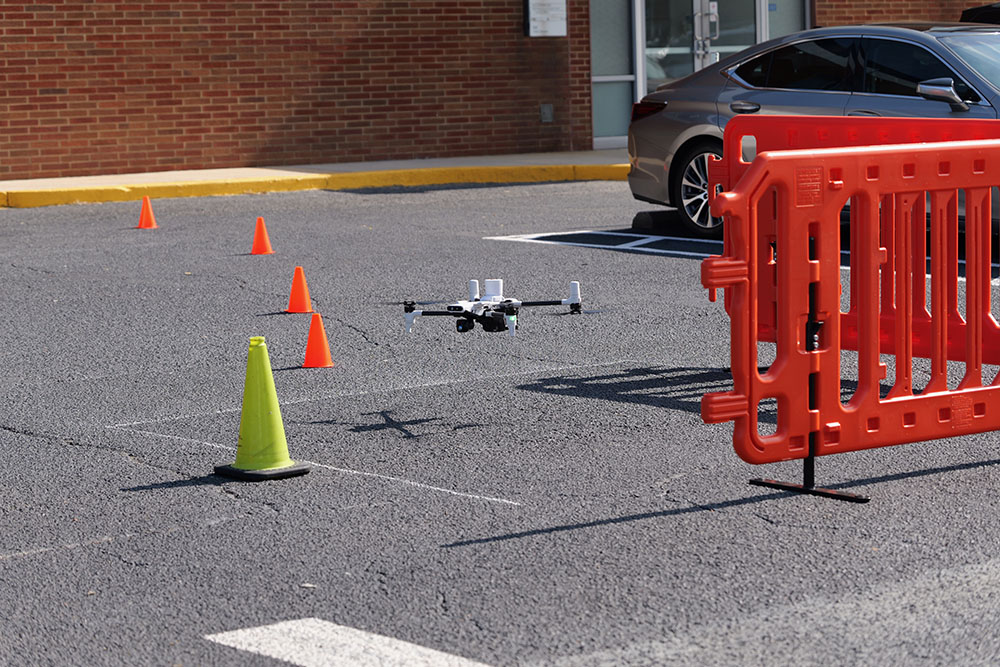
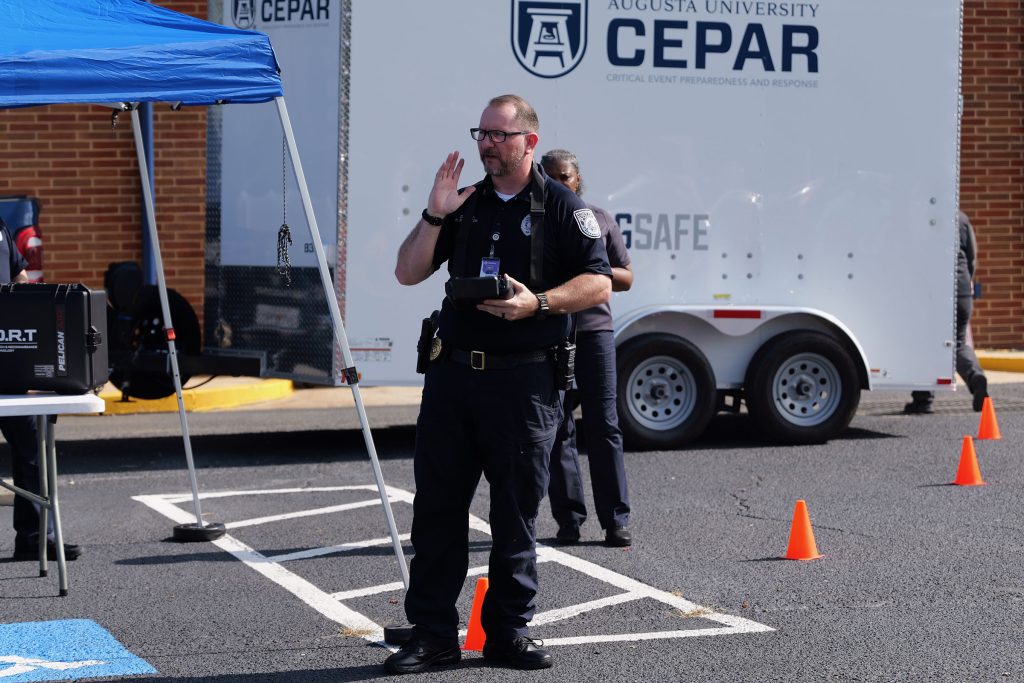
Augusta University Police Department Captain Paul Sharpton, who serves as AUPD’s captain of special operations and community engagement, stands underneath a whirring drone, controller in hand. He explains to the crowd the features on this Brinc responder drone, which include sirens, cameras, a voice amplifier, thermal imaging and the ability to reach roughly 45 mph at top speed in the air.
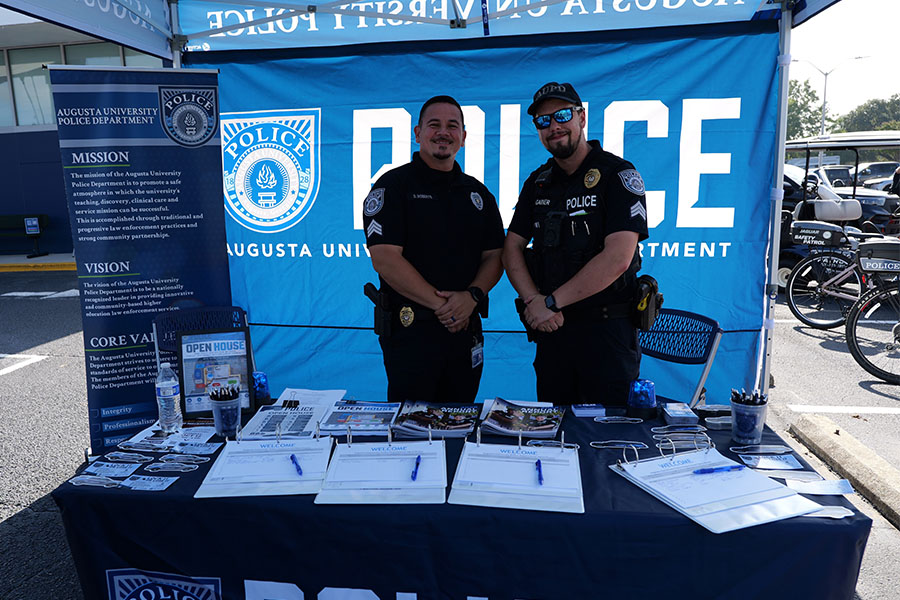
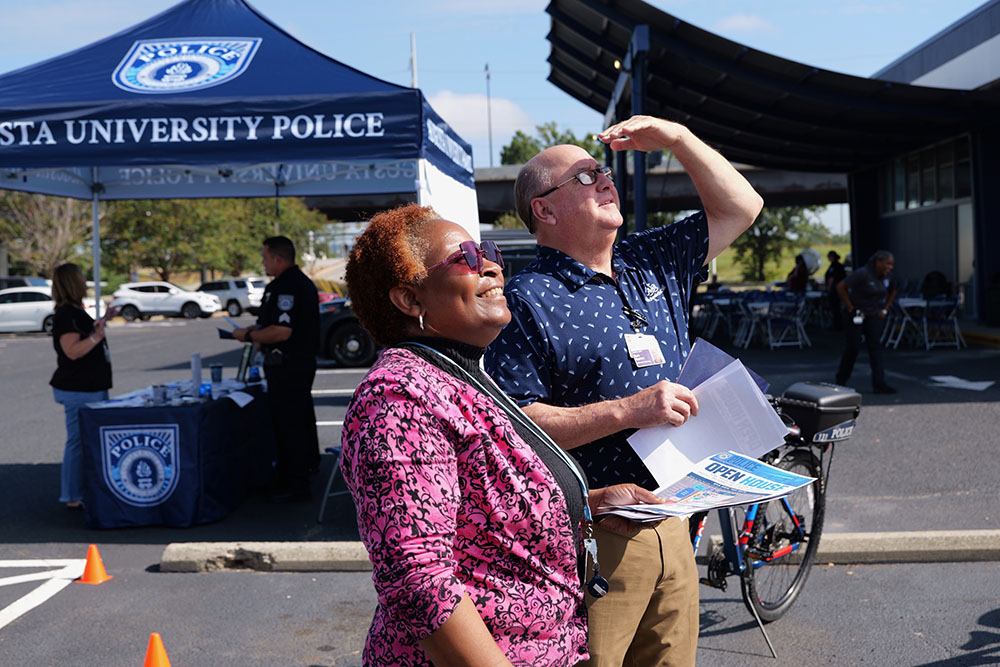
This was just one of several educational stations at AUPD’s open house on Oct. 2, where campus safety was the focus.
AUPD invited the community to witness first-hand what recent grant money – including a sizable portion obtained via congressionally-directed spending – has gone toward keeping Augusta University students, faculty, staff and visitors safe. Participants had the opportunity to speak with AUPD officers, learn more about what these investments mean to the community via a guided tour and even grab a free hot dog or two with officers at the end of the simulations.
“Students can’t learn and grow unless they feel safe on campus. I’m glad to see Augusta University is putting federal dollars to good use and prioritizing student safety. I’m proud to have secured this funding and look forward to continuing to support the safety of Georgia students.”
U.S. Sen. Raphael Warnock, D-Georgia
The main funding source for these enhancements – a Department of Justice COPS (Community Oriented Policing Services) grant worth $2.67 million – was championed by U.S. Sen. Raphael Warnock (D-Georgia). On informational sheets handed out to participants were new totals of technological capacities and equipment tallies that have been improved through both new grant money and university investments:
- 211 surveillance cameras
- 65 emergency blue phones (university funds)
- 40 body worn cameras
- 25 automatic electronic defibrillators
- 23 license plate readers
- 20 portable radios
- 19 in-car radios
- 17 mobile data terminals
- 4 real-time information center (RTIC) consoles
- 3 Avtec radio stations
- 1 portable command center
- 1 Brinc responder drone (university funds)
Leading the open house was AUPD Assistant Vice President and Chief James Lyon, who wanted to give community members the chance to see first-hand how his officers work to keep the community safe and how these new investments assist them in their mission.

“The open house is really a culmination of several years’ worth of work. We received a $2.67 million COPS technology grant from the Department of Justice. Senator Warnock really helped us get that grant, and we’ve been able to do a lot of different things to help improve campus safety across Augusta University’s campuses,” Lyon said. “But also, we wanted to make sure that we provided our community the ability to come in and engage with us, to be able to showcase all the things that we’ve been able to accomplish to keep our university community safe.”
“Students can’t learn and grow unless they feel safe on campus. I’m glad to see Augusta University is putting federal dollars to good use and prioritizing student safety,” Warnock said in a statement. “I’m proud to have secured this funding and look forward to continuing to support the safety of Georgia students.”
Among the stations that visitors went through at the open house were:
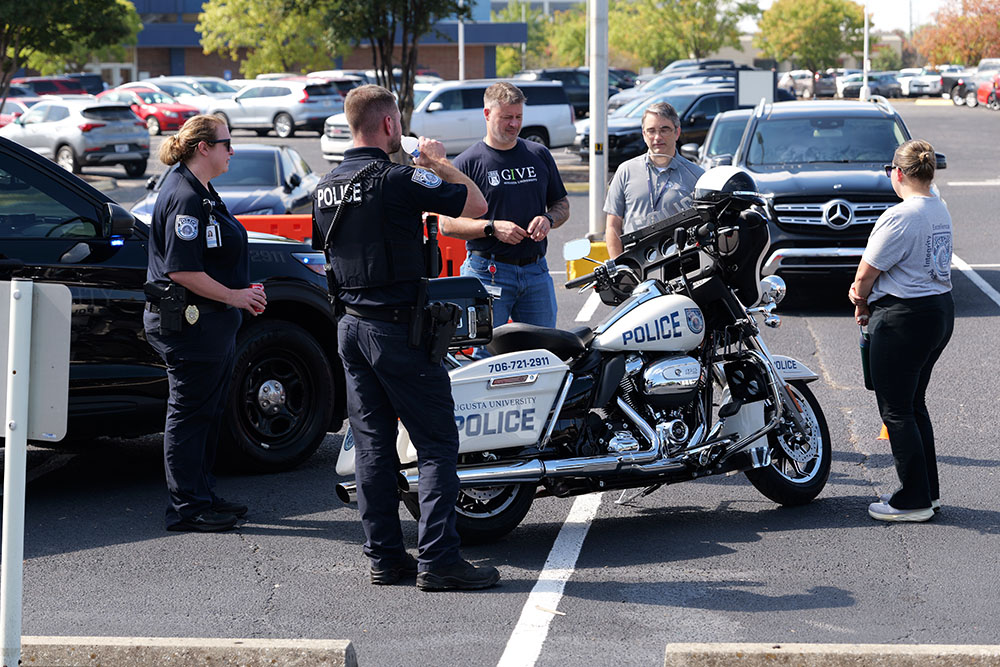
- A patrol operations station, where community members could witness a day in the life for an AUPD officer. On display were patrol vehicles and equipment demonstrations, such as officers’ emergency response gear;
- A guided tour of RTIC used by AUPD, the central technology and communications hub behind many campus safety measures;
- The aforementioned demonstration of the new Brinc responder drone;
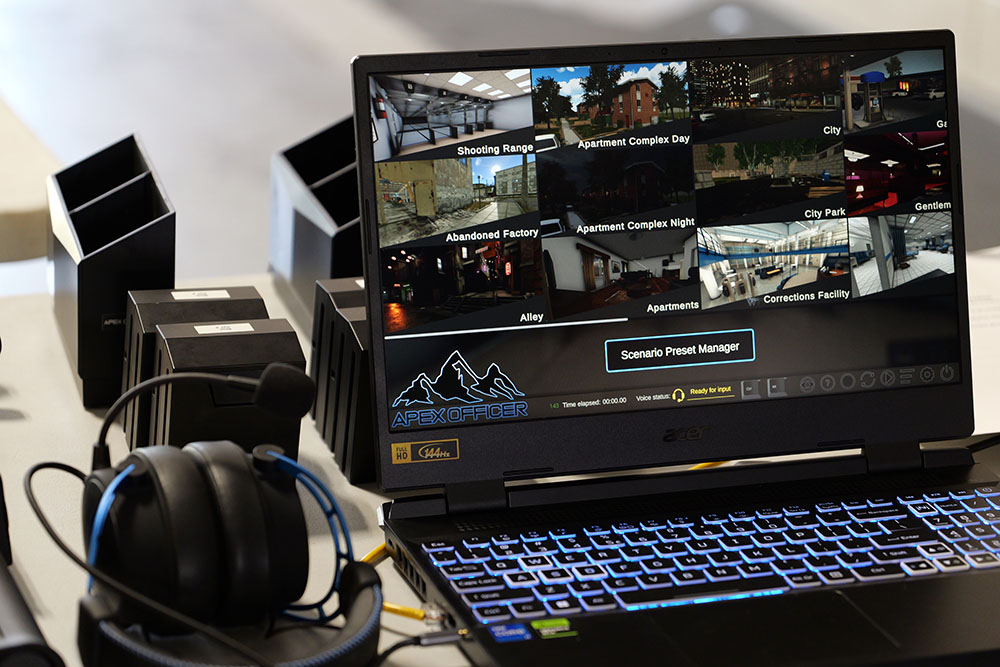
- A virtual reality training simulator used by AUPD officers that showed visitors how officers deal with de-escalation, crisis intervention, decision-making under stress and active threat training;
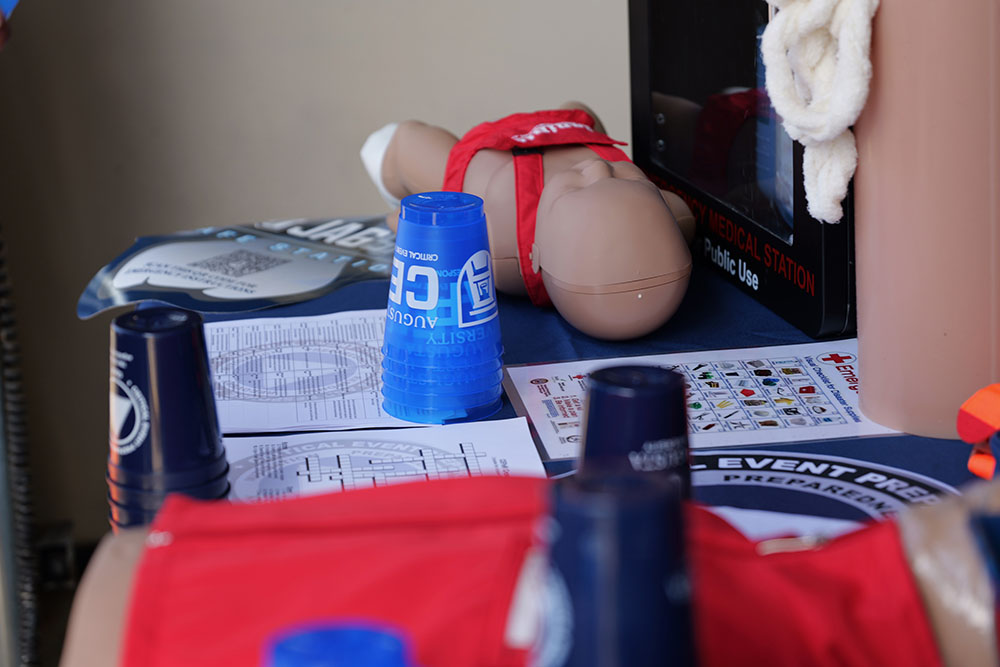
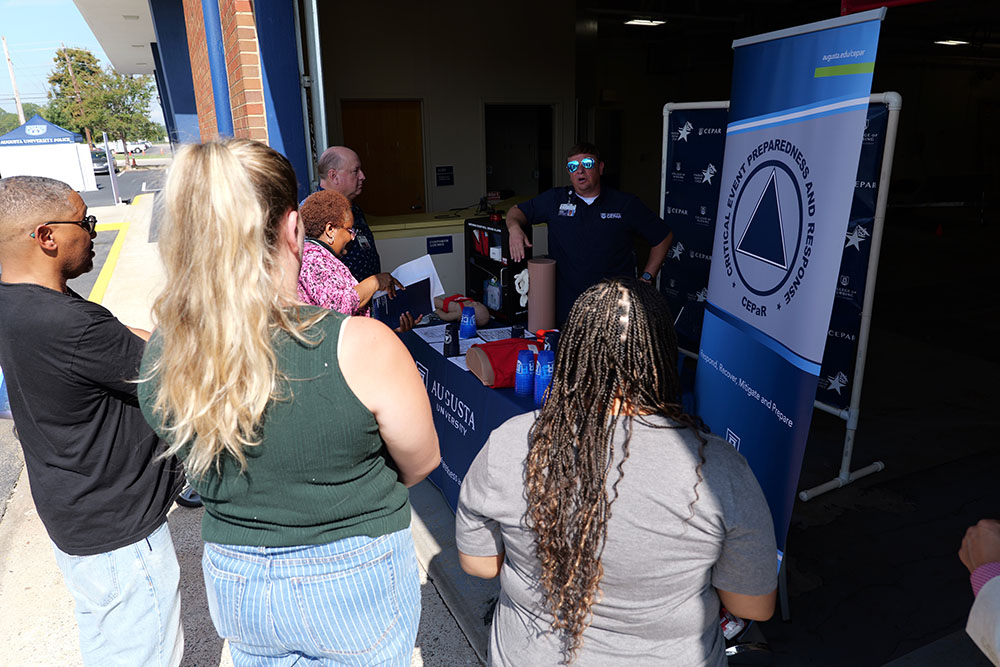
- An informational display and discussion by Augusta University’s Office of Critical Event Preparedness and Response (CEPaR) that educated visitors on emergency preparedness and resources available through CEPaR, which included details on severe weather and active threats, among others.
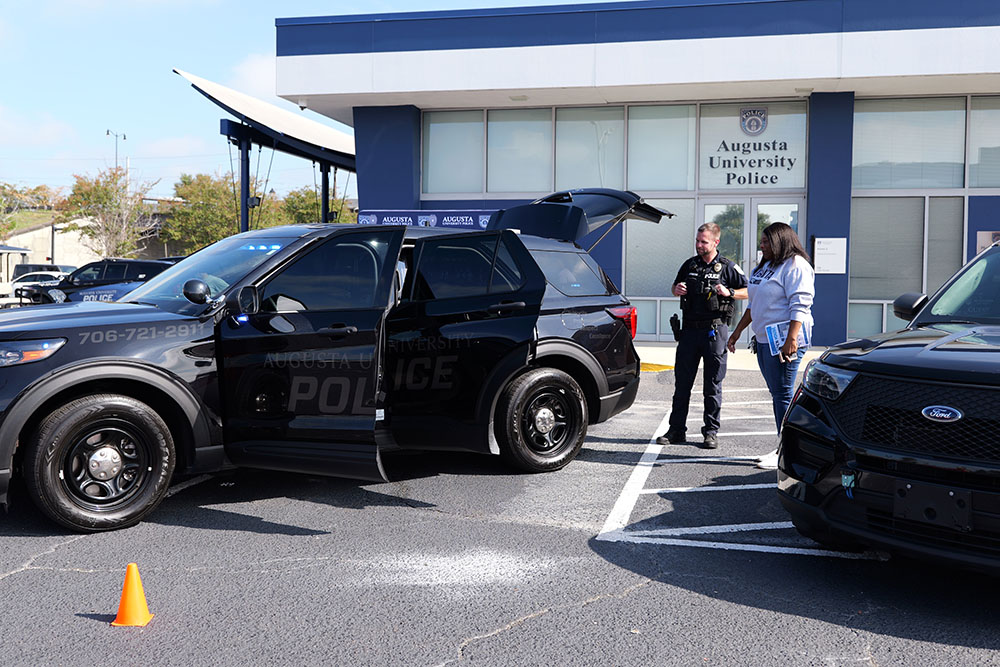
Among the most important enhancements achieved through the grant funding, according to Lyon, was the addition of RTIC.
“We had the idea that we wanted to build a real-time crime center, real-time information center. And so that’s really the hub of all the information that comes into our university police department,” Lyon said. “But, we needed funding to be able to provide those technologies. The grant helped us fund license plate readers, it helped us fund cameras across all of our campuses, it helped us fund the information to be able to talk to each other.”
Lyon said, for instance, in the event of an incident, AUPD’s response can immediately begin with information gathering via cameras that have been newly integrated into campus access control systems.
“If somebody calls our dispatch center, our real-time information center, to say, ‘Hey, there’s something happening over here in this part of the campus,’ we then have the ability to be able to train our cameras, our access control, to be able to respond effectively to that to give information to our officers in real time. It provides a whole lot better situational awareness,” Lyon said. “All of that information talks to each other. It’s a real significant investment in safety and security of our campus.”
The Brinc responder drone was a big hit with open house visitors, with Sharpton giving multiple demonstrations throughout the day. The DFR-capable aircraft – which stands for Drone First Responder – can fly autonomously at the push of a button, but AUPD still uses manual pilots. The aircraft can be dispatched to a report of an incident much quicker than a police officer can, and its cameras and communication abilities give AUPD the ability to remotely assess (or deter) situations from a safe altitude before an officer can arrive on the scene.
But Sharpton also explained an important scenario on a campus like Augusta University, which has several large medical facilities.
“One of the big things that that we outlined in our proposal was the Wellstar hospital,” Sharpton said. “We have a lot of eloped patients. This could be Alzheimer’s patients, it could be children, it could be persons suffering from a mental health crisis that have eloped the hospital and they could be a danger to themselves or others. Using a drone to cover more ground quickly helps us locate those people and is a little faster and safer than traditional patrols and trying to drive a patrol car or bicycle through the campus and navigate all this traffic in the middle of the day.”
For Lyon and Sharpton, new technologies like this aren’t superficial, they keep Augusta University current with law enforcement methods.
“As years go by and technology changes and times change, this shows we’re committed to staying modern, that we’re committed to using best practices,” Sharpton said. “Everything that we’ve purchased or acquired or been afforded to have, a lot of research goes into those products. We don’t just buy a police product because it looks cool, or some guy gave us a great deal on it. We put a lot of research on what is our community’s needs, and what can we purchase to benefit the campus and benefit the patrol officers and their ability to be able to be better at their job?”
“We talk about making sure that Augusta University is a safe campus, and it is. Our crime statistics prove that,” Lyon said. “But part of that is the perception, and so hopefully this open house will help with the perception of Augusta University being a safe campus. All these things, all these efforts that we do behind the scenes, I don’t think anybody sees, anybody knows about. That’s the purpose of the open house, is to be able to showcase those things and show everybody in our university community that these are the things that’s happening behind the scenes to help keep Augusta University a safe place to learn, work and grow.”

 Aaron Smith
 Valerie Emerick
 Jennifer Hilliard Scott
 Jamison Guice