 Augusta University

 Hannah Litteer
A new five-year, $3.3 million grant from the National Institute of Diabetes and Digestive and Kidney Diseases and the National Institute on Minority Health and Health Disparities will support researchers from Augusta University’s School of Public Health and the University of Kentucky as they work to improve access to diabetes self-management education services for people living with type 2 diabetes in rural communities.
Co-led by Aaron Kruse-Diehr, PhD, chair of SPH’s Department of Community and Behavioral Health Sciences and Beth Lacy, PhD, an associate professor of epidemiology at the University of Kentucky, the study will build on the success of a previous NIH-funded project.
The new project will be completed in partnership with four healthcare systems and 20 primary care clinics across eastern Kentucky to increase referrals to Diabetes Self-Management Education and Support, or DSMES, programs. These evidence-based services help people with diabetes better manage their condition through education, lifestyle guidance and support.
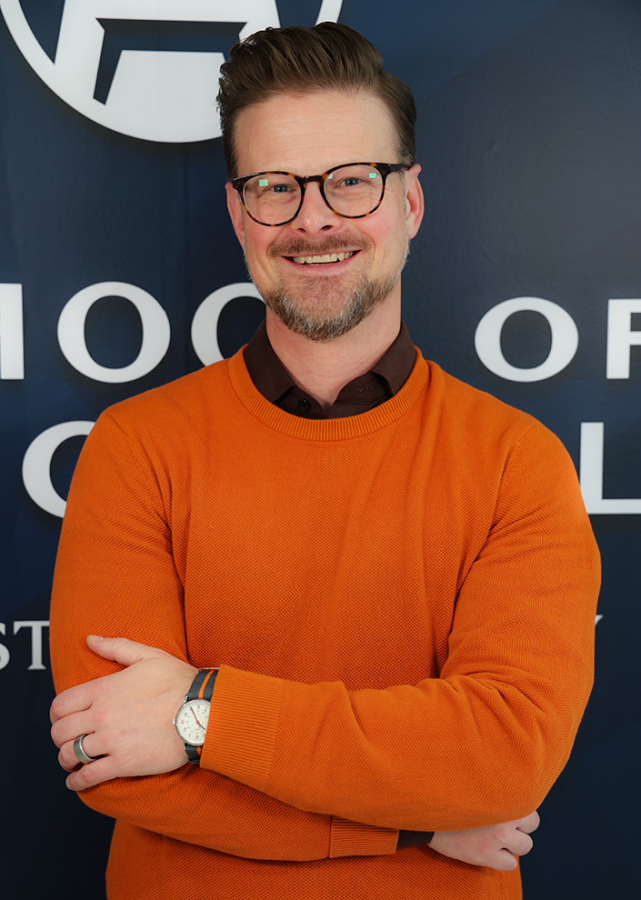
“DSMES has a wide base of evidence showing it’s inexpensive and effective at helping patients both in terms of lowering their A1c and also improving various other health outcomes associated with diabetes,” Kruse-Diehr said.
Despite its proven effectiveness, many eligible patients are never referred to these services. Kruse-Diehr said this can be due to barriers like limited provider awareness of DSMES programs or uncertainty about its effectiveness, the referral process and whether insurance is needed.
“Luckily, in Kentucky, DSMES is available for free through the local health department for anybody in all counties,” he said. “So, this is a great example of taking this evidence-based intervention that has years of evidence showing that it’s effective but underutilized because of barriers in clinical practice and addressing those barriers through this grant.”
Over the next five years, the research team will work alongside participating clinics through learning collaboratives and virtual sessions where healthcare providers can share their experiences and challenges and develop strategies for improving referral pathways.
The project also incorporates implementation science methods, which aim to close the gap between scientific discoveries and patient care. This will include a rollout implementation optimization (ROIO) trial design that will allow researchers to refine intervention strategies before conducting a larger randomized trial with participating clinics.
The project will then test bundles of those implementation strategies designed to increase DSMES referrals and ultimately improve patient outcomes.
“Traditional effectiveness research looks at whether a program or intervention works. Implementation science looks at how to make things work in different real-world settings,” Kruse-Diehr explained.
In a widely cited 2000 study co-authored by E. Andrew Balas, MD, PhD, a professor in the Department of Health Management, Economics, and Policy at SPH, research showed that it takes an average of 17 years for new evidence-based findings to be implemented in clinical settings. This project will work to shorten that timeline by identifying practical ways to help primary care clinics connect more patients with resources that already exist.
Because the study focuses on rural health systems, researchers hope the lessons learned in Kentucky can eventually be adapted for use in other underserved communities across the country, including rural areas in Georgia.

“There’s a rising prevalence of diabetes in society,” Kruse-Diehr said. “From a public health standpoint, it’s important to address that before people start to develop complex conditions that cost a whole lot more to manage.”
Teresa Waters, PhD, dean of SPH, is also involved in the project, and as a health economist, she will lead analyses examining the costs and value of different implementation approaches.
“This is an exciting opportunity, and I’m delighted to be part of this talented team. My work will focus on understanding the financial side of the project. We know that DSMES works well and is worth the investment, but we don’t yet know which methods are the most efficient and affordable, making the services available to more people,” she said.
For Kruse-Diehr, who has type 1 diabetes himself, the project carries both professional and personal significance.
“There is an importance and a need to train clinicians in what they can do to help their patients have better outcomes with their diabetes, whether that means providers learning more about how to treat the condition or learning about the resources that exist within their community at low or no cost to their patients,” he said.


 Haley Crain
 Staff

 Erin Weeks

 Aaron Smith