 Augusta University
 Milledge Austin
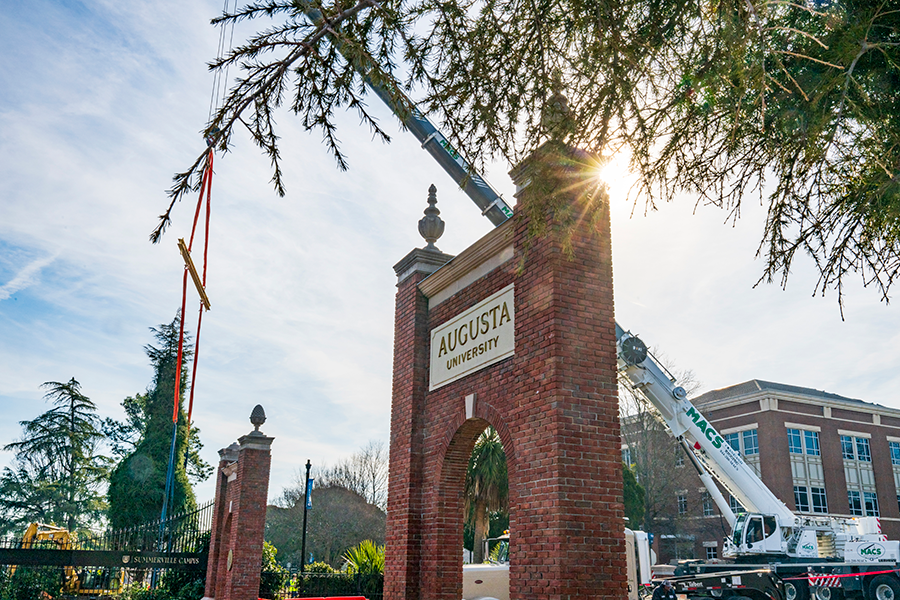
The entrance to Augusta University’s historic Summerville Campus has long been marked by a few defining features: the brick archway framing the Russell A. Blanchard Fountain, the black wrought-iron fence along Walton Way and, for decades, a pair of towering deodar cedars on either side of the drive welcoming visitors.
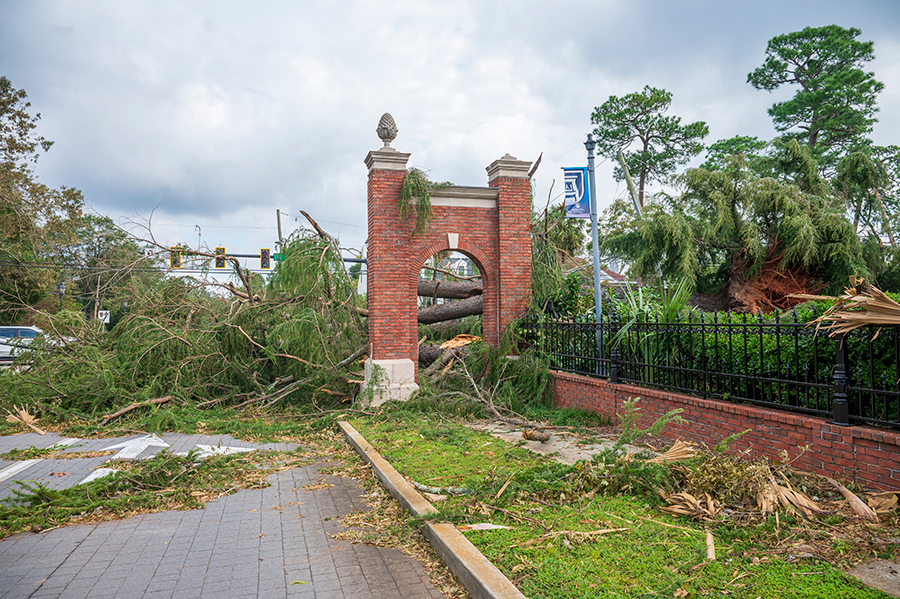
That changed on the morning of Sept. 27, 2024, when Hurricane Helene tore through the CSRA and up into Western North Carolina, leaving in its wake a swath of destruction that will likely be visible for years to come.
With sustained winds of at least 80 mph – and gusts reaching 100 mph in some areas – along with significant rain fall of around 12 inches making the ground over saturated, approximately 75% of the tree canopy in the CSRA was lost. That included a large number of trees across Augusta University’s campuses.
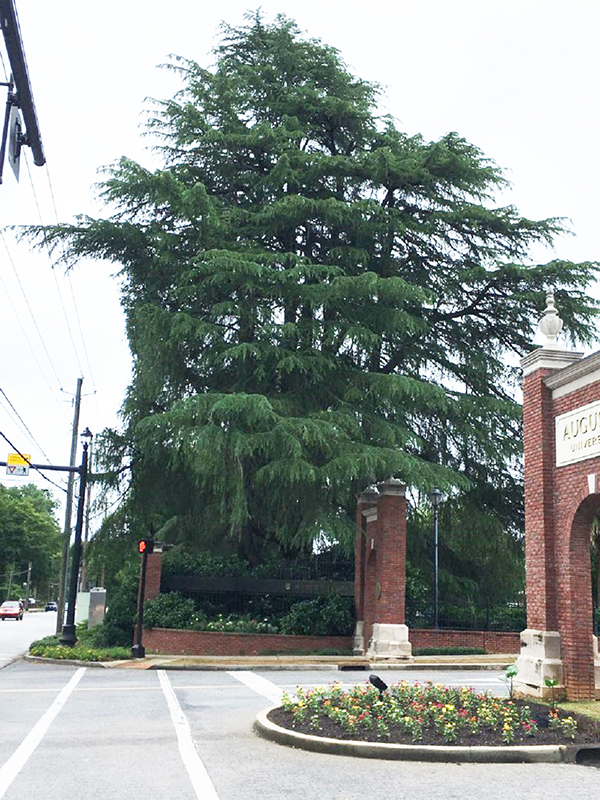
In the wake of the storm, the cedar on the west side of the entrance, which was known as the Champion Deodar Cedar for being approximately 250 years old and the largest in the state, fell and had to be fully removed, leaving a large hole in the landscaping, in the wrought-iron fence and in the spirit of the campus.
Nearly a year later, that space has finally been restored.
On Feb. 10, two mature deodar cedars were planted, completing a project that required months of planning, coordination and care.
“Helene tested our campus and our community in ways we could never have imagined,” said AU President Russell T. Keen. “Restoring these signature cedars on our Summerville Campus is more than a landscaping milestone. It is a powerful reminder of the resilience, strength and spirit that define Augusta University and those we serve, and the power of community. We are deeply grateful to the Sand Hills Garden Club and the Community Foundation for the CSRA for their generous support and partnership.”
A university and community priority
Trees have long been central to the Summerville identity, from the historic Arsenal Oak – featured on the university seal – to the stately canopy found in the grove that gives the campus its distinctive feel.
The effort to replace the signature cedar, as well as a pecan tree that was located in front of the Grover C. Maxwell Performing Arts Theatre that also fell during the storm, was driven by campus leaders with support from local groups, including the Sand Hills Garden Club and the Hurricane Helene Community Crisis Fund at the Community Foundation for the CSRA, said Anna Lacey, Augusta University’s director of Landscaping and Grounds. Lacey joined AU in the spring of 2025 and restoring the campus landscape was a top priority.
“When I arrived, replacing as many trees as possible was near the top of my list,” she said. “Partnerships with the Sand Hills Garden Club and the Community Foundation for the CSRA helped ensure these signature cedars were at the very top.”
“Upon learning that the Augusta University campus lost so many trees, the Sand Hills Garden Club was inspired by the University’s comprehensive Tree-Care Plan and its long-term commitment to preserving and enhancing the campus landscape,” said Cathy Dolan, president of the Sand Hills Garden Club. “This initiative reflects the Sand Hills Garden Club’s enduring commitment to stewardship, sustainability and the preservation of the natural beauty that enriches our community.”
Finding the right trees
Lacey knew the replacements needed to match both the scale and presence of the originals. She knew just who to reach out to: Jeff Covell, owner of More Than Trees, whom she had worked with on previous projects.
Selecting the right trees meant searching beyond Georgia. Covell maintains a nationwide network of contacts and locations, often identifying potential trees years before they are needed.
“We travel all over the country,” Covell said. “We’re always looking at trees that are getting on the larger side. That’s what we specialize in.”
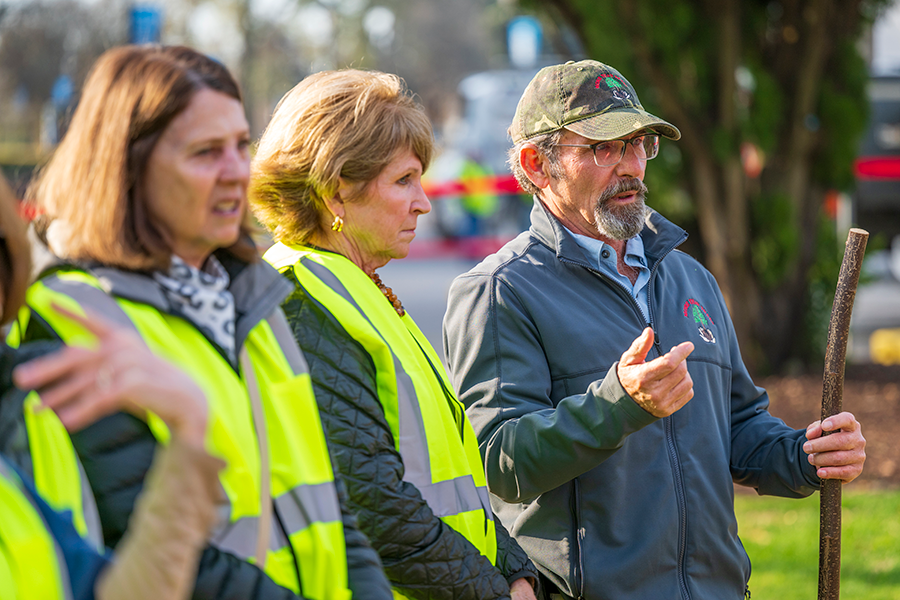
The search led to a grove in North Carolina. After a site visit, Lacey selected two trees about 26 years old and standing approximately 40 feet tall.
“We wanted to make sure we had a central leader tree, full to the base and even all the way around,” she said. “Once I saw them in person, I knew they were the right trees.”
A careful and scientific process
Moving trees of that size is complex. Each weighs tens of thousands of pounds and must be removed and replanted with minimal disruption to the root system.
“The bulk of the dirt is removed with an excavator, but everything about shaping the root ball is carved by hand,” Covell said. “There’s no shortcut to success.”
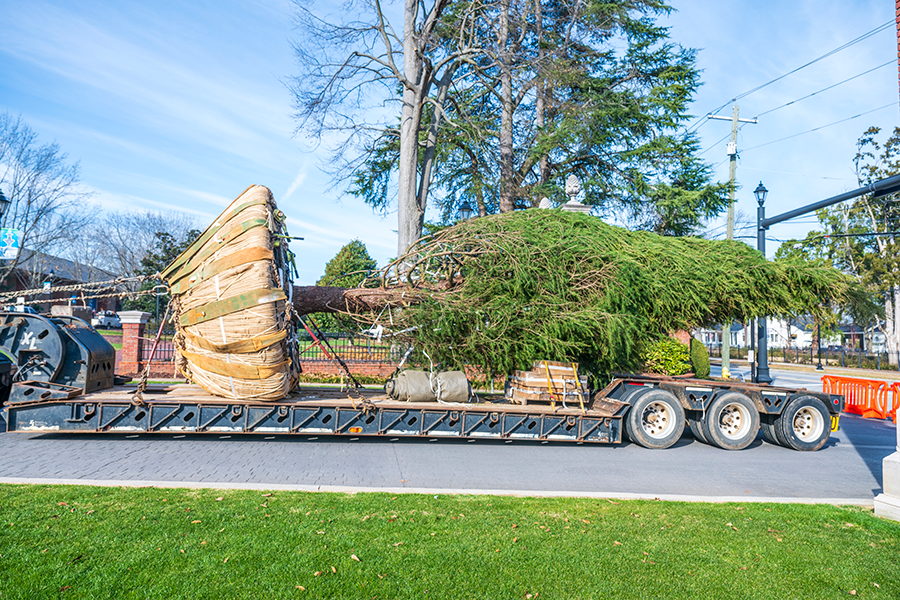
Covell’s crew ties every limb, shape the root ball in stages and compress and wrap the soil repeatedly to preserve structure during transport.
“When you’re moving something that weighs around 45,000 pounds, physics matters,” he said. “Hard, compacted clay is our best friend. It binds the soil and holds the root ball together.”
That level of detail, he said, comes from decades of experience and constant learning.
“Some of what we’ve learned, you won’t read in any book,” Covell said. “It comes from experience and paying attention to what the soil and the trees are telling you.”
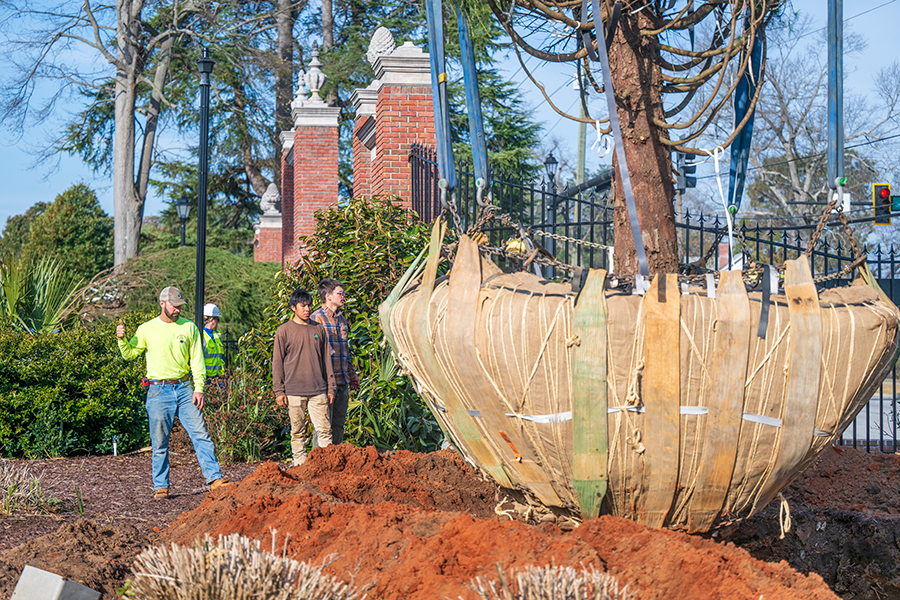
He said the work is as much science as it is craftsmanship.
“I’m up at four in the morning reading soil books, chemistry, plant physiology – anything to answer why something worked or didn’t,” he said. “A lot of people think it’s just irrigation or a warranty. But do you understand the connection between the plant and the soil? The plant is the factory. Are you giving it what it needs to complete the life cycle?”
Covell’s experience spans decades and has taken him across the country, including work for high-profile clients such as Steven Spielberg, Whitney Houston and Carl Icahn. But he said the focus is always on the next tree.
“I’m only as good as the next tree I move,” he said. “That’s what I teach my guys – be great one tree at a time.”
Timing, logistics and weather
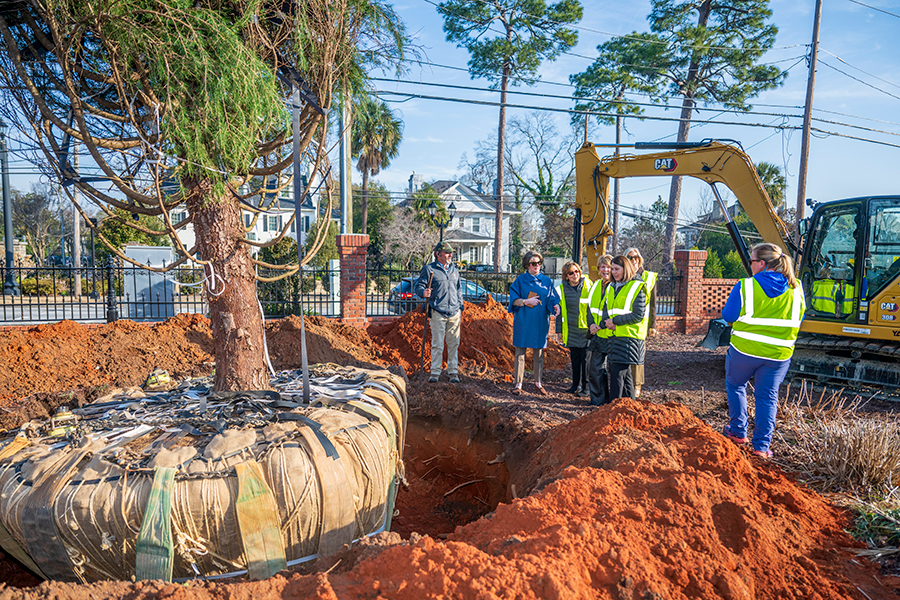
Planning for the new trees required coordination across multiple teams. Holes had to be dug in advance while avoiding underground utilities. Traffic patterns and JagExpress Shuttle routes were rerouted, and the campus entrance temporarily closed.
The biggest challenge, however, was the weather.
Winter storms and freezing temperatures in the Carolinas delayed digging and added pressure to an already narrow timeline.
“It’s a fluid process,” Lacey said. “There’s a lot of quiet pressure behind it because you want everything to go right, but nature is unpredictable.”
A seamless finish
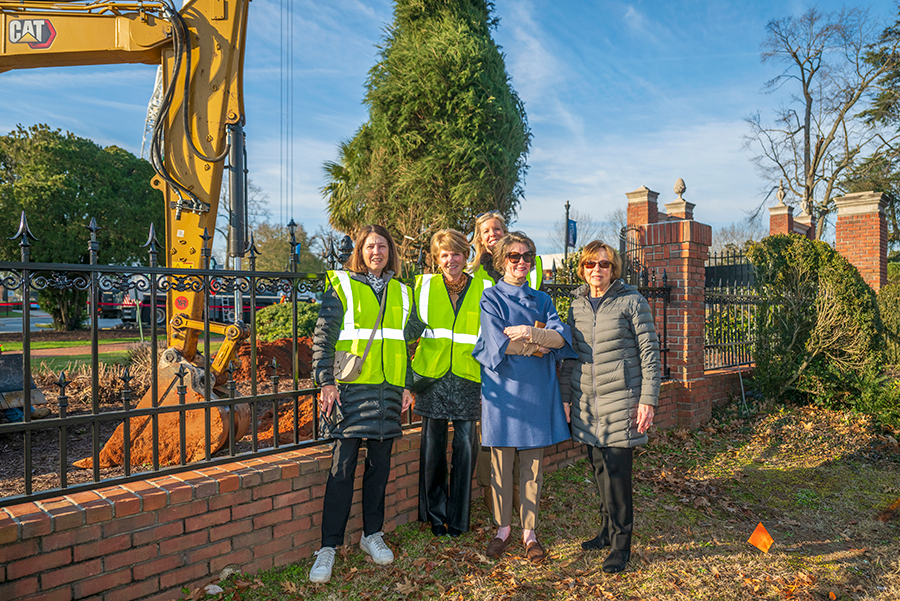
Despite the obstacles, the trees arrived on schedule. A crane carefully lifted each into place – first the cedar next to the entrance followed by the tree in front of the Maxwell Theatre – and the work was completed in a single day. Members of the Sand Hills Garden Club and leaders from across the university were on hand to watch the momentous occasion.
By the next morning, the transformation was complete.
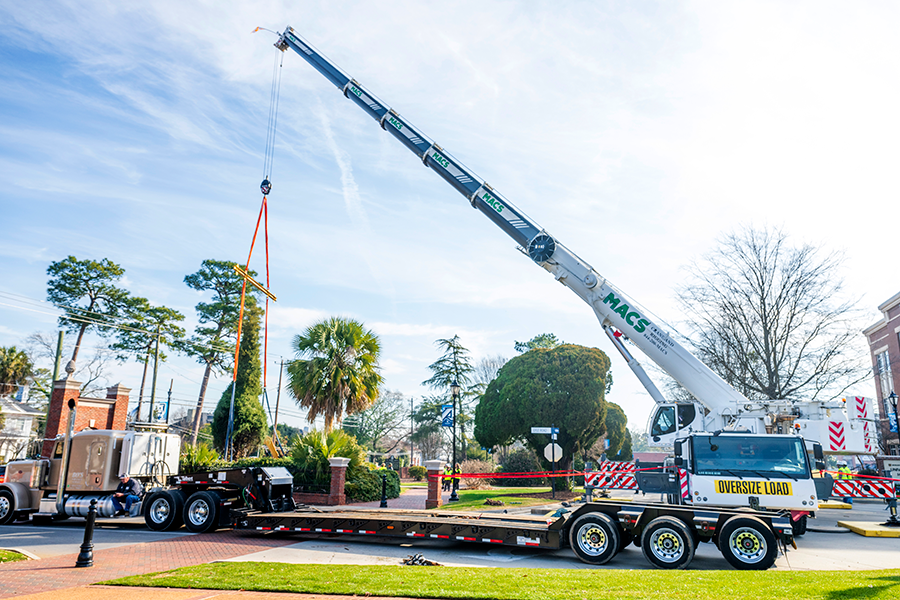
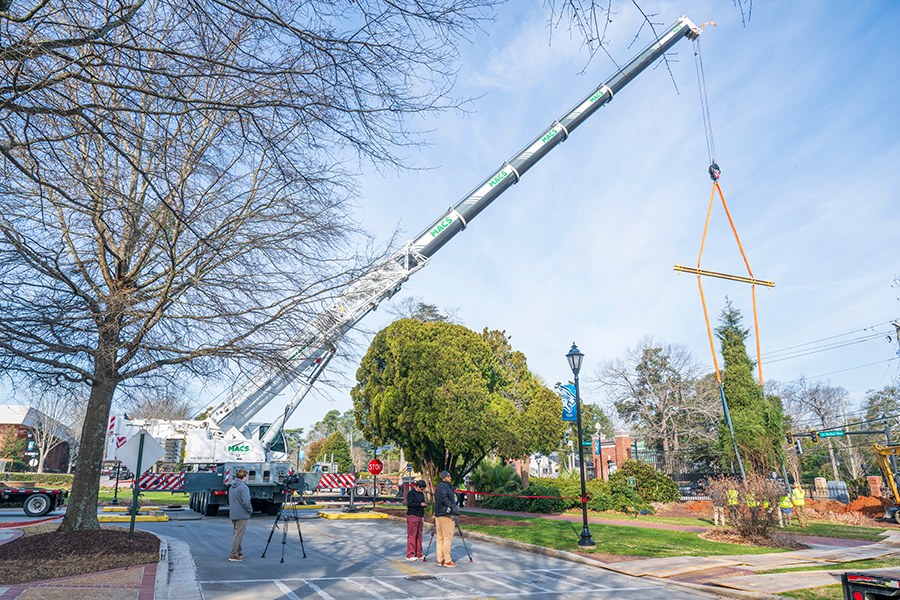
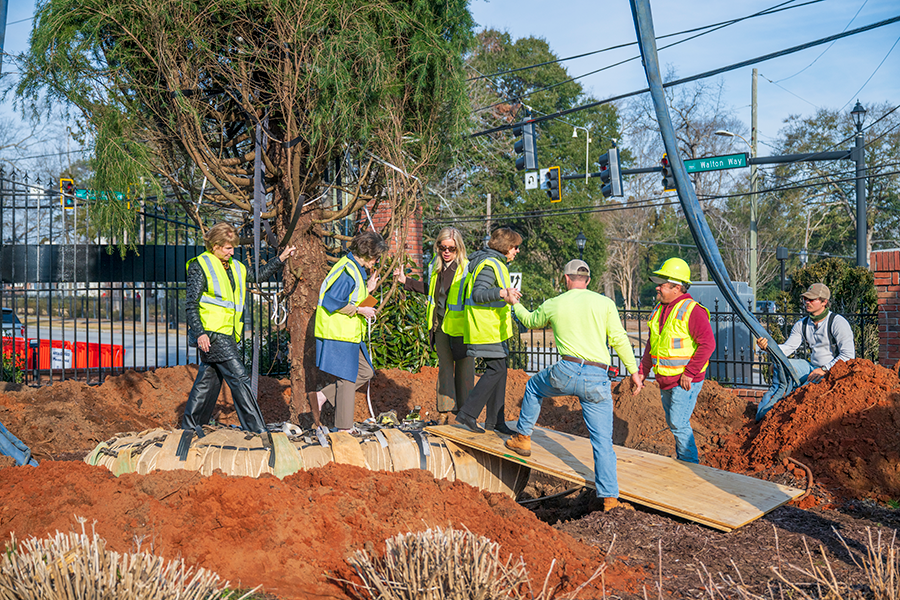
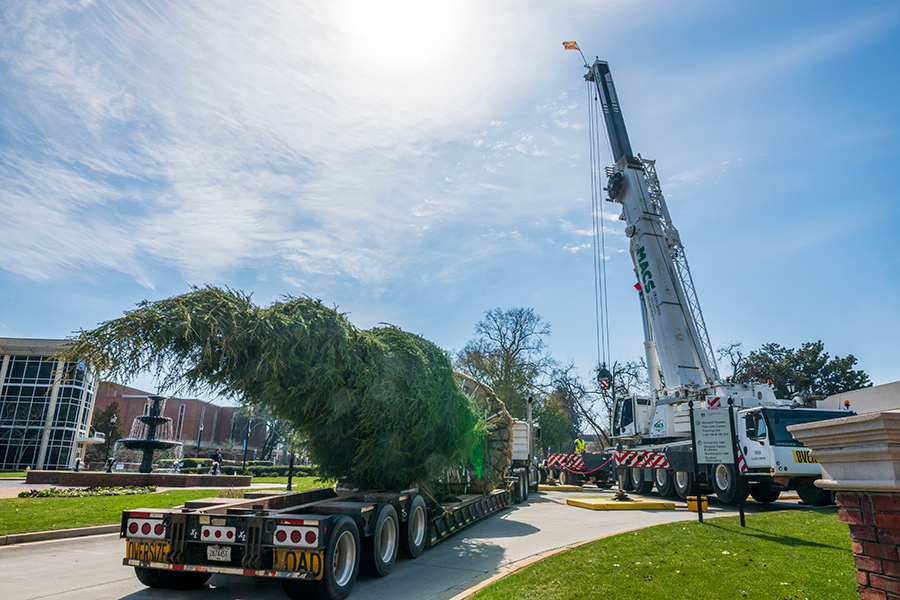
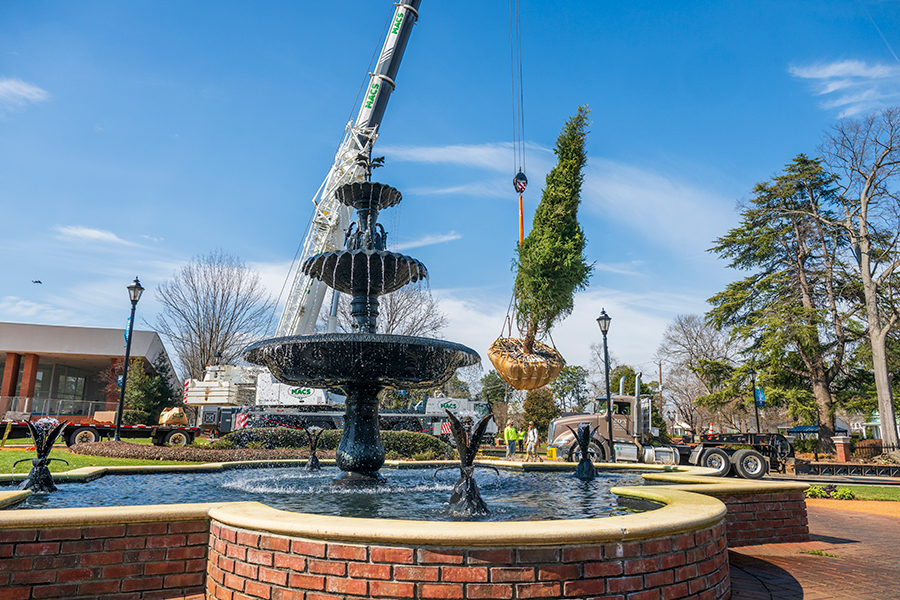
Already, the new cedars appear as though they have always stood at the campus entrance. Grounds crews will continue monitoring their health, with ongoing guidance from Covell to ensure the trees establish strong root systems.
For Lacey, the project has been both challenging and rewarding.
“The enthusiasm and excitement behind this process is higher than anything I’ve experienced,” she said. “The passion people have for this campus is contagious.”
If all goes as planned, the trees will continue to be a focal point of the Summerville Campus, welcoming visitors to campus for years to come and continuing a tradition deeply rooted in Augusta University’s history.
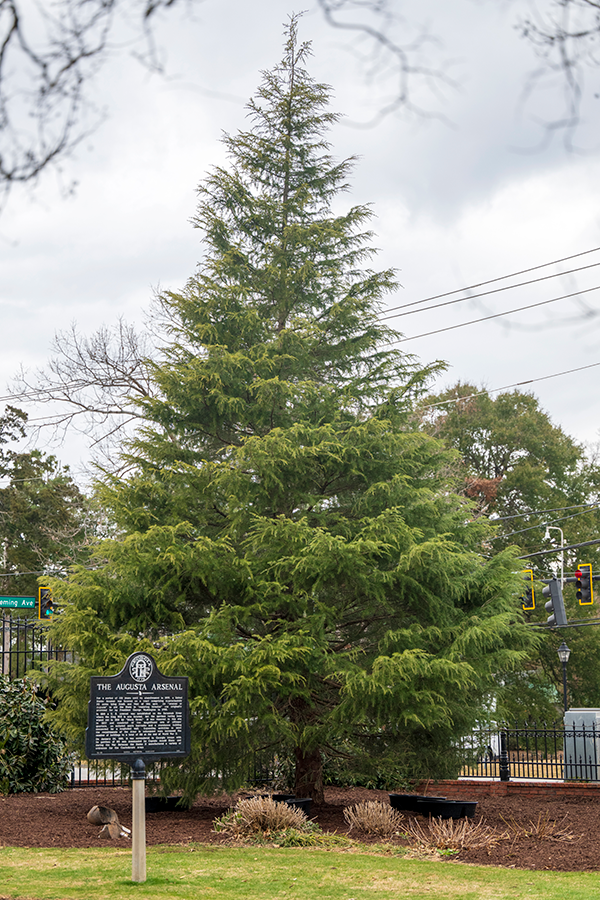
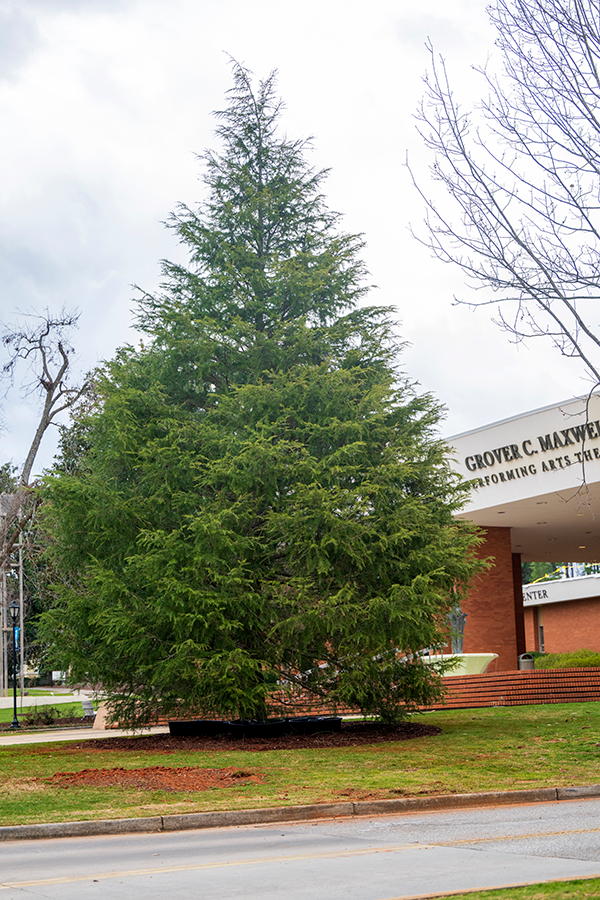
A dedication ceremony celebrating the successful planting of the trees and those who made it all possible will be held at 11 a.m. on Tuesday, March 10, next to the signature cedar just inside the main entrance to the Summerville Campus, beside the History Walk.
If you are interested in supporting Augusta University’s efforts to replace and maintain the beautiful trees on AU’s campuses, you can donate online to the AU Tree Fund or by emailing the Philanthropy and Alumni Engagement office.

 Jamison Guice

 Hannah Litteer
 Paige Tucker