Augusta University
 Hannah Litteer
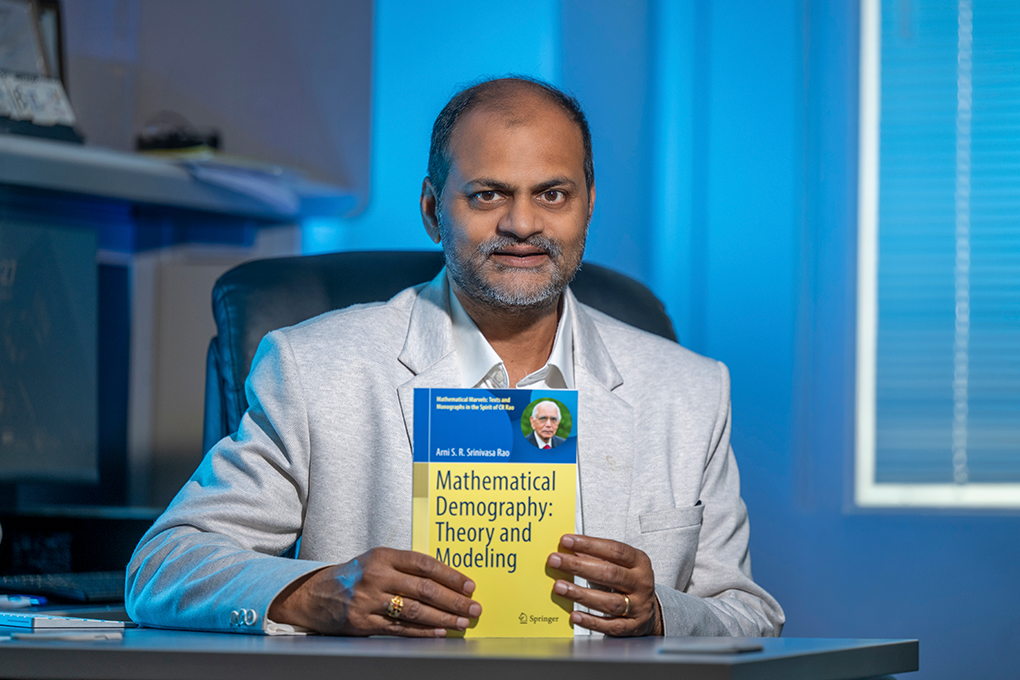
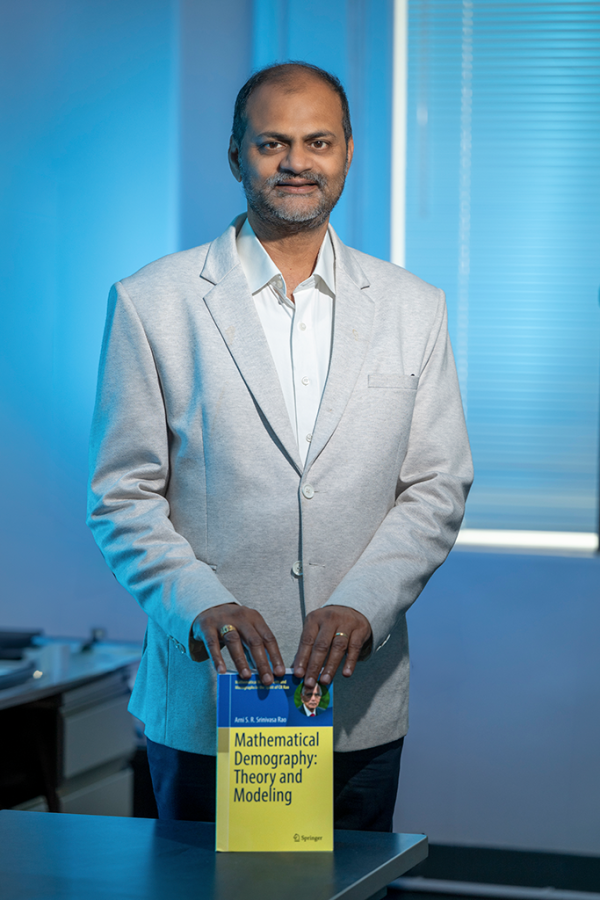
A new textbook written by Arni S.R. Srinivasa Rao, PhD, titled, Mathematical Demography: Theory and Modeling, acts as a comprehensive guide to the principles and applications of modern and classical mathematical demography and its foundational equations and theories.
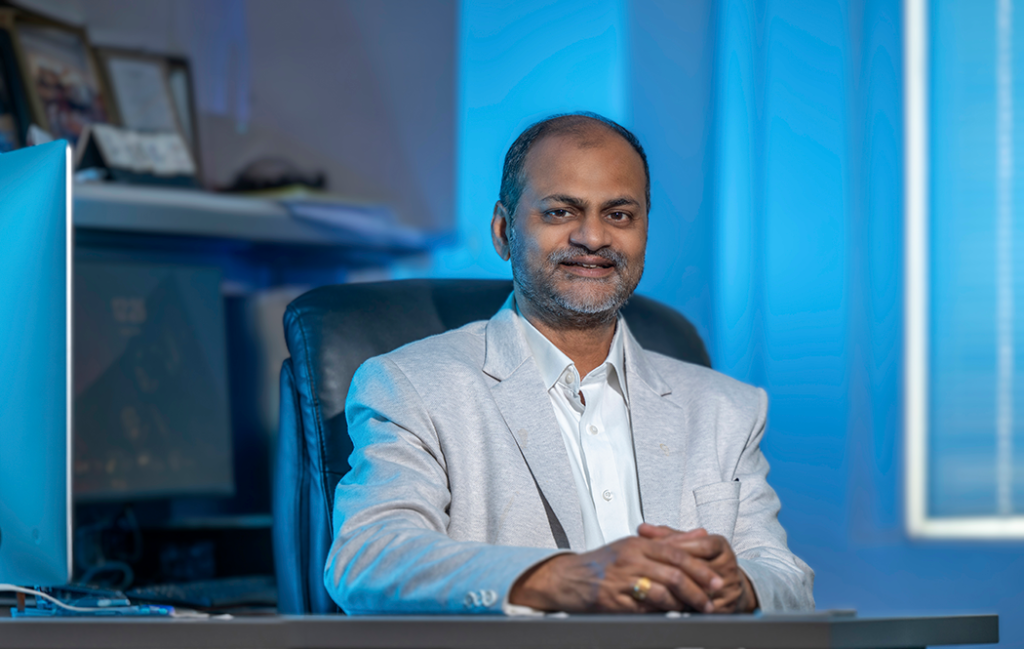
“This textbook emerged from various subjects within the mathematical sciences. Essentially, what I have been teaching here for the last 14 years at MCG,” said Rao, a professor and director of the Laboratory for Theory and Mathematical Modeling in the Division of Infectious Diseases at the Medical College of Georgia at Augusta University.
It was while he was teaching that he realized his students needed more resources.
“We have been teaching these things within MCG and other colleges on campus, and I found that the students get attracted more and more to this topic, but there is no unified book. So that actually inspired me to write a textbook exclusively for them.”
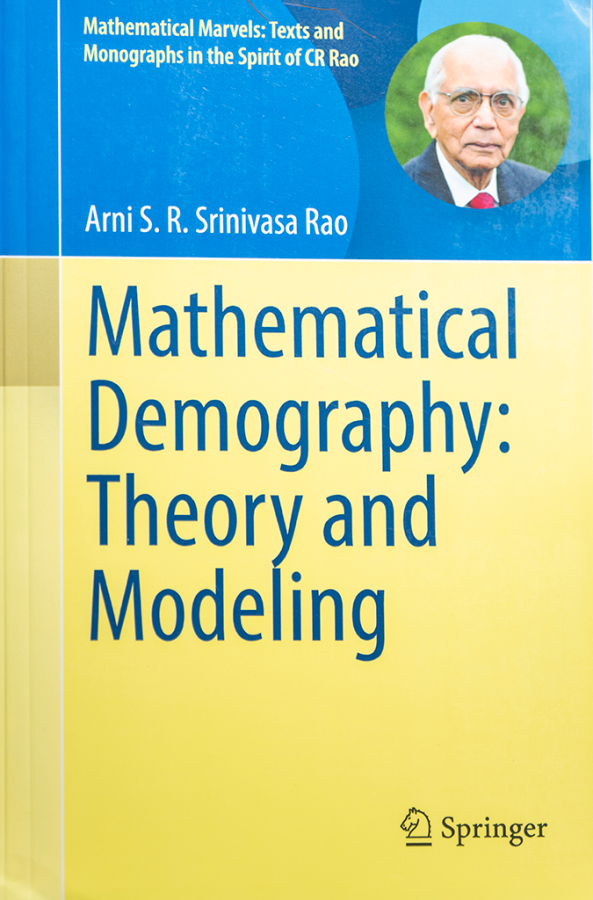
The 180-page textbook is currently available in paperback and e-book formats, and it contains eight chapters that cover subtopics ranging from early population integral equations to different types of models, life table explanations, stochastic theory and measures of population stability.
“It also contains example problems and exercises. Some are difficult exercises and some are very easy, so it caters to various students from beginners to advanced students who want to go deeper,” Rao explained.
In the book, Rao also dives into the differences between the two branches of mathematical modeling: stochastic and deterministic. Deterministic modeling gives exact, fixed outputs when given the same input each time. Stochastic modeling incorporates randomness and probability variables to predict outcomes, which most closely resembles real-world scenarios.
“There are very few textbooks that combine these two different principles, and this book caters to both of them,” Rao said.
On top of teaching mathematical modeling, Rao also serves as a subject-matter expert for communities all over the world, providing valuable insight that governments use to help their citizens. He’s witnessed firsthand how indispensable a tool mathematical modeling is for not only analyzing demographic changes, but also tracking the spread of viruses and diseases – which was made clear during COVID-19 and various epidemics.
“During COVID, I provided a lot of time-sensitive mathematical modeling for the governor’s office in Georgia and various other places internationally and nationally. The number of hospital beds required, the number of COVID kits required, how the disease and morbidity status changes over time,” he explained. “I also proved a major theorem about 12 or 13 years ago pertaining to stationary population models in demography, and that was published in the major journals, apart from getting the worldwide attention of that particular theorem.”
He hopes that, paired with his mathematical and stochastic modeling courses, the textbook might inspire students from all disciplines to strive for similar career paths that don’t limit their skills to purely academic uses.
“I’ve taught these principals in premier places like the Indian Statistical Institute, and the difference with MCG is that I have students who are coming from medical backgrounds, and I myself work with various government agencies and NGOs to supply mathematical model-based outcomes. So, I know the pulse of the real world,” Rao said. “This book is not only for academic purposes. It can be used by both the practical users of modeling as well as academicians. That’s one advantage.”
And it’s not just a specific major or discipline that can use the tool, either. It can be applied to almost any STEM or even medical-related field.
“For example, the textbook can be helpful for ecology students, those who are trying to understand the spatial spread of certain diseases or forest fires, agricultural growth and crops, or temperature changes and how that affects population dynamics,” Rao said.
Sejong Bae, PhD, professor and chair of the Department of Biostatistics, Data Science, and Epidemiology at AU’s School of Public Health, teaches courses that intersect with Rao’s outlines of mathematical demography. Although he works in a different department of a different school within AU, he plans on promoting Rao’s textbook to his students because their fields of study are so intertwined, with Rao having previously taught courses within AU’s biostatistics curriculum.
“The textbook is particularly well suited for courses not only in mathematical demography, but also biostatistic and population modeling where students benefit from both foundational principles and exposure to contemporary developments,” Bae said. “Moreover, having a high-quality text authored in-house reflects leadership and scholarly contributions in this field from Augusta University.”
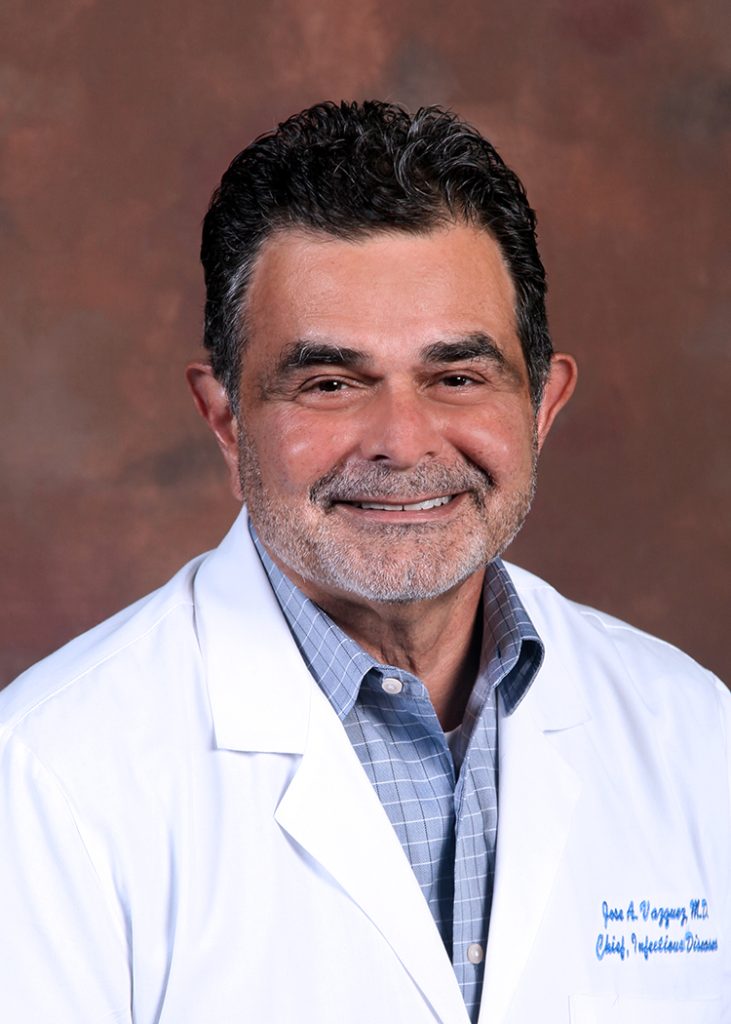
Reflecting on Rao’s nearly 15 years at MCG and his accomplishments in his early career, Jose Vazquez, MD, professor of medicine and chief of the Division of Infectious Diseases at MCG, predicts that wisdom built into his textbook will be an important resource for students near and far.
“Drawing on his extensive background in mathematics and his numerous scholarly publications in the field, Dr. Rao brings a level of expertise that will undoubtedly benefit students who engage with this book,” Vazquez said. “I am confident that this text will be adopted both nationally and internationally as a trusted tool for teaching this subject matter.”
The subject matter of the textbook will also be adopted in courses within AU’s College of Science and Mathematics.
“The writing of any book is a great achievement. This book, bringing together both deterministic and stochastic modeling techniques, will be an entry to students and investigators alike to a broad range of techniques and applications,” said Seth Oppenheimer, PhD, professor and chair of the Department of Mathematics in CSM.
Rao also has two more textbooks on the way: one on linear algebra and one on complex analysis and probability.
Through these works, it’s rewarding for him to give back to a school that’s helped shape his career so thoroughly.
“I owe a lot to MCG. There is no faking information here. It’s given a lot of opportunities to interact with clinicians, public health providers and agencies. I want to thank the chairs and dean for giving me freedom to teach new courses that were not taught here before,” he said. “So, this is like giving back to MCG, and the students will benefit from it as well.”

 Tyler Wooten
 Chris Curry
 Haley Crain