 Augusta University
 Tim Rausch
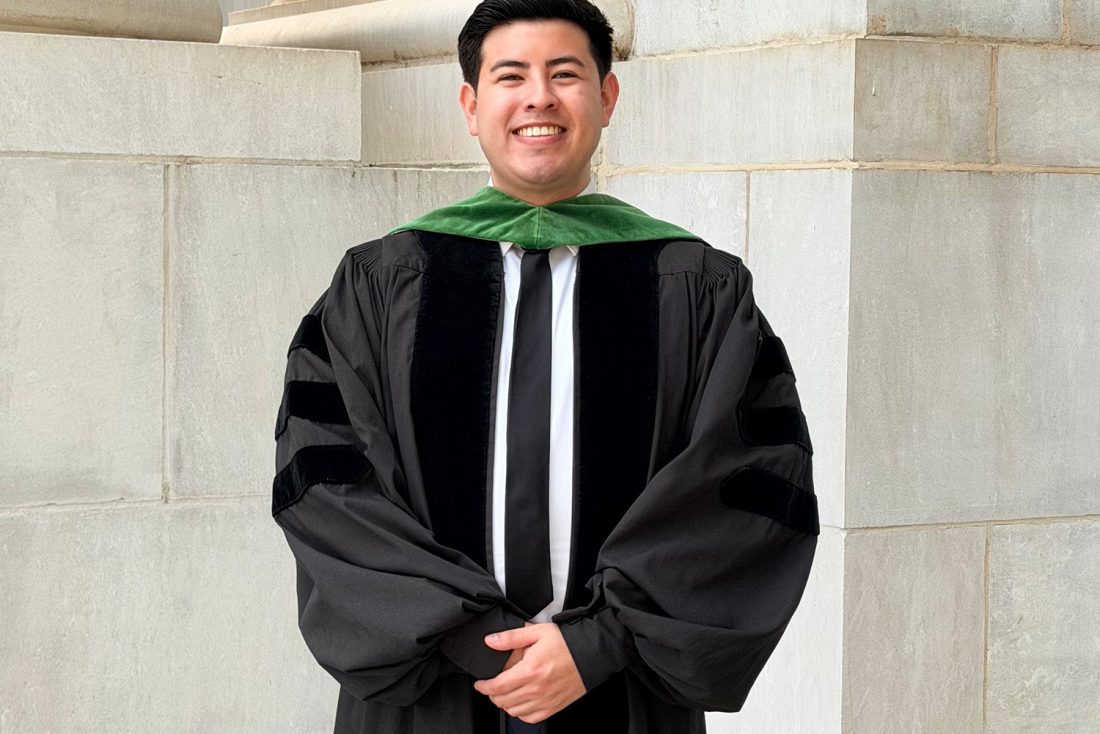
On most mornings during his clinical training, Alvaro Cortez drove familiar roads to see patients in the same health system where he was born. For him, training close to home was not incidental. It was intentional.
As he graduates with both a Doctor of Medicine and a Master of Public Health, Cortez is preparing for a career in primary care rooted in northwest Georgia and in communities like the one that raised him. Beginning in July, for the next three years, he will be a family medicine resident at Floyd Medical Center in Rome.
His path reflects a larger challenge facing Georgia and much of the country: rural and underserved regions continue to face physician shortages, and medical schools are increasingly focused on training doctors who are likely to stay, serve and lead in those communities.
“I’m the first person in my family to go into medicine,” Cortez said. “So pretty much everything I do feels like I’m trailblazing.”
Cortez, born at Hamilton Medical Center in Dalton and raised primarily in Chatsworth, is the son of parents who immigrated to the United States from Mexico, growing up in a household where navigating health care often meant overcoming language and system barriers.
“I knew I wanted to go into primary care. Being part of the primary care workforce is not enough to just be able to care for an individual, it’s also a matter of how can you care for your community.”
Alvaro Cortez
That sense of responsibility was shaped early. Cortez’s sister was born with trisomy 18, also known as Edwards syndrome, a genetic condition that ultimately led to her death. The experience exposed him to medicine at a young age, but also to how difficult the health care system can be for families already under strain.
“Seeing how difficult it can be for immigrant families to navigate the health care system is what really made me want to be an agent of change,” he said.
When it came time to apply to medical school, Cortez chose the Medical College of Georgia. Its statewide campus model, emphasis on community-based training and affordability as Georgia’s public medical school aligned closely with his goals.
“Alvaro has always demonstrated commitment to his community and to his family,” said Dixon Freeman, MD, assistant dean of the Northwest Campus. “From his choices to attend Dalton State College, to attain his clinical education based in Dalton and to pursue residency in northwest Georgia, he has remained close to the geographic and cultural communities that raised him and instilled the values of a family physician.”

Alongside his medical degree, Cortez pursued a Master of Public Health with a concentration in Health Management. The dual-degree path allowed him to examine health care beyond the exam room, focusing on systems, access and population health.
“I knew I wanted to go into primary care,” Cortez said. “Being part of the primary care workforce is not enough to just be able to care for an individual, it’s also a matter of how can you care for your community.”
Freeman said that combination of clinical training and public health perspective has positioned Cortez to contribute at both the patient and community level.
“As a dual degree MD-MPH student, Alvaro is acquiring knowledge and skills that will enable him to contribute to the health of communities and society,” Freeman said. “He has a unique eye toward underserved and marginalized populations.”
At the national level, Cortez served for two years as the student liaison between the American Academy of Family Physicians’ Family Medicine Interest Group and the Latino Medical Student Association. He was also co-chair of the Latino Medical Student Association’s 2026 Southeast Regional Conference and spoke on a panel at the organization’s national conference in Chicago.
“Alvaro is a leader,” Freeman said. “I have no doubt that he will continue to be a leader throughout his career in family medicine.”
Cortez recently traveled to Washington, D.C., to participate in a policy summit with the Latino Medical Student Association, where he met with legislators to advocate for health issues affecting underserved populations.
“It was my first opportunity to really advocate for things that are important to me and to the populations I hope to serve,” he said.
As a National Health Service Corps scholar, he is committed to four years of service in a medically underserved area after his residency in Rome. Whether that service keeps him in Georgia or takes him elsewhere, Cortez said his focus remains the same: building a career that strengthens access to care in the communities most likely to need it.


 Haley Crain
 Aaron Smith
 Stephanie Hill
 Felicia Baskett