 Augusta University
 Miguelangelo Hernandez
Claude Farmer III, remembers his mother, Martha Farmer, PhD, as an incredibly humble person.
Former students and colleagues remember how active and kind she was in her interactions with them.
Farmer was a longtime faculty member of Augusta College’s business school. She started as a part-time professor in 1966, served as acting dean in 1987 and as full-time dean from 1988-1991. She became acting president of Augusta College after Richard S. Wallace’s death in 1991 and served in that role until 1993, when William A. Bloodworth assumed the post.
Farmer passed on May 13 at the age of 87 after a lengthy illness.
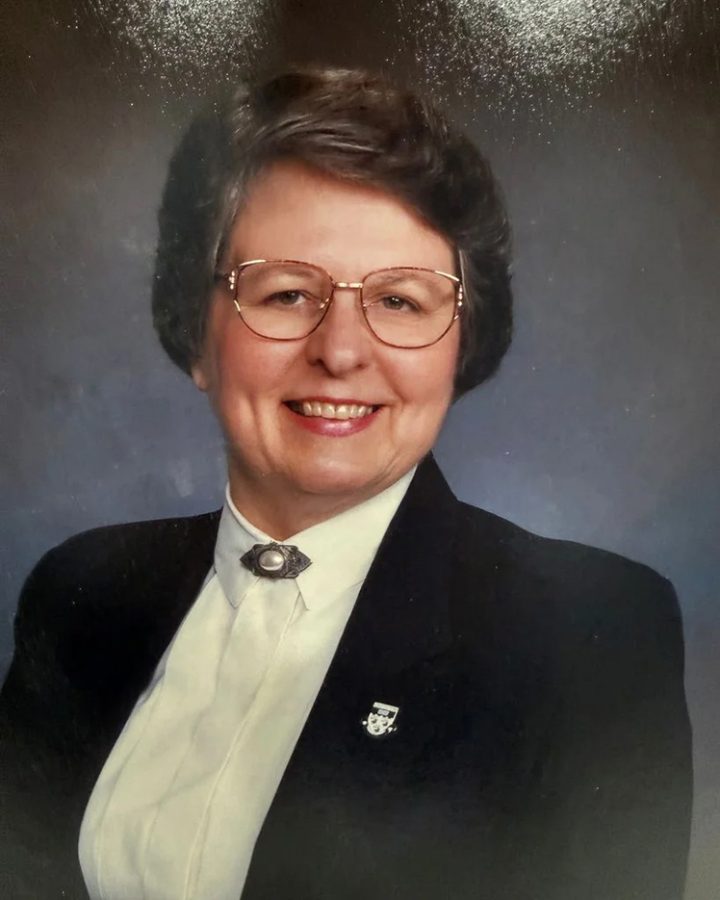
“She just had this infectious laugh … Martha is one of the smartest persons I’ve ever met, she was a brilliant businessperson, but at the same time was the most personable, fun and kind person,” said Helen Hendee, who is a retired emeritus administration faculty member from AU. “Yes, she was a teacher, then she became the dean, and then, all of a sudden, became the person in charge of the college and she just was able to move from one to the other with total ease. The thing that made her so effective was she was so genuine. She could be sitting in the room with you and she might be talking about some hard things, but she still made you feel comfortable.”
Farmer earned her Bachelor of Science and a Master of Sciences from the University of Alabama, and her doctorate at the University of South Carolina. During her years as dean, she helped foster a productive and comprehensive environment with the faculty, while making the students the school’s primary focus. She once wrote, “the attention paid to faculty, curriculum and infrastructure is determined by the impact on the student.”
Becoming a Jaguar
Farmer grew up in the rural town of Roanoke, Alabama, where she attended Roanoke City Schools. In a 2012 interview, she credited her public-school teachers for their influence on her and for shaping her life.
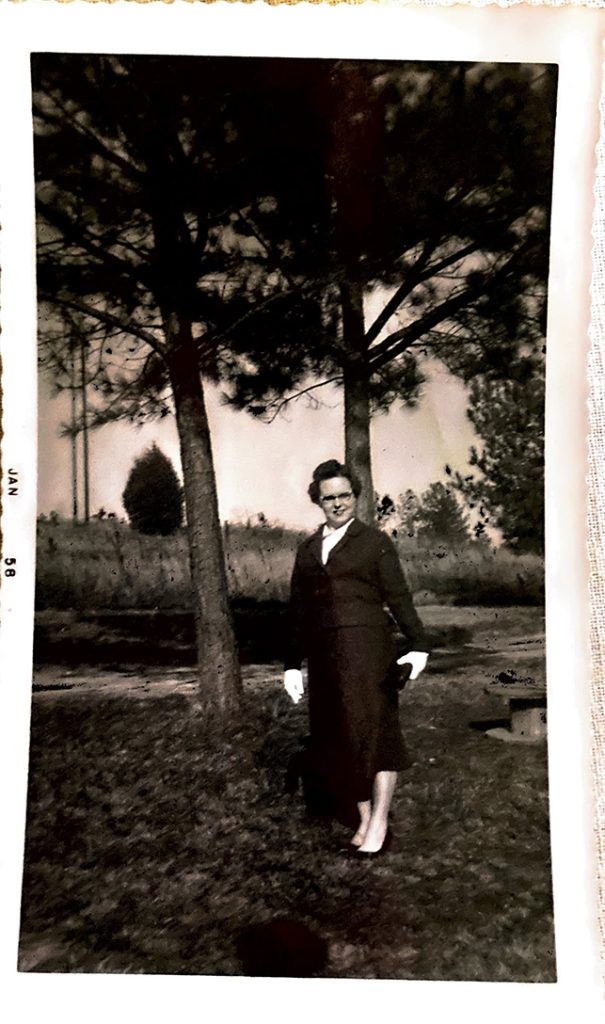
“I took advice from my two high school teachers – a math teacher and my commercial teacher. I was doing both tracks commercial and college so that I could help in my dad’s work and so I could be sure I could get a job. Between them and on the advice of my aunts, I went to the University of Alabama and majored in accounting. It was a good decision,” she said.
Farmer, along with her husband, Claude Farmer, Jr., moved to Aiken, South Carolina, where he began working at Savannah River Site as the facility was called at the time. She took a position at Aiken High School as a math instructor for two years. They lived in Aiken for several years and began to raise a family before moving to Augusta. Farmer had been hired by Augusta College to be a part-time instructor. The move was meant to shorten her commute to work for a better work-life balance. It would also prove rewarding for Claude, who soon became a fan of golf and the Masters Tournament.
When Farmer joined the department in 1966, it was primarily male dominated. In the same 2012 interview, she remembered the question being raised during her interview process of whether she would be comfortable teaching men older than she was at the time.
“I think what it did for me was made me appreciate all the hard work. You don’t consciously realize that as a kid, but as an adult, you kind of go, ‘Oh, that’s where I got that from.’ The hard work, the passion for what you do and always trying to do your best; those kinds of things were probably the lessons that I learned from Mom.”
Claude Farmer III, on his mother, Martha Farmer, PhD
“I said it’s fine with me and it doesn’t bother me,” Farmer said. “They explained that they drew a lot of retired Army officers, and I did have a lot of retired Army officers over the years. There was one person who went all the way and got his master’s and we later discovered we have the same birthday. We became buddies.”
During her time in Augusta, Farmer held a department chair, was acting associate dean and acting dean multiple times before becoming dean in the late 1980s. She worked closely with Richard S. Wallace, PhD, before his passing and was contacted by the chancellor of the university system at the time to see whether she would consider becoming acting president.
While she wasn’t sure how she ended up on the list to become acting president, she took great pride in the work she accomplished and was met with an overwhelming positive reaction by her colleagues, especially when it came to being faced with cutting the school’s budget. She said she tried to bring more visibility and transparency to the whole planning and budgeting process.
“I had worked very closely with Dick and during his last couple of years, I represented him often in the community,” she said. “I was so humbled by the positive response I got from the whole campus. When I presented to the faculty that we had to cut our budget and we were asking for suggestions, I don’t think I had one negative comment. That was just unbelievable, and we worked through it.”
Claude Farmer said his mother was extremely dedicated toward education. He remembers going back and forth to Columbia, South Carolina, while she was getting her PhD and seeing how hard she worked.
“What really impressed me was that she was just so hardworking,” he said. “I’ve never met a more determined person in the world, and she was really good with people. She’s quiet, and she had the mom stare all children recognize, and she was just sharp as a tack. I remember I heard from some of her former students that while she could be pretty intimidating, they loved her.
“I think what it did for me was made me appreciate all the hard work. You don’t consciously realize that as a kid, but as an adult, you kind of go, ‘Oh, that’s where I got that from.’ The hard work, the passion for what you do and always trying to do your best; those kinds of things were probably the lessons that I learned from Mom.”
From educator to mentor
Marc Miller, PhD, attended Augusta College from 1980-89, earning his bachelor and master’s degrees in business administration. He was on faculty starting in 2000 and became dean in 2002 of the James M. Hull College of Business.
Miller first met Farmer when he was a student, recalling she was a very active dean and was willing and able to meet with students in various roles. He said she was clearly a mentor, and what impressed him after he became a dean, was that she knew all of her students by name.
Her activeness and lead-by-example attitude helped show students how to conduct themselves in life.
“Without a doubt, Farmer was an active collaborator with faculty, staff and students,” said Miller, who is currently the dean of the School of Business at Middle Georgia State University. “She ‘led by doing’ and without her leadership our business school would not be accredited by AACSB.”
Jana Johnston, who is the director of Prospect Development at AU, first met Farmer when she was a freshman working in the president’s office as a student assistant. She originally worked for Wallace until his passing and with Farmer after her appointment. Johnston said her encouragement, as well as being a woman in her position, provided her with a positive role model.
“I do think that was definitely a positive influence on me … even after she went back to being dean of the College of Business, she was always very encouraging to me to finish my education, go on and get my master’s degree while I could. She definitely was an encouragement and positive role model for me.”
Retired Emeritus Faculty Mary Lisko first met Farmer in 1976 when she was hired as a temporary instructor to teach marketing courses. She was also taking accounting classes and they would cross paths occasionally.
“After I took some additional accounting classes, I then converted to teach accounting classes and then she and I had a close relationship,” Lisko said. “We worked together and went to annual meetings with the Georgia Association of Accounting Instructors and with the Georgia Society of CPAs. We would drive together and developed a very strong professional relationship.”
Lisko called Farmer, “a remarkable lady and a very professional instructor, absolutely top notch.” Lisko said it was obvious Farmer was very well educated.
“She took her time making sure her students understood things and that she was available to try and make sure that all the students got what they needed. The terminology was very technical, but Dr. Farmer could teach students who knew nothing about accounting so that they would have a much greater understanding of the subject by the end of the quarter.”
Personable and ‘truly a giant’
Lisko also noted Farmer always looking into the future when she interacted with students, saying she was looking for the end result versus creating a good student.
“She wanted to create a good professional that would have a good career. She was always looking ahead and encouraging her students to go in at the time. The School [of Business] was turning out students … and she wanted to make sure that they were suited for a professional career, in accounting or in whatever field they chose to go in to,” Lisko said. “Martha showed them how to dress and interact with people. That’s such a wonderful example for the students in the class, but they could see themselves as accountants because of her image at the front of the class.”
Hendee said that Farmer, who was recognized by The Augusta Chronicle as one their Women of Excellence Award winners in 1993, was small in stature but a “giant in her ability to connect with others personally.” She also mentioned that Farmer was a leader in every sense of the word.
“There was no time when you felt like you didn’t want to do what she wanted you to do because you were always on the same page. I don’t think you can be an effective leader within the university if you are not a leader in the community … and she was very active in the community. People perceived her as the leader and there was no line in-between.”
Helen Hendee, a retired emeritus administration faculty member on Martha Farmer, PhD
Jana Johnston had a lot of respect for Farmer and admired how pleasant a person she was, how well dressed she always was and how she carried herself with everyone. She also recalled how witty she was and being able to diffuse intense moments with a quip that would relax the room.
“I just remember she would get that little smirk on her face sometimes. You know, she just had that sense of humor that made everybody else laugh and she kind of caught you off guard.”
Marc Miller believes Augusta University’s current state is a credit to Farmer’s legacy and the work she put into building viable relationships within the community.
“Sir Isaac Newton once said, ‘If I have seen further, it is by standing on the shoulders of giants.’ Martha Farmer was truly a giant and without her vision of [Augusta College] and the School of Business, I really do not think that Augusta State would have been a viable institution to merge with the Medical College of Georgia,” he said. “The merger was hard, but it was necessary for the growth and vitality of Augusta as a community and for Augusta State to become more relevant and impactful. Without Martha Farmer we would not be where we are today.”
Farmer’s children have established the Martha & Claude Farmer Scholarship to support business school students and student-athletes on the golf team.


 Haley Crain
 Paige Tucker
 Valerie Emerick
 Aaron Smith