 Augusta University
 Jennifer Hilliard Scott
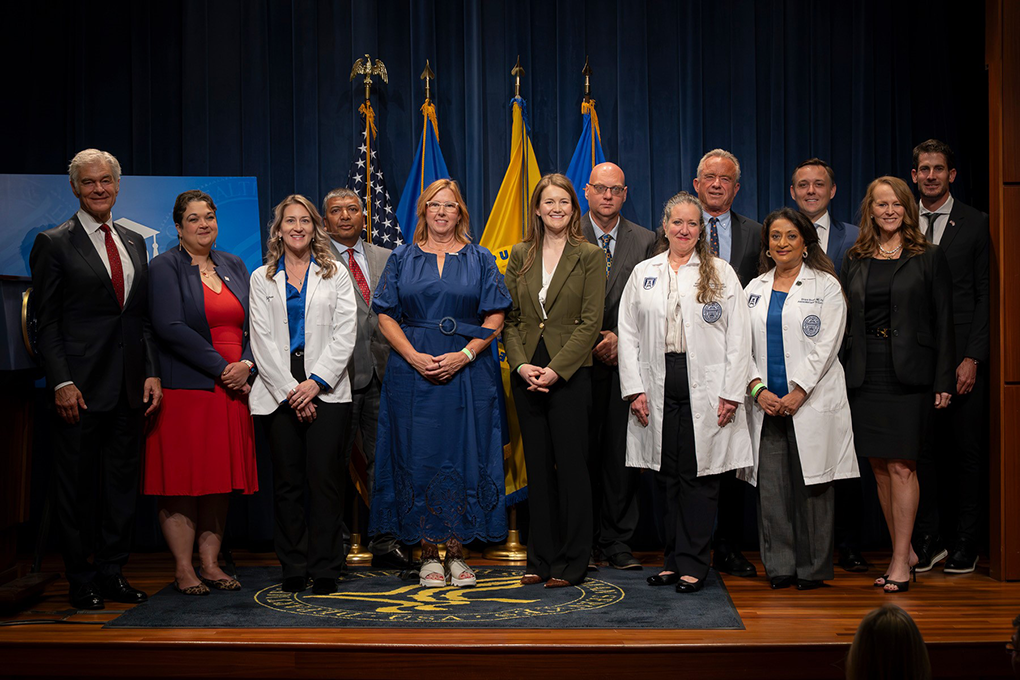
The Medical College of Georgia at Augusta University has committed to participate in the national Nutrition Education Initiative led by the U.S. Department of Health and Human Services and the U.S. Department of Education.
The voluntary program is designed to strengthen nutrition education in medical training. MCG’s commitment positions it as the first Georgia-based medical school to participate in the initiative and maintains MCG’s leadership in a transformative movement in medical education.
“Since its founding in 1828 as Georgia’s first medical school, the Medical College of Georgia has shaped the health of our state and contributed to breakthroughs felt far beyond it,” said Augusta University President Russell T. Keen, EdD. “As the 13th oldest medical school in the country, MCG remains at the forefront of innovation. Joining this national initiative reinforces our commitment to transforming medical education and equipping future physicians to confront nutrition and diet related diseases. This work is essential to creating a healthier Georgia and a healthier world.”
HHS Secretary Robert F. Kennedy Jr., and Department of Education Secretary, Linda McMahon, recently introduced this initiative to encourage medical schools across the nation to enhance nutrition instruction in response to the growing burden of diet-related chronic diseases. MCG joins more than 70 prestigious medical schools nationwide in this historic effort, which is also supported by the Association of American Medical Colleges.
MCG has committed to implementing either a minimum of 40 hours of required nutrition education across all four years of medical school, or a competency-based equivalent aligned with the HHS Medical Education Nutrition Competency Framework. This commitment will take effect beginning this fall. The purpose of this initiative is to address a critical gap in medical education that is also part of the broader “Make America Healthy Again” movement, which seeks to address the root causes of chronic disease through improved nutrition, lifestyle interventions and preventive care.
According to a 2022 survey published in the Journal of Wellness, medical students reported receiving an average of only 1.2 hours of formal nutrition education each year. Additionally, three-fourths of U.S. medical schools do not require clinical nutrition courses, and only 14% of residency programs require a nutrition curriculum. Meanwhile, diet-related chronic diseases are responsible for nearly 60% of U.S. deaths, with an estimated one million Americans dying from diet-related chronic diseases each year.
“Nutrition has always been under emphasized in medical education, despite its strong relationship to good health,” said MCG Dean David Hess, MD. “I appreciate our academic affairs team and their rapid and thoughtful response to make these additions to our curriculum.”
MCG’s enhanced nutrition curriculum will integrate comprehensive training throughout all four years of medical education, incorporating foundational science courses, organ-system modules, and clinical training. Students will examine the role of nutrition in conditions such as obesity, diabetes, cardiovascular disease, and hypertension, while also learning to address micronutrient deficiencies, malnutrition and the social determinants of health that impact dietary behaviors.
The curriculum will emphasize practical counseling skills, enabling future physicians to assess dietary habits, create patient-centered care plans and collaborate effectively with dietitians and other health professionals. During clinical rotations, students will apply nutrition principles in primary and specialty care settings, gaining hands-on experience in supporting lifestyle modification and long-term disease management. HHS has committed $5 million through a multi-phase National Institutes of Health nutrition education challenge to support medical schools, nursing residency, nutrition science, and dietician programs that integrate nutrition education into their curricula. This funding will help institutions develop coursework, clinical training opportunities and research initiatives focused on evidence-based nutrition science.


 Karen Fulton
 Paige Tucker
 Milledge Austin
 Lindsey Morris