 Augusta University
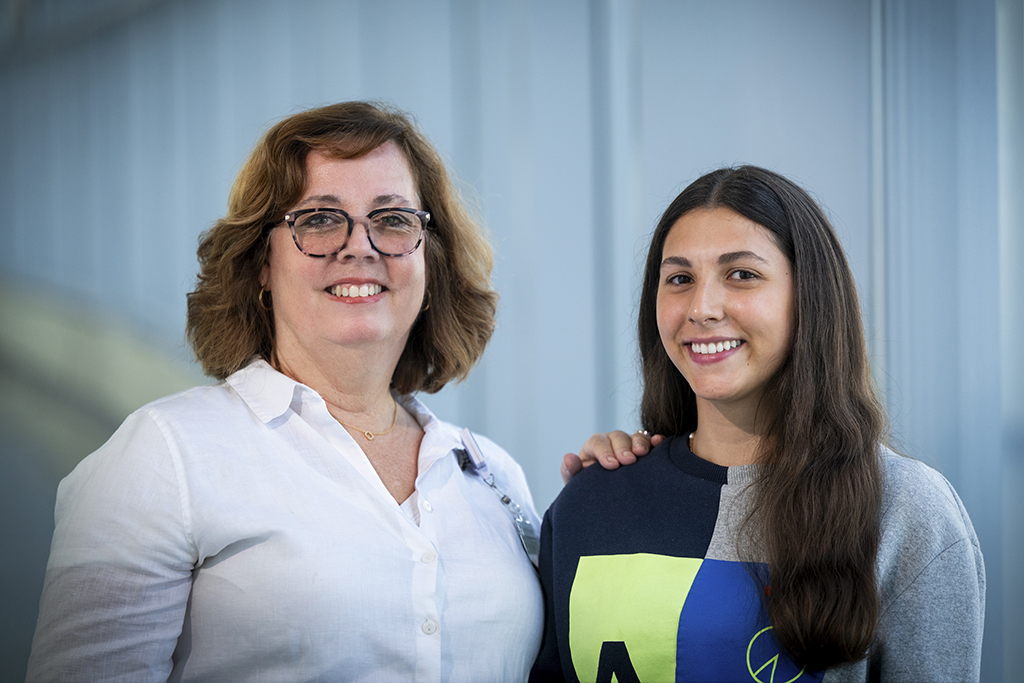
 Miguelangelo Hernandez
When Lynn Glenn, PhD, worked in primary care and general practice, it appeared every patient she saw had diabetes. She wasn’t a diabetes expert to begin with but has spent her entire career treating, managing and researching it. After almost 30 years as a nurse practitioner, she gained vast experience with Type 1, Type 2 and gestational diabetes.
When she came to Augusta University nearly five years ago, she started diabetes prevention research within the College of Nursing and Institute for Public and Preventive Health. Her focus is diabetes prevention in younger adults between the ages of 18 to 45. She has found that population is not studied as much as the middle-aged or older population for Type 2 diabetes.
Glenn explained that during health fairs such as the Costa Layman event held during the summer, they offer some evidence-based information and education to either prevent diabetes or slow the progression of it.
“For example, Costa Layman is a really great place to do diabetes screening and we are already doing that. We’re trying to offer more healthcare access to diabetes screening and early detection. So early detection is really the key,” said Glenn, who is an assistant professor. “The earlier you detect diabetes, the less chance of complications and better treatment outcomes.”
She went on to say that her emphasis is raising pre-diabetes awareness.
“We used to call it borderline diabetes, but we’ve really given it a more solid definition,” Glenn said. “Pre-diabetes is the stage in between normal glucose metabolism or glucose levels and diabetes itself. People did not take that pre-diabetes stage seriously, so we’re really trying to catch people at the pre-diabetes stage instead of waiting until they’re actually diagnosed with diabetes.”
“I didn’t know Hispanics were more prone to getting diabetes until I started the research. [The research] is something personal to me that I’m attached and drawn to helping this population and helping with the research.”
Sofia Villa, a third-year premed international student
Hispanics, African Americans, certain Asian American groups, Native Islanders, Hawaiian and Pacific Islanders are among the high-risk groups. Rural populations also have a higher rate of diabetes. Glenn says that by the time they are finally diagnosed, most people have already had diabetes for about five years. At that point they’re likely already experiencing complications such as eye, kidney, heart or nerve damage.
This year, in addition to their traditional exams, blood work and evaluations, Glenn and an undergraduate research student provided the farmworkers at Costa Layman an additional 27 physical activity questions to the five preliminary diabetes risk survey to best evaluate their risk factors, as well as how to educate and treat them.
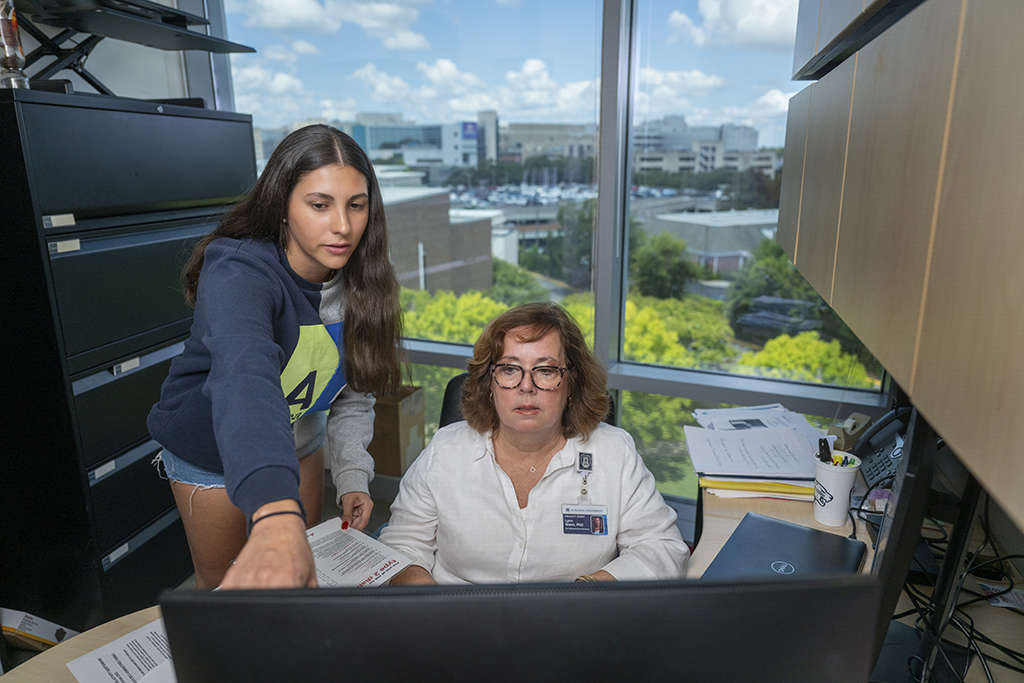
Sofia Villa is a third-year premed international student from Colombia. She originally worked with Glenn during the summer after connecting with her through the Center for Undergraduate Research and Scholarship (CURS). Villa showed an interest in Glenn’s area of Hispanic population and her topic and was selected.
After their initial nine weeks was over, Glenn asked Villa whether she wanted to continue working together. They both agreed the partnership was a good fit.
“My dad right now has pre-diabetes, and my whole family either has diabetes or is pre-diabetic. My mom has always been like, ‘Oh, you shouldn’t eat that much sugar.’ I didn’t know Hispanics were more prone to getting diabetes until I started the research,” Villa said. “[The research] is something personal to me that I’m attached and drawn to helping this population and helping with the research.”
Villa said during the Costa Layman Health Fair, she was able to connect with the farmworkers immediately because they were able to have a conversation in Spanish. In turn, the farmworkers were more apt to be open with their medical history.
Glenn and Villa will spend the next semester uploading and organizing information collected at the health fair and then compare the statistics of the returning farmworkers from last year to monitor their progress. This past summer, they focused on general physical activity because occupational physical activity specifically does not decrease the risk of diabetes or heart disease.
“We wanted to look at their overall physical activity, especially what did they do when they weren’t working,” Glenn said. “We also did some statistical analysis of comparing their blood work, their blood glucose average to their diabetes risk. The higher the risk, the higher the A1C. So, there was a strong relationship between those risk factors and the blood sugar average. The other strong predictor of diabetes risks was having a family history of diabetes. We found that out from that previous surveys.”
Glenn said the results of her research should be available by early 2027.

 Haley Crain
 Jennifer Hilliard Scott
![Participants listen and engage during the Connected for Life Open-House event. [Aaron Smith/Augusta University]](https://jagwire.augusta.edu/wp-content/uploads/sites/15/2026/10/DSC_9186-332x249.jpg)
 Aaron Smith
 Stacey Hudson