 Augusta University
 Morgan Hayes
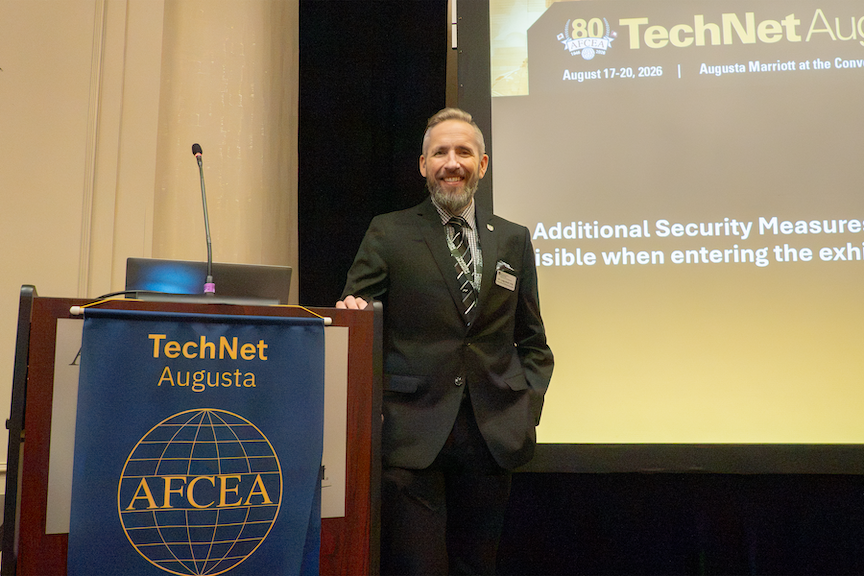
Augusta University faculty, staff and students joined government, military, academic and industry leaders at TechNet Augusta 2026, one of the nation’s premier defense technology conferences.
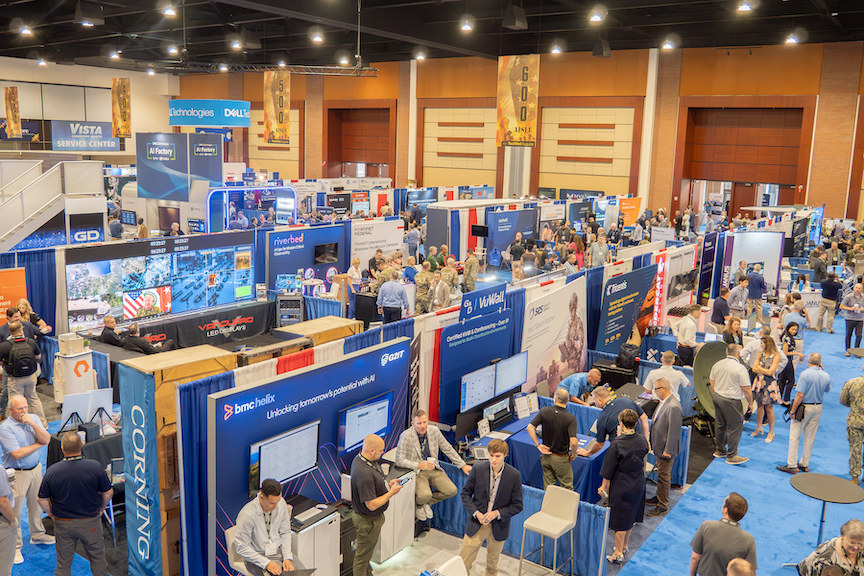
Held at the Augusta Marriott at the Convention Center, the conference welcomed more than 6,000 attendees for conversations focused on cybersecurity, national defense and emerging technologies.
Among Augusta University’s participants was Craig Albert, PhD, director of the PhD in Intelligence, Defense, and Cybersecurity program in the Katherine Reese Pamplin College of Arts, Humanities, and Social Sciences. Albert served as moderator for a panel focused on the growing role of artificial intelligence in military operations.
“TechNet provided a chance for Augusta University to demonstrate innovative thinking, especially in the realm of advanced technology,” said Albert. “I was a part of a panel and attended other panels hosted by AU folks that really dove into how the Army can be better prepared for future wars.”
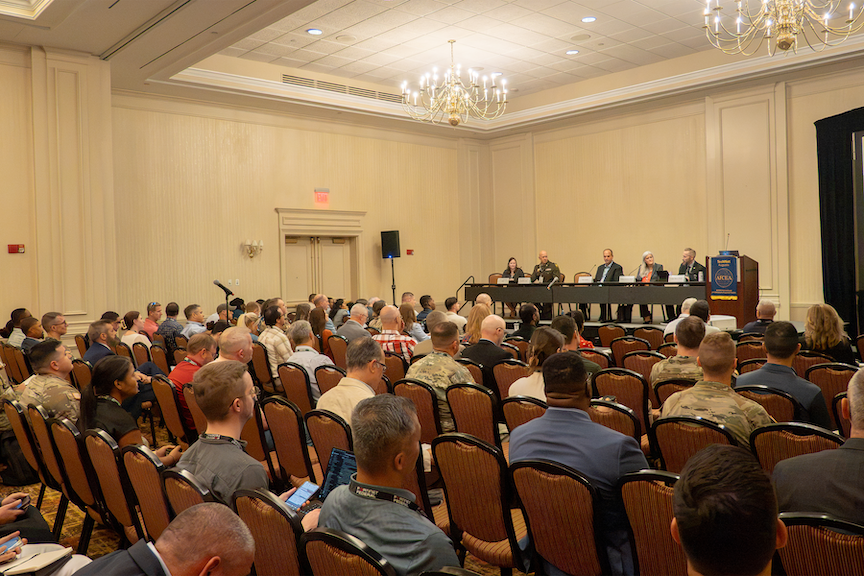
During the session, Albert led a discussion on how artificial intelligence could be used in military settings and what that could mean for the future of defense. Panelists discussed the opportunities AI can provide, including its role in decision-making, military strategy and emerging technology, while also addressing questions surrounding responsible use.
The panel ended with a question-and-answer session that gave attendees the opportunity to continue the conversation and dig deeper into some of the topics raised during the discussion.
“Technology and cybersecurity aren’t just about code or machines. They’re fundamentally about people, social systems, and how we make sense of change,” said Kim Davies, PhD, dean of Pamplin College. “What makes TechNet Augusta so exciting is seeing our Pamplin faculty and PhD students right in the middle of these conversations, bringing that essential human and social perspective to real-world defense questions.”
Augusta University’s presence at TechNet extended beyond the panel. Representatives from the School of Computer and Cyber Sciences connected with attendees at the university’s booth, sharing information about the school, its programs and the work happening across the university.
“The content of the conference is fantastic, but the highlight for me is catching up with so many old friends and former colleagues,” said Eric Toler, PhD, executive director of the Georgia Cyber Center at Augusta University.
Toler also pointed to Augusta University’s longstanding relationship with AFCEA International and the university’s continued involvement in TechNet.
“Augusta University, and especially the Georgia Cyber Center, is blessed to have such a close relationship with AFCEA International,” he said. “The AU team was able to participate on a forum from some of our nation’s top technology leaders, but our AU faculty and staff were also able to contribute as panel speakers and moderators. One of our graduate students was also able to highlight their research during a poster session.”
TechNet Augusta gave Augusta University another opportunity to share its expertise, connect with leaders in the defense and technology industries and take part in conversations surrounding the future of artificial intelligence, cybersecurity and national security.

 Tyler Wooten
 Hannah Litteer
 Haley Crain