 Augusta University

 Chris Curry
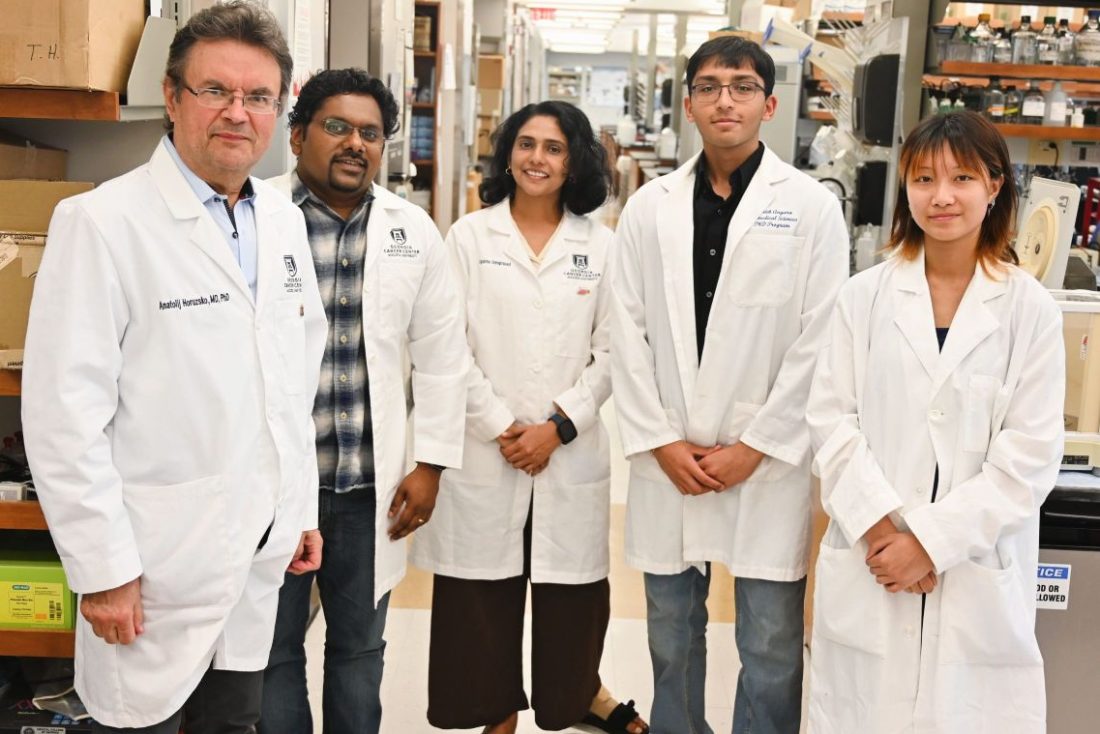
Researchers at the Georgia Cancer Center at Augusta University and Wellstar MCG Health have discovered new information about how kidney cancer cells grow, survive and avoid being attacked by the body’s immune system. The findings could help researchers identify new ways to target the disease in the future.
The study, led by Anatolij Horuzsko, MD, PhD, and his research team, focuses on a molecule called HLA-G. The researchers found that HLA-G may do more than help cancer hide from the body’s natural defenses. It may also help cancer cells grow faster and stay alive longer.
The study, “HLA-G functions as a tumor-intrinsic driver of growth and survival in renal cell carcinoma” was published in a recent issue of OncoImmunology, a high-impact scientific journal known for publishing studies on the relationship between cancer and the immune system.
Kidney cancer, also known as renal cell carcinoma, develops when cells in the kidneys begin growing out of control. While treatments have improved, some kidney cancers can resist treatment or find ways to avoid the body’s immune system entirely. Researchers, like Horuzsko, are working to better understand how cancer cells survive so they can find new ways to fight the disease.
“Understanding how cancer cells protect themselves and continue to grow is an important step toward finding new ways to fight the disease,” said Horuzsko, a professor of medicine, biochemistry and molecular biology, Graduate Studies at the Georgia Cancer Center and Medical College of Georgia at Augusta University. HLA-G is a molecule that can help control the immune system. Under certain conditions, it can prevent immune cells from attacking other cells.
Horuzsko and his team are working to understand what happens when kidney cancer cells produce this molecule. In laboratory experiments, they discovered kidney cancer cells producing HLA-G grew faster, moved more easily and were less likely to die than cancer cells without it. Their research also showed HLA-G may help cancer cells change how they use energy and may make it harder for immune cells to attack them. These findings suggest that HLA-G plays more than one role in helping kidney cancer grow and survive.
“The findings also point to HLA-G as a possible target for future cancer treatments,” Horuzsko said. “When we blocked HLA-G in laboratory experiments, there was a decrease in cancer cell survival and growth. However, additional research is needed to understand how this approach might work in patients and whether it could become a safe and effective treatment.”
The study also highlights the important role students can play in scientific research. Useong Chang and Mia Lin, both participants in the Georgia Cancer Center’s Summer Research Experience program, are named contributors on the published manuscript. Through the program, high school students have the opportunity to work alongside scientists in real research laboratories and gain firsthand experience in cancer research.
The Georgia Cancer Center’s Summer Research Experience helps introduce students to the world of cancer research while allowing them to learn from scientists working to improve the understanding and treatment of cancer.
Being named on a published scientific paper is a significant accomplishment for students at this stage of their education. Their contributions demonstrate how hands-on research experiences can give young people the opportunity to participate in work that advances scientific knowledge.
For Horuzsko and his team, the findings provide a foundation for further research into HLA-G and its role in kidney cancer. For students like Chang and Lin, the publication represents an opportunity to contribute to scientific work that may help shape future research.


 Felicia Baskett
 Valerie Emerick

 Tyler Wooten
 Valerie Linares