Augusta University
 Hannah Litteer
A newly funded project out of the School of Public Health at Augusta University aims to improve how individuals with intellectual and/or developmental disabilities (IDD), including autism, are included in research.
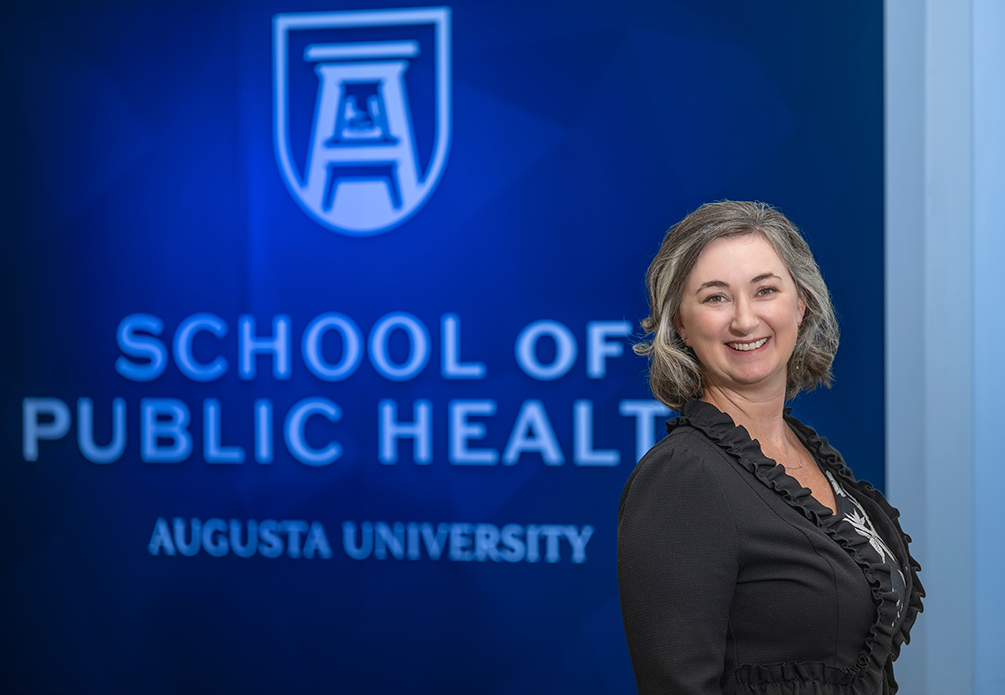
Teal W. Benevides, PhD, professor in the Department of Community and Behavioral Health Sciences within SPH, is the co-principal investigator of a nearly $1.3 million study funded by the Patient-Centered Outcomes Research Institute (PCORI), a nonprofit that funds comparative clinical effectiveness research designed to provide patients and those who care for them with evidence to make better-informed healthcare decisions.
Benevides will work with co-principal investigator Stephen Shore, EdD; co-investigators Julia Heinly, Hannah Morton, PhD, and Mirko Uljarevic, PhD; and the Autistic Adults and other Stakeholders Engage Together partnership (AASET) to execute a two-fold plan: validate a survey tool that assesses how well researchers include and support people with IDD in projects and evaluate the acceptability and practicality of that tool across various studies.
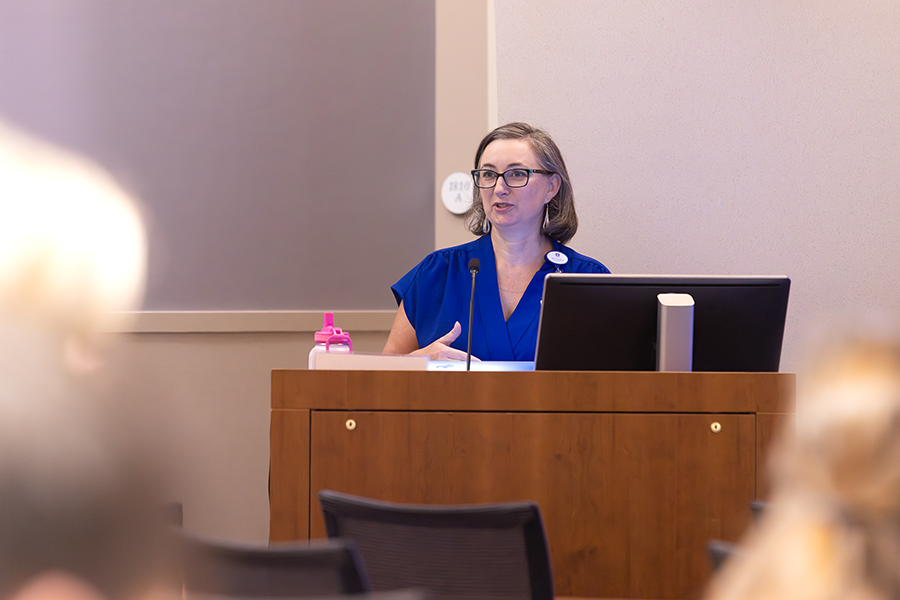
“In research, the primary people who make decisions about what research is done and what the outcomes of that research are often are researchers. People with lived experience are not always involved in helping determine the research questions, or how the research is done or where the research is shared,” Benevides explained. “Our team is trying to flip that script.”
In order to do that, the team has modified a survey tool called the Adapted Stakeholder-Centric Engagement Evaluation (A-SCEE) that they will give to various research teams in different stages and contexts. Research partners with lived experience and IDD in those projects will fill out the survey and report on if they find it practical and acceptable for gauging their engagement, then Benevides’ team will assess its validity. The goal is for the tool to accurately reflect the voices and feelings of people with lived experience and improve the way researchers collaborate with them.
“Being a member of a research team can be overwhelming. There are power dynamics, it can be stressful talking to people who have different expertise. It’s important to level the playing field, reduce power dynamics and make sure that we build trust and value all perspectives and aren’t saying, ‘Because you have a PhD, we believe you more than somebody who has lived experience,’” Benevides said. “The A-SCEE tool will ask our partners, ‘How are we doing? Do you feel like we include you in decisions? Do you feel that we respect you? Have we built trust? Do we provide a safe environment in which you can disagree with us and you feel that your opinion is listened to?’”
The tool’s effectiveness has already been validated within Benevides’ team, and they are now asking other national and international research teams to use it with their members who have lived experience. After gathering survey responses, Benevides’ team will share feedback with the enrolled teams. This will help them understand their strengths and areas for improvement in creating a research environment that feels safe, builds trust, involves peers and supports teamwork.
“We’re going to include about 20 different teams and their community partners. We plan to enroll 225 community research partners, and then we can use statistical approaches to find out how valid and reliable the survey is,” Benevides said. “Is it performing the same way in different teams, or is it not?”
The survey uses clear language and a star rating system for community partners to evaluate their teams.
“We can define engagement. We know it when we see it. We have yet to measure this vital concept. As an autistic person, I see this research filling a yawning gap in the field by working with the community to align with trauma-informed inquiry to actually measure engagement in a scientific manner,” said Shore, an associate professor at Adelphi University. “We look forward to results boosting our understanding and implementation of research that matters to the community.”
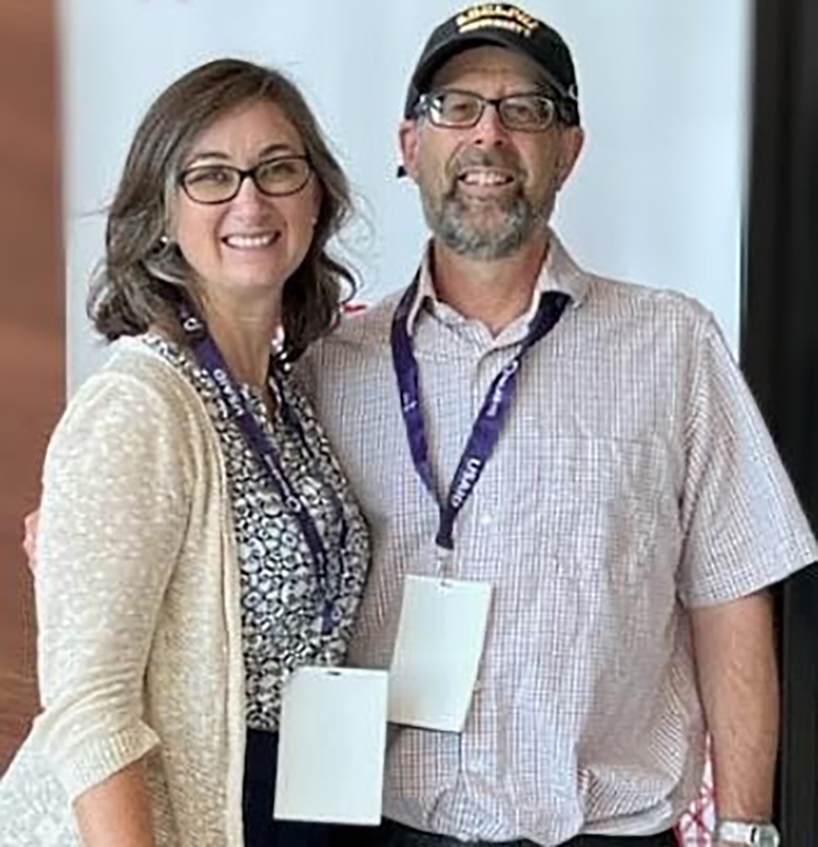
Benevides met Shore at the International Society for Autism Research conference in 2016, where they discussed working together on authentic, autistic-led research focusing on the priorities that people with autism have.
“Stephen and I have been collaborating since 2017 when we were funded by PCORI as well, and our whole goal was to create a team of people who have lived experience authentically contributing to all stages of the research process. We do everything together,” Benevides said. “I think a really important part of our collaboration is we bring different viewpoints to our discussions and decision making, and I love that. I think it’s a really special thing.”
This two-year study is set to begin in September.
“This research project was selected for PCORI funding for its potential to strengthen patient-centered comparative clinical effectiveness research by providing evidence about specific methods and measures that promote engagement of patients and other stakeholders in research,” said PCORI Executive Director Nakela L. Cook, MD. “We look forward to following the study’s progress.”
Teresa Waters, PhD, dean of the School of Public Health, is looking forward to witnessing the many ways Benevides’ work will benefit research teams around the world through this funding.
“We are delighted that PCORI has chosen to support this important work led by Dr. Benevides and her colleagues,” she said. “This significant award will continue the ground-breaking work that Dr. Benevides conducts centered on systems and contexts that promote or inhibit healthcare access for individuals on the autism spectrum and related developmental disabilities, helping to ensure that their voices are meaningfully reflected in research and practice.”


 Miguelangelo Hernandez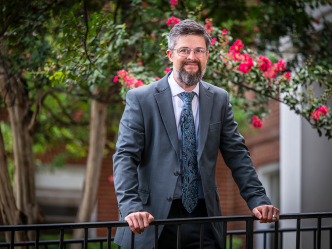
 Jennifer Hilliard Scott
 Felicia Baskett