 Augusta University
 Milledge Austin
For students beginning their research careers, finding a strong mentor is key. Joining a mentor’s research team lets students share their work with a wider audience and helps them learn from others while exploring new options they may not have thought of before.
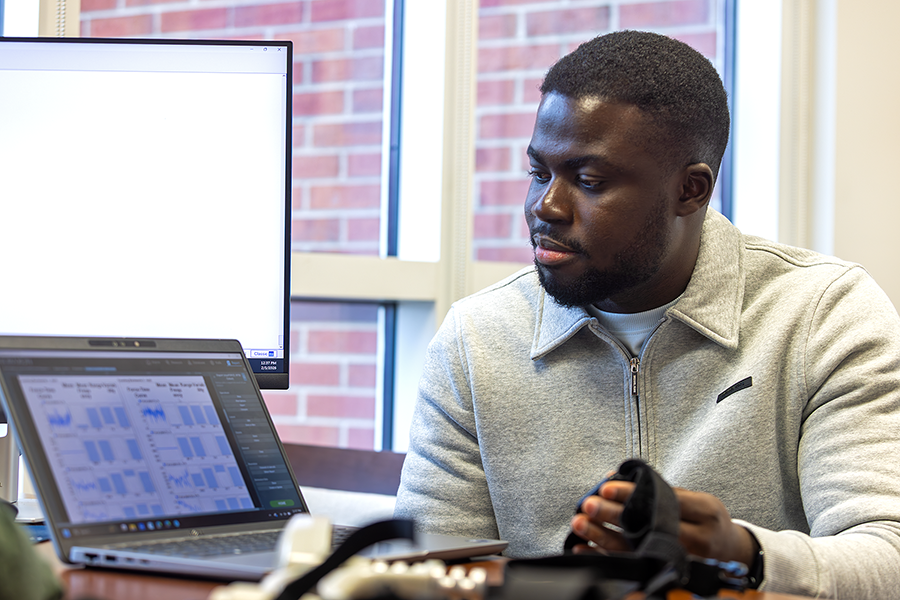
Albert Okrah, a third-year student in the Applied Health Sciences PhD program within the School of Public Health, will take his research to Greenville, South Carolina, in February, supported by an award he received in the fall.
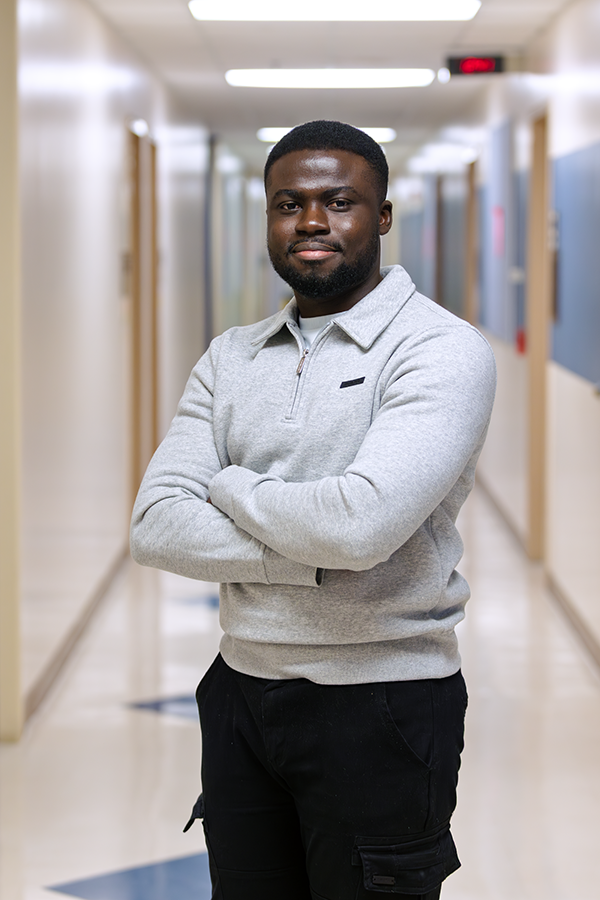
Okrah, who is originally from Ghana, was awarded the Wendi H. Weimar Doctoral Research Award by the Biomechanics Interest Group of the Southeast Chapter of the American College of Sports Medicine. The award provides research and travel support for students with top-rated abstracts to present at the organization’s annual meeting. With this funding, Okrah will attend and present his research at the 2026 Southeast American College of Sports Medicine conference in Greenville Feb. 26-28.
“It means a lot to me and to the collaborators on this study,” said Okrah, who is the inaugural president of the Public Health Student Association and a Graduate Ambassador for The Graduate School. “It shows that the work we are doing is being recognized, and I’m very grateful to the award selection committee.”
Okrah’s abstract, “Instrumented Assessment of Gait, Functional Mobility and Posture in Older Adults With and Without Concussion,” focuses on improving concussion detection in older adults, a population often overlooked in traditional concussion screening. He developed his research with help from his mentor Deborah Jehu, PhD, an assistant professor in SPH’s Department of Community and Behavioral Health Sciences, and includes collaborators from multiple clinical settings, including orthopedics and emergency medicine. Okrah said the interdisciplinary nature of the team strengthens the study’s impact.
“Having collaborators from different areas helps us approach the problem from multiple angles, from participant identification to testing,” he said.
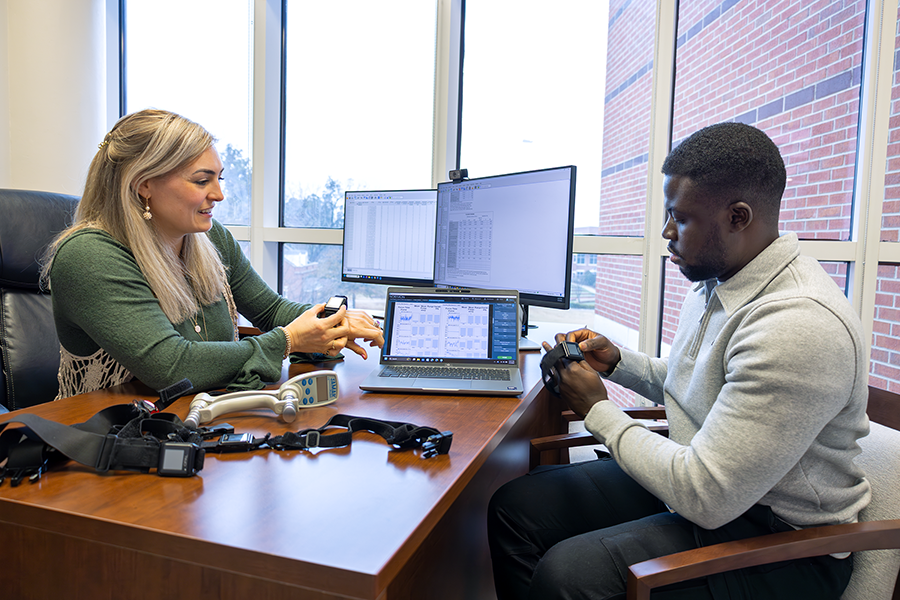
“Albert’s dedication to this project has been outstanding,” Jehu said. “He has led rigorous recruitment efforts in community settings by delivering eight educational fall prevention talks at local residential care facilities, churches and clinics, which has significantly facilitated enrollment while also skillfully implementing the study’s advanced instrumented assessments.”
According to Okrah’s research, falls are a leading cause of injury among older adults, with recent data showing that one in four adults age 65 and older experiences a fall each year. Concussions caused by falls are frequently missed during clinical evaluations.
“Subtle changes from concussion are often not picked up by the assessments we currently use,” Okrah said. “Many tools are designed to detect severe traumatic brain injuries or sports-related concussions, but an older adult falling and bumping their head is a very different mechanism.”
“My background in biomedical engineering allows me to merge instrumentation and biomechanics with research to improve mobility, reduce fall risk and ultimately improve quality of life for older adults.”
Albert Okrah
The study uses instrumented assessments, including wearable sensors and force platforms, to evaluate gait, balance, posture and functional mobility. Participants completed walking assessments, 360-degree turns and posture tests, both as single tasks and while performing cognitive tasks simultaneously.
“What we found is that assessments that provoke symptoms of headache, dizziness, nausea or fogginess, are more likely to differentiate older adults with concussions from those without,” Okrah said. “At baseline, two individuals may look the same, but once symptoms are provoked, differences begin to appear.”
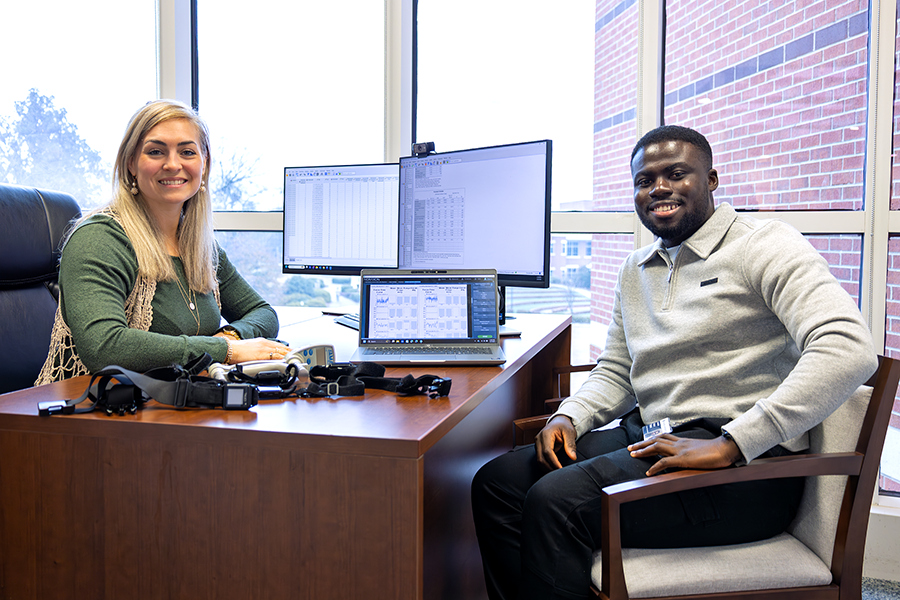
“Albert’s work is advancing our understanding of how subtle, symptom-provoked changes in gait, mobility and posture can reveal concussions that standard screenings often miss in older adults,” Jehu said. “This recognition through the Wendi H. Weimar Doctoral Research Award is well-deserved and underscores the real-world potential of our interdisciplinary approach to improve concussion detection and ultimately enhance safety and quality of life for this vulnerable population.”
While Okrah hypothesized that dual-task assessments would further distinguish between groups, the results did not show a significant difference, a finding he said still provides valuable insight.
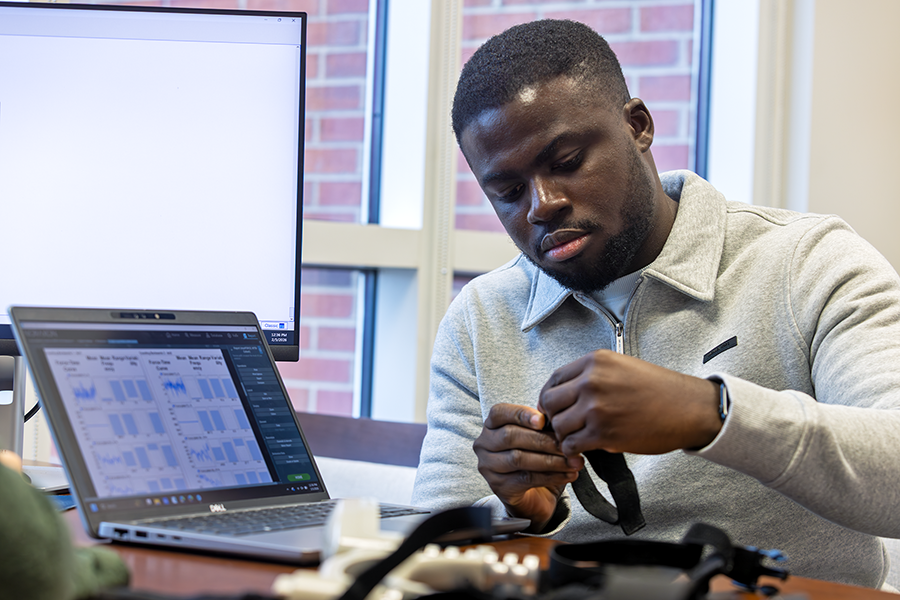
“These results suggest that future clinical assessments should focus on symptom-provoking tasks to better detect subtle changes in concussion screening,” he said.
Okrah said his interest in older adult mobility began during a field experience at an elder care facility in his home country, where limited access to research and technology highlighted the need for improved assessment tools.
“I wanted to be part of the solution,” Okrah said. “My background in biomedical engineering allows me to merge instrumentation and biomechanics with research to improve mobility, reduce fall risk and ultimately improve quality of life for older adults.”

 Jamison Guice
 Valerie Emerick
 Staff
Staff
 Felicia Baskett