Augusta University
 Stacey Eidson
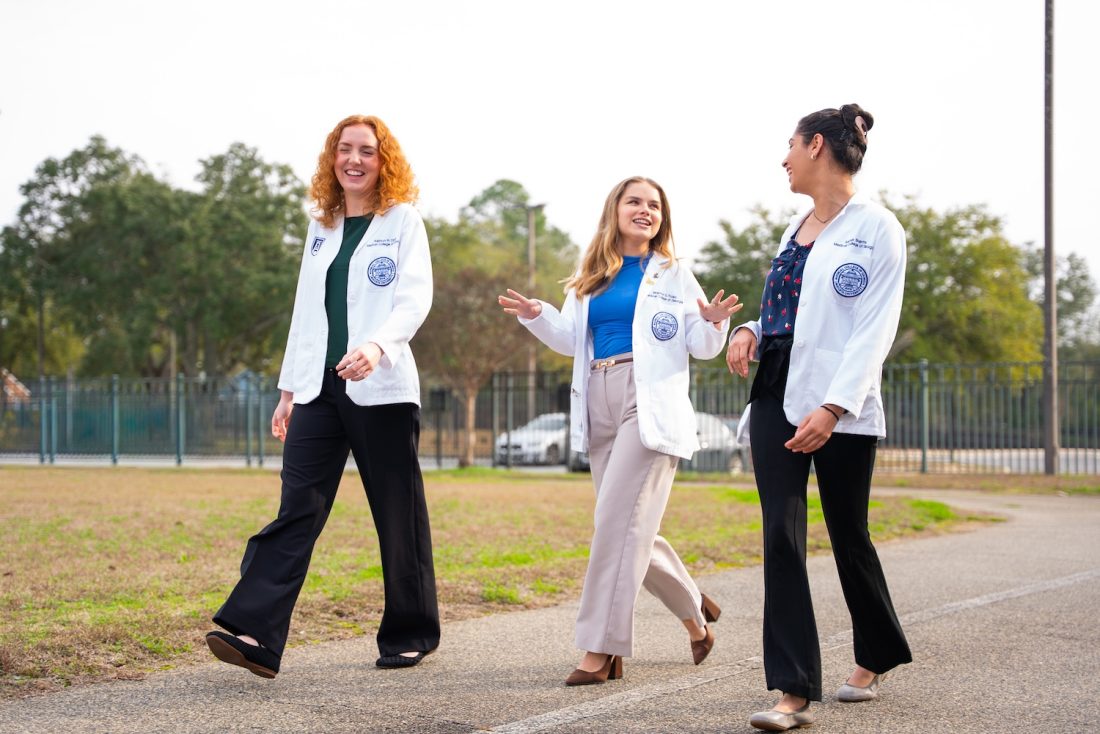
Southwest Georgia has faced a severe physician shortage, leaving many rural areas without adequate primary care physicians and specialists. To address the need for more physicians in this region, the Medical College of Georgia opened its first regional clinical campus in southwest Georgia in 2005.
For more than two decades, the MCG Southwest Campus in Albany, Georgia, has been strategically located in this rural area of the state where physician shortages are most acute. One of the goals of establishing this campus was to bring medical education, innovative medical electives and better access to primary care to southwest Georgia.
“Our goal is for every Georgian – regardless of zip code – to have access to exceptional health care delivered by highly trained physicians.”
Augusta University President Russell T. Keen
Since 2010, when the campus became residential, allowing students to live and learn in Albany for the entirety of their clinical education, MCG’s Southwest Campus has graduated 12 cohorts of physicians. The results of this campus and the young physicians educated there have helped improve the health care footprint in southwest Georgia, said Augusta University President Russell T. Keen.
“Our goal is for every Georgian – regardless of zip code – to have access to exceptional health care delivered by highly trained physicians,” Keen said. “MCG’s Southwest Campus is not only meeting that challenge, but it’s also setting a powerful example of what’s possible when we train physicians in the very communities where we hope they’ll one day serve.”
Connecting with the community
Growing up in southern Georgia, Luke Guy knows what it is like to travel long distances to receive proper health care.
“I’m originally from Fitzgerald, Georgia, which is a small town about 30 minutes outside of Tifton and about an hour from Albany,” said Guy, a fourth-year medical student at Augusta University’s Southwest Campus. “Since I’m from a rural area, I realize that the residents living there don’t always have access to health care.”
“That’s what made me interested in going back,” he added. “I wanted to treat the patients who are from my area.”
“Since I’m from a rural area, I realize that the residents living there don’t always have access to health care. That’s what made me interested in going back. I wanted to treat the patients who are from my area.”
Luke Guy, a medical student at Augusta University’s Southwest Campus
MCG established the regional clinical campus for third- and fourth-year students in Albany, hoping that the medical students’ clinical experiences there would lead them to return to practice in southwest Georgia.
In 2023, an investment from U.S. Rep. Sanford D. Bishop, Jr. (GA-02) strengthened that goal and provided support for MCG’s Southwest Campus to help build existing relationships with hospitals, clinics and providers in the region to expand the depth of training for students. This effort also provided students on MCG’s Southwest Campus with clinical leadership development experiences.
“One of my top priorities in Congress is to make sure our rural and underserved communities have the health care professionals, equipment and facilities they need to ensure residents have all of their medical needs met at or as close to home as possible,” Bishop said.
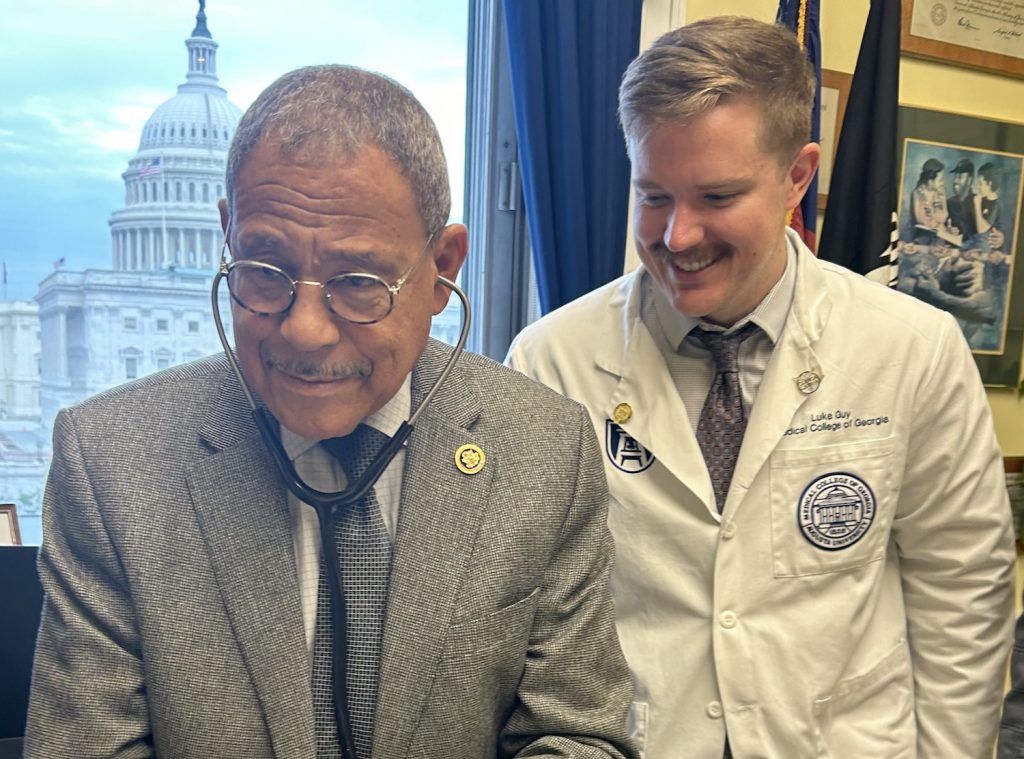
“One of my top priorities in Congress is to make sure our rural and underserved communities have the health care professionals, equipment and facilities they need to ensure residents have all of their medical needs met at or as close to home as possible.”
U.S. Rep. Sanford D. Bishop, Jr.
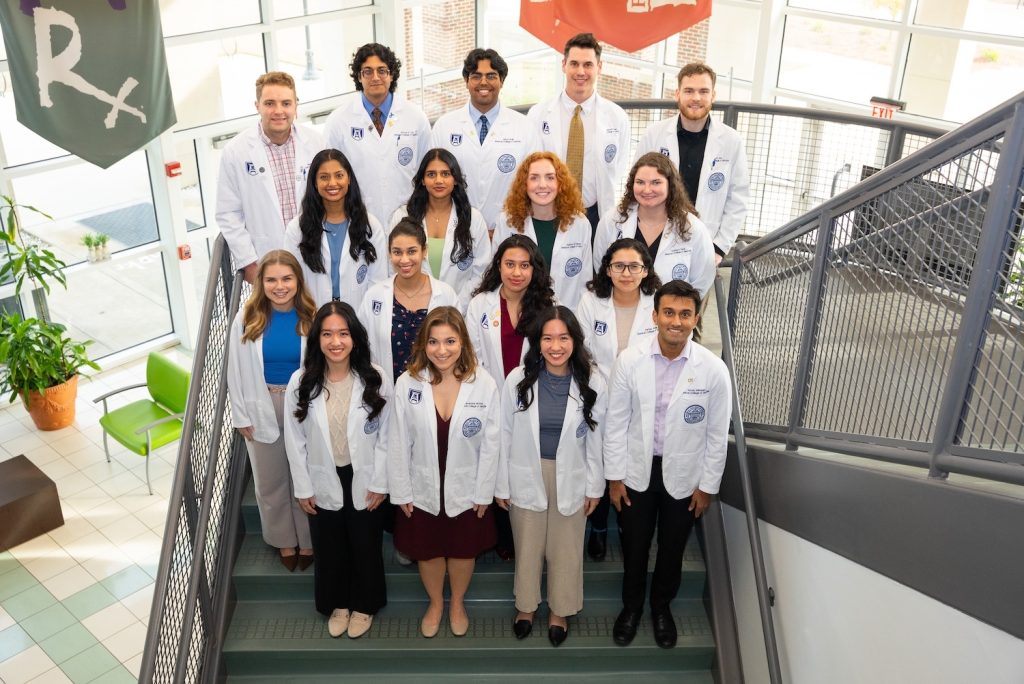
Doug Patten, MD, the campus’s associate dean, said the Southwest Campus has two cohorts of students, one based in Albany at Phoebe Putney Memorial Hospital and another in Thomasville at Archbold Hospital. Additionally, MCG students have rotation sites throughout the region, including Columbus, LaGrange, Tifton, Valdosta, Americus and Cordele.
At many of these sites, medical students engage in public health and participate in community outreach programs, such as visiting local high school and college students to discuss potential career paths in medicine.
“This immersive experience helps our medical students shape their thinking around future practice opportunities,” Patten said. “The students see that the doctors teaching them are also serving as leaders in their communities. This experience provides our students with a different perspective on what it would be like to practice in this region, while strengthening their connection to the communities.”
Helping underserved areas
Ayanna Turner, a medical student from Shiloh, Georgia, is part of MCG’s 3+ PGY-1 program. This program allows qualified medical students to complete their core MD curriculum in three years and then immediately enter a primary care Postgraduate Year One (PGY-1) residency program, with a commitment to practice in underserved areas of Georgia after training. This pathway is designed to meet the needs of students with established primary care career intentions and also address the shortage of primary care physicians in the state.
“Being from Shiloh, Georgia, which has less than 400 people, the residents in this community struggled with access to health care,” Turner said. “It’s one of the reasons why I chose to come to MCG’s Southwest Campus. I’m set to graduate a year early with the class of 2026 and go straight into a family medicine residency. Then, I will work two years in a medically underserved part of Georgia, and, in return, I will receive a scholarship that will pay for my second and third years of med school.”
From an early age, Turner said she realized the impact that a lack of access to health care can have on a small town.
“If there were more doctors in my area, some of the things that happened could have been prevented,” Turner said. “I realize that people in smaller areas need preventive medicine and more access to care.”
“I definitely see myself as a physician somewhere in a rural, underserved area. I want to be able to help as many people as I can.”
Ayanna Turner, a medical student from Shiloh, Georgia, is part of MCG’s 3+ PGY-1 program at Augusta University.
Turner recently began the Longitudinal Integrated Curriculum (LIC) at MCG’s Southwest Campus, where the approach integrates core clinical experiences throughout a 12-month clerkship. This provides students with the opportunity to see the same patient in multiple settings across multiple specialties throughout the year.
“I definitely see myself as a physician somewhere in a rural, underserved area,” Turner said. “I want to be able to help as many people as I can.”
Learning the importance of physician leadership
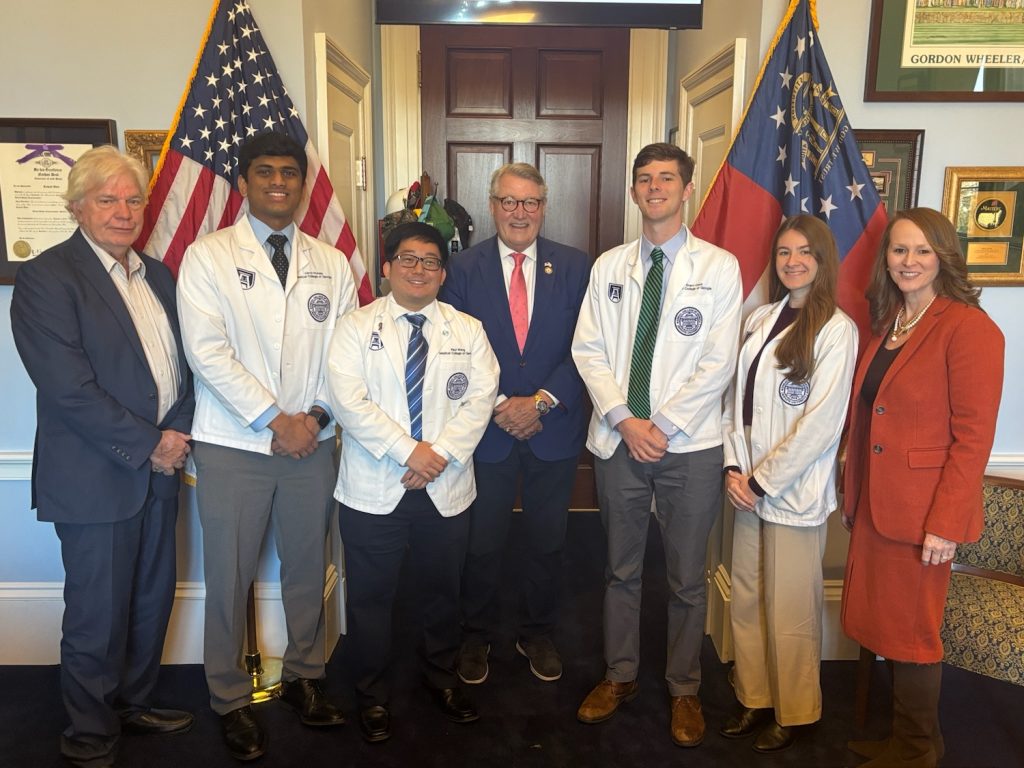
Some students from the Southwest Campus have had the opportunity to develop leadership skills on a local, statewide and national level. Several cohorts of MCG’s SW Clinical Leadership Elective students have visited Washington, D.C., to experience, learn and receive feedback regarding the importance of leadership.
Monty Philpot Brock, Augusta University’s director of federal relations for Government Relations, has helped plan visits for the leadership elective students to the nation’s capital.
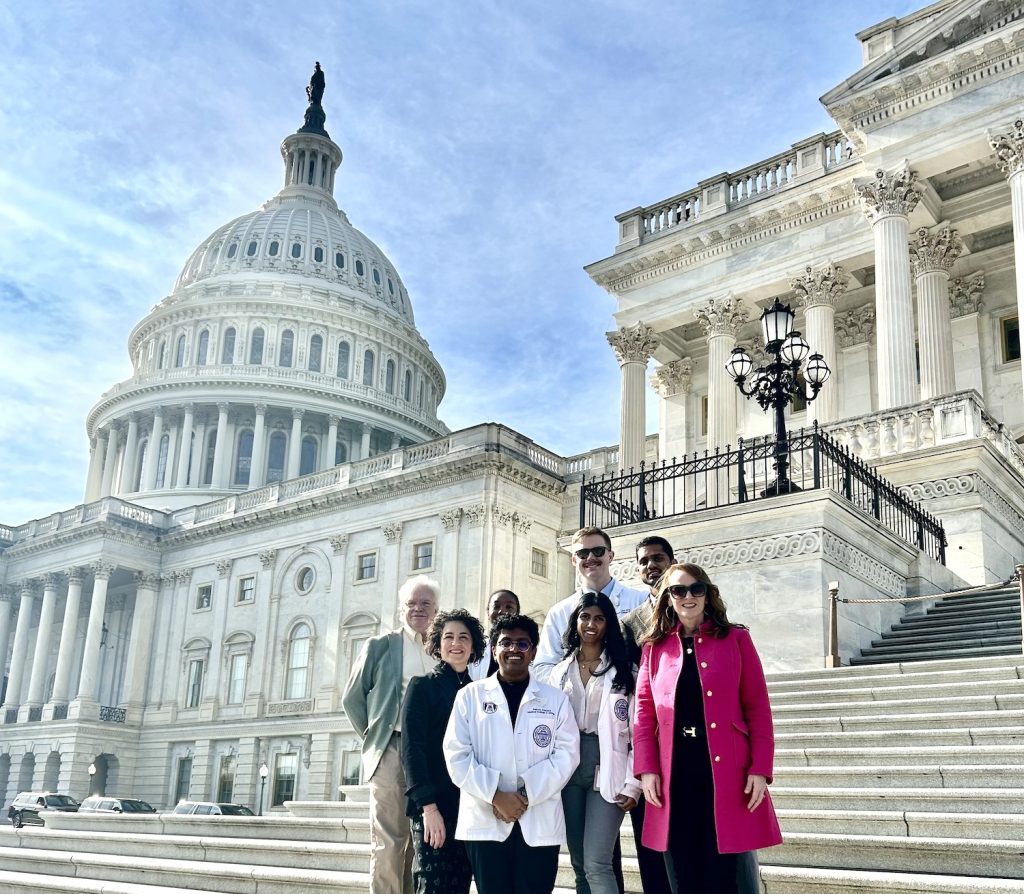
“As future physicians, these students begin to understand that their patients, colleagues and communities will look to them as leaders. I want them to see themselves that way, too – and to recognize how these skills can help them create positive change in nearly any situation.”
Monty Philpot Brock, Augusta University’s director of federal relations for Government Relations
Part of the preparation includes lectures to help students better understand the importance and purpose of leadership, building relationships and using compelling stories to communicate.
For example, Brock, who holds an adjunct faculty appointment in MCG’s Department of Family and Community Medicine, said she encourages the students to include local examples and real data to maintain relevance. She also discusses the importance of meeting preparation, including best practices, as well as behaviors to avoid.
“As future physicians, these students begin to understand that their patients, colleagues and communities will look to them as leaders,” Brock said. “I want them to see themselves that way, too – and to recognize how these skills can help them create positive change in nearly any situation.”
Rithwik Koppaka, one of the students who has travelled to Washington D.C., is a medical student who qualified for Augusta University’s accelerated dual degree program for incoming freshmen interested in medicine, known as the Professional Scholars Program (BS/MD).
This program allows outstanding students to earn both their Bachelor of Science and Doctor of Medicine degrees in just seven years – instead of the normal eight – through the BS-MD program.
“I always had a strong passion to go into medicine,” Koppaka said. “I love working with populations that are underserved, so when I got to MCG, I was very actively involved in the student-run clinics volunteering and that made me want to go to the regional campus because I didn’t have a lot of exposure to rural medicine.”
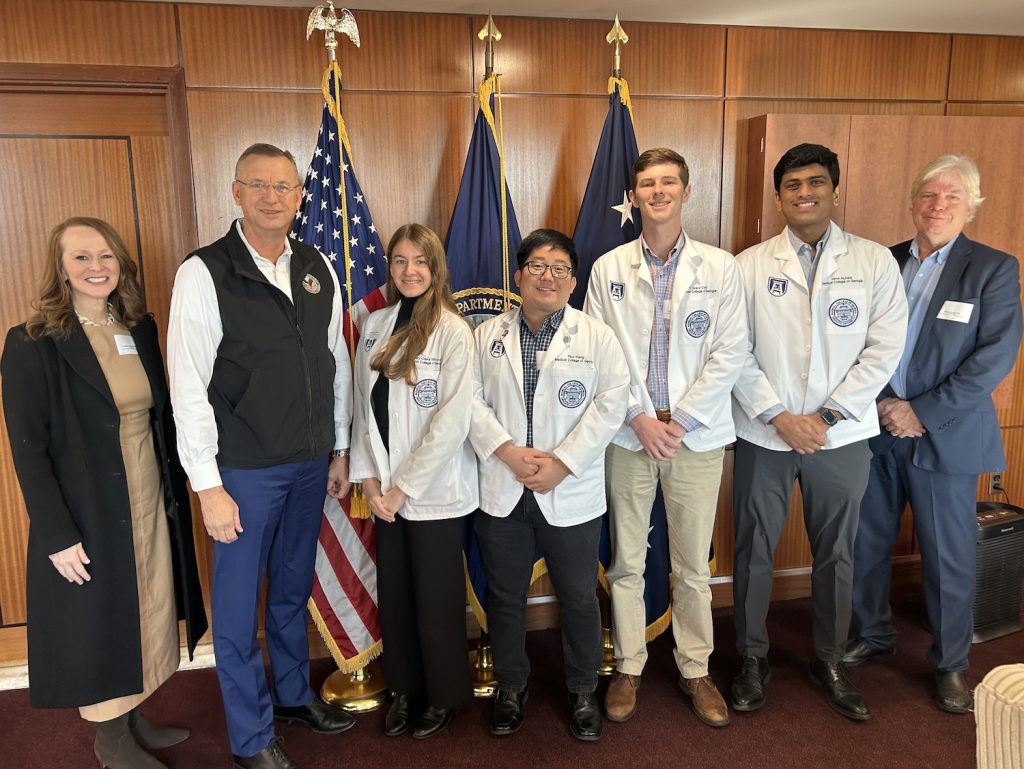
Koppaka said he gained an appreciation of how many factors in the community, such as access to housing, transportation and education, have a powerful impact on individuals and community health. His passion for addressing such issues led him to pursue a Master of Public Health while completing his Doctor of Medicine.
“I clearly see in the rural areas where people might have minimal access to care, presenting with the sickest pathologies I’ve ever seen,” Koppaka said. “It was a very eye-opening experience.”
Finding the future
Vani Senthil, a fourth-year medical student, said she specifically wanted to go to the Albany campus because it provided exposure to rural health medicine and one-on-one time with attendings, training she was hoping for at MCG.
“The reason I got into medicine was to help people who were not able to fully help themselves,” said Senthil, who grew up in the Atlanta area.
As she explored different clinical areas, she gravitated to women’s mental health through her OB-GYN rotation.
“While I was at the Southwest Campus, I found an organization called Women on a Mission,” said Senthil, explaining the group was created to help provide women in Albany the resources and support to achieve optimal health, mental wellness and financial independence.
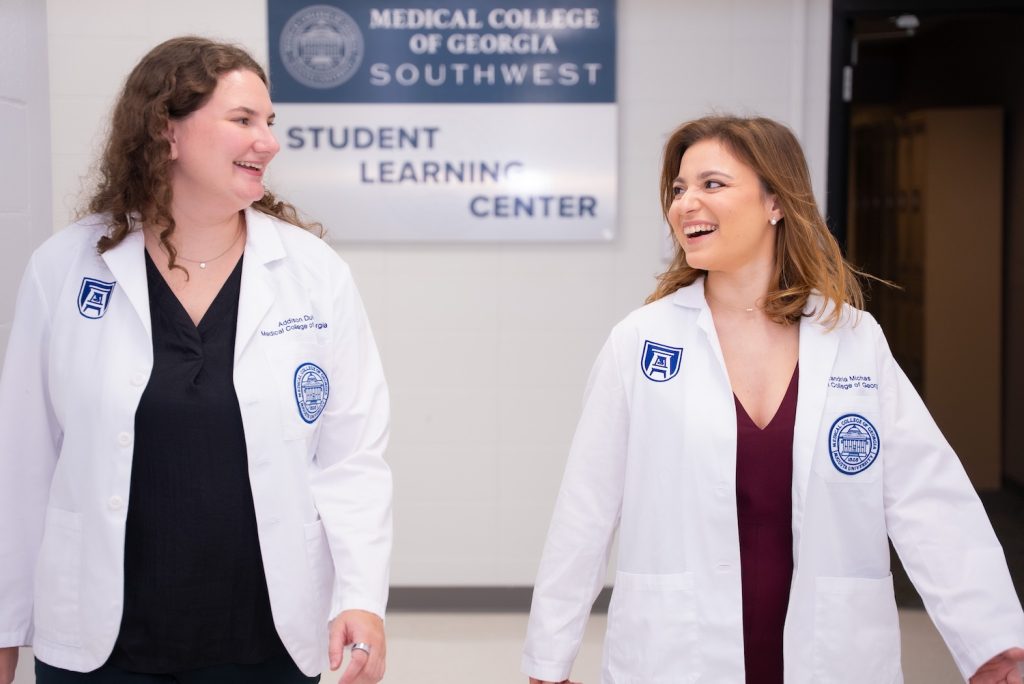
She volunteered with the group and gave a presentation on high-yield topics in women’s mental health.
“Afterwards, several women came up to me and commented, ‘We never see physicians out here in the community. It really means a lot that you’re out here and you’re talking about issues that we go through that nobody else mentions,’” Senthil said.
“These students and this campus offer an incredible return on investment for Georgia. The Southwest Campus is giving them the training and the community connections they need to make a meaningful impact in the places that need them most.”
Augusta University President Russell T. Keen
Senthil said it was an amazing experience and changed her outlook on her future career. She began meeting with people throughout the community and talking about women’s health, fitness goals and diabetes-friendly meal plans. She also did a diaper drive for another local group called Helping Mamas.
“I feel like it had a tremendous impact,” Senthil said. “It was important being from the MCG Southwest Campus and showing my face and letting people know, ‘I do care about you and your health and I’m willing to talk about it.’ That’s what I won’t ever forget. I don’t think I would have had that experience anywhere else.”
As the state’s flagship medical school, MCG has the responsibility and opportunity to produce physicians who will strengthen health care that changes and saves people’s lives, in every corner of the state, Keen said.
“These students and this campus offer an incredible return on investment for Georgia,” Keen said. “The MCG Southwest Campus is giving them the training and the community connections they need to make a meaningful impact in the places that need them most.”


 Bakija Parks
 Miguelangelo Hernandez