 Augusta University
 Miguelangelo Hernandez
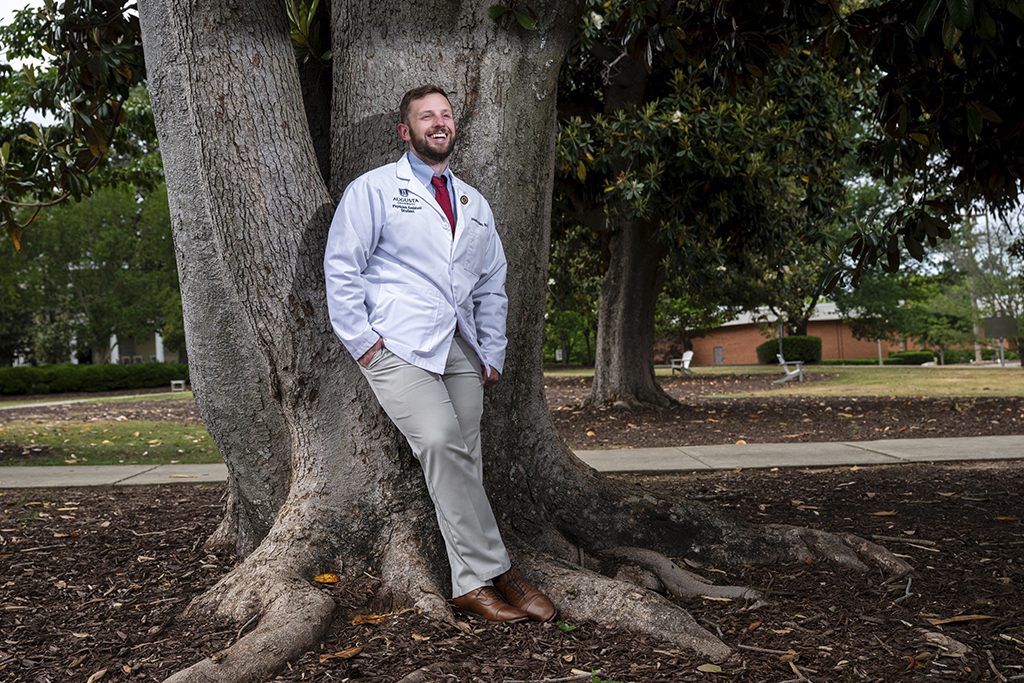
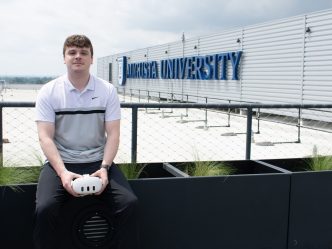
Medicine has always been a dream of Johnathon Boles for as long as he can remember, but his path to getting there wasn’t a straight line.
Originally from Mocksville, North Carolina, Boles is a first-generation student whose family has been supportive and made a lot of sacrifices to help him pursue his education. He started his path at Catawba College, where he earned his bachelor’s degree in biology and an MHS Clinical Mental Health Counseling degree.
After graduation, he worked in higher education for almost six years. Boles said his role was centered around helping students discover their passions, discern their sense of purpose and think about how their gifts and interests could shape what they studied and how they might serve others.
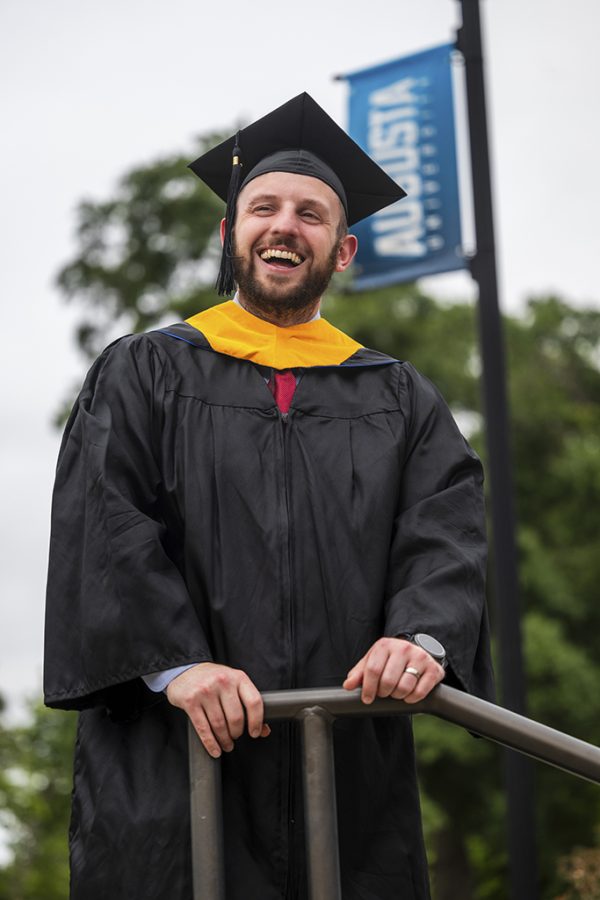
“It was incredibly meaningful work because I had the opportunity to walk alongside students during such formative seasons of their lives and help them think more intentionally about their future,” said Boles, who will graduate from Augusta University’s College of Allied Health Sciences with a Master of Physician Assistant degree. “That experience taught me a lot about listening well, building relationships, and supporting people through important decisions – skills that continue to shape who I am as I’ve transitioned into medicine.”
While his time in higher education was rewarding, Boles found himself wanting a better understanding of how the physical, emotional and mental parts of a person’s health all connect. He realized he wanted to care for people in a more holistic way, and pursuing a PA degree felt like the right next step because it would allow him to keep serving others while “continuing to learn and grow in a field I’ve always been drawn to.”
“Health care has always been one of my deepest passions because it brings together so many things that matter to me: curiosity, service, teaching and helping others. I’ve always been drawn to learning, and what I love most about medicine is that it’s a field where you can truly be a lifelong learner – there is always more to understand about the human body, people’s stories, and how to care for others well,” Boles said.
Elizabeth Prince-Coleman, DMSc, who is chair and program director in the Department of Physician Assistant, said students who are willing to move for a program are often very intentional in their choice, and his decision “suggests that AU is viewed as a place that offers a strong education.”
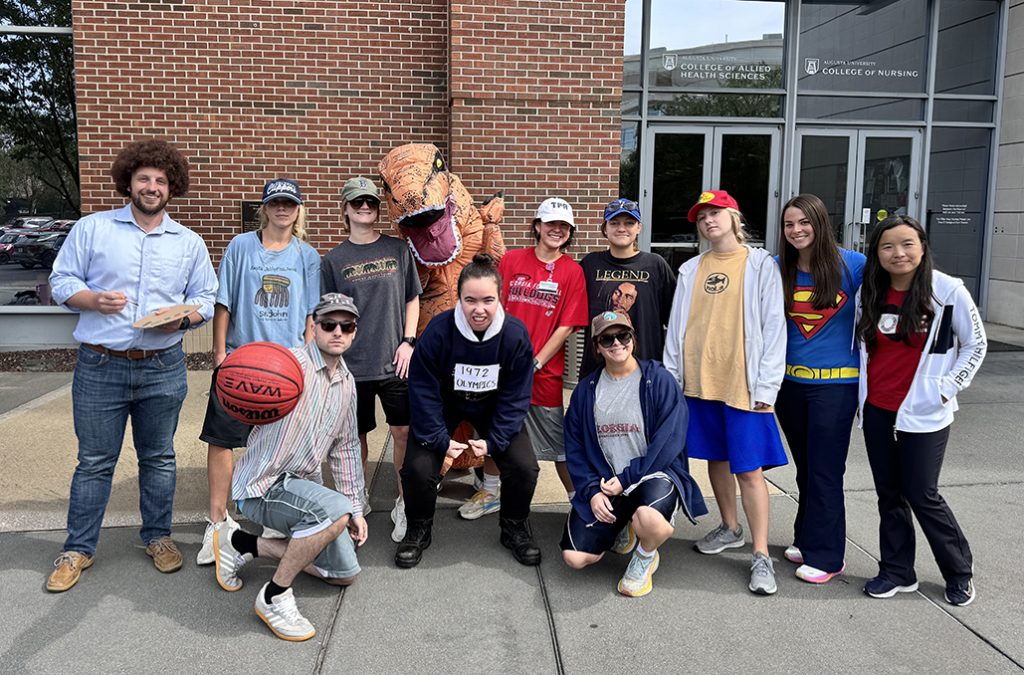
“His presence, along with other out-of-state students, reinforces that the program is competitive and respected, attracting individuals who are committed to investing in their education and future careers,” Prince-Coleman said. “We hope that the reputation reflects academic rigor in a supportive learning environment, preparing graduates for success in their chosen career.”
Coming to AU as a non-traditional student has been an adjustment for Boles, 31, making him one of the oldest students in the program. He said stepping into a program where he was in a different season of life than his classmates took some adjustment at first but he said at the same time, it helped him stay grounded during the challenges of PA school and reminded him that growth, calling and the pursuit of something meaningful are not limited by age or timing.
“Johnathon stands out for the maturity and perspective he brings as a non-traditional student,” Prince-Coleman said. “His life experience has shaped his priorities in a meaningful way. Rather than focusing primarily on grades or academic outcomes, he is more committed to understanding the material and how it applies to his future role in patient care.”
Boles has been married to his wife, Madison, for almost three years now. He said balancing school and married life has taught him a lot about how he chooses to prioritize his time and the effects that has on everyone involved.
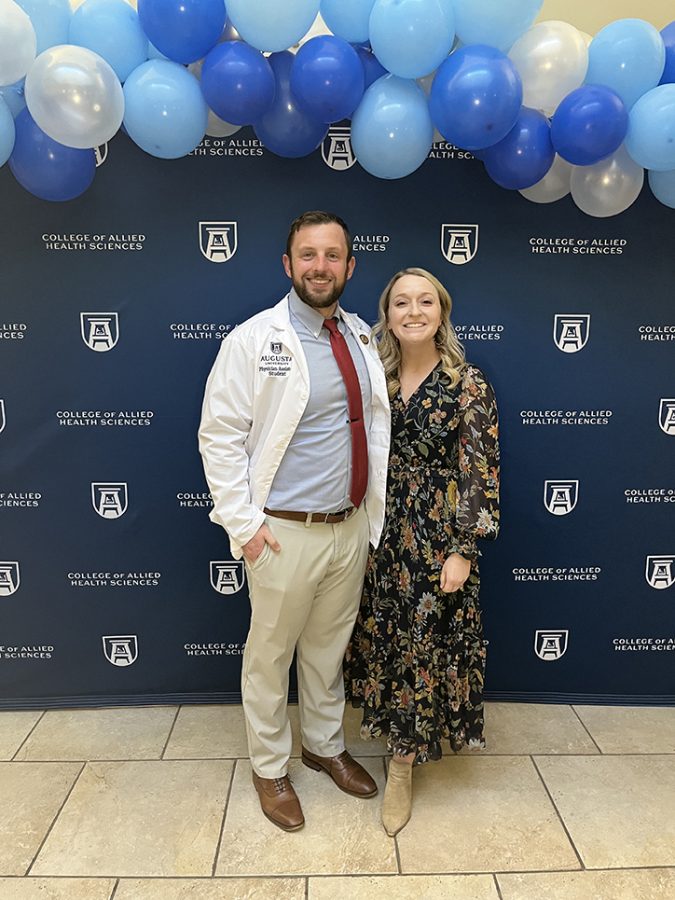
“My wife and her support throughout my time in this program has been integral to my success,” Boles said. “I honestly don’t believe I could have done this without her. She is currently a PA herself, so it really means a lot to not only have her love and support but also have the support of someone who knows exactly what I’m going through because she has gone through it herself.”
Finally, he is one of three males in a cohort of 46. The PA profession itself is predominantly female so he was prepared for the large discrepancy but was still surprised to be one of three males. He said over time that became less important than the shared experience of just getting through PA school together.
Prince-Coleman said Boles contributes to the diversity of perspectives within the program, which in turn enriches the learning environment for both his peers and faculty. She noted his individual qualities – his maturity, respectfulness and collaborative nature – have made him a positive influence within the cohort. She said faculty have also noted his professionalism and ability to contribute meaningfully to group dynamics, which benefits both classroom and clinical settings.
“This program is demanding for everyone, and that challenge has a way of bringing people together. While the three of us certainly group up for different things like group projects or class activities, we’ve all certainly made meaningful relationships with others in the cohort,” Boles said. “I think our entire cohorts strives to lean on one another whether that is sharing notes, encouragement before exams, or simply just checking in on one another.”
As Boles reflects on his time at AU, he knows being a Jaguar for life means being part of something bigger than his time here – that he’s connected to a community of people committed to learning, serving and making a difference.
“I’m grateful to share an experience that so many before me have had and that others after me will continue to have,” he said. “The PA program challenged me in ways that helped me grow not just as a future provider, but as a person. Moving forward, I hope to take what I’ve learned here and use it to care for others well and give back to the communities I serve.”

 Felicia Baskett
 Haley Crain
 Jaylon Brooks
 Jamison Guice