 Augusta University
 Milledge Austin
New research out of Augusta University reveals widespread prevalence of cardiovascular-kidney-metabolic syndrome, or CKMS, among adults in the United States, but there is a notable increase in key sociodemographic groups, including women, Black Americans, residents in rural areas and individuals with lower income.
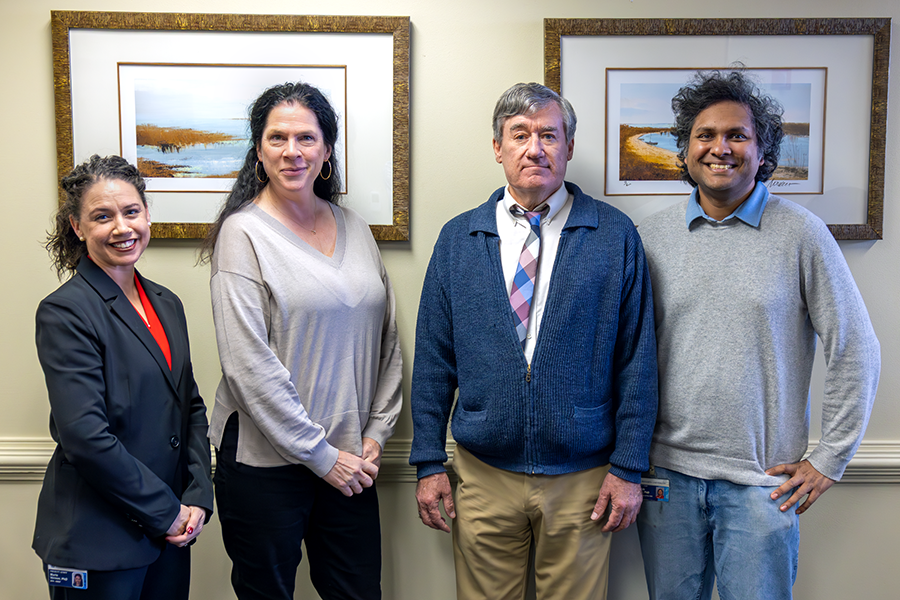
The study continues the work of AU’s American Heart Association-funded Strategically Focused Research Network center, and was led by Steven Coughlin, PhD, and co-authored by Biplab Datta, PhD, Marlo Vernon, PhD, and Jennifer Sullivan, PhD, as well as two students from the Medical College of Georgia at Augusta University, Nikul Parikh and Ashley Oh.
The research team used national data to examine how CKMS affects adults across age, sex, race, education, income and geographic location. As a condition, CKMS was formally defined by the American Heart Association in 2023, but the team was able to draw on Behavioral Risk Factor Surveillance System data from 2019, 2021 and 2023. The research offers some of the most comprehensive prevalence estimates to date for a syndrome that links cardiovascular disease, kidney disease, diabetes and metabolic dysfunction.

“The study highlights the very high prevalence of CKMS in the adult U.S. population, as well as differences by sex or gender across the lifespan,” said Coughlin, program director for the Master of Science in Epidemiology and professor in the Department of Biostatistics, Data Science, and Epidemiology in Augusta University’s School of Public Health. “We found that Black or African American adults born between the 1950s and 1990s have a particularly high prevalence of CKMS, which is an important observation for future studies aimed at preventing CKMS or slowing its progression.”
Because CKMS is a relatively new clinical framework, not much was known about how common it is in the U.S. population. The study found that CKMS is common among adults, with very high rates of advanced disease, especially stage 4 in older adults, those without a college degree, lower-income households and people living in rural areas.
The study also found big differences in race and sex. Among adults born between the 1950s and 1990s, advanced CKMS was more common in non-Hispanic Black individuals than in non-Hispanic white adults. While previous studies mostly reported CKMS prevalence as a whole, the current study explores prevalence rates by birth decades, providing a more nuanced understanding of the burden.
This research adds to and supports national studies that used National Health and Nutrition Examination Survey data, which also found that advanced CKMS is more common in older adults, men and Black Americans. Overall, the findings show how big of a public health problem CKMS is and highlight the need for targeted prevention and intervention strategies at all stages of life.
“This study provides estimates of CKMS prevalence across birth decades and by sociodemographic attributes within each birth decade. This will help policy makers and stakeholders to better understand the differential burden of CKMS in the U.S. population,” Datta said.
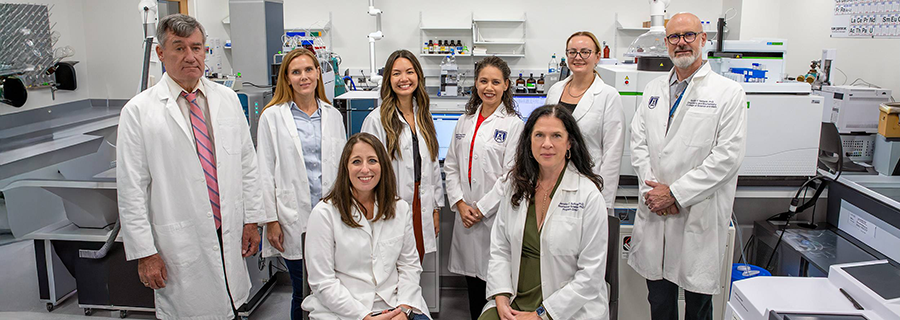
With a background in epidemiology that includes 11 years with the National Center for Chronic Disease Prevention and Health Promotion at the Centers for Disease Control in Atlanta, Coughlin’s research focuses on racial disparities, women’s health, cardiometabolic disease and cancer survivorship. He has written 16 books and serves on the editorial boards of several scientific journals.
Vernon is an associate professor in AU’s School of Public Health and a member of the Georgia Cancer Center, the Institute for Public and Preventive Health and the Georgia Prevention Institute. Vernon’s research focuses on family-based approaches to healthy behavior change, community cancer prevention and maternal mortality and morbidity prevention. She is the principal investigator on the Cancer Health Awareness, Navigation, and Screening project and VidaRPM – a remote self-monitoring application for blood pressure and mental health with care coordination for pregnant and postpartum women. She also co-directs the HRSA-funded Access to Services for Pregnant and Postpartum Persons in Northeast Georgia project and leads a breastfeeding support and community engagement project, Mothers Informed Lactation Knowledge and Support.
An assistant professor in the Department of Health Management, Economics, and Policy in the School of Public Health, Datta is a population health scientist with a background in applied microeconomics. He is an expert in quantitative methods and a highly published author in areas of public and population health. He also heads up the team of faculty and staff from the Institute of Public and Preventive Health in SPH that creates the “Healthy Georgia: Our State of Public Health” report each year.
An internationally recognized expert and leader in the field of sex differences in cardiovascular physiology and pathophysiology, Sullivan is the dean of The Graduate School at Augusta University and serves as the director of the Rural Obese At Risk, or ROAR, initiative in AU’s National Institutes of Health Specialized Center of Excellence. Sullivan’s research has been continuously funded by the NIH and American Heart Association since 2008. Sullivan has published more than 135 peer-reviewed articles in leading cardiometabolic journals. Her exceptional contributions have been recognized with numerous prestigious honors, including the Inaugural John Laragh Research Award by the American Journal of Hypertension, Mid-Career Award for Research Excellence from the AHA Hypertension Council, Ernest Starling Lectureship Award, which is the APS Water and Electrolyte Homeostasis Section’s highest honor, and the Harriet Dustan Award from the AHA, recognizing outstanding contributions by female investigators in hypertension research.


 Hannah Litteer
 Jaylon Brooks
 Jamison Guice
 Nina Sligar