 Augusta University
 Paige Tucker
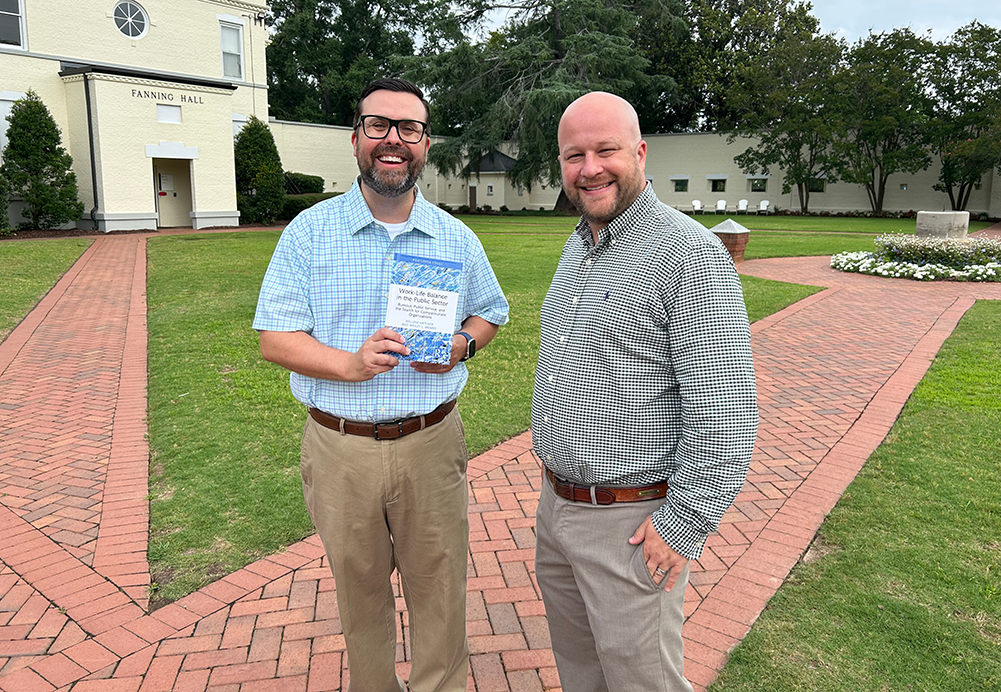
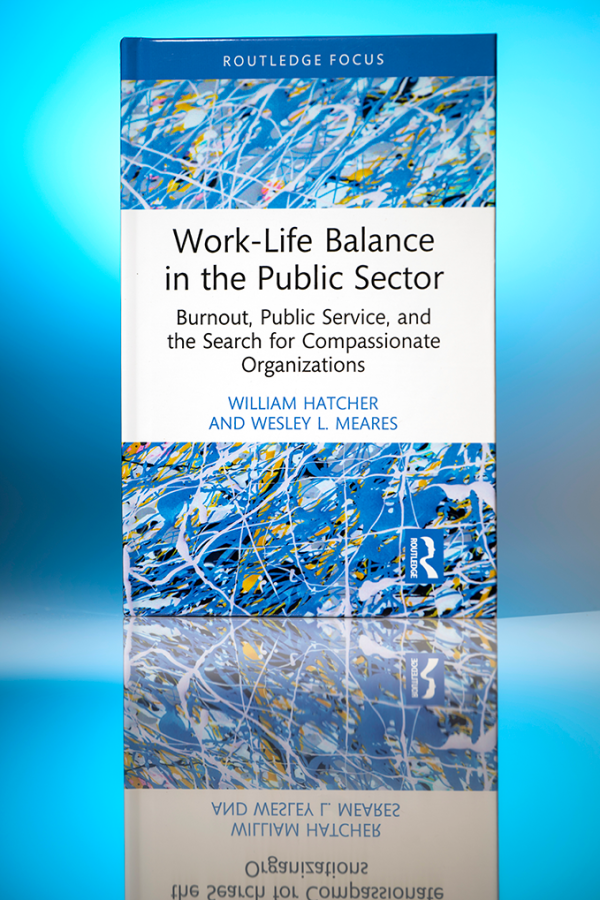
It’s an age-old question that perhaps has a more complicated answer in the modern world: is work-life balance possible? Pamplin professors Wesley Meares, PhD, and William Hatcher, PhD, discuss this in their new book, Work-Life Balance in the Public Sector Burnout, Public Service, and the Search for Compassionate Organizations.
Pointing to research with public-sector employees across the country, the professors contend that work-life balance is more of a harmonious relationship between professional and personal life than an absolute.
“It’s not a myth … it’s just a constantly moving target,” said Meares, professor of public administration and director of the Master of Public Administration program in the Katherine Reese Pamplin College of Arts, Humanities, and Social Sciences at Augusta University. “It’s not a yes-or-no … it’s more like, ‘How balanced am I?’ That should be more of the question. When we talk about work-life balance, we’re talking about those barriers between what is work and what is personal life and how those barriers are being eroded between either your personal life eroding into your work or your work eroding into your personal life. So, the ultimate definition we landed on is having a harmonious relationship between work, work responsibilities and life in your life responsibilities and having something that is balanced and harmonious and works for the individual.”
Meares added that balance likely looks a bit different for everyone at different points in their lives. Factors such as career stage, family responsibilities and personal priorities can impact what balance means to an individual.
Through their research, the two found that holding the belief that balance is impossible is actually potentially harmful, which could lead to burnout. Having that mindset, Meares said, we will never seek solutions or try to address it.
“There is such a thing as work-life balance. We can have this relationship where we can do what we need to do at work and what we need to do in life.”
Burnout hurts more than workers. It can spread from the individual to organizations and communities and from groups to individuals. Social media, the pressure to be constantly available and threats toward public servants increase stress all lead to burnout.
“You’re losing so much knowledge when you’re kind of pushing people out and losing potentially good employees.”
The authors noted it’s not just a personnel problem. It affects public services, leadership pipelines, institutional knowledge and even public trust.
“You could be driving out talent. If you drive out talent too early, you’re creating problems for that next generation – who’s going to be the next public leader? Who’s going to be the next city administrator? Or how are these city administrators going to continue to move up?”
Though Meares and Hatcher’s research focused on public-sector employees, the findings can be applied to the private-sector workforce as well. Strong leadership and flexible work policies can be helpful and give employees greater control over how and when they work. Flexibility is one of the most important factors to work-life balance, according to the surveys.
Balance is different for everyone, depending on individual circumstances, but vital to preventing burnout. Their goal for the book is to further discussion on the issue and give public-sector organizations more tools and strategies to create healthier, more balanced workplaces.
“We hope the book is used to advance scholarship in how we address burnout among public servants. Most importantly, we hope the findings are used by city managers and really all public servants to help them address their burnout and also promote work-life balance and harmony in their organizations,” said Hatcher, professor and chair of the Department of Social Sciences. “Achieving this and having healthy public workplaces is vital to the health of our communities and the quality of public services in our cities, counties, states, and the overall nation.”


 Hannah Litteer
 Jaylon Brooks
 Morgan Hayes
 Tyler Wooten