Augusta University
 Stacey Eidson
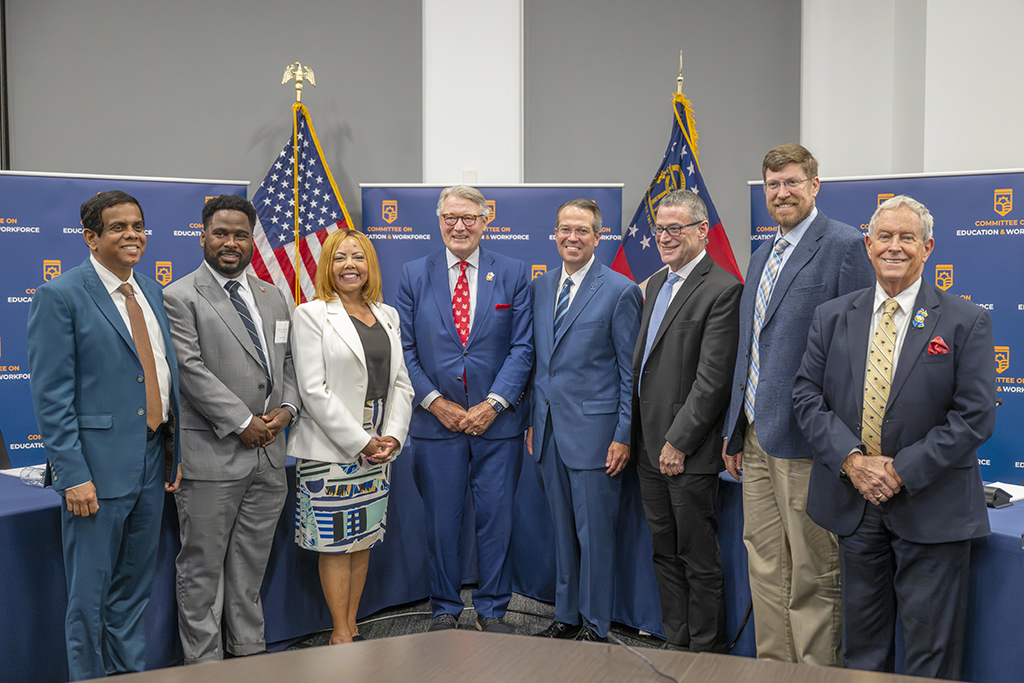
The U.S. House of Representatives’ Committee on Education and Workforce held its first artificial intelligence (AI) focused field hearing titled “Building an AI-Ready America: How AI Is Creating Opportunities Across America’s Workforce” at the Georgia Cyber Center at Augusta University on July 24.
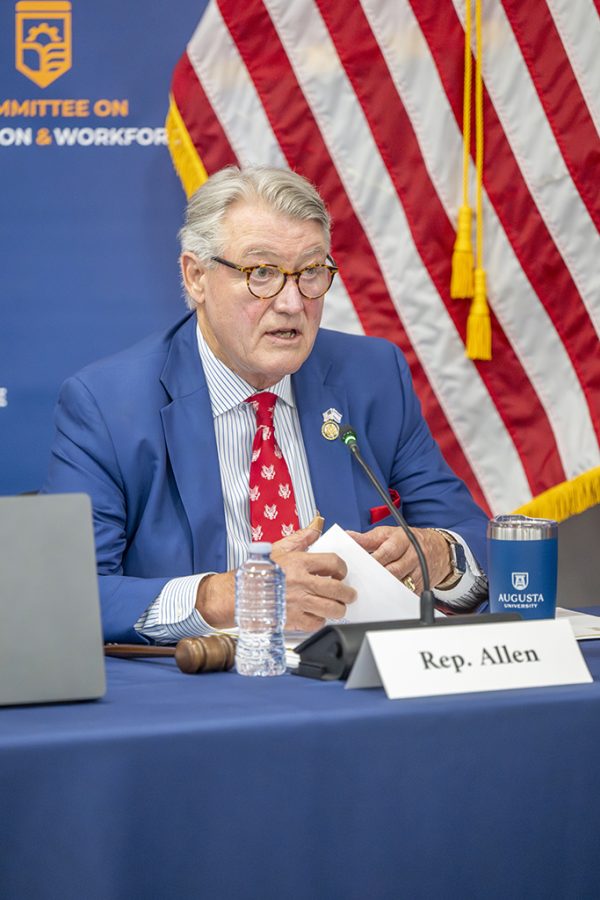
U.S. Rep. Rick W. Allen (R-Georgia), who represents Georgia’s 12th District that includes the Augusta area, chaired the committee’s hearing. He is a member of the U.S. House Education and Workforce Committee and also the chairman of its Subcommittee on Health, Employment, Labor, and Pensions. Allen, along with U.S. Rep. Joe Wilson (R-South Carolina) and U.S. Rep. Lucy McBath (D-Georgia) participated in the field hearing.
Jeffery Talbert, PhD, chair of the Department of Artificial Intelligence and Health at the Medical College of Georgia at Augusta University and a Georgia Research Alliance Eminent Scholar, also served as one of the witnesses during the field hearing.
“Today, we examine how artificial intelligence, AI, is creating economic opportunities for American workers, job creators and our communities,” Allen told the committee. “There’s no better place to hold this hearing than right here in Augusta. Right here at the Georgia Cyber Innovation and Training Center on Augusta University’s campus.”
Allen said the combination of the Georgia Cyber Center and Fort Gordon in the Augusta area provides the perfect expertise needed when discussing subjects such as artificial intelligence.
“The Georgia Cyber Center was created to meet this growing demand and drive collaboration between academia, government and industry stakeholders to equip a superior cybersecurity workforce with the skills they need. AI is playing a significant role in this mission as the technology continues to transform Army Defense Cyber Operations.”
U.S. Rep. Rick Allen (R-Georgia)
“Fort Gordon is just a short 30-minute drive from where we currently sit,” Allen told the committee. “It hosts the Army Cyber Center of Excellence and is home to Army Cyber School, which trains, educates and develops the Army’s Cyberspace and Electronic Warfare workforce. Every year, thousands of people leave Fort Gordon looking for work.”
“The Georgia Cyber Center was created to meet this growing demand and drive collaboration between academia, government and industry stakeholders to equip a superior cybersecurity workforce with the skills they need,” he added. “AI is playing a significant role in this mission as the technology continues to transform Army Defense Cyber Operations.”
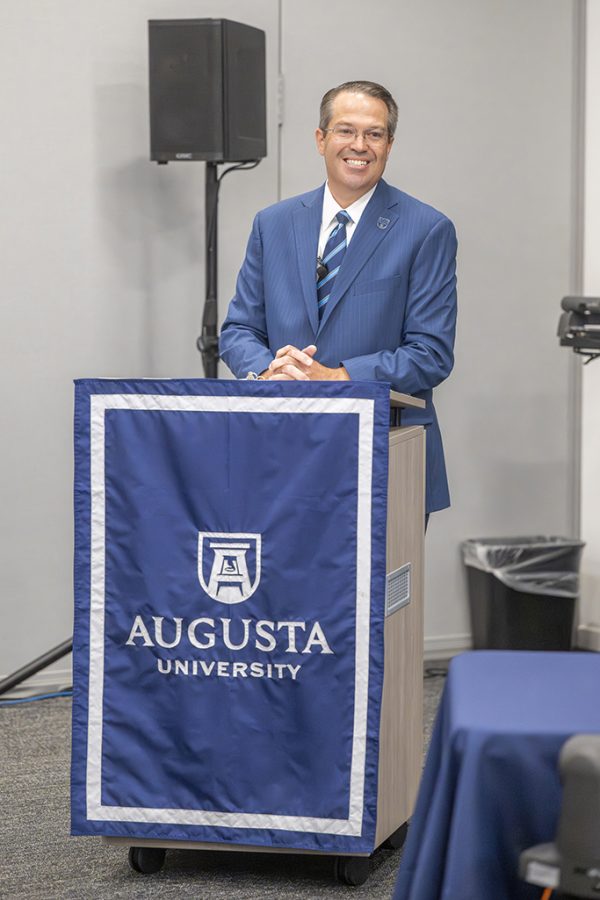
Augusta University President Russell T. Keen told the House Committee it was an honor for AU’s Georgia Cyber Center to host the field hearing discussing artificial intelligence.
“I want to thank my dear friend, Congressman Rick Allen, for bringing this important conversation to Georgia’s 12th District, and to Augusta University,” Keen said. “Congressman Allen has long recognized the important role that education, innovation and workforce development play in strengthening our state and our nation.”
Artificial intelligence is clearly reshaping the nation’s economy and creating new opportunities for the American workforce, Keen said.
“Artificial intelligence will continue to change how we live, how we learn, how we work and how we solve problems,” Keen said. “It will also help us solve the diseases that have plagued generations of our families for far too long. By leveraging artificial intelligence, we will solve those diseases and cure what ails Americans. Augusta University intends to lead in that transformation in ways that strengthen our workforce, advance discovery, improve lives, change lives and save lives.”
“By leveraging artificial intelligence, we will solve those diseases and cure what ails Americans. Augusta University intends to lead in that transformation in ways that strengthen our workforce, advance discovery, improve lives, change lives and save lives.”
Augusta University President Russell T. Keen
With more than 30 years of experience in biomedical informatics, Talbert was one of four witnesses in the field hearing. His work has been published approximately 260 times, and he has also led more than 100 funded research projects totaling more than $130 million.
“The Medical College of Georgia is one of the largest medical schools in the country. We provide the next generation of physician leaders with a life-saving and life-changing education. As a part of that education, we are teaching students how AI can be a force amplifier and contribute to better health outcomes for their patients,” Talbert said. “In healthcare, AI is increasingly demonstrating its greatest value is through augmentation. The strongest evidence shows AI helps healthcare professionals work more effectively, reducing administrative burdens, improving patient outcomes and expanding workforce capacity.”
The healthcare workforce faces staffing shortages, rising administrative demands, burnout and retention challenges, Talbert said.
“One of the healthcare industry’s most successful AI applications is ambient documentation technology, which converts clinical conversations into draft notes that clinicians review and approve,” he said. “Multiple studies show these tools reduce documentation burden, after-hours work and burnout. One multisystem implementation found clinician burnout fell from approximately 52 percent to 39 percent.”
AI is also producing measurable improvements in healthcare quality and medical discovery, he said.
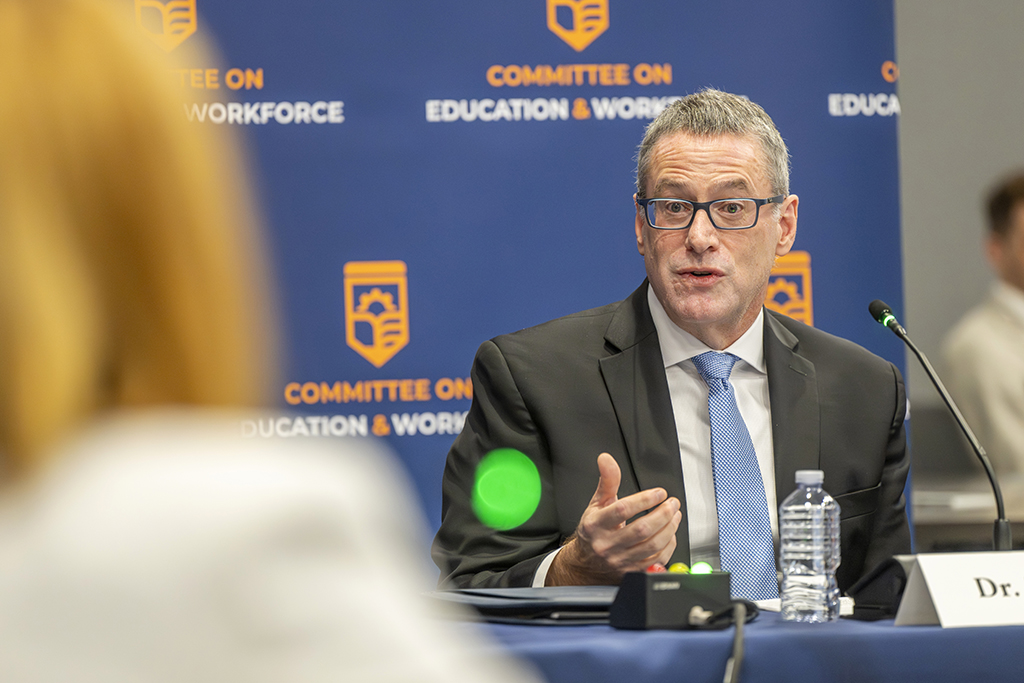
“For example, large studies of AI-assisted breast cancer screenings have shown approximately 29 percent higher cancer detection, helping more patients benefit from earlier diagnosis and treatment,” he said. “AI is also demonstrating the potential to predict serious complications before they occur.”
America’s opportunity is not simply to adopt AI, but to lead its responsible development, education and implementation, Talbert said.
“That is why Augusta University established the Department of AI and Health at the Medical College of Georgia, the first department of its kind in Georgia, to advance AI research, support groundbreaking achievements in translational science and support responsible implementation of AI in clinical practice,” Talbert said.
Allen thanked the witnesses for their insight on how AI can improve people’s lives, strengthen the economy, create jobs and reinforce the United States’ leadership in innovation.
“AI has the potential to be a powerful engine of economic growth. Across the country, AI is enhancing workers’ knowledge, skills and productivity while also automating routine tasks and improving efficiency across every industry,” he said. “As it is introduced in more workplaces, our job as policy makers is to foster an environment that delivers new and greater opportunities for American workers. The potential for AI to create jobs, strengthen existing industries and empower job creators is immense, but we must ensure that our policies encourage its responsible adoption, so that every worker can benefit from these advancements.”
The purpose of these field hearings is to listen to the American people about their thoughts on the future of AI, he said.
“As we consider the role of AI in the workplace, we should be wary of a one-size-fits-all approach,” Allen said. “The needs of a family farm are not the same as those of a hospital, a manufacturing plant or small business. Congress must pursue flexible policies that allow businesses to adopt AI in ways that best suit their industry and workforce.”
“Our goal should be to foster innovation by ensuring that businesses of every size, in every corner of the country, can benefit from AI,” he added. “That begins by listening to the voices of workers, producers, entrepreneurs and industry leaders to craft solutions that reflect the diversity of America’s economy. That is exactly what these hearings are designed to do.”


 Tyler Wooten
 Chris Curry
 Hannah Litteer