Augusta University
 Hannah Litteer
We’re in the midst of a new era of technology, with artificial intelligence changing the way we operate in almost every aspect of our lives. Occupations, academia, research, entertainment and miscellaneous tasks have all been impacted, positively or negatively, by technological developments. The dentistry field is no exception, with AI being used as a tool to enhance clinician, patient, instructor, student and researcher satisfaction.
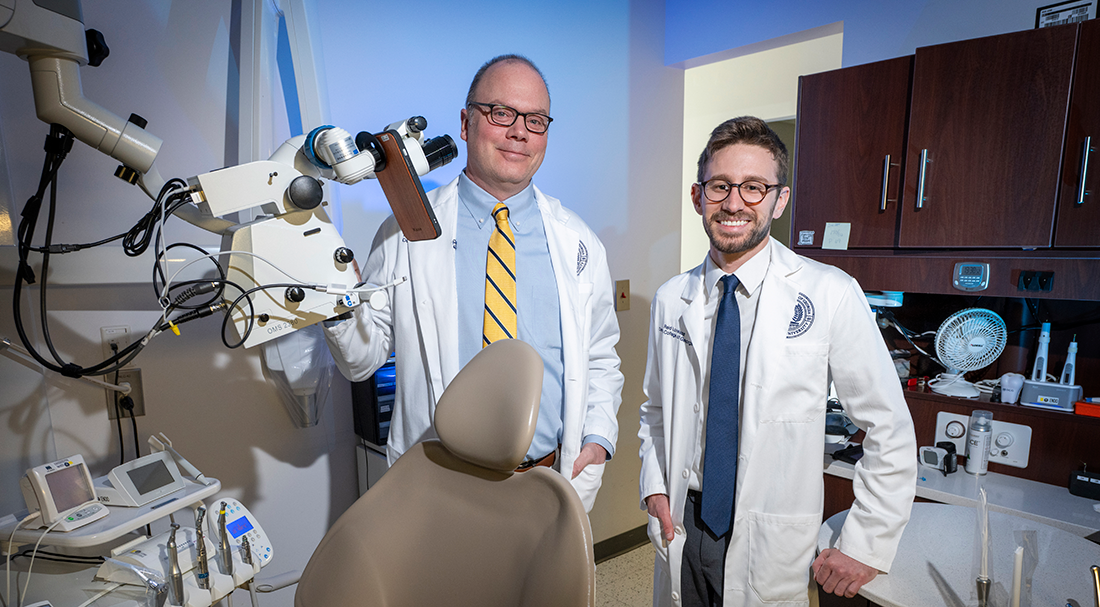
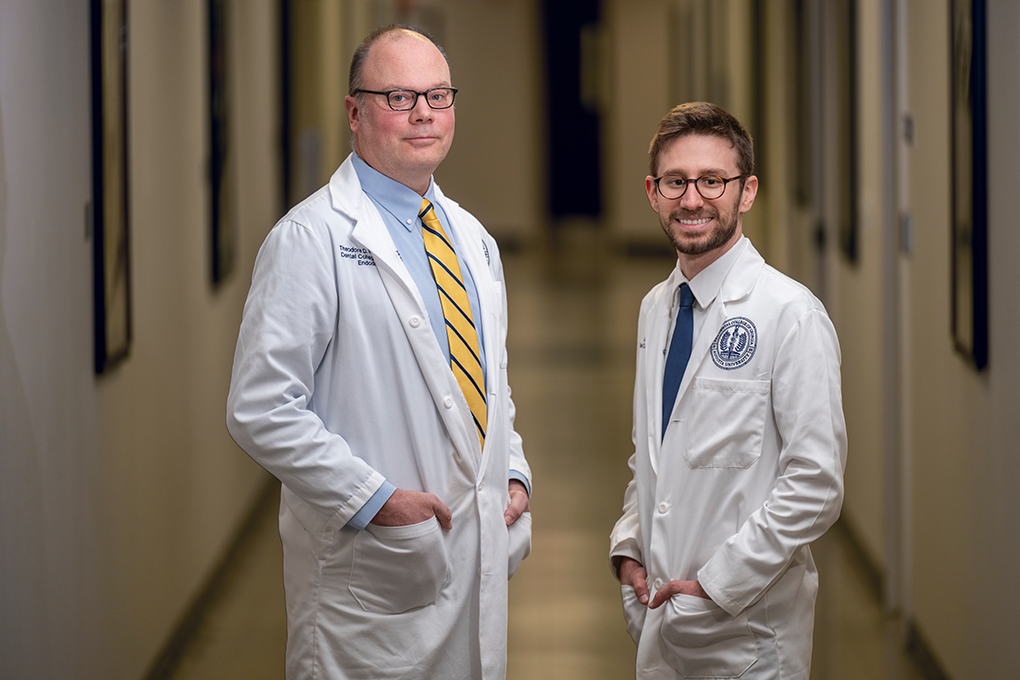
A recently published review from the Dental College of Georgia at Augusta University written by Theodore Ravenel, DMD, Franklin R. Tay, BDSc, PhD, and third-year DCG student Reid Loveless, titled, “The role of artificial intelligence in shaping dentistry through advancement in data acquisition, clinical practice, education, and research,” explores how AI is applied in dentistry and its possible future impacts.
“There are a lot of misconceptions and misunderstandings about AI,” Ravenel said. “And so for us, we really wanted to have a critical evaluation of how AI is reshaping dentistry by examining four key areas: data acquisition, clinical practice, education and research because all of those components are interconnected.
“From there, we wanted to look at the limitations and barriers to clinical translation and suggest strategies to utilize AI in efficient, ethical and accurate ways in the future.”
Ravenel is an associate professor and director of the predoctoral endodontic program at DCG with more than 25 years under his belt in the dental field. He’s witnessed significant advancements in dental technology, whereas Loveless has benefited from using AI in his studies, boosting his expertise to that of a seasoned professional.
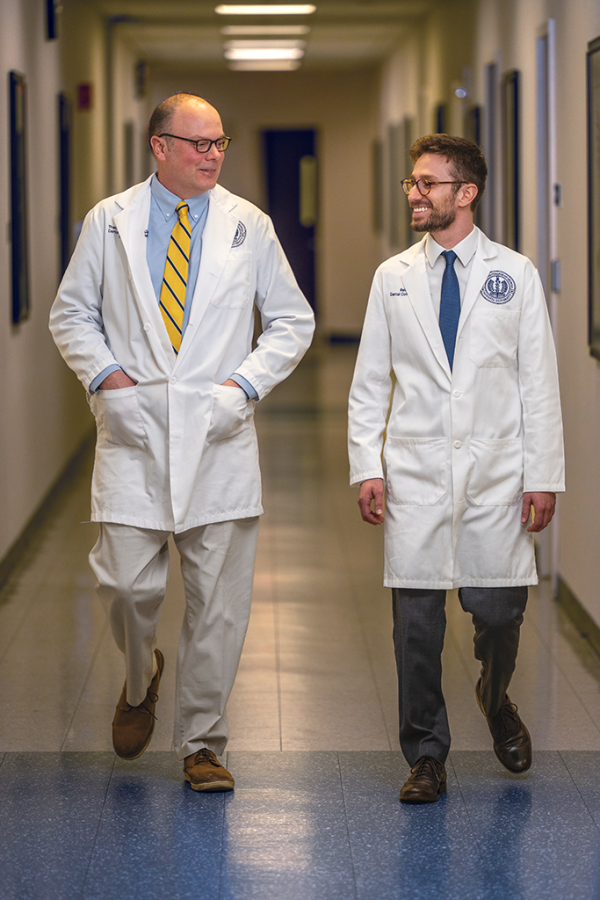
“We’re able to take someone like Reid and someone like me who has years of experience, and the technology really levels the playing field. He’s able to use it to provide more advanced care than he normally would be able to,” Ravenel explained. “I’ve seen residents who have been in my residency for maybe a month or two, and they’re able to do something that took me years and years of practice to get to that point. From that standpoint, it leads to higher-quality care for the patients, given that there is a limited number of endodontists in the world.”
Data consideration and evaluation metrics
The first section of the review focuses on the methodology for developing AI systems in dentistry. Key considerations before using AI software include patient data acquisition, standardization, privacy and security.
“Ethically, all of that stuff comes into play from the standpoint of patients being involved, so you have to be careful and make sure that it’s de-identified. Anything that you put in there is going to be basically for the entire world to see, so there are safeguards that are used and luckily, we have things like the Health Insurance Portability and Accountability Act (HIPAA) in the United States,” Ravenel said.
The section also discusses evaluation metrics for measuring AI tool efficiency in dentistry. These metrics vary based on the tasks the tools perform, and they help determine both accuracy and clinical usefulness.
The authors highlight that metrics alone do not guarantee an AI tool’s clinical readiness. The technology must be tested with different datasets than those used for its training, and other dental trials are also needed to ensure real-world effectiveness. Then, all results should be logged transparently for consistent comparison across institutions.
Clinical applications of AI in dentistry
“Just using it cautiously and responsibly can have a lot of benefits, but if you’re too reliant on it, then it’s the opposite impact.”
Reid Loveless, third-year DCG student
The second section centers on AI in clinical settings, showcasing how it is implemented in almost every aspect of a patient’s experience. Conventional dental treatment methods are being replaced by precise AI tools – but they haven’t replaced human expertise.
“It’s like a double-edged sword because there are a lot of places where it can improve patient care. It can make things more accessible, affordable, possibly more accurate in diagnosing, but at the same time, if it’s just being used to cut corners or to avoid paying a human, it’s going to be the patient and their care that pay the price,” Loveless said. “Just using it cautiously and responsibly can have a lot of benefits, but if you’re too reliant on it, then it’s the opposite impact.”
AI aids in diagnosis accuracy, streamlines preoperative planning, assists during procedures and helps predict treatment outcomes.
The first subsection reviews various AI models and devices for diagnosing and treating dental conditions, highlighting their accuracy and future potential.
The second subsection discusses AI and robotic systems during dental procedures. These systems enhance decision-making, surgical precision, operation times and individualized care, primarily in oral and maxillofacial surgery, orthodontics and implantology.
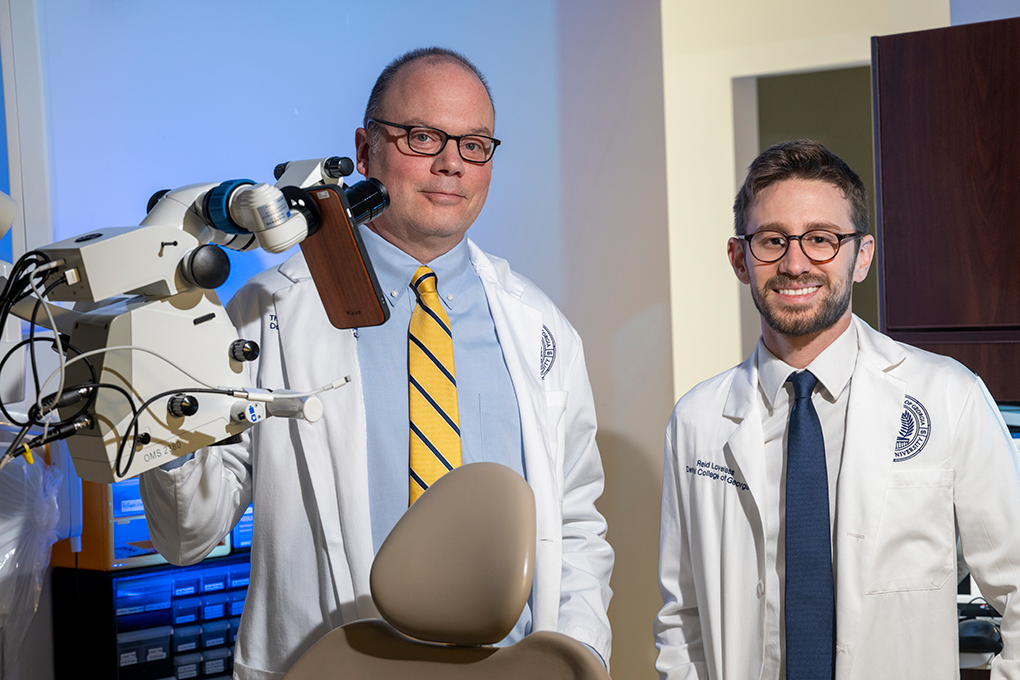
“Right now, there are a couple different software programs out there, but for the most part, they are for caries detection, diagnosis and treatment planning. On the endodontic side, AI helps to measure the length of a tooth or identify pathology on a radiograph and things of that nature. But it’s mainly being used to help dentists like periodontists identify bone loss or help an orthodontist with their treatment planning from the standpoint of analyzing and predicting whether they’re going to need interceptive orthodontics down the road,” Ravenel said.
Lastly, the authors note AI’s ability to analyze risk factors and predict treatment outcomes by processing large datasets and providing objective insights for clinicians.
AI in dental education and training
The third section examines AI’s impact on dental education. It changes how dental students are trained, the skills they learn and how quickly they learn them. Current AI and robotics tools simulate real-world scenarios, helping students bridge the gap between classroom learning and clinical practice.
Loveless noted a learning tool developed by DCG associate professor Rafael Pacheco, PhD that incorporates AI and helped him in Pacheco’s dental materials class.
“It basically evaluated our reasoning. So it gave us a patient scenario, and then asked, ‘What should you do as a provider?’ Then you make a decision and explain your reasoning, and then it’ll say yes or no with a thorough explanation as to why,” Loveless said. “If you were successful, then it would progress you to the next question or the next scenario. So I thought that was pretty neat.”
The tool kept Loveless on track as he navigated mapping out complex treatment plans and helped Pacheco as an instructor by providing immediate feedback to a class of nearly 100 students.
“You can’t have faculty for every single question giving you feedback for every one of your responses, so it really helped out in that way.”
DCG students also have use of the SIMtoCARE Dental Trainer, a virtual reality tool that simulates tooth preparation for cavity filling and endodontics.
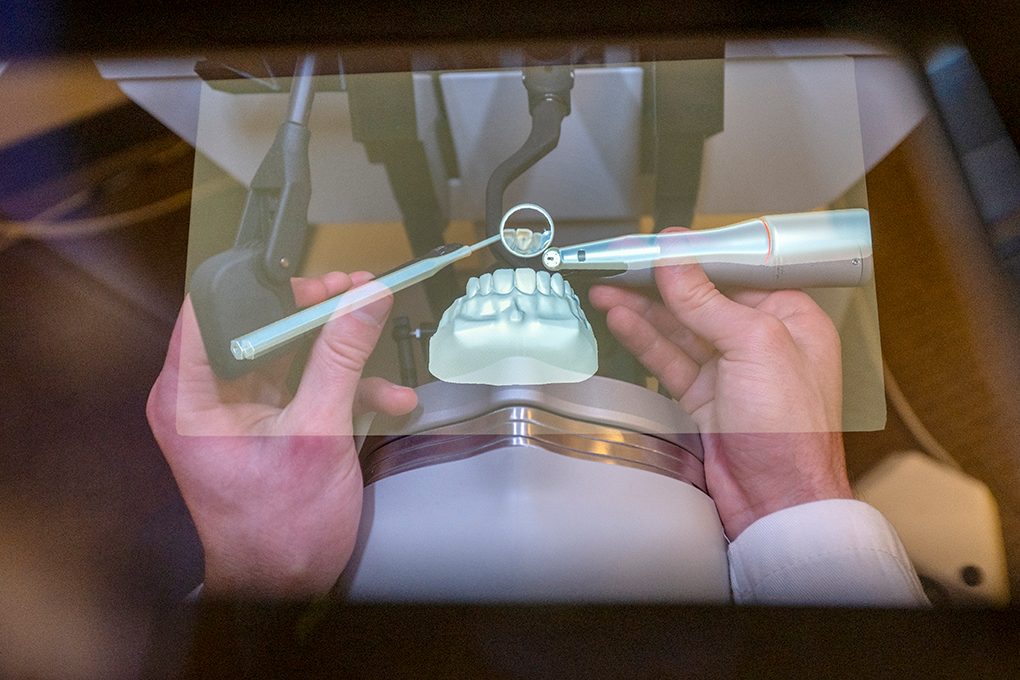
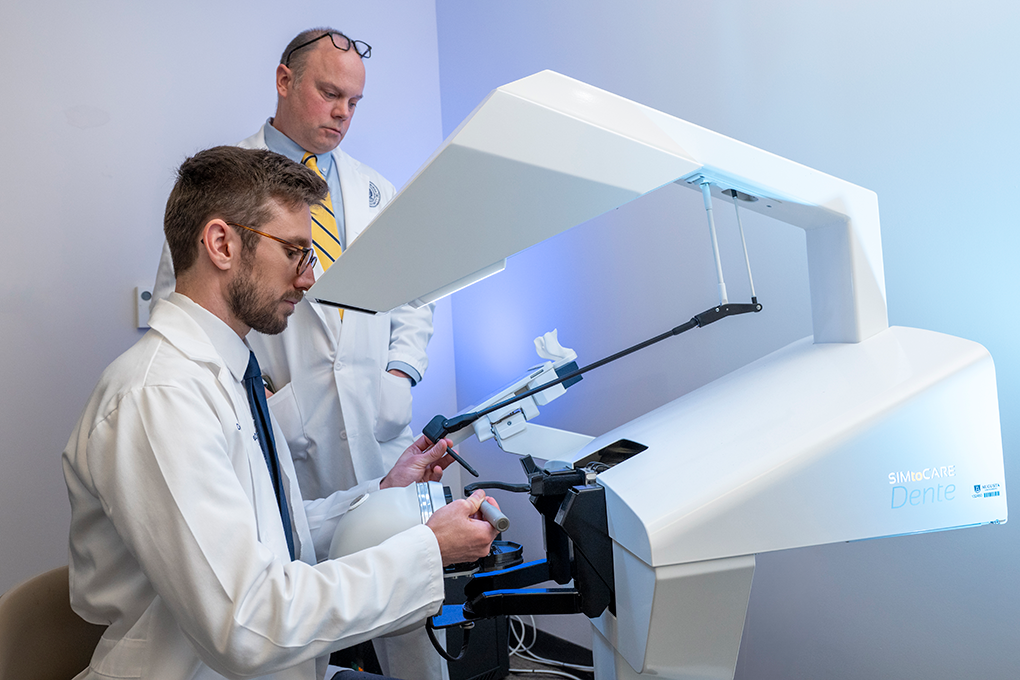
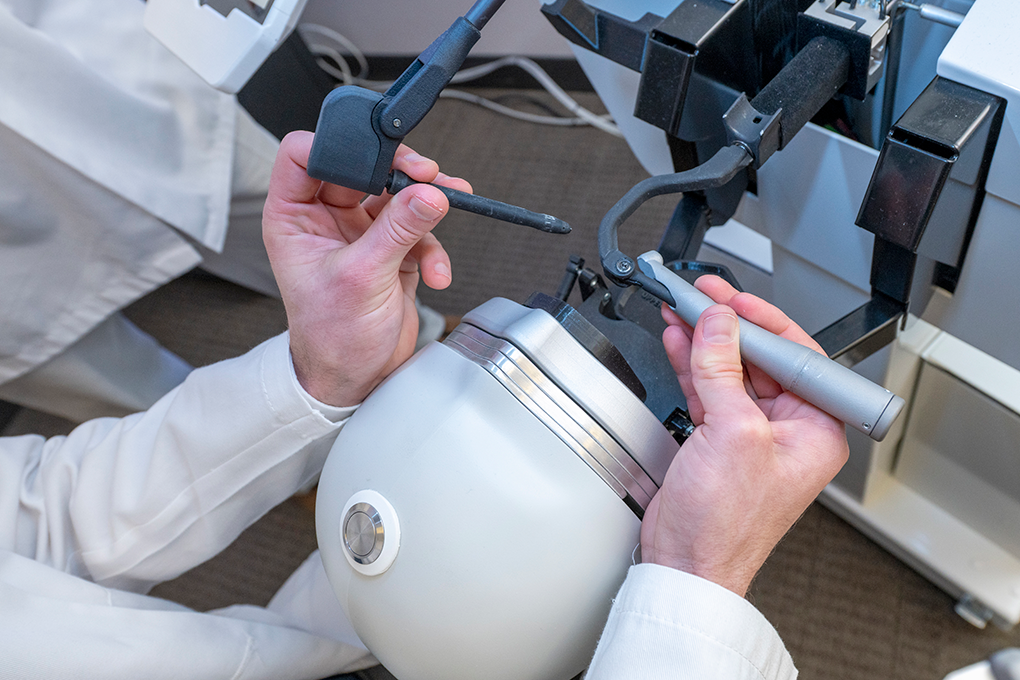
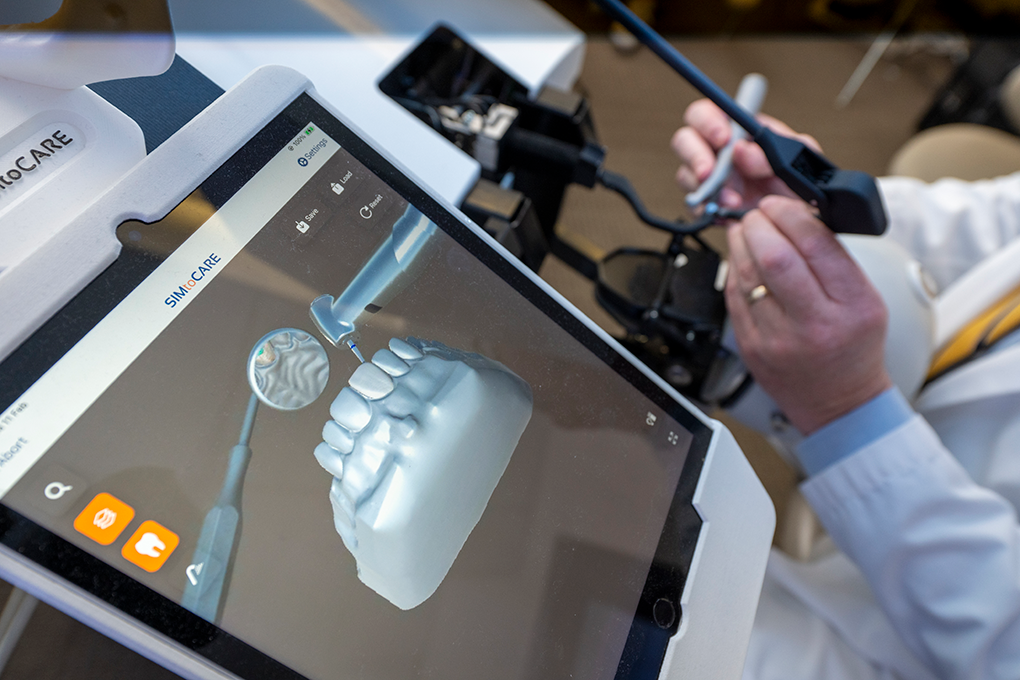
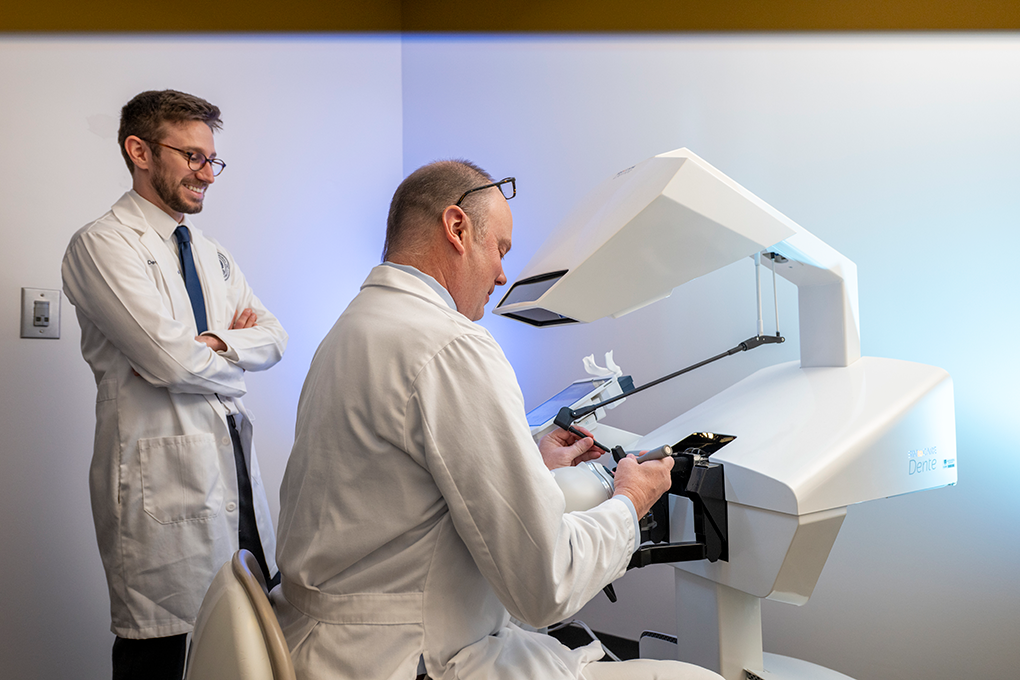
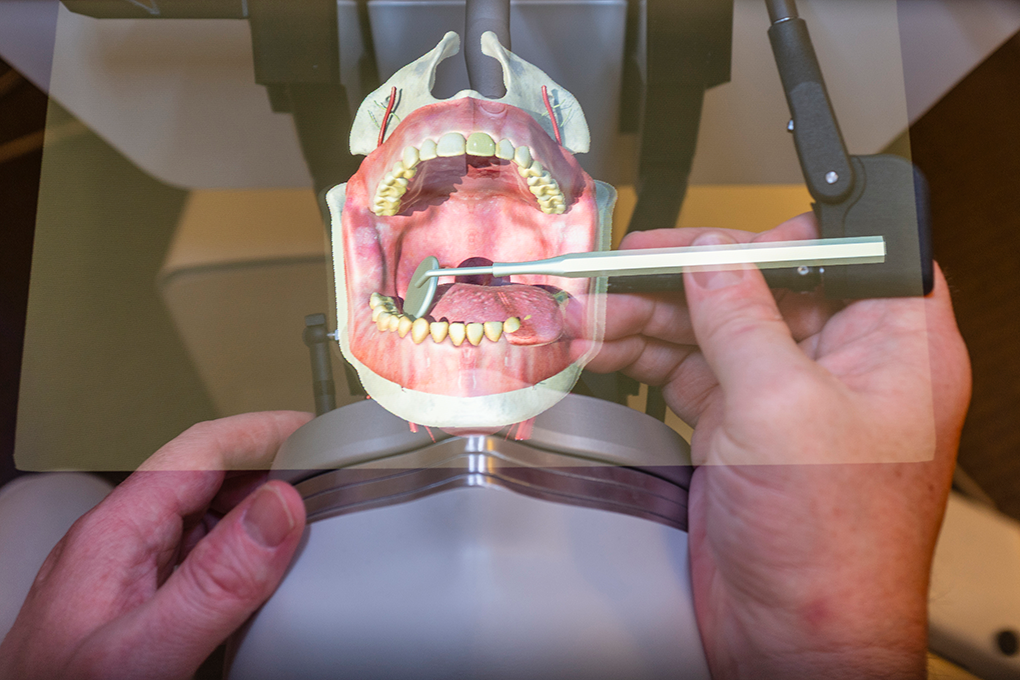
In addition, Ravenel and other faculty and residents are working on a chatbot that gives students real-time feedback on their tooth preparations.
“They scan their completed preparations with their phones, and the chatbot tells them if they would pass the board certifications based on the preparation,” Ravenel said. “We want students to be able to get objective feedback immediately based on what the rubric for the actual test is. So, that’s one of the things that we’re working on right now and hopefully we’ll have the paper out on that in the next month or so.”
AI chatbots are also being used to educate patients and ease their minds about dental treatments, with the authors citing reports of improved patient satisfaction with AI-generated education materials.
The section wraps up with a brief discussion on AI’s role in reducing cheating and other fraudulent activities in dental academia through monitored assessment proctoring systems, while ensuring fairness across institutions through resource-sharing platforms.
AI in scientific discovery
“In just a single experiment, you may have a terabyte worth of data, and as humans, we can’t possibly begin to sort through it all, so we rely on these tools to help us identify patterns and make sense of it all.”
Reid Loveless, third-year DCG student
The fourth section explores AI as a crucial part of multi-disciplinary research. The review details how AI processes datasets, identifies new biomarkers, develops academic articles and streamlines the peer review process.
“The researchers are able to go back through and look at a lot of the data that they have and check for biomarkers that they might have previously missed,” Ravenel explained. “AI is also helping them to actually refine the papers and get it through the peer review process more efficiently.”
Loveless collaborates with Zoya Kurago, DDS, PhD, on dysplasia research using single-cell molecular characterization to predict if a lesion will progress to cancer. He said AI is instrumental in analyzing large data sets for patterns.
“In just a single experiment, you may have a terabyte worth of data, and as humans, we can’t possibly begin to sort through it all, so we rely on these tools to help us identify patterns and make sense of it all,” he said. “We’re using AI to better understand cancer, but it’s being used in a lot of the same ways to investigate other areas of dentistry and medicine, too.”
Challenges in dental AI implementation
“It is really reshaping dentistry and how we practice dentistry.”
Theodore Ravenel, DMD
The final section addresses AI’s limitations in dentistry and suggests ways to improve them. Key concerns include data limitations that cause biases, ethical issues about patient privacy, model interpretability and maintaining academic integrity.
The efficacy of AI models is contingent upon how vast and diverse the data pool is that programs them, which is why they must be closely monitored and retrained with updated datasets.
“Everything is based on the data that you get. You’re looking at a specific population base that the AI is being trained on, so that what might work, for example, in Portland, Oregon, but might not work for a different part of the United States and you have to keep that in mind,” Ravenel said.
Another limitation is the variance in dental instruments used across offices, which calls for standardization, he explained.
“One office might have brand new equipment, brand new sensors, whereas one has 10-year-old equipment that isn’t the same. The quality of the images you take with the sensors might not be the exact same, and AI is making assumptions based on that, which can lead to misinterpretation.”
To protect patient privacy, the review highlights the need for governance and guidelines for responsible data use.
To improve model interpretability, the review recommends using multiple sources, AI or not, to cross-check results and make treatment decisions, rather than relying solely on AI.
Cognitive gaps among AI developers and dental professionals regarding AI use can also jeopardize patient care. The review suggests interdisciplinary training to ensure proper and accurate use.
To prevent students from using AI to cheat or fraudulently complete assessments, the review encourages educators to set strict guidelines and implement AI-detection tools to maintain academic integrity.
Finally, the review emphasizes that AI should be a tool, not a replacement for human care. AI models lack human experience, empathy and the ability to connect with patients. The best care a patient can receive combines a clinician’s compassion and communication skills with AI’s knowledge and precision.
“It is really reshaping dentistry and how we practice dentistry, is the best way that I can put it,” Ravenel said.


 Jennifer Hilliard Scott
![Participants listen and engage during the Connected for Life Open-House event. [Aaron Smith/Augusta University]](https://jagwire.augusta.edu/wp-content/uploads/sites/15/2026/10/DSC_9186-332x249.jpg)
 Aaron Smith
 Haley Crain