 Augusta University
 Milledge Austin
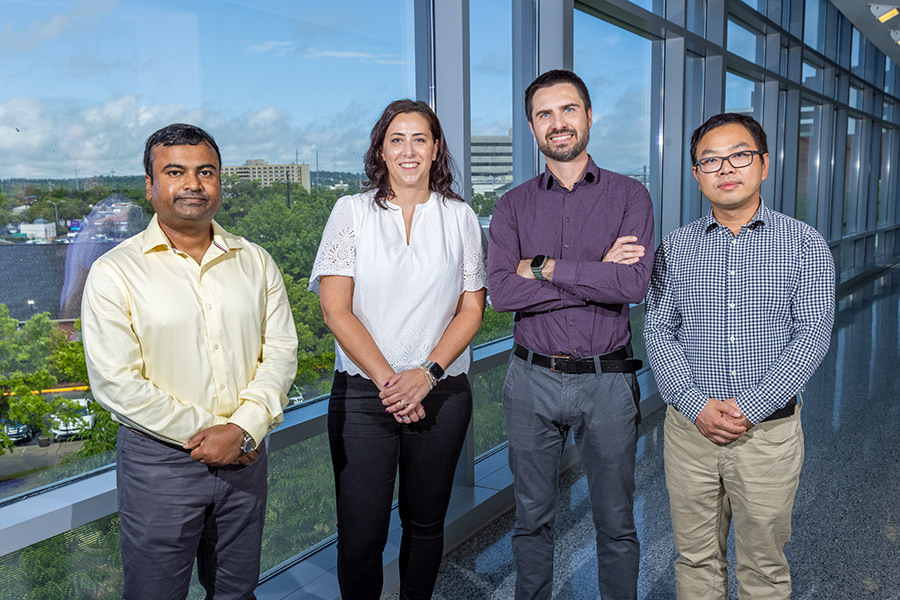
Four early-career researchers from the Medical College of Georgia at Augusta University have been recently awarded Bridge Career Development Awards from the American Heart Association. Each grant provides $77,000 for one year, allowing the early-career researchers to continue projects started under previous early-career AHA grants.
Dipankar Ash, PhD, and Anita Kovacs-Kasa, PhD, researchers in AU’s Vascular Biology Center with appointments in MCG’s Department of Cellular Biology and Anatomy, and Kunzhe Dong, PhD, and Marco Orecchioni, PhD, assistant professors and researchers with the Immunology Center of Georgia with appointments in MCG’s Department of Pharmacology and Toxicology, all received the grants.
“Early career funding is one of the most important investments we can make to advance the future of science,” said MCG Dean David C. Hess, MD. “The American Heart Association has a long history of supporting our researchers, and these awards give these young investigators the momentum they need to pursue innovative ideas and build strong, independent research programs.”
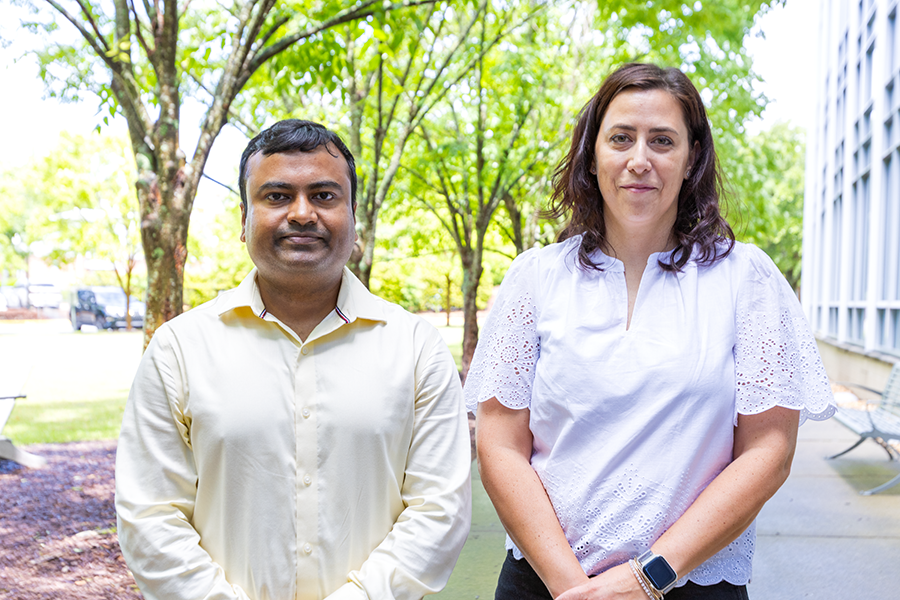
An assistant research scientist in the Vascular Biology Center, Ash joined AU in 2017. His project titled, “Cu Transporter ATP7A Protects Against Atherosclerosis by Limiting Endothelial-to-mesenchymal Transition,” addresses the role of copper and copper transporter proteins in regulation of endothelial cell metabolism in the context of cardiovascular diseases like atherosclerosis.
“Receiving the AHA Career Development Award Bridge funding is very crucial as it ensures that our momentum in discovering how the metabolic changes in endothelial cells affect the atherosclerosis development remain uninterrupted,” he said. “This support not only validates the importance of our work but also provides the essential resources needed to bridge the gap toward long-term independent funding and impactful discovery.”
Kovacs-Kasa joined the VBC in 2012, and in 2020 she joined the lab of Brian Annex, MD, the J. Harold Harrison, MD, Distinguished University Chair in Vascular Medicine in the Department of Medicine. Her research project, “EC Metabolism Unveils Distinct Ligand vs. Long Non-Coding RNA IL21R Activation in Peripheral Artery Disease,” focuses on therapeutic angiogenesis in peripheral arterial disease. Kovacs-Kasa is focusing on the role of the long non-coding RNA IL21R-AS1 in hypoxia-induced angiogenesis and vascular remodeling responses relevant to PAD, with an emphasis on endothelial metabolism.
“Receiving this grant is an important milestone in my career and a meaningful step toward independence, and it also validates our work in endothelial biology and therapeutic angiogenesis,” she said. “It provides critical support for exploring novel pathways that promote vascular growth while preserving barrier integrity, addressing an unmet need in diseases such as peripheral artery disease. Ultimately, this funding brings us closer to translating our discoveries into real clinical solutions.”
“We are very excited to hear about the bridge funding for the American Heart Association Career Development Award for Drs. Ash and Kovacs-Kasa,” said David Fulton, PhD, Regents’ Professor and director of the Vascular Biology Center, as well as the Herpert S. Kupperman, M.D. Chair in Cardiovascular Disease. “Early-career funding is one of the best investments in the future and these awards from the AHA have been critical in making research careers possible. Dr. Ash is working on how the accumulation of copper, an important trace nutrient, can accelerate cardiovascular disease. Dr. Kovacs-Kasa is investigating how to prevent the narrowing of blood vessels in the leg by altering cell metabolism.”
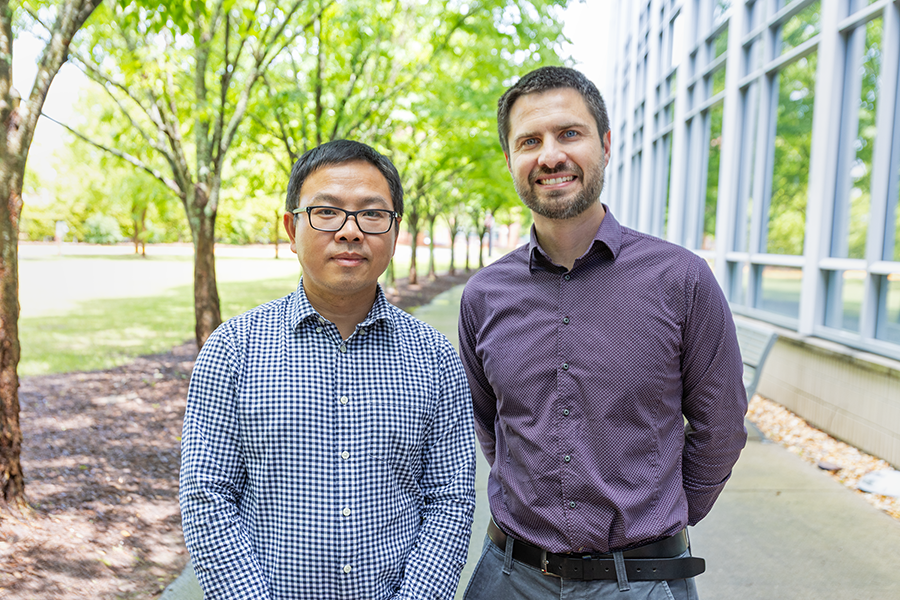
A vascular immunologist with expertise in long noncoding RNA which regulate gene activity both up and down, Dong came to AU in 2017 as a postdoctoral fellow studying with Vascular Biologist Jiliang Zhou, PhD, in the Department of Pharmacology and Toxicology. He was promoted to senior postdoctoral fellow in 2021, and in 2023, he joined the Immunology Center of Georgia as an assistant professor. Dong’s research project is titled, “Elucidating the function of the lncRNA PRDM16-DT in regulating VSMC phenotypic modulation.” During the initial grant, Dong and his team used bioinformatics to analyze multi-dimensional datasets from both healthy people and patients with atherosclerosis. They found a specific gene region carrying DNA mutations linked to both a higher risk of atherosclerosis and lower levels of PRDM16-DT. This molecule is normally very active in smooth muscle cells, a key cell type in atherosclerosis. These findings showed that this region helps control PRDM16-DT activity and may influence disease development by affecting smooth muscle cell functions.
“In this project, we will address two key questions: How this region controls PRDM16-DT levels by turning it on or off and how that affects smooth muscle cell behavior; and how smooth muscle cells change during atherosclerosis when PRDM16-DT is missing in mice,” Dong said. “This award will allow us to answer these important questions and generate key preliminary data that will support future NIH-R01 or AHA-funding applications.”
An immunologist and cellular biologist, Orecchioni joined IMMCG in 2023 from La Jolla Institute for Immunology in California, where he had been since 2017. His project, titled “Distinct Olfactory Receptors Drive Functional Specialization of Macrophages in Atherosclerosis,” is aimed at better understanding how olfactory (smell) receptors on macrophages – which seem to be more common in inflammatory disease states like arteriosclerosis – affect immune cells, including driving inflammation, and whether they provide an unexplored connection between diet/oxidative stress and the progression of heart disease and other metabolic problems.
“This continuation of the career development award provides one additional year of funding to build on the work we’ve already completed,” Orecchioni said. “It will allow us to collect additional primary data so we are better positioned to compete for federal funding opportunities like an R01 grant. This bridge funding will enable us to conduct more experiments, finalize our understanding of the function of Olfactory Receptor 2 and further examine how different receptors may play distinct roles in modulating macrophage function during disease progression.”
“Having two IMMCG faculty receive AHA bridge awards emphasizes our strength in vascular immunology,” said Klaus Ley, MD, co-director of IMMCG and Georgia Research Alliance Eminent Scholar. “Vascular is a young branch of immunology that helps us understand what goes wrong in vascular diseases, including atherosclerosis, a very common disease that causes heart attacks, strokes and cardiovascular deaths.”


 Jennifer Hilliard Scott
![Participants listen and engage during the Connected for Life Open-House event. [Aaron Smith/Augusta University]](https://jagwire.augusta.edu/wp-content/uploads/sites/15/2026/10/DSC_9186-332x249.jpg)
 Aaron Smith
 Paige Tucker
 Valerie Emerick