 Augusta University
 Milledge Austin
“The Healthy Georgia Report is an important tool for benchmarking the health of Georgians and highlighting opportunities for improvement," says Teresa Waters, PhD.


“The Healthy Georgia Report is an important tool for benchmarking the health of Georgians and highlighting opportunities for improvement," says Teresa Waters, PhD.
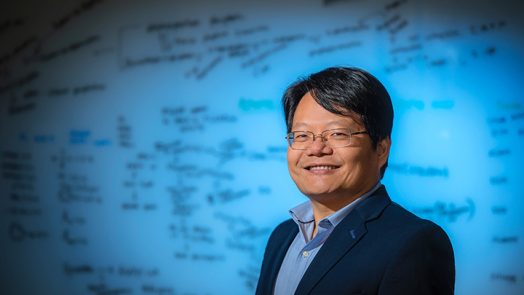
“Glycan sequencing uses advanced tools like next-generation sequencing and AI to quickly and accurately map out these sugar structures,” says Wan Tien Chiang, PhD.
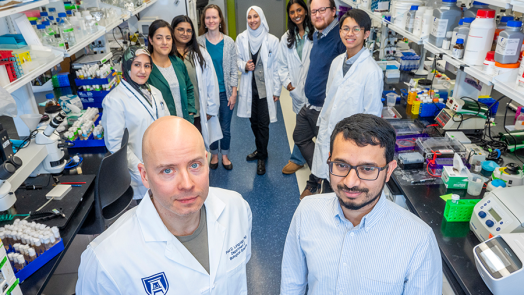
"It's one of the first publications as a lab we've produced, and it was kind of new because it took what we were doing in the fruit fly and combined that with computational work with Dr. Malmi-Kakkada,” says Paul Langridge, PhD.
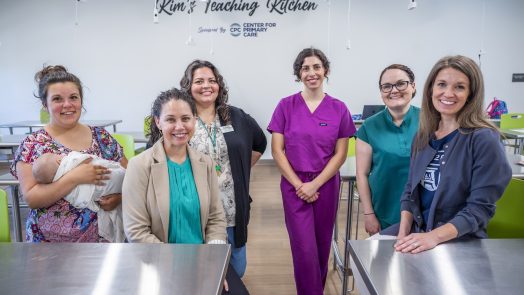
Over the last two decades, the rate of death of new moms from pregnancy rose more steeply in Georgia than almost all other states in this country. Augusta University is trying to change that fact.
"World Cancer Day is a powerful reminder of the global impact of this disease and the ever-growing need for collective action," says Jorge E. Cortes, MD.
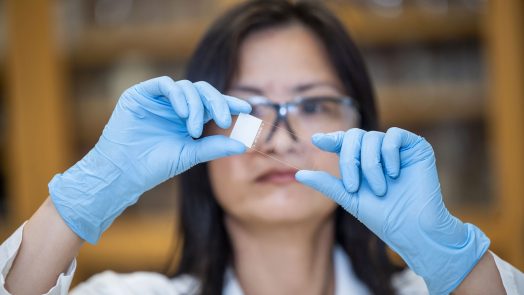
“Having a resource like this, especially locally, right here on campus, is a really important asset for our researchers,” says Meghan McGee-Lawrence, PhD.
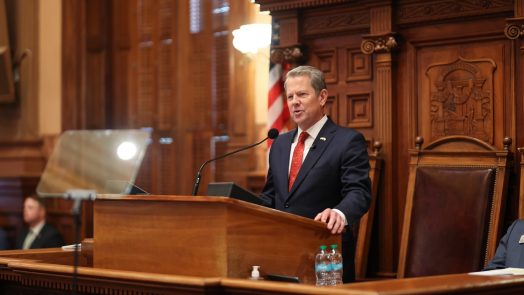
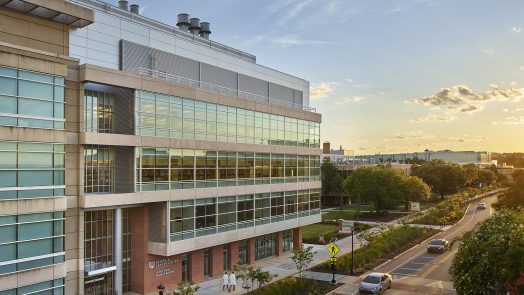
Gov. Brian Kemp introduced a budget that includes $99.8 million in funding for a new translational research building at Augusta University.
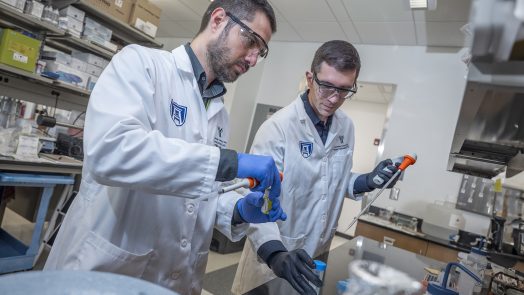
“It allows us to explore uncharted territory in mucosal immunology and vascular biology," says Rafael Czepielewski, PhD.

"The question we raised was, ‘How is this going to impact the university and athletic department funding?'" says Wesley Meares, PhD.
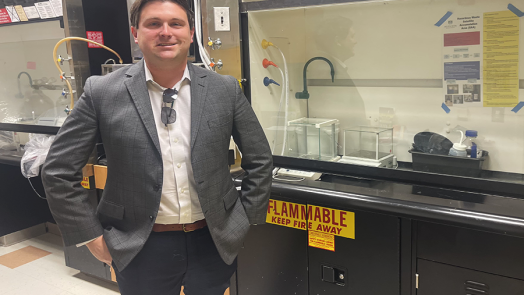
"Every decision I make related to a research project or a startup company is driven by solving a problem in society," says Keith Hearon, PhD.
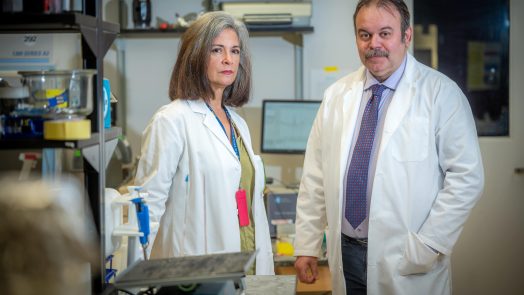
Vascular biologists in MCG have spent years developing treatments for acute respiratory distress syndrome from pneumococcal pneumonia.
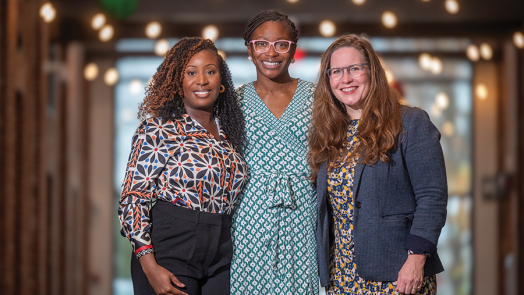
"By working with study volunteers to co-design study protocols, we can design studies that are more patient-centered and culturally sensitive," says Christy Ledford, PhD.
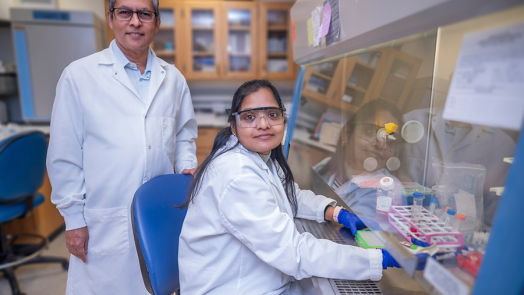
“This suggests that targeting senescent cells with senolytics could be a game-changer for sepsis treatment,” says Raghavan Raju, PhD.
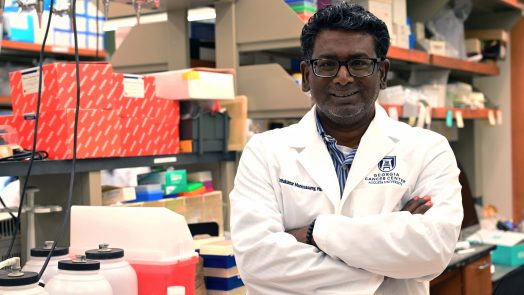
“By understanding this basic mechanism, we will be able to target this pathway and develop new therapeutic strategies against cancer,” says Santhakumar Manicassamy, PhD.
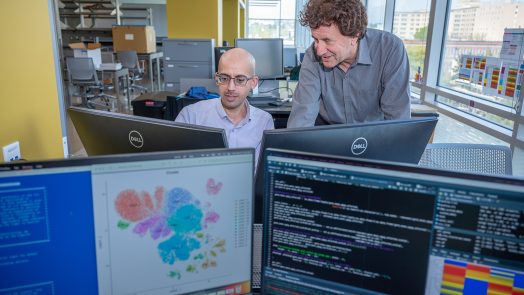
“This research helps us know what to look for, making it easier to identify similar mechanisms in human diseases," says Klaus Ley, MD.
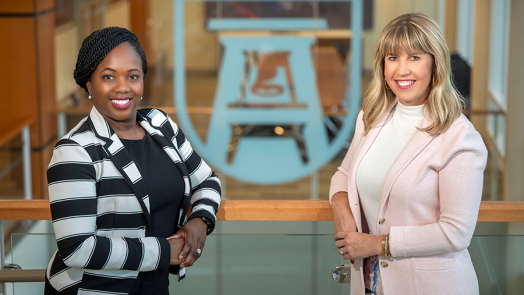
“This funding validates the importance of addressing mental health at both the student and educator levels,” says Jordon Beasley, PhD.
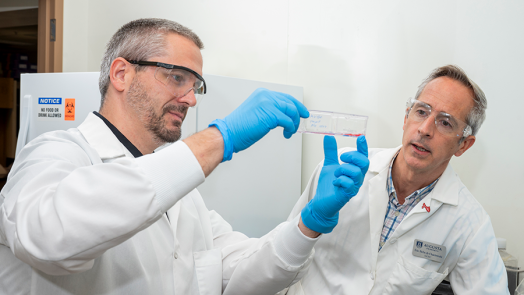
The grants are aimed at helping scientists better understand the mechanisms of two cardiovascular complications associated with HIV.
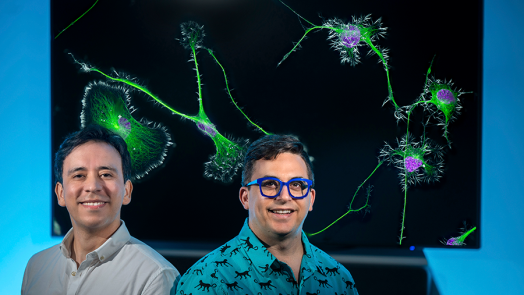
“This year we finally found something that was both an interesting image and an interesting research subject," says Bruno Cisterna, PhD.

Guido Verbeck, PhD, chair of the Department of Chemistry and Biochemistry at Augusta University, is making strides to battle the fentanyl epidemic plaguing the nation.
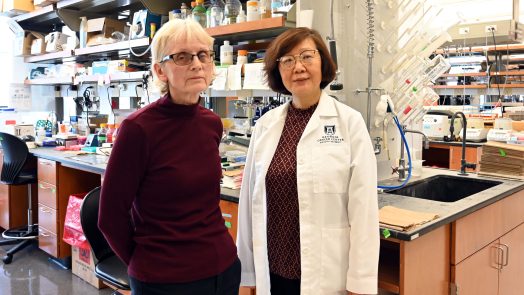
“The Paceline fund offers us an opportunity to utilize highly sophisticated, novel technology to test our hypothesis and obtain insightful preliminary data,” says Zoya Kurago, PhD.
 Heather Henley
 Hannah Litteer
 Stacey Eidson
 Chris Curry
 Miguelangelo Hernandez
 Jennifer Lask
 Jenna Ingalls
 Staff
Staff Lindsey Morris
 Katy Hennig
 Jennifer Hilliard Scott