Augusta University
 Karen Klock
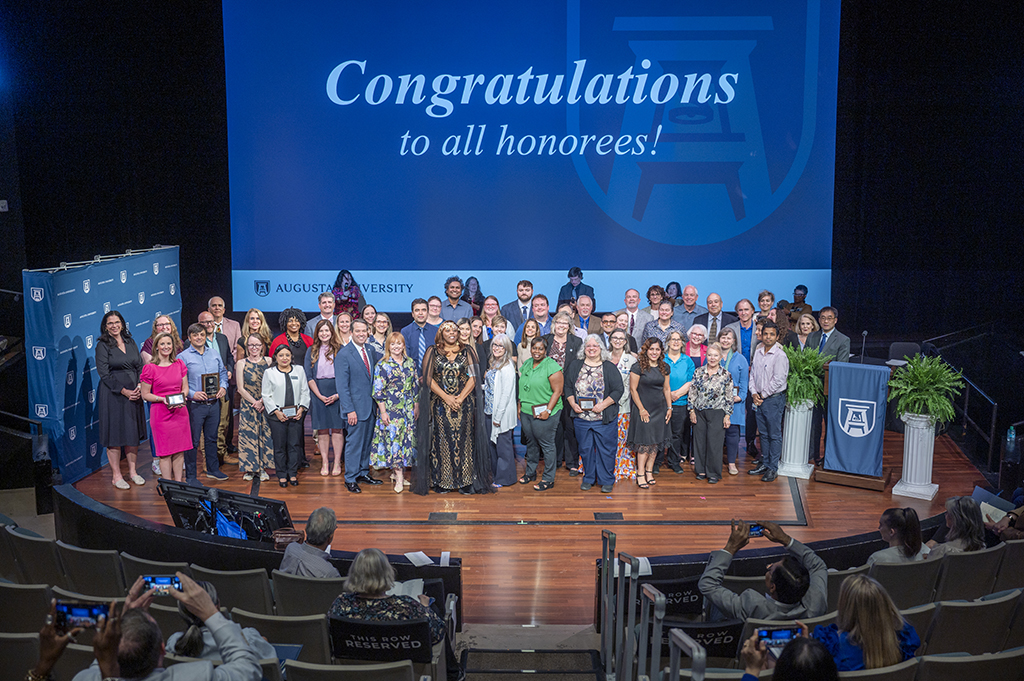
Every year, Augusta University shines a spotlight on its extraordinary faculty —visionaries whose dedication transforms classrooms and uplifts communities, leaving a lasting impact that reaches far beyond campus.
Teaching Excellence Awards
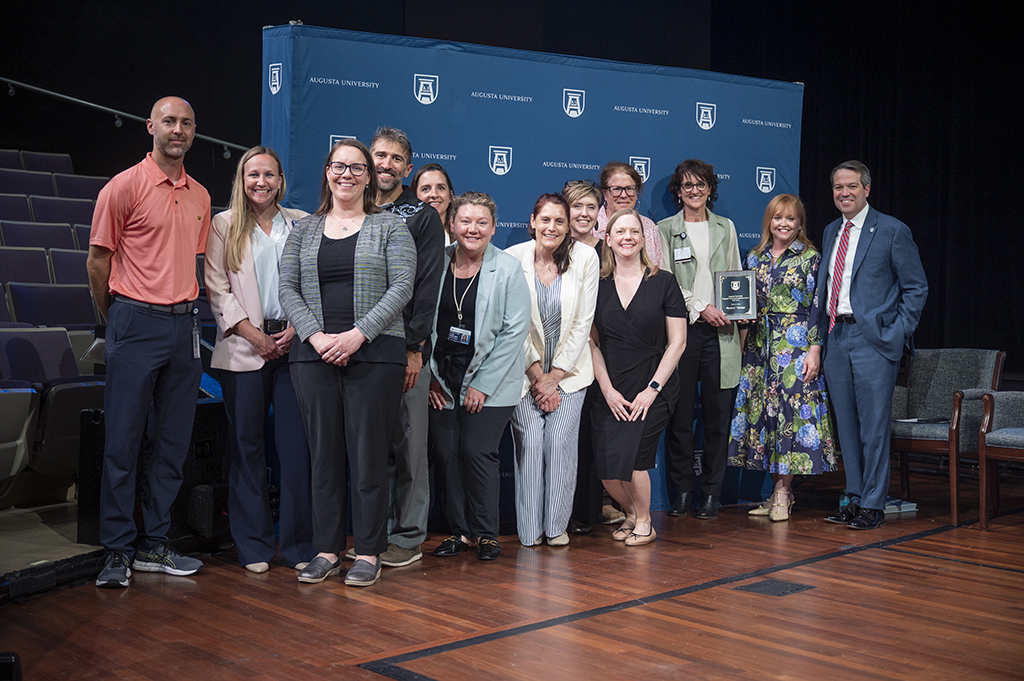
Four Teaching Excellence Awards are given annually to praise the excellence of the university’s educators and educational programs. This year’s winner of the AU Program Teaching Excellence Award is the Department of Physical Therapy in the College of Allied Health Sciences.
“The department has a rich history of developing exceptional physical therapy practitioners. This is exemplified through their comprehensive assessment methods, which drive ongoing curricular revisions and program enhancements,” the nomination letter states.
“The collaborative efforts of the faculty are truly impressive,” it continues. “They utilize collaborative teaching, faculty-designed common assessments, and innovative evaluation tools like the Clinical Reasoning Assessment Tool and Clinical Readiness Assessment Tool to ensure consistent high-quality instruction and student progress.”
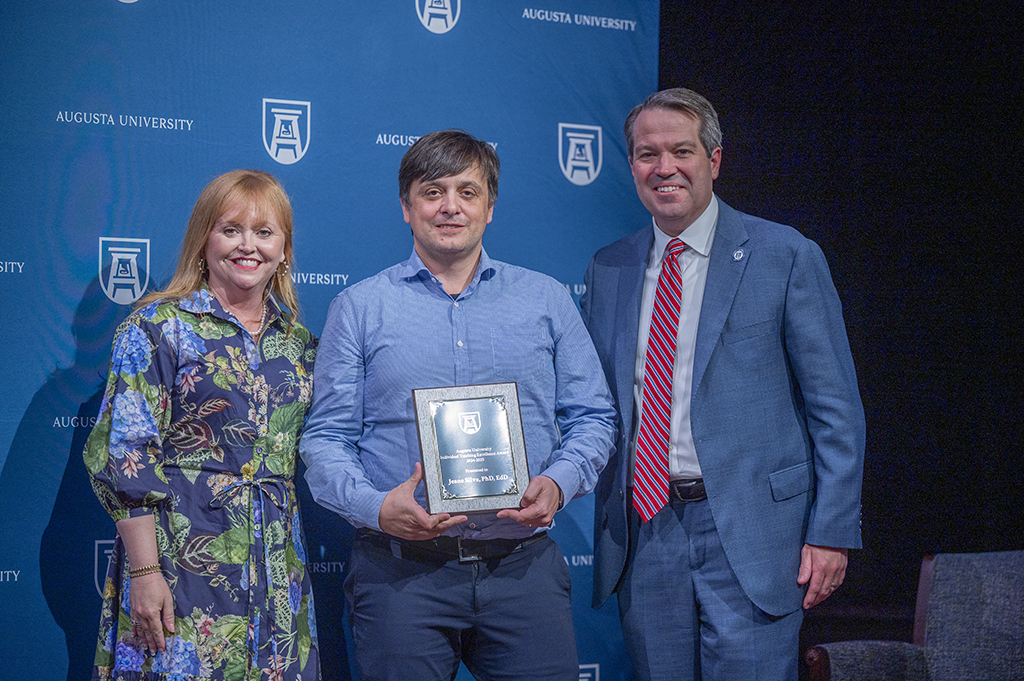
The Individual Teaching Excellence Award was given to Jeane Silva, PhD, EdD, from the Department of Health Management, Economics and Policy in the School of Public Health.
Silva was nominated for her significant contributions to the university’s academic community through her research, teaching and service, citing one of her most notable achievements as the role she took in addressing students’ concerns during the transition of the PhD in Applied Health Sciences program to the School of Public Health in 2023.
“To help address these concerns, Dr. Silva participated in several town hall events,” her nominee wrote. “Her dean reported that Dr. Silva listened to students with a positive attitude, ultimately helping address students’ concerns in a satisfactory and student-centered manner.”
Silva said her focus is on being the best mentor possible for all who pass through her classroom.
“I am truly honored to receive this award, which I dedicate to all my students whose hard work and determination made this achievement possible,” she said.
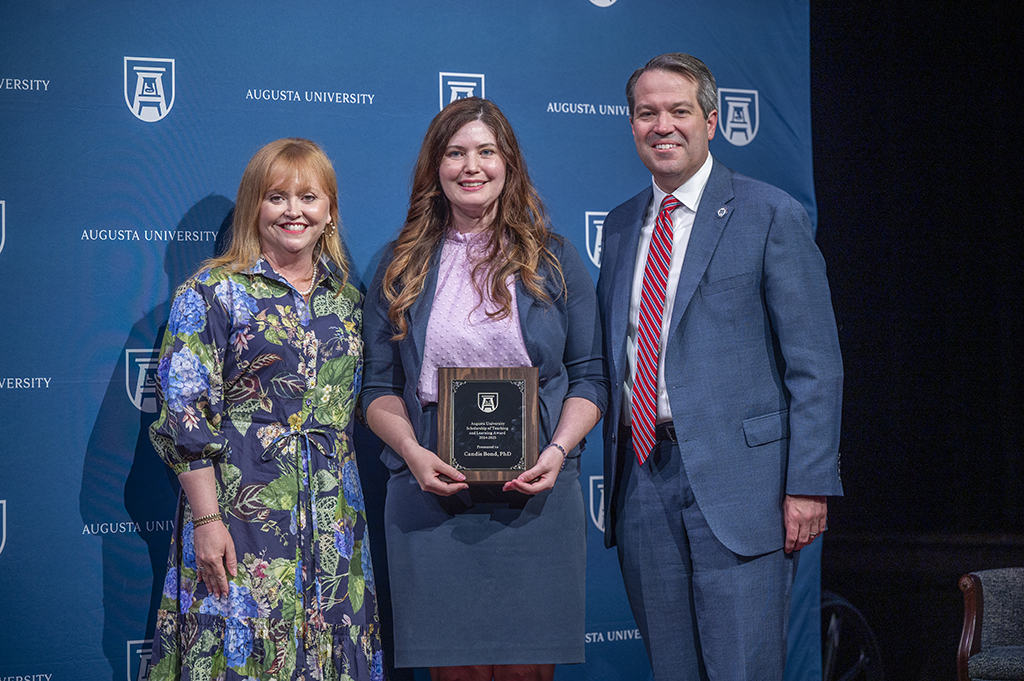
Candis Bond, PhD, interim chair of the Department of English & World Languages from the Pamplin College of Arts, Humanities, & Social Science, was presented the Scholarship of Teaching and Learning Award.
“Dr. Bond’s SoTL projects have led to significant improvements in student learning and faculty development. Her research on the use of writing centers by first-generation college students uncovered essential learning needs and challenged conventional writing center practices,” her nomination letter states.
This study is now being replicated at multiple institutions across the nation and has influenced the approach of AU’s Center for Writing Excellence in supporting students.
Bond is grateful to former chair Seretha Williams, PhD, for nominating her. She believes that the strategies she’s learned through SOTL have practical implications in everyday life for everyone, not just her students.
“As we move through out careers, it’s easy to get comfortable and do what we’ve always done in the past, but SOTL reminds us to stay open and to practice humility by accepting that there is always room to do something better or differently,” she said. “It also challenges us to ask ‘why’ and ‘how’ so that we can be more intentional in our pedagogy.”
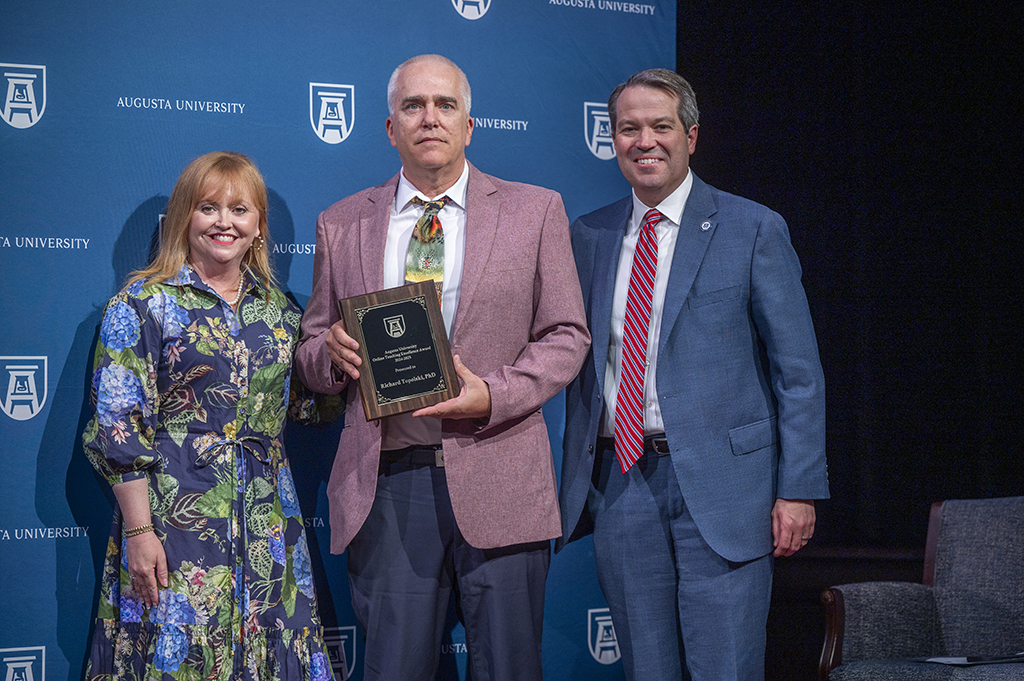
Richard Topolski, PhD, a professor in the Department of Psychological Sciences in the Pamplin College of Arts, Humanities, and Social Sciences, the winner of the Online Teaching Excellence Award, has found his teaching niche online.
He believes that online teaching allows students with busy schedules to receive an education in a non-traditional classroom setting and that it is vital to maintain a personal connection with his students to keep them engaged and motivated. He emails his students nearly ever day and consistently meets with them via Teams.
He is appreciative to have been nominated for the award by Pamplin Dean Kim Davies, PhD, and Tadd Patton, PhD, chair of the psychology department.
“I am very grateful there are leaders like Dr. Patton and Dr. Davies who are incredibly collegial, supportive of their faculty and recognize their efforts,” Topolski said. “I’m really moved when I can instill passion and life skills in my students.”
Bell Research Award
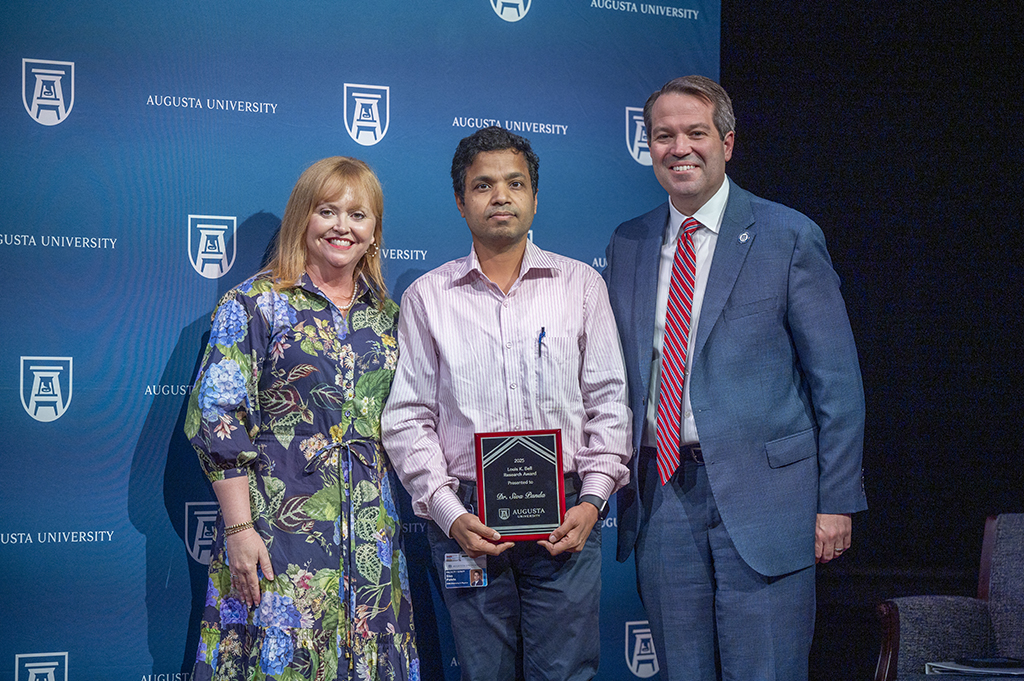
The 2025 winner of the Louis K. Bell Research Award, which recognizes outstanding contributions in research over the past two years, is Siva Panda, PhD, from the Department of Chemistry and Biochemistry in the College of Science and Mathematics.
In his application for the award, Panda highlighted his interdisciplinary research in medicinal chemistry that combines chemistry, pharmacology and molecular biology to improve drug discovery. His research, which targets cancer, inflammation and infectious diseases using advanced practices to create more effective drug candidates, has led to multiple high-impact publications, patents and recognition from major research institutions.
Additionally, he has mentored more than 40 students, helping them gain hands-on research experience and contribute to scientific progress.
“Receiving the Louis K. Bell Research Award is a remarkable honor and a profoundly meaningful milestone in my academic path. It signifies not only recognition of my scientific contributions in medicinal chemistry but also validates the hard work, perseverance and collaborative spirit that have guided my research over the years,” Panda said. “Above all, this recognition strengthens my commitment to advancing translational research and fostering a culture of scientific excellence at Augusta University and beyond.”
Wallace Service Award
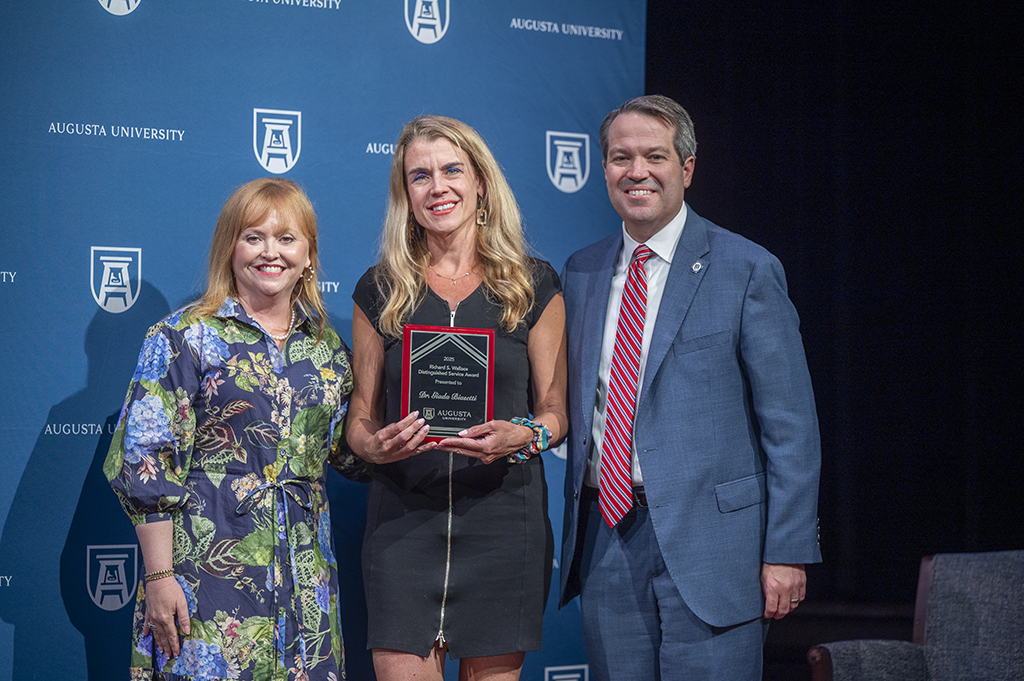
The 2025 winner of the Richard S. Wallace Distinguished Service Award, which recognizes distinguished service to the university, students and community, is Giada Biasetti, PhD, from the Department of English & World Languages in the Pamplin College of Arts, Humanities, and Social Sciences.
Biasetti was nominated for the work primarily carried out in her translation courses, which build bridges and lead to collaboration with partners, both at AU and outside the university. In these courses, she commits to multicultural programming to give students and various units across campus the opportunity to work together, enriching the students’ academic journeys. She also invests in community building, active learning approaches and real-world applications of classroom learning.
“One of the best outcomes of this award has been being able to inspire others to create and lead these kinds of projects by reaching out to the community and beyond.
This fall, Biasetti will be leading a Provost Learning Community, which will center learning around community engagement. The goal is to motivate faculty members to establish more real-world connections and to help them feel more comfortable leveraging the available technology to facilitate these collaborations. She will also expand her translation courses in the fall, offering her students the opportunity to work on different projects and collaborate with other disciplines, institutions, national and international companies and organizations, publishers, cultural centers, clinics and hospitals.
Receiving this award has helped Biasetti strengthen her teaching methods and curriculum development and improve her understanding and implementation of activities that lead to high levels of student engagement and a strong sense of community in the online classroom.
“Receiving this award is an honor and has led to numerous other opportunities to talk about the importance of community engagement and experiential learning in online classes,” Biasetti said. “I have met numerous colleagues and members of the community who also see the value in this type of service and have shown interest in future collaborations. It has also motivated me to continue creating translation projects that give students a sense of purpose that connects them to their classmates, students at other institutions, members of the Augusta community, and international organizations and professionals.”
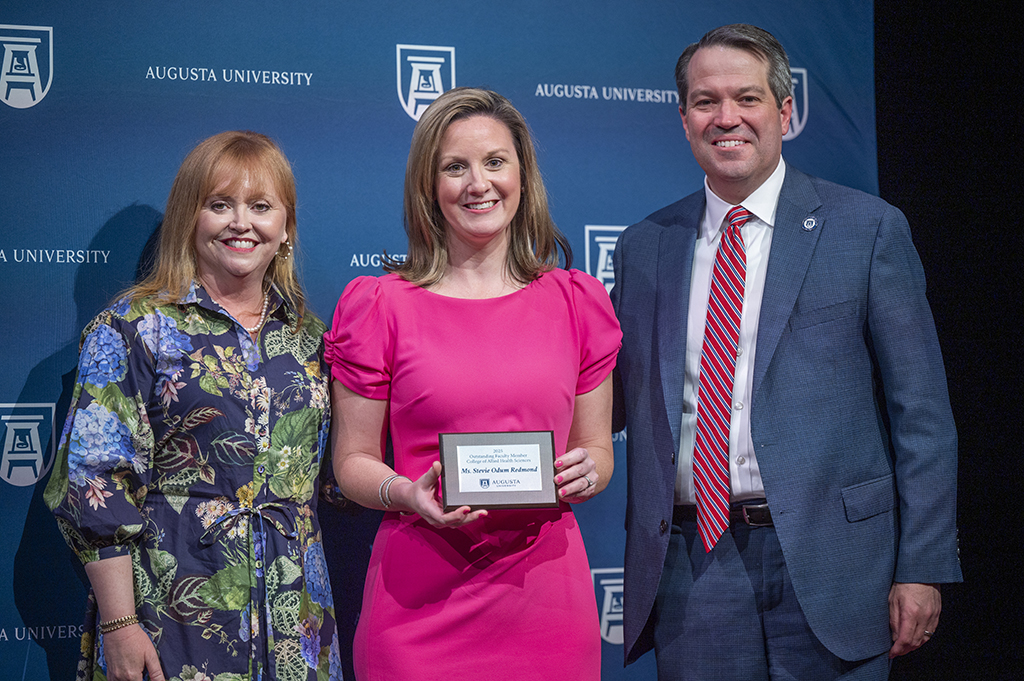
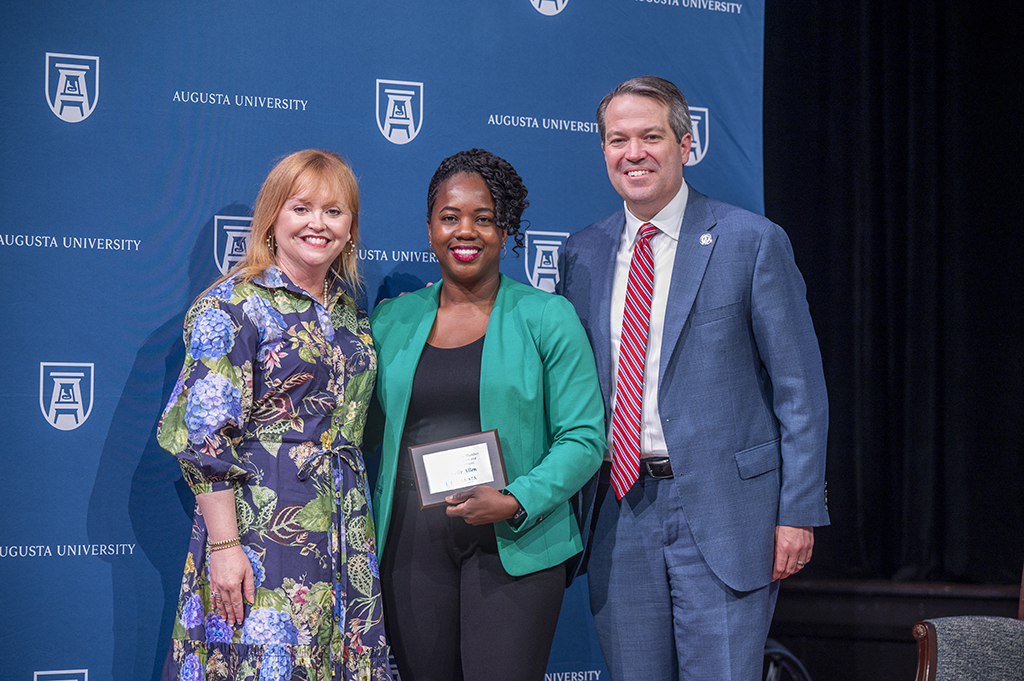
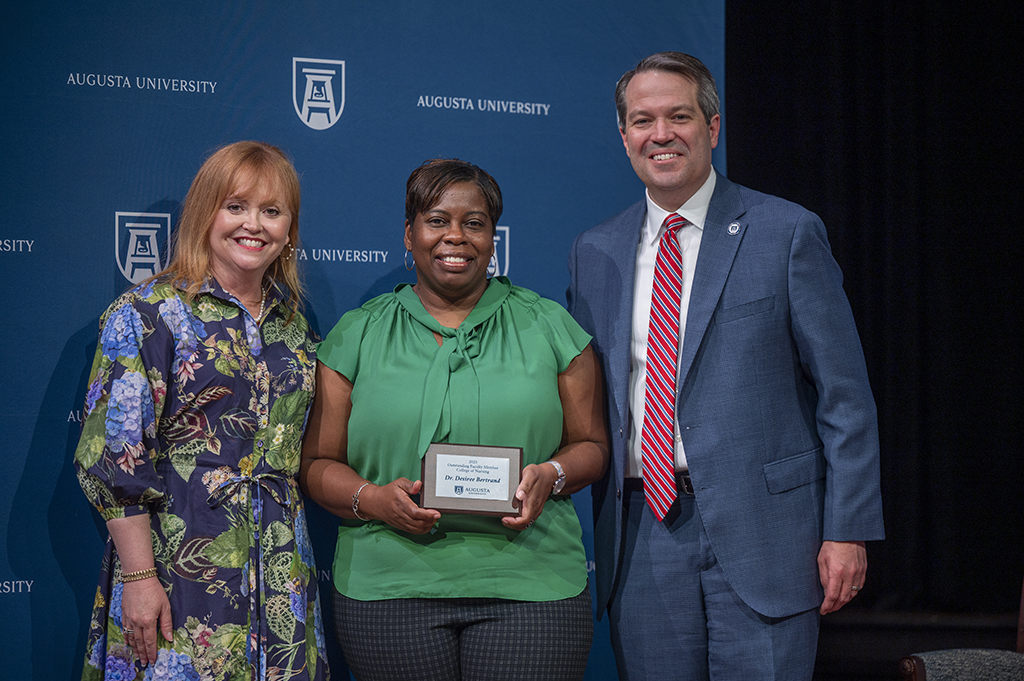
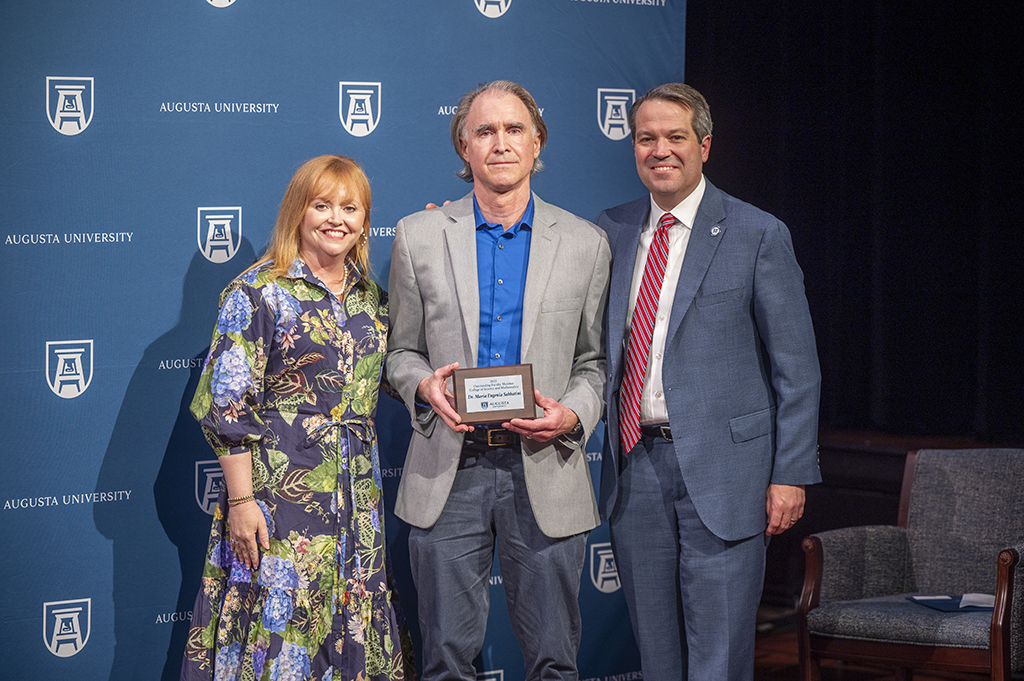
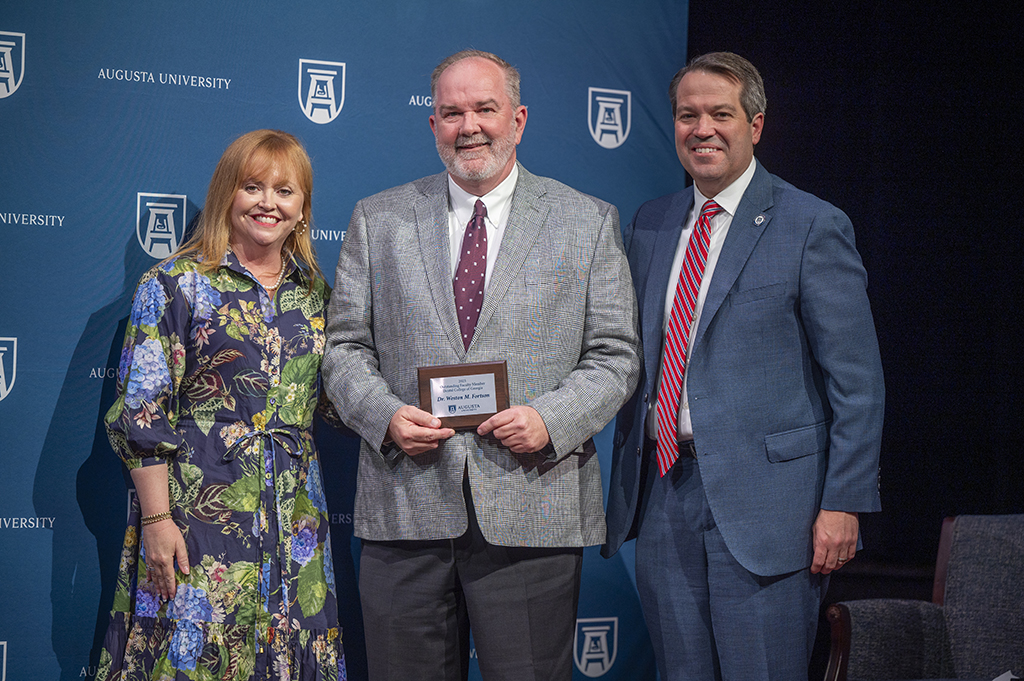
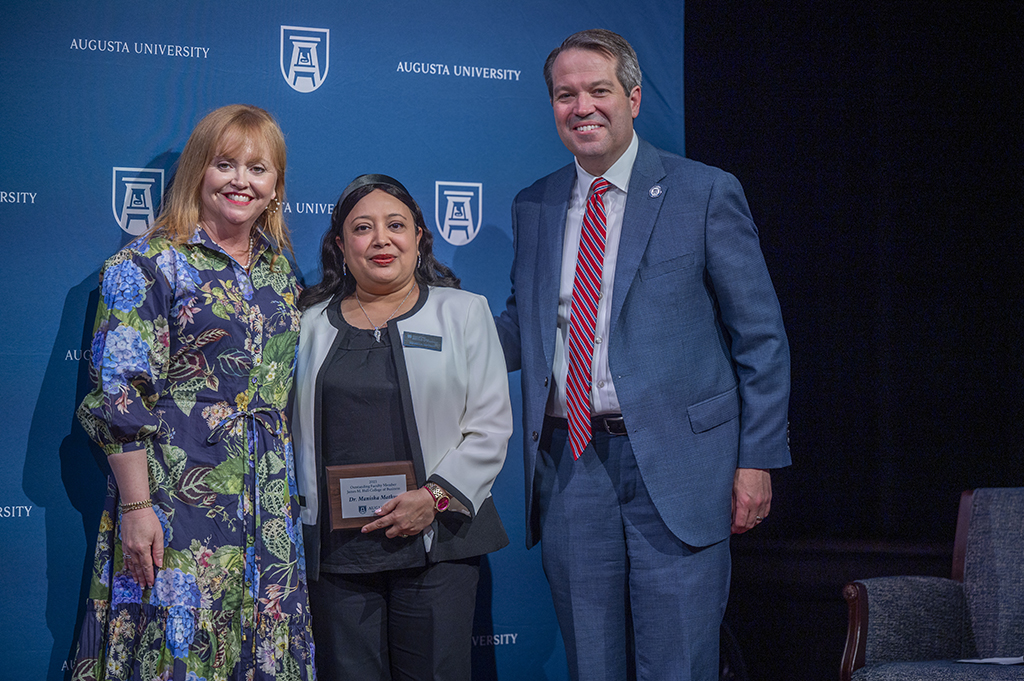
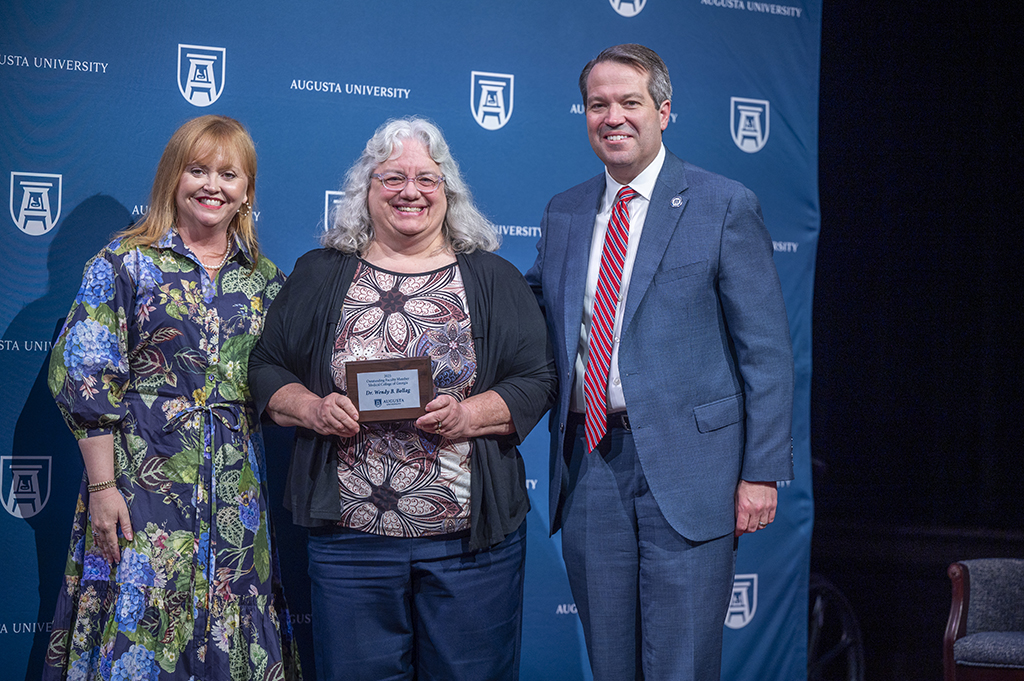
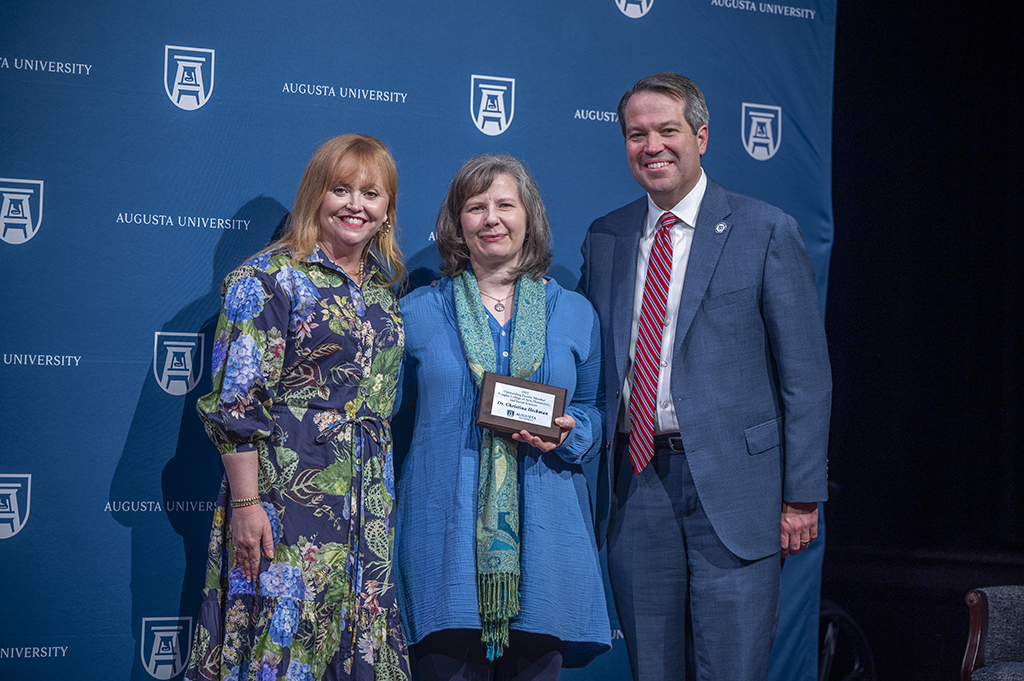
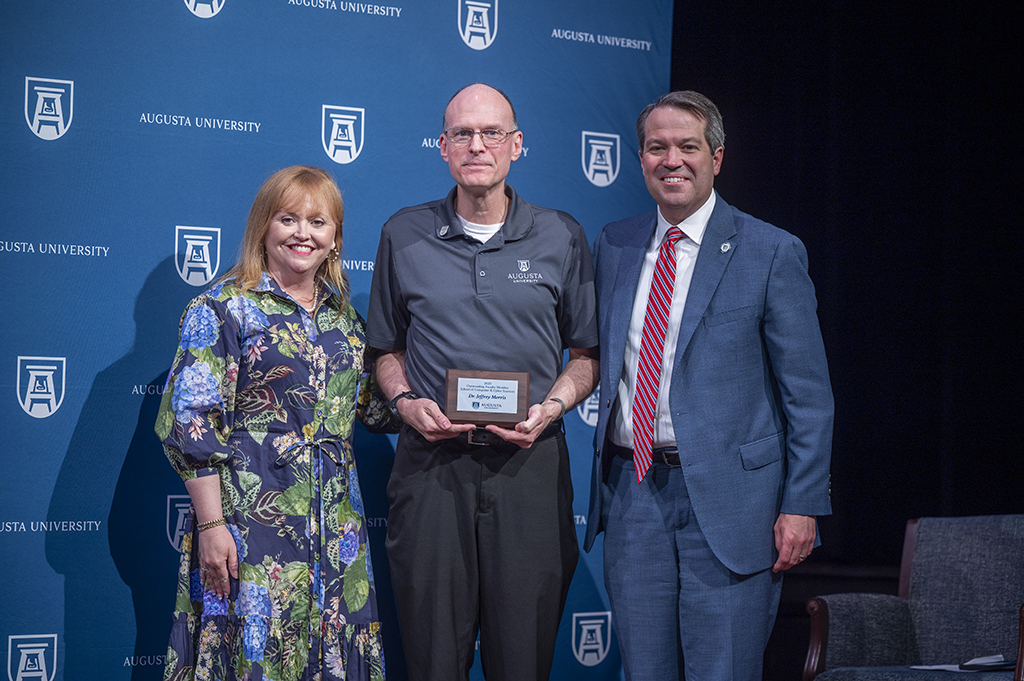
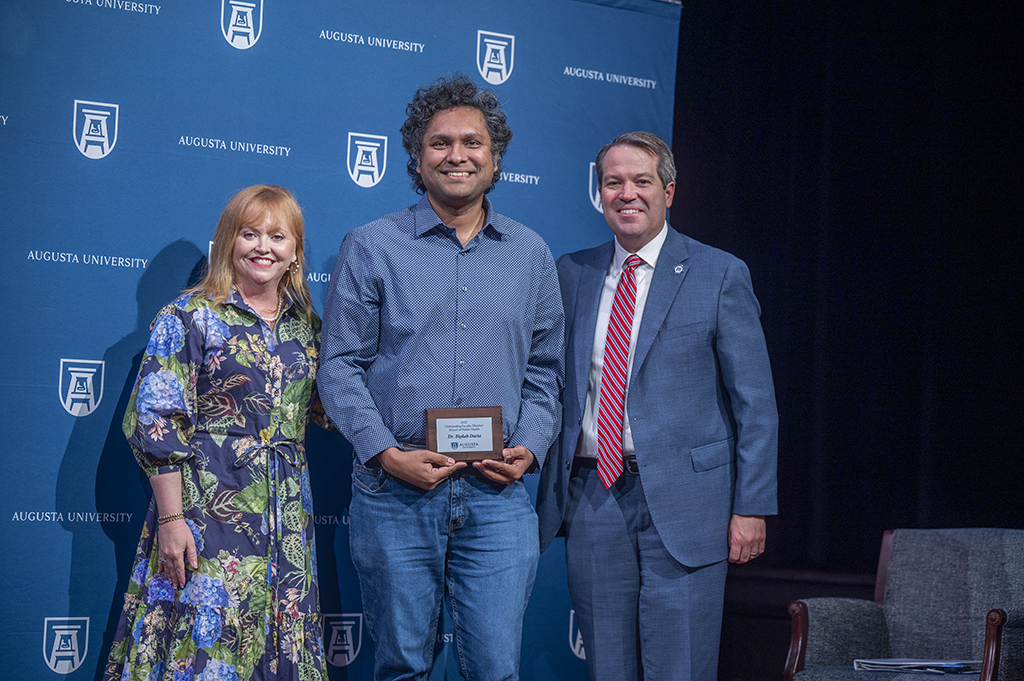
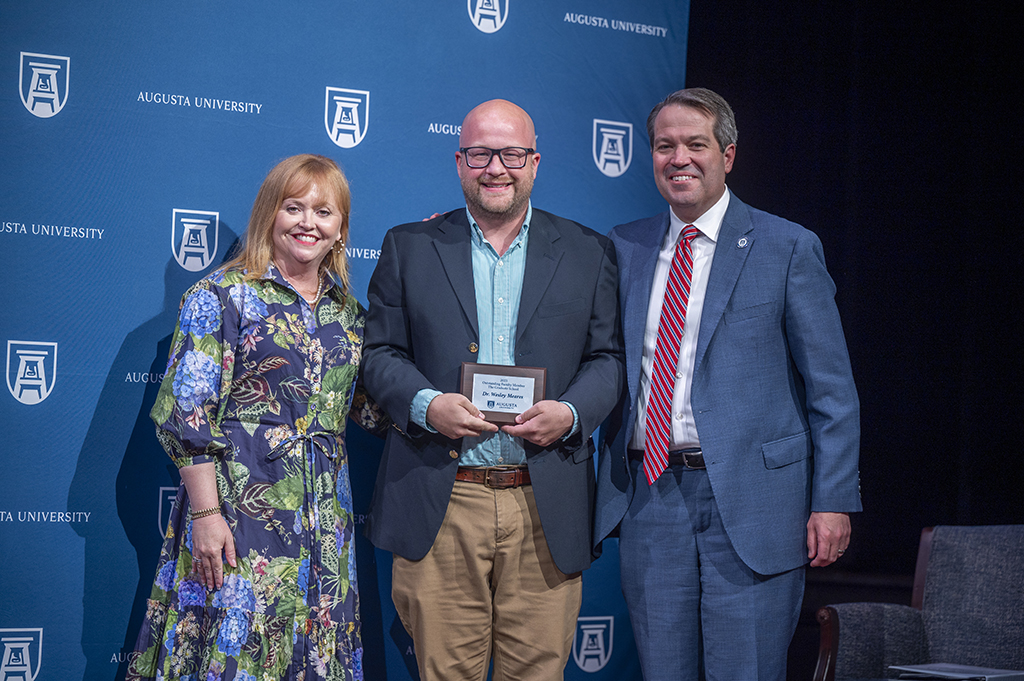
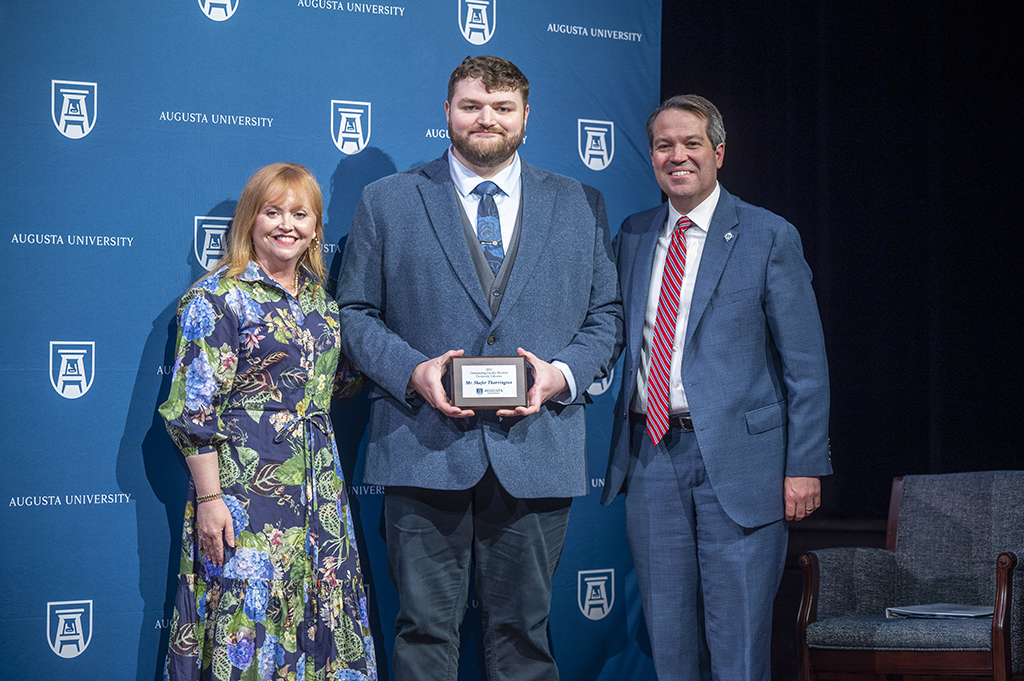
Outstanding Faculty Awards
The winners of the Outstanding Faculty Awards, Augusta University’s highest honor for faculty in the university’s 11 colleges and schools, were announced during the celebration. These awards celebrate superior accomplishments in teaching, scholarship or creative activity and service.
The winners for 2025 are Stevie Redmond for the College of Allied Health Sciences; Kelly Allen, PhD, for the College of Education and Human Development; Desiree Bertrand, PhD, for the College of Nursing; the late Maria Eugenia Sabbatini, PhD, for the College of Science and Mathematics; Weston Fortson, DMD, for the Dental College of Georgia; Manisha Mathur, PhD, for the Hull College of Business; Wendy Bollag, PhD, for the Medical College of Georgia; Christina Heckman, PhD, for the Pamplin College of Arts, Humanities, and Social Sciences; Jeffrey Morris, PhD, for the School of Computer and Cyber Sciences; Biplab Datta, PhD, for the School of Public Health; Wesley Meares, PhD, for The Graduate School; and Shafer Tharrington for the University Libraries.
Receiving the award brought on a multitude of emotions for the educators. Bollag called it gratifying, Bertrand found it to be heartwarming and Redmond expressed her gratitude.
“Receiving this award is an incredible honor, and I’m truly grateful for the recognition,” said Redmond. “It means so much to be acknowledged for doing work that I deeply care about. I’m especially thankful for the individuals — colleagues, mentors and students — who have believed in me and continue to support and encourage me every day.”
Mathur found the honor to be both humbling and affirming.
“It is an honor that represents a distinguished recognition for my efforts and the curiosity of our students, and Hull College’s commitment to innovation, applied research, and workforce development,” she said. “It’s a reminder that the work we do in the classroom and beyond has a lasting impact, and it motivates me to keep striving for even higher standards in all aspects of my role.”
Heckman echoed Mathur’s sentiment, saying she is both honored and humbled.
“I’ve worked extremely hard for many years, and I paid a lot of dues along the way. For my first 15 years at AU, most of my time went toward teaching and service, especially academic advising and curriculum development,” Heckman said. “I feel like I’m finally coming into my own as a researcher, and that’s been a wonderful new phase in my career; I’ve got multiple other book projects in progress, and I’m excited to be able to work on them. I’m so grateful to my department chairs and my dean for making that possible.”
For some, being nominated and recognized is an affirmation of the job they do every day and inspires them to do more.
“I’m incredibly thankful for the recognition from my library peers,” Tharrington said. “This award affirms that I’m making a meaningful difference within the AU community and fulfilling my role effectively.”
“This award further inspires me to advance my research endeavor and make meaningful contributions to impact lives,” Datta said. “I am grateful to my colleagues for their continued support toward my research.”
Allen lauded the collaborative effort of her recognition.
“I see this award not as a personal achievement but rather an exemplification of collective community efforts, because none of my work is done in solitude. Whether it’s collaborating with the Lucy Craft Laney Museum of Black History or working with The Wisconsin Black Historical Society and True Skool on the Milwaukee Hip Hop Archive Project, none of my accomplishments that are being recognized through this award are because of me alone,” Allen said. “Therefore, this award isn’t just about me — it represents the countless educators, students, and families who are working every day to create more equitable learning environments. This recognition confirms that our stories, our struggles and our visions for equity are meaningful.”
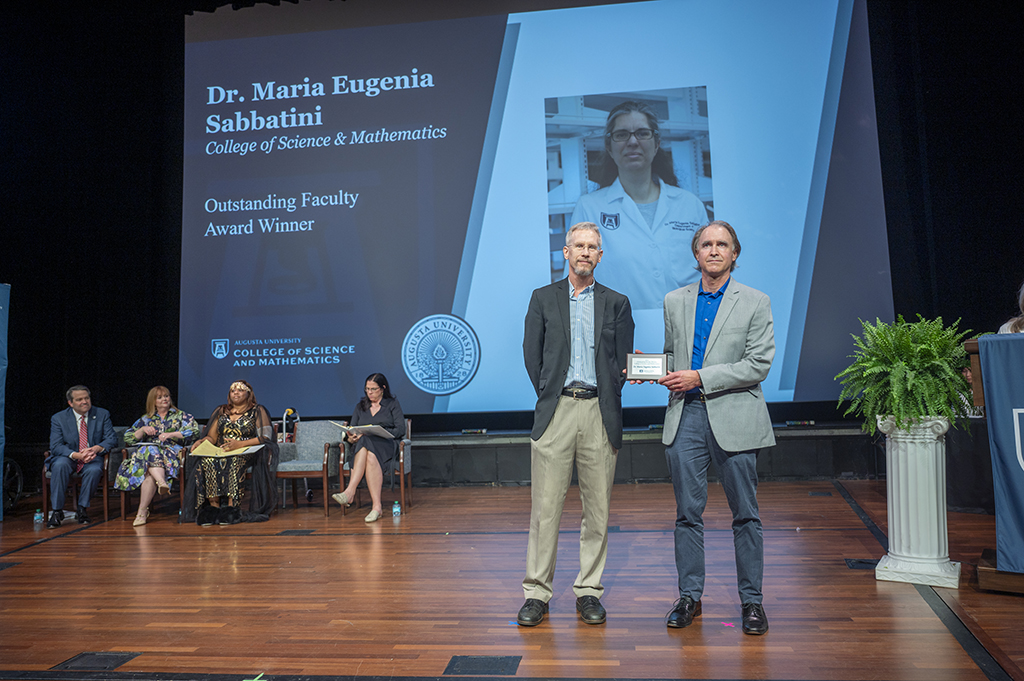
The College of Science & Mathematics chose to award Sabbatini posthumously.
“Dr. Sabbatini was a pillar of the College of Science and Mathematics for over a decade. In her 11 years at Augusta University, Dr. Sabbatini was recognized both by her colleagues and her students for excellence in research and in teaching. College of Science and Mathematics colleagues selected her to receive the Excellence in Research Award in 2017 and the Outstanding Young Faculty Award in 2019,” her nomination letter states. “Beyond her excellence in classroom teaching, Dr. Sabbatini was an outstanding mentor to both undergraduate and graduate students, a number of whom have credited her with actively shaping their academic and professional journeys. She included numerous students as active participants in her research program, and following nomination by students, she was awarded the Center for Undergraduate Research and Scholarship Mentor Excellence Award.
“Despite not having received start-up funding to support her research, Eugenia was highly productive in scholarship, publishing extensively and earning numerous grants, including a National Cancer Institute/NIH/Department of Health and Human Services R-15 funding award in 2023. Dr. Sabbatini has been described by numerous colleagues as the hardest worker they have ever known. Her remarkable dedication to all three elements of university professorship — teaching, research, and service — exemplifies her exceptional character. Always willing to step up and contribute, she personified the values of collaboration and service that define Augusta University. For Dr. Sabbatini, Augusta University was not just a place of work; it was her family. Honoring her with the College of Science and Mathematics Outstanding Faculty Member Award is a fitting tribute to her immense contributions and enduring spirit.”
Regents’ Professors
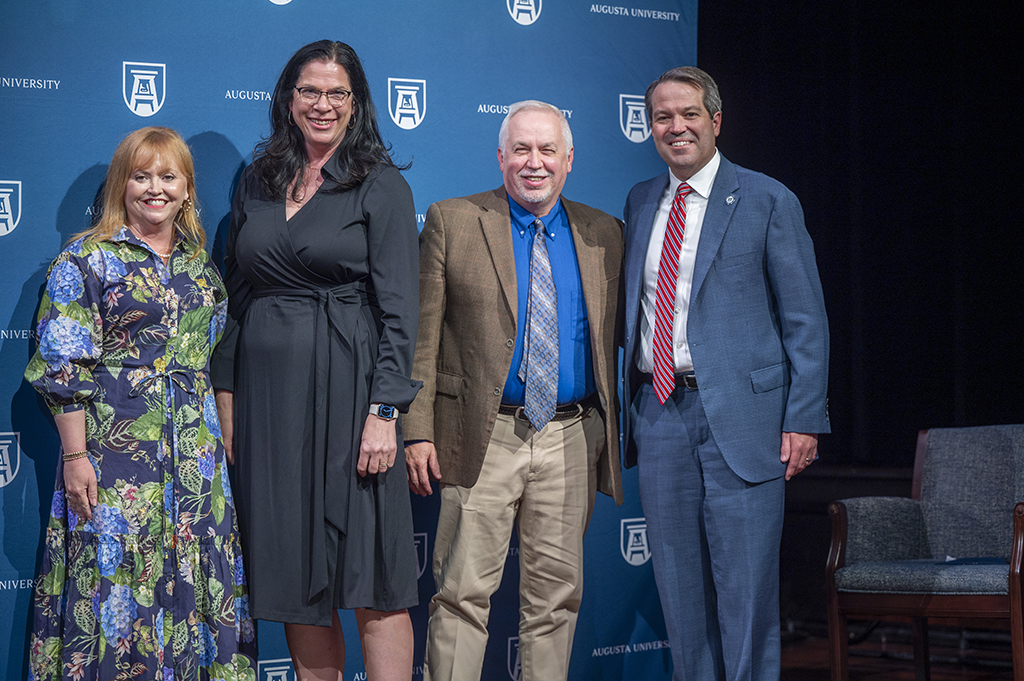
Regents’ Professorships are bestowed by the Board of Regents on truly distinguished faculty whose scholarship or creative activity is recognized both nationally and internationally as innovative and pace-setting. The 2024 Regents’ Professors are David Stepp, PhD, associate dean for Research and professor in the Medical College of Georgia; and Jennifer Sullivan, PhD, interim executive vice president for Academic Affairs and provost, dean of The Graduate School and professor in the Medical College of Georgia.
Research Awards
The Augusta University Research Institute recently recognized faculty researchers for their work in advancing research at AU.
Carlos Isales, MD, a Regents’ Professor, J. Harold Harrison Distinguished University Chair in Healthy Aging, chief of the Division of Endocrinology and Metabolism, clinical director of the Center for Healthy Aging and professor of Medicine, Orthopaedic Surgery, Neuroscience and Regenerative Medicine, Surgery and Cellular Biology and Anatomy for the Graduate School and the Medical College of Georgia, is the recipient of the AURI’s Lifetime Achievement Award.
His research group has been investigating how nutrition, especially protein and specific amino acids, affects bone health as a person ages. Their work has shown that certain amino acids act like signaling molecules, influencing how stem cells behave, particularly in bone formation. A recent focus of their research is kynurenine, a byproduct of the amino acid tryptophan that builds up with age and negatively impacts stem cell function. The group is studying ways to counteract these effects to slow down aging in bone and muscle. This work is currently supported by a Program Project grant from the National Institute on Aging.
“I very much appreciate the recognition of the work I have been involved with over the last 32 years here at MCG,” Isales said. “However, though I received the award, it represents a team effort of many individuals involved in this research: Drs. Mark Hamrick, Wendy Bollag, Meghan McGee-Lawrence, Xingming Shi, William Hill, Sadanand Fulzele, Laura Carbone, Ali Eroglu, Ding Xie, Mona ElRefaey and many medical students, graduate students and post-docs.”
Vinata Lokeshwar, PhD, a professor and chair of the Department of Biochemistry and Molecular Biology in the Medical College of Georgia, received the award for Outstanding Research, Creative and Scholarly Activity.
Her research focuses on identifying biomarkers — biological indicators of disease — and developing therapies that target them. Her current work, supported by two grants from the National Cancer Institute (NCI/NIH), centers on a major discovery: a unique version (splice variant) of the HYAL-4 gene that produces the first known eukaryotic chondroitinase enzyme, called V1. This enzyme plays a key role in promoting bladder cancer growth, spread (metastasis), and resistance to the chemotherapy drug Gemcitabine, which is commonly used in advanced treatment settings. Her team is now testing two FDA-approved drugs — originally developed for unrelated, non-cancerous conditions — to see if they can block V1’s harmful effects and help overcome resistance to Gemcitabine
“In my academic life, I have often battled preexisting dogmas, and over the years I could do so because of my mentees, research staff and collaborators and the institution,” Lokeshwar said about receiving the award. “MCG-AU has a special place in my heart because I am one of the few ‘Professor of Urology’ in the country to get a chance to become the chair of a basic science department, especially Department of Biochemistry and Molecular Biology. In recruiting me, this great institution showed that anything is possible if we dream big and work hard on it, and, more importantly, the institution values research and not where the individual/laboratory came from. And for that I am forever grateful.”
Yutao Liu, PhD, director of the Cellular Biology and Anatomy Graduate Program in the Center for Biotechnology and Genomic Medicine in the Graduate School and basic science co-director for the James & Jean Culber Vision Discovery Institute, received the Distinguished Researcher Award.
Liu’s lab studies age-related eye diseases like glaucoma and keratoconus using tools from genetics, epigenetics and molecular biology. Their work combines human samples, cell cultures and mouse models to uncover the genetic mutations and biological mechanisms behind these conditions. They’ve identified new gene variants linked to keratoconus and are exploring how these affect the cornea using advanced sequencing and experimental models. The lab collaborates internationally and is supported by major research organizations, including the NIH and the National Eye Institute.
Danielle Mor, PhD, an assistant professor in the Department of Neuroscience & Regenerative Medicine in the Medical College of Georgia, received the Emerging Scientist Award. Her lab studies Parkinson’s disease and other neurodegenerative disorders, primarily focusing on the role of the gut in potentially influencing disease outcomes.
“Receiving the Emerging Scientist Award from the AURI is a true honor,” Mor said. “I have felt extremely supported here at AU, and this award signifies to me that the University believes in me and where my career is going. I only hope to continue making our institution and our community proud.”
Excellence in Service-Learning Faculty Award
This year’s Excellence in Service-Learning Faculty Award, which lauds a faculty member who has made outstanding contributions in the areas of service learning and community-engaged work while working closely with a community partner to integrate community-engaged principles, practices and pedagogies into their course, went to Carrie Reif-Stice, PhD, assistant professor in the Department of Communications within the Pamplin College of Arts, Humanities, and Social Sciences.
Reif-Stice was recognized for her exceptional integration of service learning into her courses, particularly her Public Relations Campaigns and Social Media course, during which students engage in client-based projects and strategic communication campaigns, collaborating with local small businesses like 7Brew Coffee, Swank Co. and the Augusta Press to design and pitch proposals for Augusta University’s annual Communication Celebration.
“I am so honored to receive this award,” she said. “When I started implementing service-learning projects, I struggled on whether it was the right decision and how students would handle this method of learning. However, winning this award reaffirms that my work as an educator is making a difference in students’ lives and helping bridge the gap between classroom learning and real-world impact.”
CURS Mentor of Excellence Award
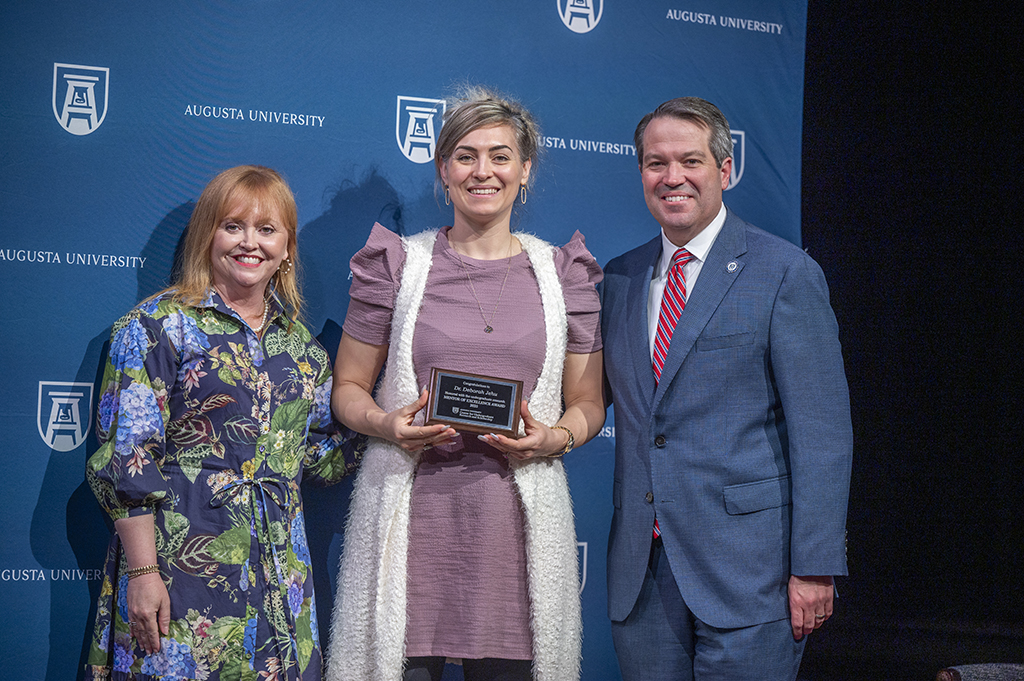
Deborah Jehu, PhD, an assistant professor in the Department of Community & Behavioral Health Sciences in the School of Public Health, received the CURS Mentor of Excellence Award, which is presented to an Augusta University faculty member who has shown excellence in mentoring undergraduates in research or scholarship, who, in turn, can nominate their mentor for the award. Nominees must be full-time AU faculty who have mentored undergraduates for at least one year.
Jehu was nominated for the “profound and lasting impact” she had on her nominator’s journey, instilling a deep appreciation for research, the importance of perseverance and the value of continuous learning in the student.
“Her unwavering belief in her mentees’ potential pushes us to exceed our own expectations and strive for excellence,” the nomination letter says. “She celebrates our successes, no matter how big or small, reinforcing the idea that progress is a continuous and rewarding process.”
Jehu is humbled and grateful for the students who nominated her and for the impact she had on their lives.
“Mentorship shapes me as much as it does my students,” she said. “It keeps me grounded in curiosity, as their questions challenge me to rethink concepts I’ve long taken for granted. It’s humbling — seeing their fresh perspectives forces me to stay sharp, question my assumptions and articulate ideas more clearly.”
Provost Fellows
The 2024-2025 Provost Fellows, Laurence Miller, PhD, and Colleen Walters, DNP, were recognized for their year of service and their contributions to the university as Provost Fellows.
Provost Learning Scholars
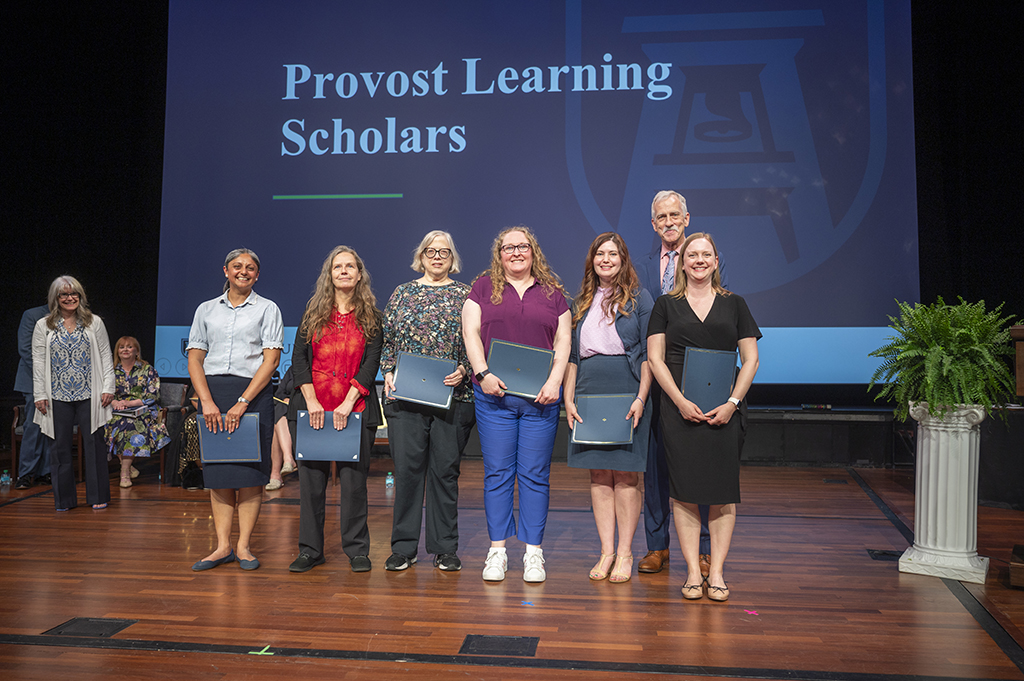
The Provost Learning Scholars celebrate the dedication and exceptional leadership of faculty members within the Provost Learning Communities. These communities are small groups, led by the Provost Learning Scholars, that meet regularly throughout the year to explore teaching and learning topics with peers across campus.
This year’s class of Provost Learning Scholars includes:
- Brian Armstrong, PhD, associate professor in the Pamplin College of Arts, Humanities, and Social Sciences, who focused on the topic of “When Bad Thinking Happens to Good People: How Philosophy Can Save Us from Ourselves” (last year’s example)
- Candis Bond, PhD, interim chair and associate professor in the Pamplin College of Arts, Humanities, and Social Sciences, who focused on the topic of “Developing a Data-Informed Pedagogy”
- Isaac Brinberg, DMA, an assistant professor in the Pamplin College of Arts, Humanities, and Social Sciences, who focused on the topic of “Creating a Vibrant Learning Environment”
- Ryan Carrick, PhD, an assistant professor in the College of Allied Health Sciences, who focused on the topic of “Making Meaningful Connections – How Professional Relationships Can Inform Our Engagement with Students”
- Becky Etheridge, EdD, an associate professor in the Medical College of Georgia, who focused on the topic of “Mastering the Digital Classroom: Strategies for Engaging Online and Hybrid Learners”
- Candace Griffith, PhD, an associate professor in the Pamplin College of Arts, Humanities, and Social Sciences, who focused on the topic of “Motivating and Including Students Through Active Learning”
- Valerie Hogan, PhD, an assistant professor in the College of Allied Health Sciences, who focused on the topic of “Experiential Learning”
- Catherine Jauregui, PhD, an assistant professor in the Dental College of Georgia, who focused on the topic of “Assessment Methodologies in Critical Thinking”
- Ellen LeMosy, MD, PhD, an associate professor in the Medical College of Georgia, who focused on the topic of “Enhancing STEM Undergraduate Research Experiences”
- Gregory Murray, PhD, a professor in the Pamplin College of Arts, Humanities, and Social Sciences who focused on the topic of “AI in Teaching and Learning”
- Ruchi Patel, PhD, an assistant professor in the Medical College of Georgia, who focused on the topic of “Implications of Cognitive Science Research for Teaching and Learning
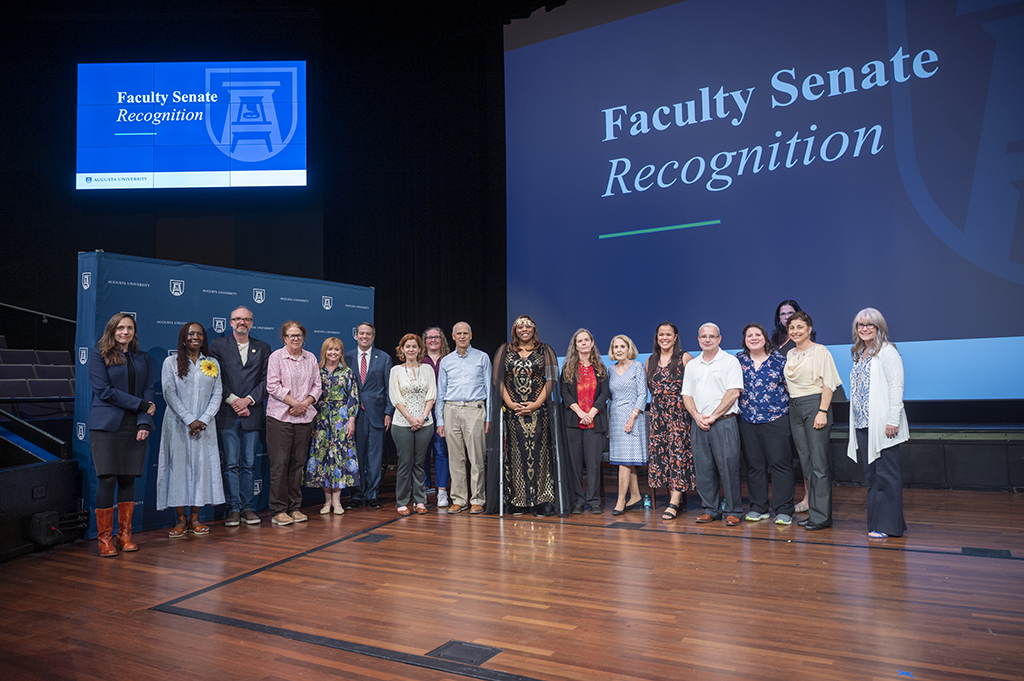
Faculty Senate Recognition
The Augusta University Faculty Senate, which is an essential component of shared governance, is composed of an executive committee, standing committees and senators who represent the colleges and schools of Augusta University. The ceremony recognized the 2024-2025 representatives: Penny Alderman; Paul Attie, PhD; Andrew Balas, PhD; Peter Basciano, PhD; Hannah Bennett, PhD; Lori Bolgla, PhD; Valia Bravo-Egana, PhD; Tiana Curry-McCoy, PhD; Jennifer Davis; Alicia Elam, PharmMD; Andrew Goss, PhD; Candace Griffith, PhD; Bill Hamilton, EdD; Catherine Jauregui; Stephanie Johnson, PhD; Chevonnia Jones; Teresa Marin, PhD; Michael Milano, DDS; Sharad Purohit, PhD; Jeane Silva, PhD; Almira Vazdarjanova, PhD; and Blaire Zeiders, PhD.
Retirees
The ceremony also honored those who retired over the last year: Lisa Daitch, with more than 27 years of service, and Lorraine Evans, PhD, with more than 12 years of service from the College of Allied Health Sciences; Olajide Agunloye, EdD, EdS, with more 16 years of service, and Charles Darracott III, EdD, with more than 25 years of service, from the College of Education and Human Development; Charlotte Christy, PhD, with more than 28 years of service and Cathy Tugmon, PhD, with more than 30 years of service from the College of Science and Mathematics; Christopher Cutler, PhD, DDS, with 13 years of service from the Dental College of Georgia; Marsha Loda, PhD, with more than 22 years of service from the Hull College of Business; Janis Coffin, DO, with 6 years of service, Catherine Davis, PhD, with 25 years of service, Stephanie Goei, MD, with more than 25 years of service, Dean Harrell, MD, with more than 25 years of service, Abdullah Kutlar, MD, with 40 years of service, Biaoru Li, MD, PhD, with more than 13 years of service, William McCall, MD, with more than 11 years of service, Kenneth Murdison, MD, with more than 17 years of service, Luis Ortiz, MD, with 24 years of service, Christopher Pallas, MD, with more than 16 years of service, Turner Rentz Jr., MD, with more than 14 years of service, Richard Schwartz, MD, with 25 years of service, Elizabeth Sekul, MD, with more than 30 years of service and Sandra Sexson, MD, with 20 years of service from the Medical College of Georgia; and Seretha Williams, PhD, with 25 years of service from the Pamplin College of Arts, Humanities, & Social Sciences.

 Tim Rausch
 Jamison Guice
 Paige Tucker