 Augusta University
 Felicia Baskett
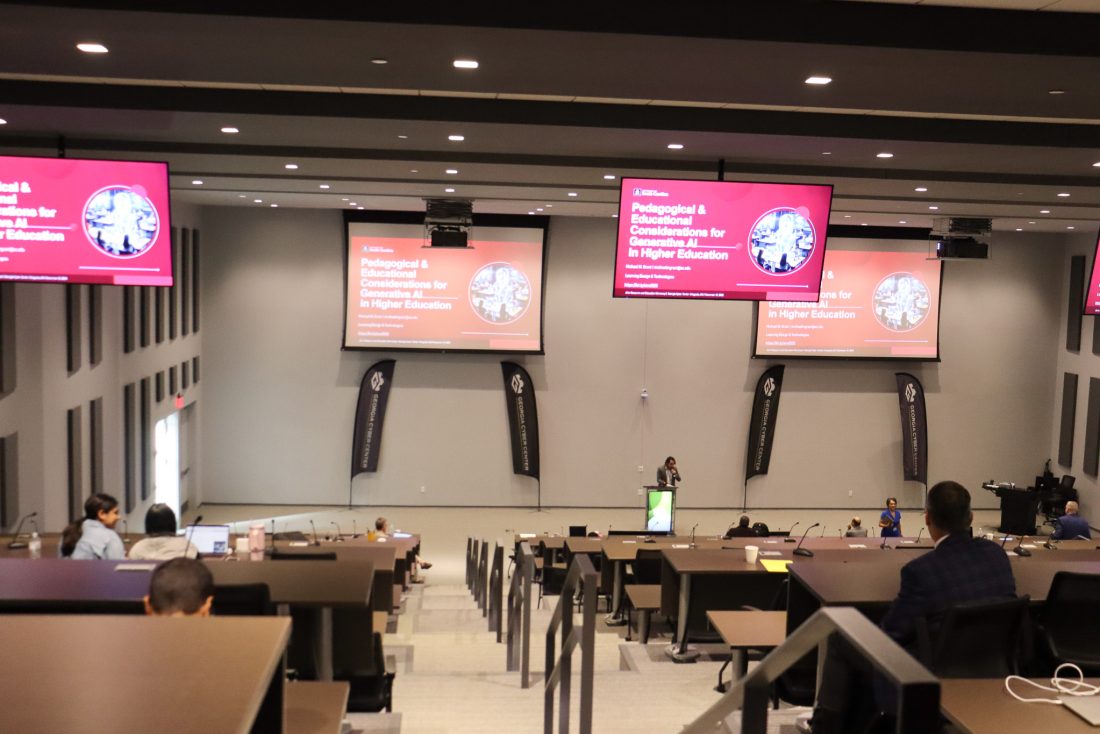
Innovation met inspiration at the School of Computer and Cyber Sciences’ inaugural Artificial Intelligence in Research and Education Workshop, where leaders in the field shared how AI is transforming research, education and the future workforce.
Hosted Nov. 21 at the Georgia Cyber Innovation & Training Center, the one-day workshop brought together faculty, students, researchers and community partners for a full day of exploring how artificial intelligence is reshaping industries across the region and beyond.
“The workshop gathered speakers from across the CSRA, including universities, institutions and research labs. We also invited students from across Augusta University to attend and learn from these conversations,” said Hisham Daoud, PhD, assistant professor in the Department of Cyber Systems and Engineering and chair of the event.
The workshop supports the School of Computer and Cyber Sciences’ efforts to establish a Center for AI in Research and Education, an initiative dedicated to fostering interdisciplinary research, encouraging innovation and preparing students to excel in an increasingly AI-driven world.
“This is the first time we’ve held this workshop, and it reflects our goal to build a strong foundation for AI research and education at Augusta University,” Daoud said.
Speakers and participants represented institutions across the region, including the Savannah River National Laboratory, the University of South Carolina and local industry partners. Students and faculty from several AU colleges and schools, including the Medical College of Georgia at Augusta University and the School of Public Health also attended.
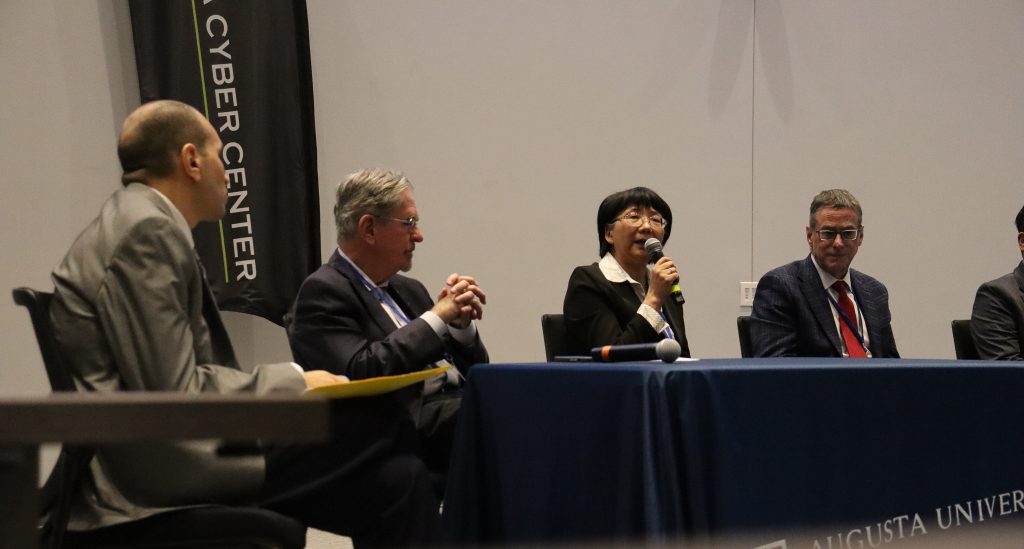
The AIRE Workshop featured four sessions focused on major areas where AI is rapidly advancing: cybersecurity, education, health care and applied intelligent systems. A panel on “AI in Healthcare: Perspectives and Challenges” brought together physicians, statisticians, computer scientists and AI researchers to discuss how AI is influencing patient care, diagnostics and data analysis.
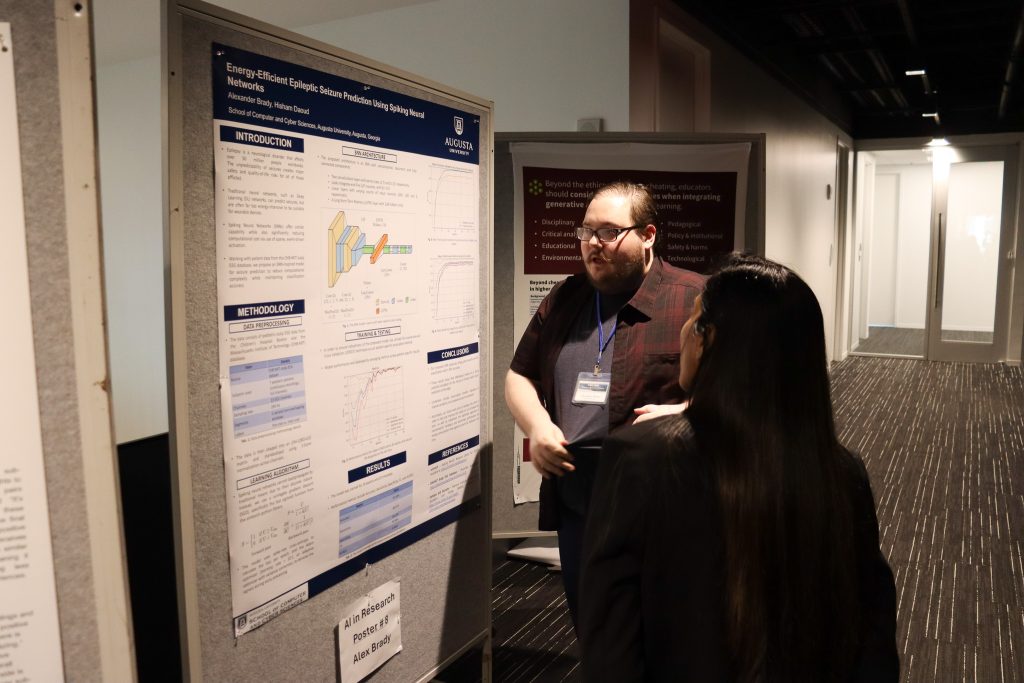
Students also presented AI-focused research during a poster session, including Alex Brady, a graduate research assistant in the Computer and Cyber Sciences PhD Program. Brady said his poster was inspired by research he’s conducting with Daoud, which focuses on developing an energy-efficient spiking neural network model designed to predict epileptic seizures before they occur. He said the model could eventually be implemented in wearable devices for use at home or in other nonmedical settings.
“For me, winning the Best Poster Award tells me I’m on the right track. It’s very encouraging to be reminded from time to time of the significance of the work that we’re doing,” Brady said.
Jordan Pruner, a fourth-year undergraduate student in the computer science program, said attending the workshop helped him better understand AI’s evolving role in his academic and future teaching career.
“As both a student and a future educator, I’ve always had concerns about AI. Coming to this workshop eased some of the fears I had, but it also made me more aware of the areas where we need to be cautious,” Pruner said. “At the same time, it gave me new ideas for how I can use AI in my learning and eventually my teaching.”
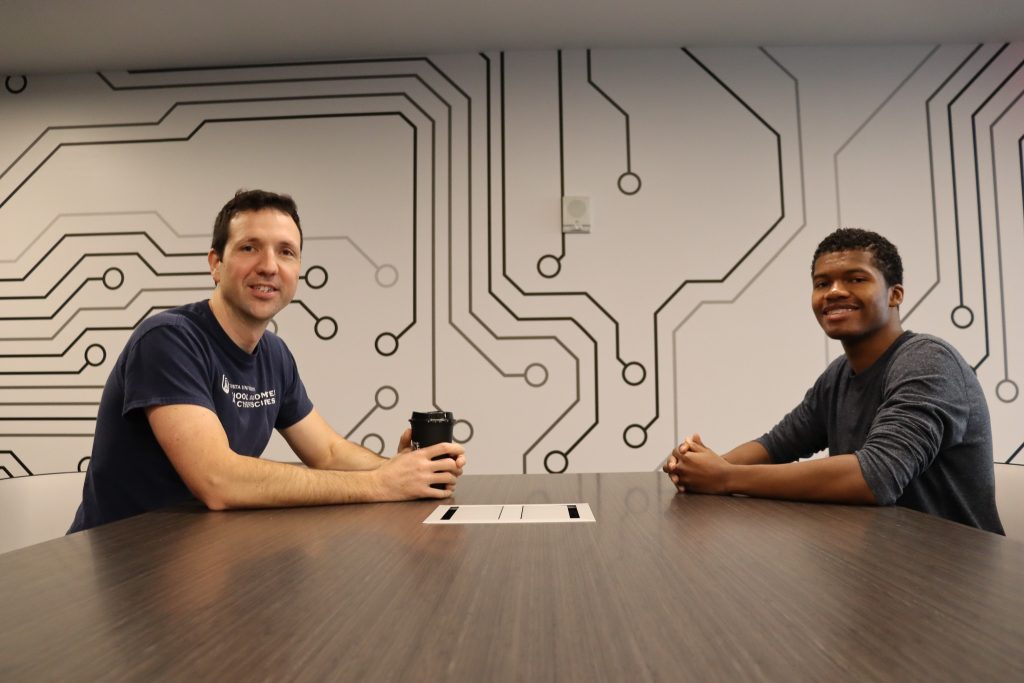
For George Dorton, a third-year undergraduate student majoring in cyber operations, the workshop highlighted just how widespread AI has become.
“The biggest benefit of this workshop was seeing how many real-world applications AI has,” Dorton said. “We use AI every day now, even for simple tasks, so gaining a deeper understanding of how it works — especially in fields like cybersecurity, education and health care — is extremely valuable.
“As a cyber operations student, I’m interested in building my own AI agents or using AI in future projects,” he continued. “This workshop showed me what’s possible and how AI can strengthen the work we do in cybersecurity.”
As artificial intelligence becomes increasingly embedded in everyday life, from smartphones to secure networks, Daoud emphasized, it is important to understand both the opportunities and responsibilities tied to the evolving AI technology.
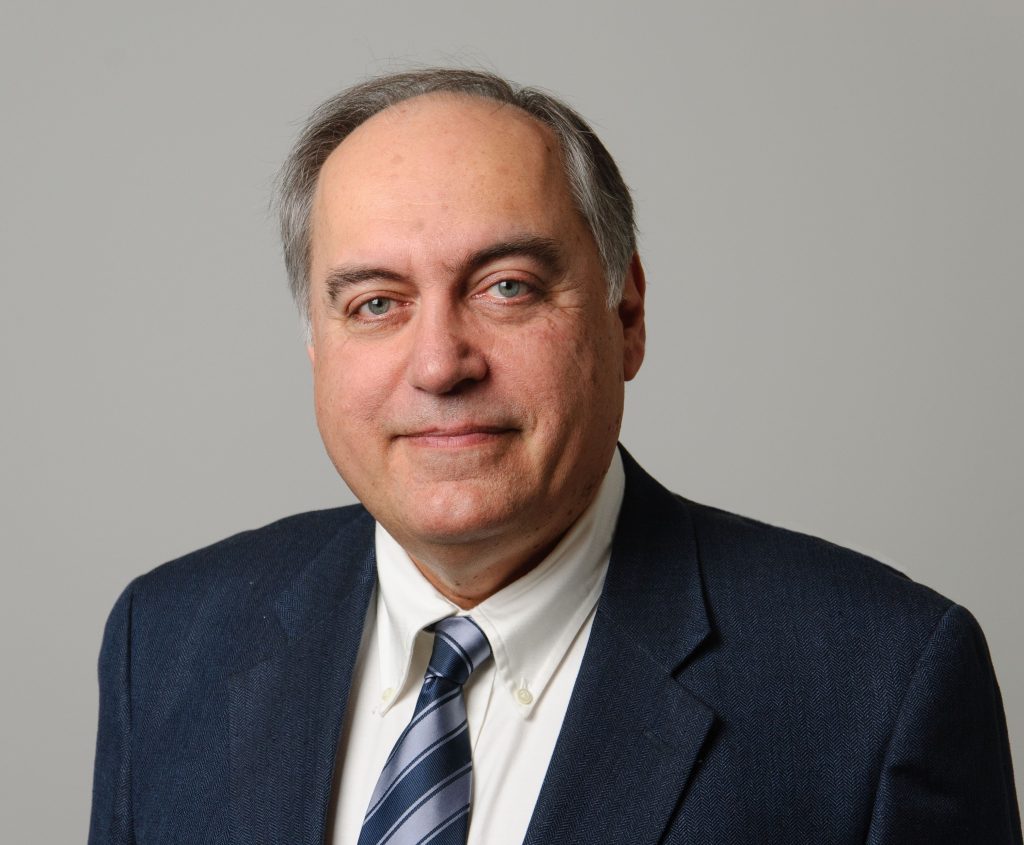
“Artificial intelligence is reshaping the frontiers of knowledge, from accelerating discovery in the sciences to transforming how we teach and learn,” said Alex Schwarzmann, PhD, dean of the School of Computer and Cyber Sciences. “This workshop underscored both the promise and responsibility of AI. Our school is determined to advance AI research and education, not only by integrating it into our curricula and scholarly work, but by fostering collaborations that ensure these technologies serve society with integrity, innovation and impact.”

 Chris Curry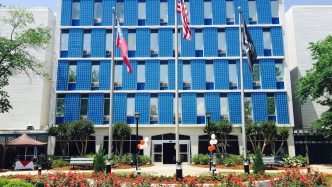
 Miguelangelo Hernandez
 Valerie Emerick