Augusta University

 Hannah Litteer
The beauty of writing is that it is subjective – what one person considers a Pulitzer-worthy piece of work, another person might deem a cluster of jumbled-up thoughts. But it is objective in the way that there are certain grammatical and organizational rules one should follow when writing to produce the best result.
Education plays a critical role in teaching someone how to write well. A national survey of teachers conducted by Michigan State University and Arizona State University revealed that only 31% of the teachers who responded took one or more classes in college devoted solely to writing instruction, leaving many of them unprepared to teach writing. This is reflected in the most recent writing results from the National Assessment of Educational Progress, highlighting that 75% of eighth- and 12th-grade students in the U.S. are not proficient in writing.
Serving as a site for the National Writing Project, the Augusta University Writing Project provides instructional support and resources to boost local educators’ confidence in teaching writing while also bolstering writing and literature initiatives, events and gatherings in the Augusta community. The impact is two-fold: improve teachers’ writing skills, so they can, in turn, improve their students’ writing skills.
“It completely changed the way that I looked at writing, the way that I taught writing, the way that I wrote.”
Rebecca G. Harper, PhD, director of the Augusta University Writing Project
Rebecca G. Harper, PhD, serves as the director of the AU Writing Project – a title she’s held since bringing the initiative to the university nearly a decade ago.

“The main reason why I wanted to start a Writing Project site here is because in 2005, I took part in a summer institute at a Writing Project site as a middle school teacher, and it changed my career. So, I knew the value of participating in the Writing Project and I knew the benefits,” said Harper, a professor of language and literacy in the Department of Research, Counseling and Curriculum in the College of Education and Human Development. “It was important for me as a faculty member to be able to bring that experience here so that others could have a similar experience.”
Twenty years ago, Harper was a full-time middle school teacher and full-time graduate student. Her involvement in the Writing Project started as a way for her to save money and earn free grad credits, but quickly turned into a decision that changed the trajectory of her life. She summed up the program as being a catalyst – igniting her love for writing and getting her to where she is now.
“It completely changed the way that I looked at writing, the way that I taught writing, the way that I wrote,” she reminisced. “I tell everybody that the Writing Project was the professional pivot in my career, but it also changed every aspect of my life. It wasn’t just professional, it was also personal. I had never presented anywhere, at any conferences. I had never written anything other than papers for classes.
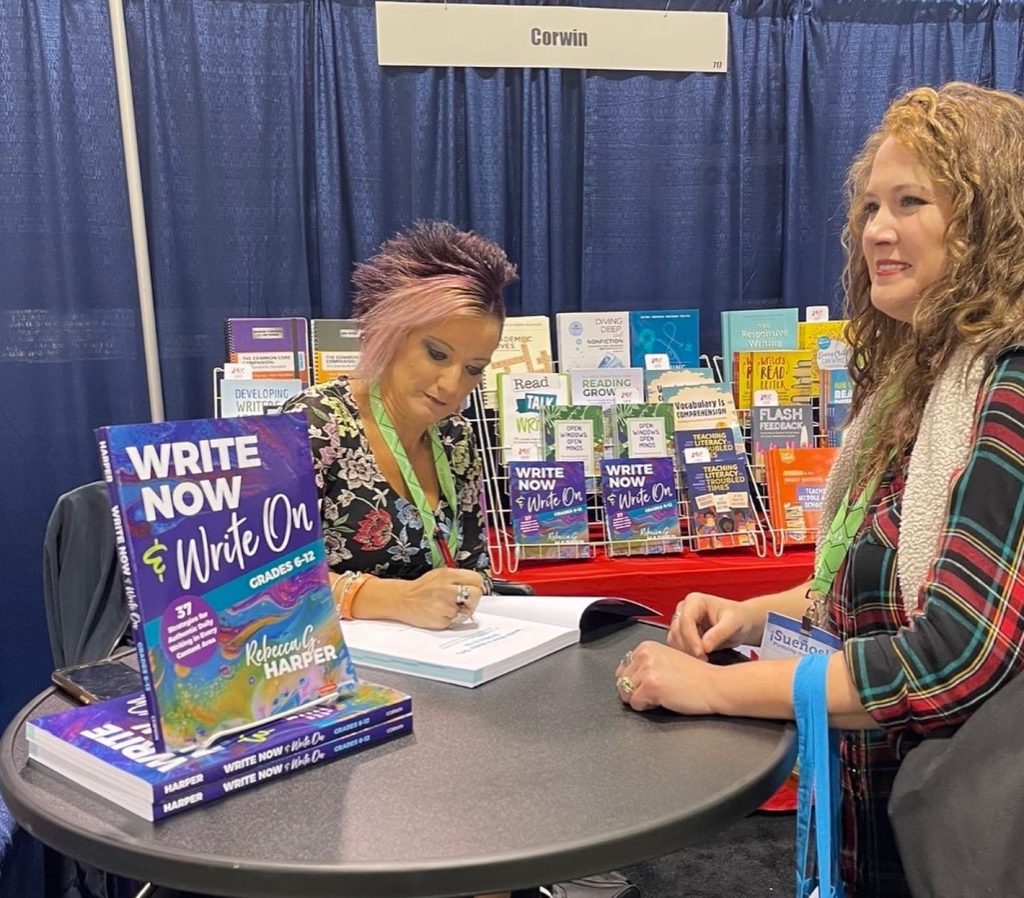
“And so I look back on that summer in 2005 and think about how I went into a PhD program because of the Writing Project,” she continued. “I came to higher ed faculty because of the Writing Project. I’ve written seven books because of the Writing Project. I’ve presented all over the country as a keynote and featured speaker, and have a network of colleagues and friends that I never would have had without the Writing Project. And it wasn’t just my story of it being transformative; my story is not unusual. It’s the common thread amongst anybody who’s been through the Writing Project. It’s just powerful.”
The Augusta University Writing Project held its first Summer Institute in 2018, serving as a two-week-long annual professional development workshop for local K-12 teachers to advance their writing and literacy expertise and find solutions for their students who are having trouble with writing.
The educators are then able to take what they’ve learned and implement it in their classrooms to better support their students.
“They come and they spend a couple of weeks on campus, and we do a lot of different workshops and things during that time, and we focus on fostering a love of writing in the classroom and out,” Harper explained. “Sometimes we have authors who pop in to help as well.”
“The strategies I gained through AUWP have been instrumental in my work with teachers.”
Nicole Cain, AUWP teacher consultant
AUWP also maintains a catalogue of resources and solutions, such as lessons and book lists, that partner schools and Summer Institute graduates can use when they need it. There are also grant opportunities that come along with being an NWP site, as well as a network of thousands of teachers across the country and professional learning groups that teachers can get involved in.
“Which I think is even more valuable – being around like-minded people who push you to do better, do more and think differently,” Harper added.
Teachers who have completed the Summer Institute and are now affiliated with the AU Writing Project are called teacher consultants. Nicole Cain, who engaged with the project in 2010 when AU was still operating as an unofficial site, currently serves as an instructional specialist for teachers.
“The strategies I gained through AUWP have been instrumental in my work with teachers. These approaches promote meaningful writing experiences, while fostering student autonomy and ownership of the writing process,” said Cain, who sang Harper’s praises for the amount of effort she’s put into growing the program at AU. “The instructional practices emphasized by AUWP are both practical and accessible, enabling all students to engage confidently in writing. In my role as a AUWP teacher consultant, I have collaborated with colleagues and presented at professional conferences in multiple locations, including Kentucky and New Orleans.”
Not only has the program impacted area teachers and students, it’s also brought interest to COEHD’s graduate programs. If someone who is enrolled in one of those programs participates in the Writing Project, they can bring in up to six hours of continuing education credit.
“We’ve actually gotten a lot of students in our EdS program because of the Writing Project. So, the people who did the Writing Project with me, they already had the equivalent of what would be two courses handled, and so they’re like, ‘We’ll just come and finish our degree,’” Harper said. “It’s been a good thing for our college because it’s helped with our graduate programs, but it’s also allowed us to continue to be involved as a community with teachers in different settings.”
It’s not just the Summer Institute the AU Writing Project oversees. Harper has arranged and brought AUWP’s presence to an array of events, gatherings and conventions in the Augusta area and beyond.
Last August, AU’s Summerville Campus welcomed Pulitzer-Prize-winning author and journalist Rick Bragg to “An Evening of Southern Storytelling” after Harper met him at a literary festival in Dahlonega, Georgia. At the event, he discussed the ins and outs of his style of writing and the process that goes into it.
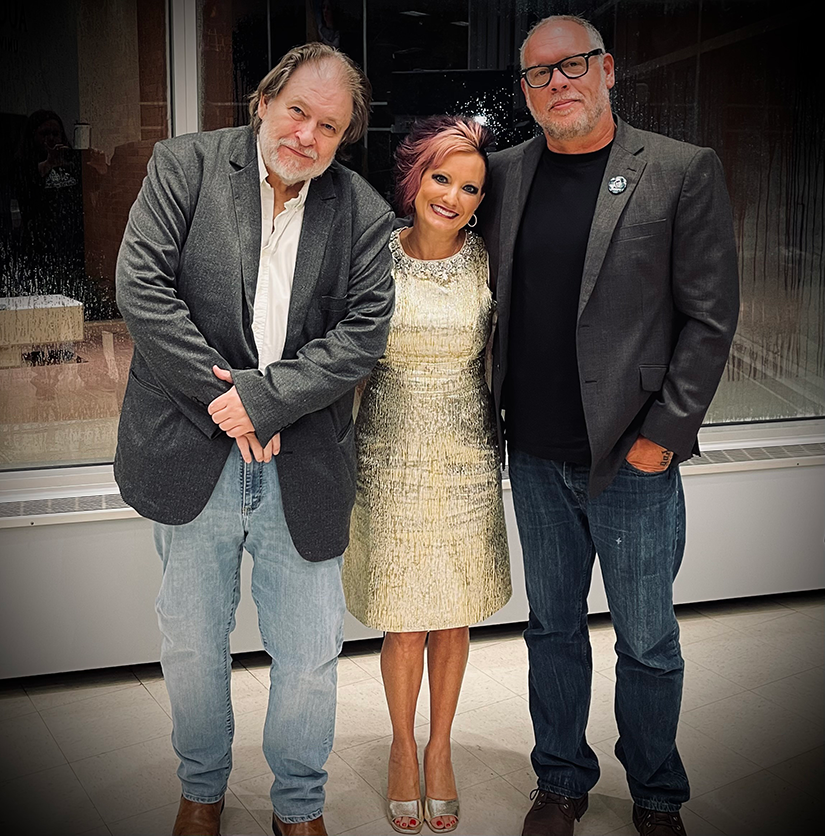
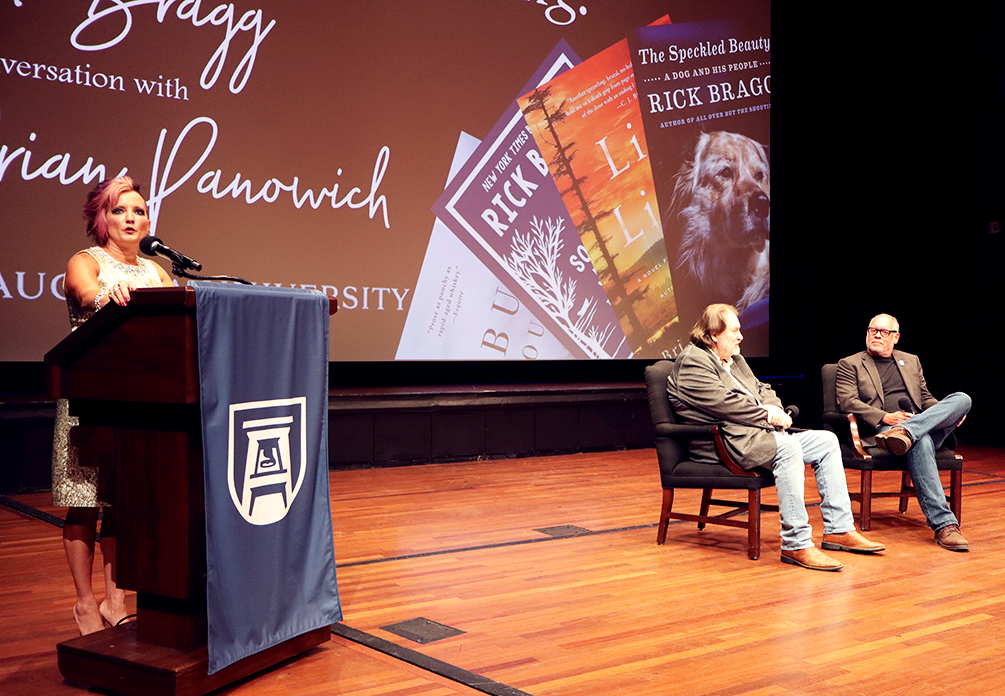
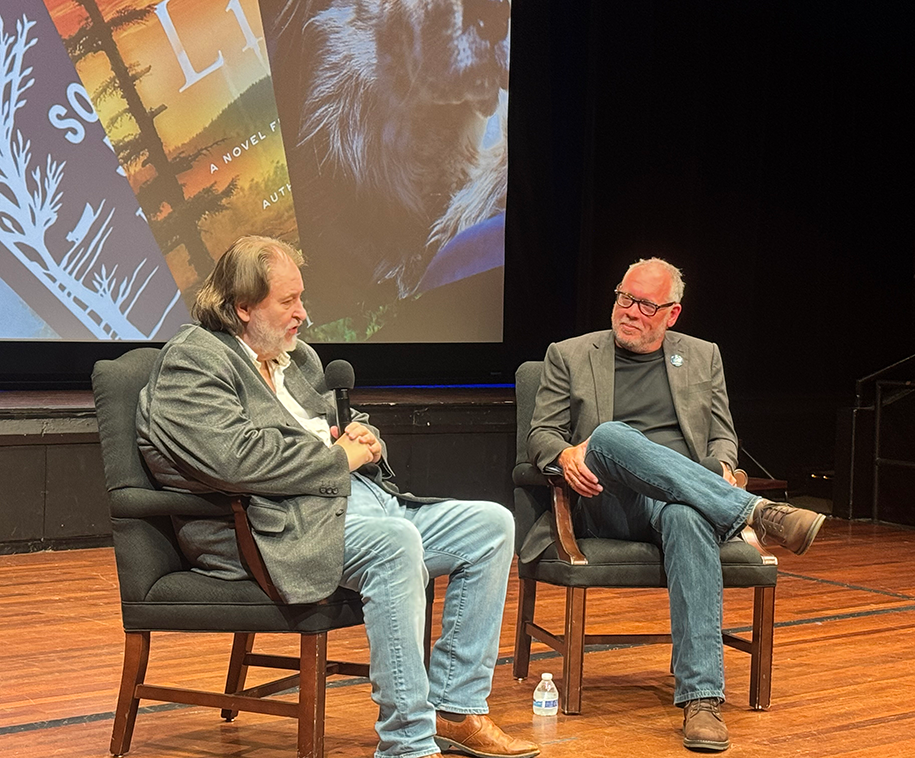
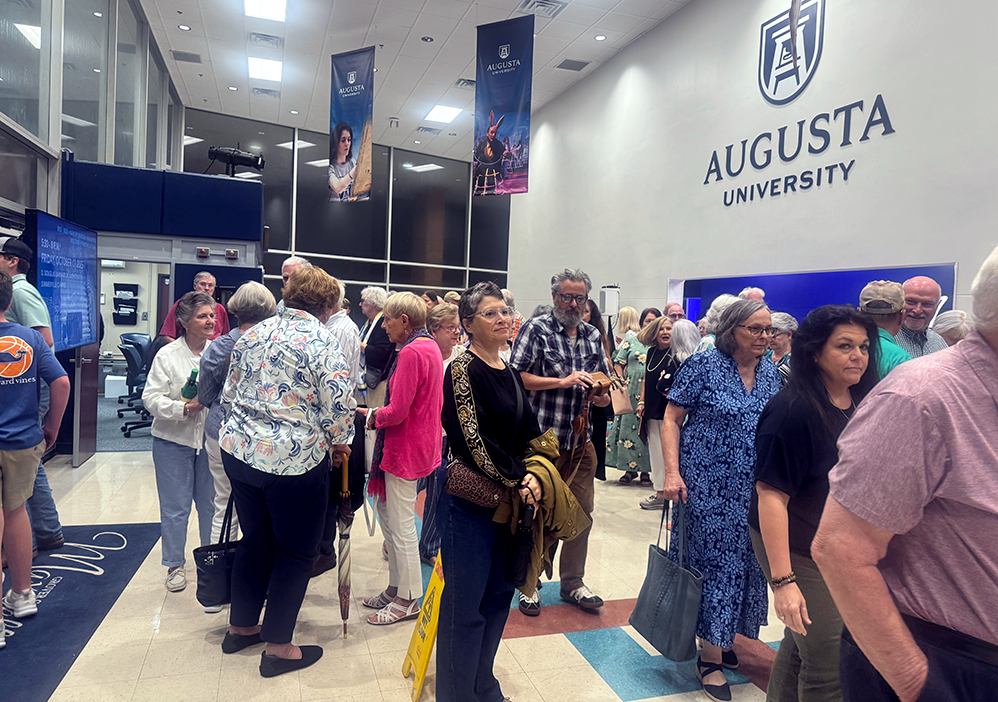
“That was the biggest event we’ve ever had. We had over 300 tickets sold, and a ton of people from the community were there for that,” Harper recalled. “And that was a big win for us, too, because you’re talking about a big name in writing, and it was very successful.”
Harper explained that, during COVID-19, the project hosted about 50 to 75 authors virtually due to social distancing and quarantine guidelines.
“I just sent an email to an author and said, ‘Hey, would you mind Zooming with my people?’ And he said, ‘Yes,’ and then the next person said, ‘Yes,’ and then that started this snowball effect of me reaching out to other authors, and it was a huge, huge success.”
The Augusta University Writing Project also often collaborates with local spaces and venues dedicated to the arts. Just recently, AUWP and The Book Tavern hosted a book signing and discussion with author Matthew F. Jones, and back in December, they joined Le Chat Noir to host the inaugural Garden City Noir at the Bar, in which eight writers from near and far gathered at the theatre for a night of storytelling and mingling.
“From my own experience, the more you read, engage with other writers and attend literary events, the stronger your writing becomes.”
Karen Head, PhD, associate provost of Faculty Affairs
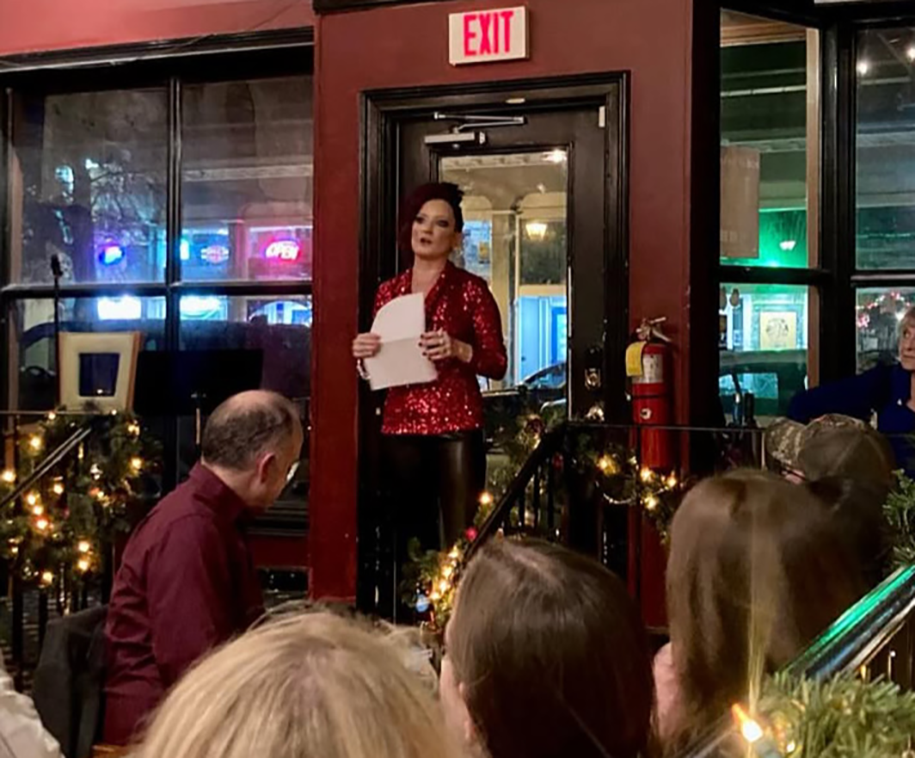

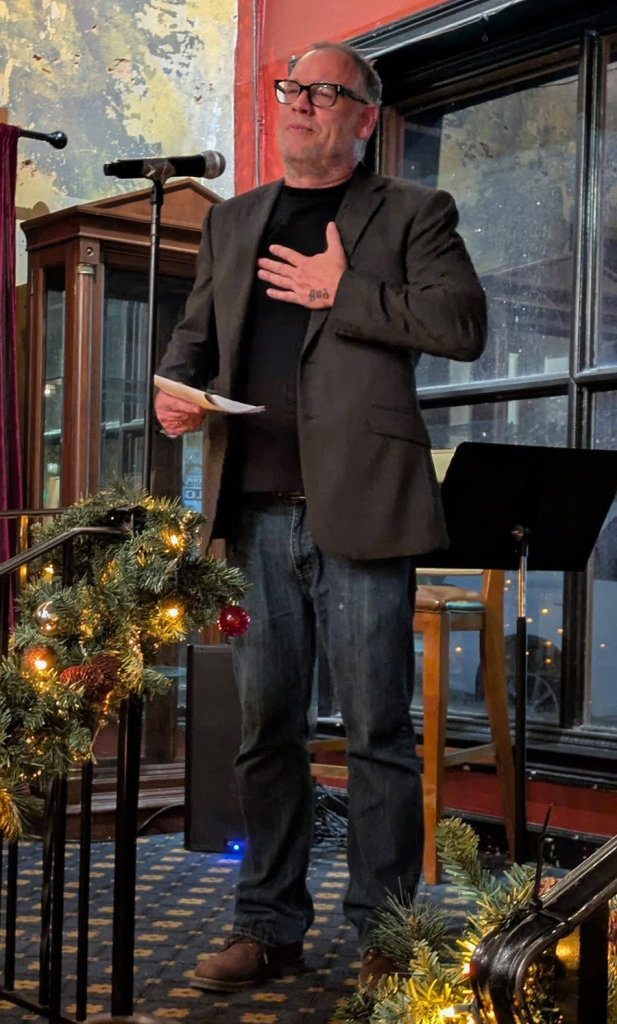
Peter Farris, Meagan Lucas, Christopher Swann, Jason Sheffield, Samantha Jayne Allen, Jon Lindstrom, Brian Panowich and Augusta University’s very own Karen Head, PhD, read excerpts from pieces they wrote and signed books for attendees.
“The other authors were fiction writers; I was the only poet, but I think that the goal is to expose people to more writers,” said Head, recalling her excitement for the event and how great of a turn out it had. “It’s difficult to write if you can’t picture what it means to be a writer. Spending time with writers and listening to them talk about their craft matters. From my own experience, the more you read, engage with other writers and attend literary events, the stronger your writing becomes.”
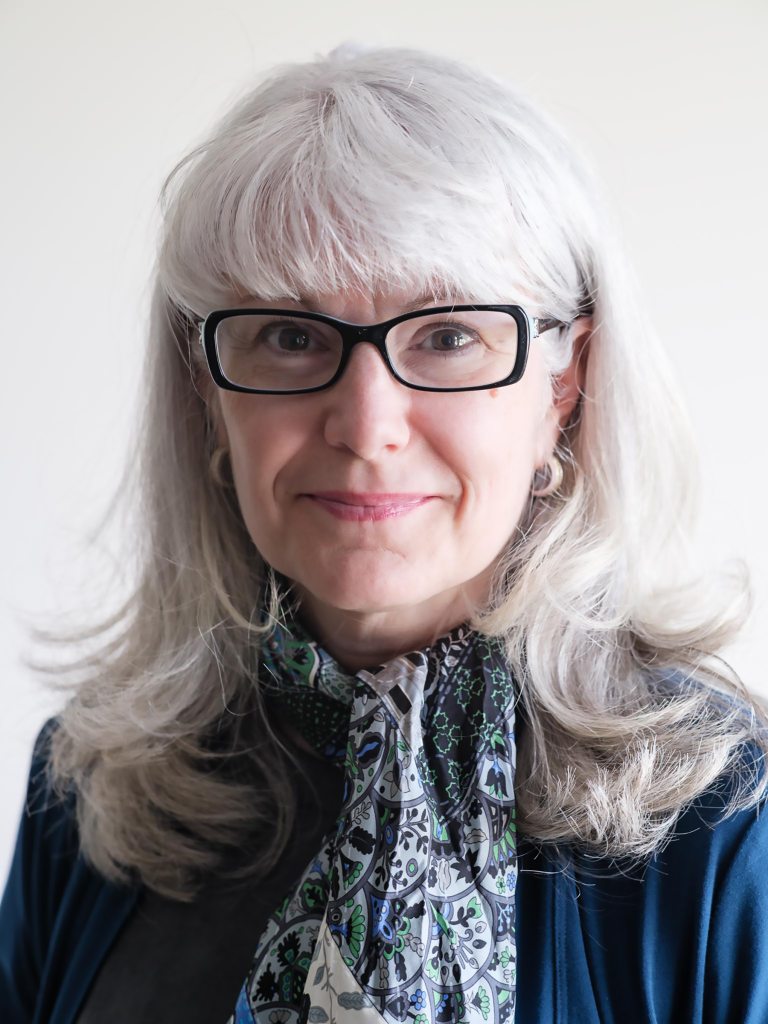
Head wears many hats – at AU, she’s the associate provost for Faculty Affairs and a professor in the Department of English and World Languages in the Katherine Reese Pamplin College of Arts, Humanities, and Social Sciences. She’s been recognized for her work establishing creative arts framework inside higher education institutions, and outside of that, she is an acclaimed and award-winning author of multiple poetry books and a nonfiction book, the coeditor of a poetry anthology and creator of several digital poetry projects, as well as the editor emerita of the international poetry journal Atlanta Review.
She served as the inaugural Poet Laureate for Fulton County, and to further add to her intrigue, she also served as the Poet Laureate of Waffle House, a title bestowed upon her not just for her love of the restaurant chain, but her drive to expose high school students in rural areas to the arts – through a poetry tour sponsored by the Waffle House Foundation – in hopes to encourage them to pursue a college degree.
So, when it came time for Harper to ask her to participate in AUWP events and readings, it was a natural fit for Head based on her previous experiences and outreach work.
“I think the work is wonderful, especially in the way the Writing Project encourages people to explore writing across so many genres and expressive forms. It really opens the door for anyone who feels called to be a writer,” Head said.
Another point she brought attention to was Augusta University’s range of offerings for degree programs related to the arts, and that its mission of providing life-changing, life-saving education doesn’t only apply to health sciences.
“We do so much more, and creative writing and creative practice really help propel that work,” she said. “I want people to recognize Augusta as the vibrant, diverse academic community it truly is.”

Upcoming Writing Project events include the Summer Reading Kickoff, bestselling and Oprah’s Book Club selection author Tayari Jones coming to campus in September and, of course, the annual Summer Institute.
“About every other month we do an event. In the past, I’ve mostly focused on things that would be beneficial for teachers, such as young adult books and authors, but I realized that the whole community might not read that genre,” Harper said. “That’s why we brought in Rick and Karen, and why we brought in all those authors for Noir at the Bar. That’s more adult reading, and I want the community to see that the Writing Project is not just for teachers – it’s for everybody.
“It’s important for our Writing Project to be able to celebrate all those voices and make sure we keep doing what we’re supposed to be doing, which is to build a love of reading and writing,” she continued.
While some of the strings Harper has pulled have been on an out-of-pocket or pro bono basis, she has also written multiple grants that have allowed the project to work with schools and provide professional development and resources with support from NWP teacher consultants and Research, Counseling and Curriculum Department Chair Alicia Becton, PhD.
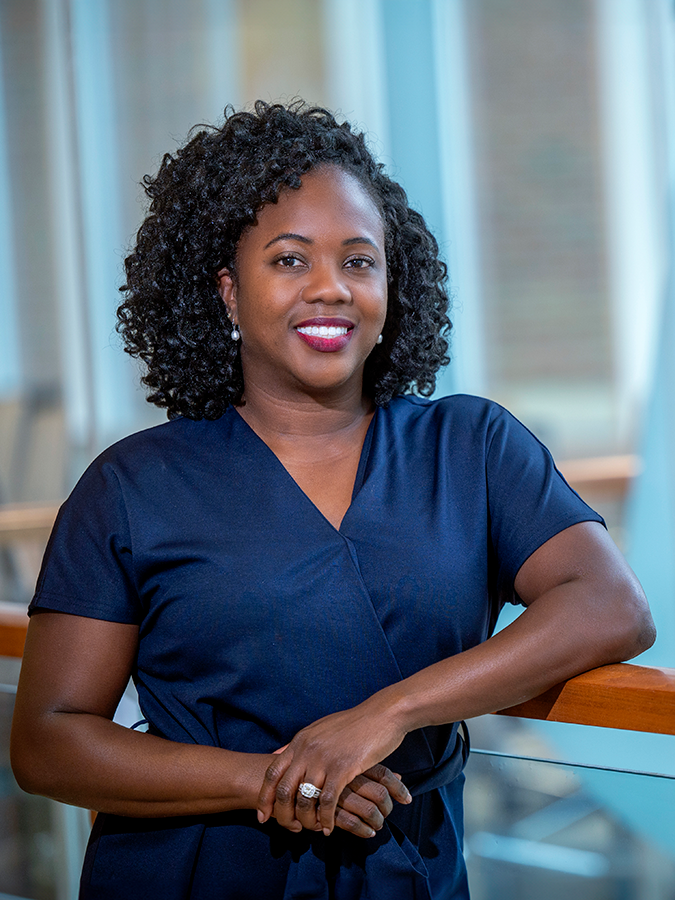
“The AU Writing Project reflects the kind of ‘community-connected’ work that strengthens both our institution and educators. Its success speaks to the power of creating spaces where teachers can grow, collaborate and strengthen their practice in ways that directly benefit students,” Becton said. “From my perspective as department chair, I am proud to continue supporting efforts that elevate professional learning, foster innovation and expand AU’s impact across our region.”
Because of that support, Harper has been able to take teacher consultants to several national, state and regional conferences to present their work and complete special training. For her, it’s all about taking the initiative to “do a lot with a little.”
“I think that we’ve grown tremendously, and I think it’s a testament to the people who are involved with it,” she mused. “We have operated a lot on figuring out a way to make it happen. I think that’s what makes us successful – we don’t wait for somebody to say ‘Yes.’ We don’t wait for somebody to come and offer the opportunity. We go and find the opportunity ourselves.”
Administrators in the COEHD hold similar sentiments, cementing Harper’s dedication to this project and what it means to the Augusta University community.

“Dr. Harper is to be commended for bringing the National Writing Project to Augusta University. It has been my joy and pleasure to watch our Summer Institute participants learn to become better writers so they can model and teach others how to become stronger writers,” said COEHD Dean Judi Wilson, EdD, EdS. “Harper is a charismatic and enthusiastic professor who is well respected in her field. The creative and innovative strategies she shares are well received by the participants and their P-12 students. Augusta University is honored to host this prestigious professional learning initiative.”
Harper’s long-term goal for AUWP is to host a similar literary festival to the one she attended in Dahlonega to continue to inspire writers of all kinds and cultivate an environment of open expression through writing.
“There’s no reason why, in a place as big as Augusta, we shouldn’t have something that’s comparable to that,” she said. “So that’s our long-term goal, and we want to keep offering events to the community, to teachers and anybody who is interested. I want people to see that writing is not just something that we do in school; so many of us are writers and don’t even realize that we are.”
Head believes this is a vital way Augusta University can continue to build itself out into the CSRA and attract more creative minds to the region.
“This community has such a genuine appetite for arts programming. Every Writing Project event I’ve attended has been filled with energy and enthusiasm,” she said. “People here don’t just want these opportunities – they truly thrive on them. That’s why Dr. Harper’s commitment to growing the program feels so meaningful and so worthy of praise.”
Harper equates the Writing Project to being her true north, keeping her centered and focused on why she started this journey in the first place.
“Something from the Writing Project reminds me of why teachers do what they do,” she expressed.
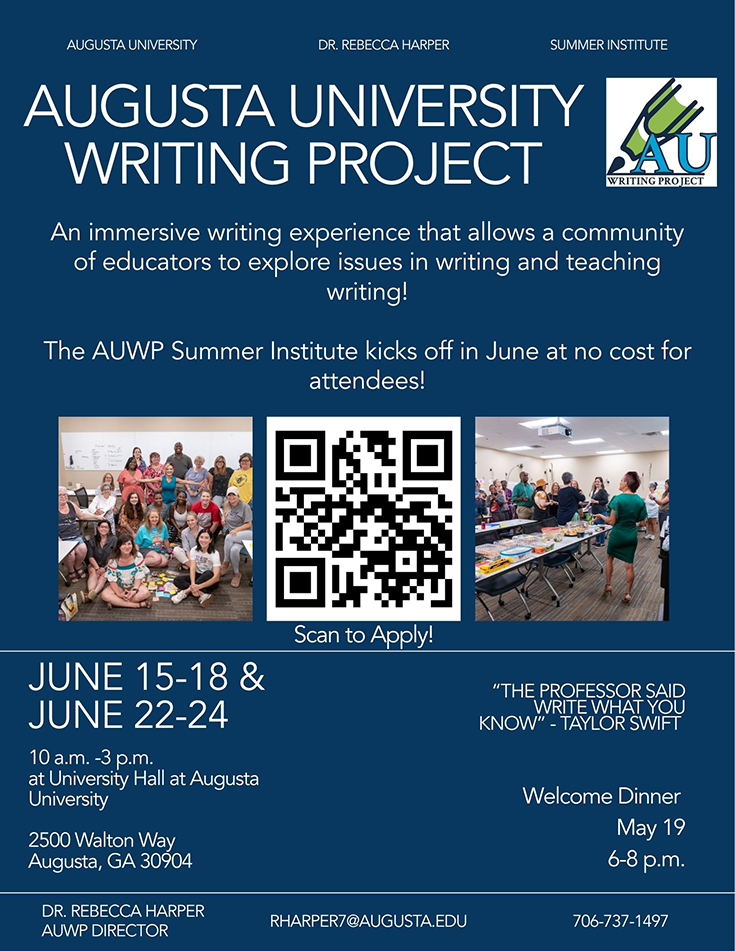
Applications for the Summer Institute are currently being accepted via the AUWP website.

 Miguelangelo Hernandez
 Felicia Baskett