 Augusta University
 Nina Siso
Earning a Doctor of Philosophy in Nursing degree provides another pathway to contribute to patient care and the nursing profession. For Tracey Couse, FNP, it allows her to grow as a scholar, mentor future nurses, help future leaders and advance patient care through the research process.
“I love the program because it changes how you think, how you ask questions, how you solve problems,” Couse said. “It prepares nurses to be leaders, collaborators and innovators.”
Her background as a research technician and supporting other people’s projects sparked a lasting respect for the power of inquiry and how it can improve patient care. With a bachelor’s in biology and medical laboratory technology, she knew she wanted to get closer to the bedside and decided to pursue her BSN.
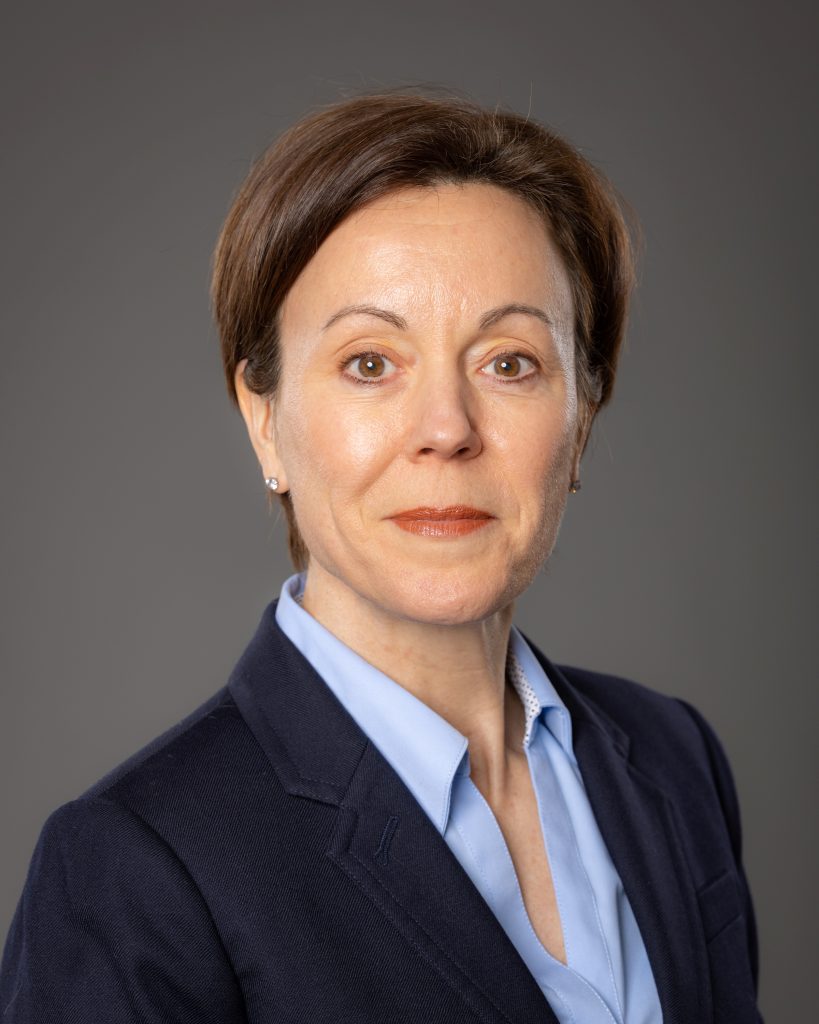
Her current research in the College of Nursing‘s PhD program at Augusta University was inspired by her early career work in neuro/vascular surgery and stroke care and as an advanced practice provider in neurosurgery. She has a particular interest in ischemic strokes, which are caused by blood clots that block blood flow to the brain.
“My goal is to advance stroke-related research and patient care,” she said. “The diagnosis of a stroke is so life-changing, and treatments are so time sensitive. There are still very few interventions after decades of research.”
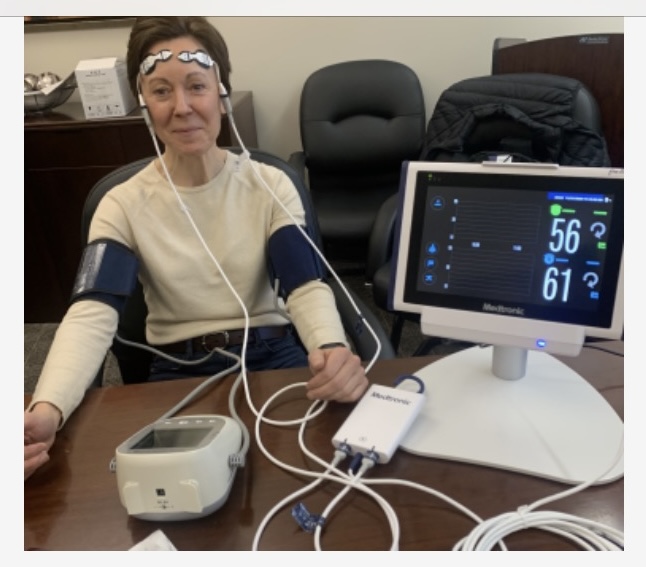
Her thesis looks at a technique called remote ischemic conditioning, which gently reduces blood flow to the arm. This simple, non-invasive method triggers protective responses in other body tissues like the brain. Her goal is to study how this conditioning impacts oxygen levels of the brain in adults after an ischemic stroke.
She is working closely with neurologist Askiel Bruno, MD, who works with various stroke patient populations. After enrolling ischemic stroke patients in his clinic, participants will be fitted with a home remote ischemic conditioning (RIC) device for daily use over two weeks. Brain oxygen levels will be measured before and after the treatment period using near-infrared spectroscopy (NIRS).
“There are still gaps in its use for the clinical setting, but I’m looking for more information to transfer this process from the bench side to the bedside,” Crouse said.
Couse is currently preparing to defend her proposal to her advisory committee, which includes her major advisor Terri Marin, PhD, and hopes to start collecting data over the summer in Augusta.
Professionally, Couse recently transitioned to academia and is a full-time faculty member at Kennesaw State University.
“I enjoy combining my clinical and research backgrounds to teach future nurses,” she said.
Her work requires her to attend the PhD program part time and the flexibility of it being online is a huge factor in her success.
“I’m very routine driven, which helps me stay focused and on track. Working full time, most of my course work is done in the evenings and on the weekends,” said Crouse, who credits the program’s faculty for helping with the juggling act. “They are highly supportive, and my advisor is always there to help guide me and make sure my plans are solid and achievable.”
On top of collecting her data, Couse will focus on her manuscripts as well. The program has a “three manuscript option” that ensures students will have submitted three manuscripts by the time of graduation. Publishing scholarly work not only helps to establish a professional reputation but is a way for students to disseminate their research.
“I’m hoping for five publications from my PhD work. I will publish my literature review, my methodology and my results, at the very least.”
Through working on manuscripts and presenting at university and faculty events, Couse can refine how she articulates her ideas and research while receiving meaningful feedback. After graduation, she hopes to apply to a tenure track role and grow a research program in her area of interest. She also hopes to work part-time in stroke patient care.
“Having a PhD doesn’t mean you have given up clinical practice. For me, it’s important to have contact with patients and make sure my work is patient informed,” she explained.
Couse encourages anyone who might be interested in research to take the next step.
“The journey is challenging, but contributing knowledge that improves patients’ lives is incredibly rewarding. We get to create the evidence that improves practice and can even shape policy and healthcare systems,” she said. “The excitement of knowing what I can contribute to patient care is truly exhilarating. With the support from faculty and fellow students the process is manageable, so just go for it.”


 Hannah Litteer
 Stacey Eidson
 Felicia Baskett
 Jamison Guice