 Augusta University
 Hannah Litteer
A researcher in the Medical College of Georgia at Augusta University is making great strides toward understanding what causes Alzheimer’s disease.

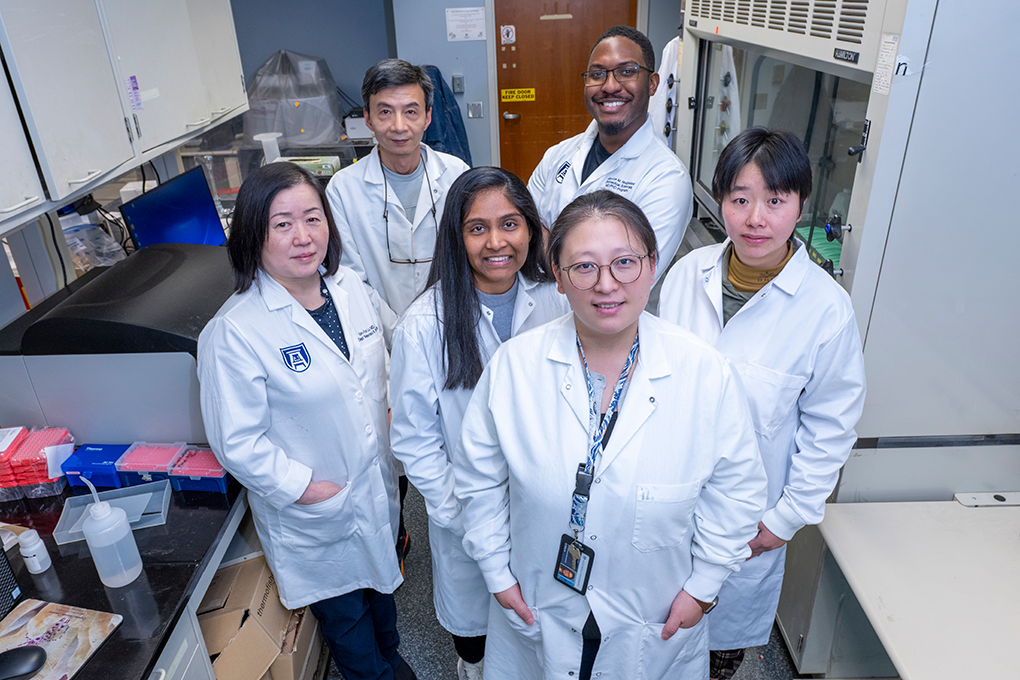
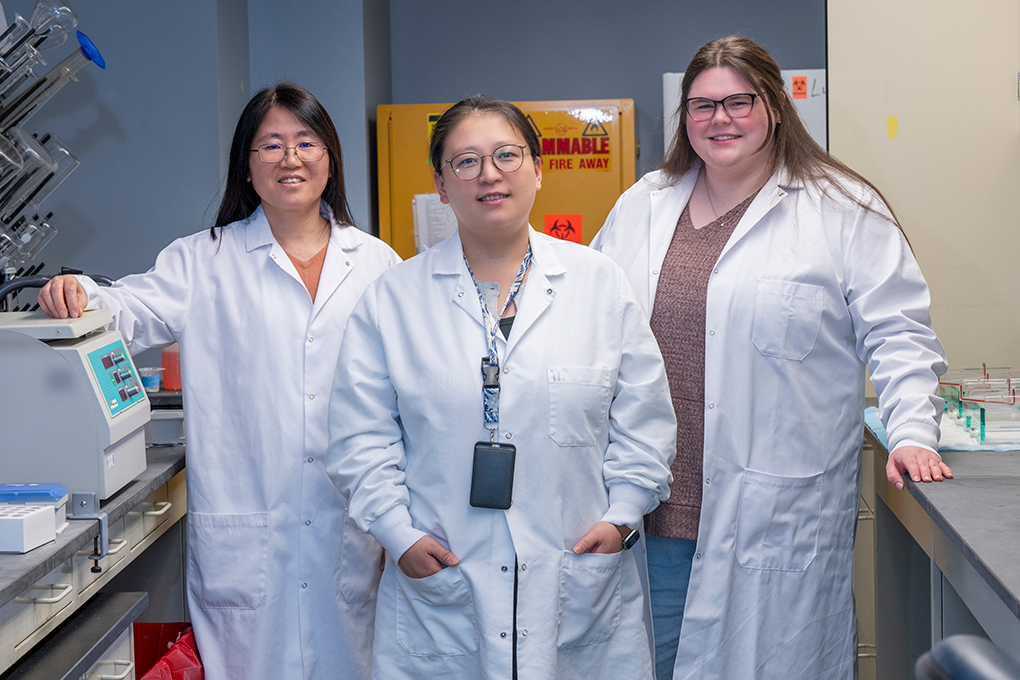
Yun Lei, PhD, assistant professor in the Department of Neuroscience and Regenerative Medicine, recently received a nearly $2.8 million R01 grant from the National Institutes of Health to study the impact of Alzheimer’s disease on certain neurons. Additionally, an Alzheimer’s disease research paper she authored was recently accepted for publication by the journal Molecular Psychiatry.
Both the grant and paper seek to find Alzheimer’s answers – but from different perspectives.
The grant
The five-year NIH-funded study, “Epigenetic mechanisms of selective vulnerability of entorhinal PV neurons in aging and AD,” began in January and seeks to discover why certain neurons in the entorhinal cortex are more vulnerable to damage in early Alzheimer’s stages.
The entorhinal cortex sends information to the hippocampus, the brain’s memory center.
“There are all different kinds of neurons in the brain, but not all of them are affected by Alzheimer’s disease,” Lei said. “So we are focusing on the most vulnerable brain region, and then one group of neurons in that region that is particularly vulnerable to the development of the disease.”
Gene expression in neurons can change with aging, as well as in response to our experiences and environment, without altering the DNA sequence.
As Lei explained, “It’s not changing your genes or your DNA, but it can change how certain genes are turned on or off – we call that epigenetic regulation. When this process doesn’t work properly, it can speed up aging and increase the risk of diseases like Alzheimer’s.”
Her research links Alzheimer’s disease progression to an enzyme called EZH2. This enzyme can modify the structure of DNA-associated proteins called histones by adding chemical tags to them, which makes certain genes less accessible for activation. Early data shows EZH2 is dysregulated in neurons of the entorhinal cortex in Alzheimer’s mouse models.
Based on this, Lei’s team hypothesizes that dysregulated EZH2 is a key factor that makes certain neurons in the entorhinal cortex more vulnerable to aging and degeneration in Alzheimer’s by disrupting their normal gene expression.
To test this, they will aim to answer three questions: Is EZH2 in these neurons essential for maintaining neuronal function during aging? Does EZH2 protect neurons from damage caused by amyloid beta plaques and tau tangles, the two hallmarks of Alzheimer’s disease? And, what molecular pathways does EZH2 target that lead to neuronal dysfunction and degeneration?
“Alzheimer’s disease is a devastating neurodegenerative disorder that causes memory loss. It is very complex, and we still do not fully understand the mechanisms behind its development. We see amyloid beta plaques and tau tangles in the brain of people with Alzheimer’s, but there are also some normal individuals having these toxic proteins who do not develop memory loss,” Lei explained.
“In our work, we use mouse models that express these toxic proteins to recapitulate the pathological features of Alzheimer’s disease and to explore new molecular targets and potential therapies.”
The paper
Lei’s paper that is currently in press, “Neuronal HDAC9: A key regulator of cognitive and synaptic aging, rescuing Alzheimer’s disease-related phenotypes,” explores the role of the enzyme HDAC9 in Alzheimer’s progression. It’s in collaboration with and builds on earlier research with Xin-Yun Lu, MD, PhD, professor and chair of the Department of Neuroscience and Regenerative Medicine at MCG.
Histone deacetylases, or HDACs, like EZH2, are enzymes that regulate gene expression. There are 18 subtypes of them in humans, but their specific functions are still unclear. Lei’s research found HDAC9 was expressed in both human and mouse brain neurons.
“Many previous studies have focused on Class I HDACs, but we’re looking at Class II HDAC9 in our study to understand its specific role in aging and Alzheimer’s disease,” Lei said. “We found that HDAC9 levels are reduced in the aged brain and in Alzheimer’s mouse models.”
The team discovered that young mice lacking HDAC9 showed impaired cognitive function, and removing HDAC9 from hippocampal neurons also harmed cognitive abilities.
On the other hand, increasing HDAC9 in neurons helped preserve cognitive function in aging mice.
“We overexpressed HDAC9 and allowed the mice to age to 21 months, which is roughly comparable to humans in their 70s. We found that the aged mice developed memory and learning deficits, but HDAC9 overexpression helped preserve their cognition,” Lei said.
Not only that, they also noticed overexpression of HDAC9 in neurons actually reduced cognitive deficits and amyloid plaques in Alzheimer’s mice.
“When we first observed this, it was surprising, as it contradicts the prevailing idea in the field that HDAC inhibition is beneficial in Alzheimer’s disease,” Lu said. “This particular HDAC has a unique structure and interacts with other epigenetic modulators. We believe it functions through these binding partners rather than through its own activity.”
These findings suggest HDAC9 is vital for maintaining cognitive function in aging and Alzheimer’s – adding another piece to the puzzle of understanding and treating the disease.
“Dr. Lei’s work brings competitive federal funding to Augusta University, and her discoveries may lead to new strategies for preventing or treating this devastating disease,” Xin-Yun Lu said. “Her laboratory also provides training opportunities for graduate students and postdoctoral fellows, supporting the university’s research and education mission.”

 Chris Curry
 Jamison Guice
 Miguelangelo Hernandez
 Stacey Hudson