 Augusta University
 Milledge Austin
Neutrophils are best known as the immune system’s rapid-response cells, rushing to sites of infection and inflammation to help protect the body. But these abundant white blood cells are far more versatile than their traditional “first responder” reputation suggests.
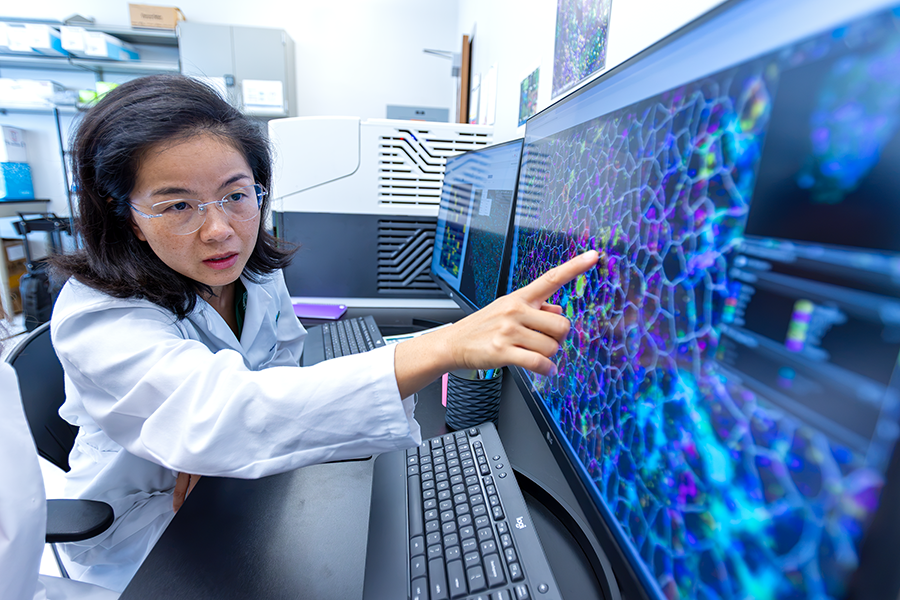
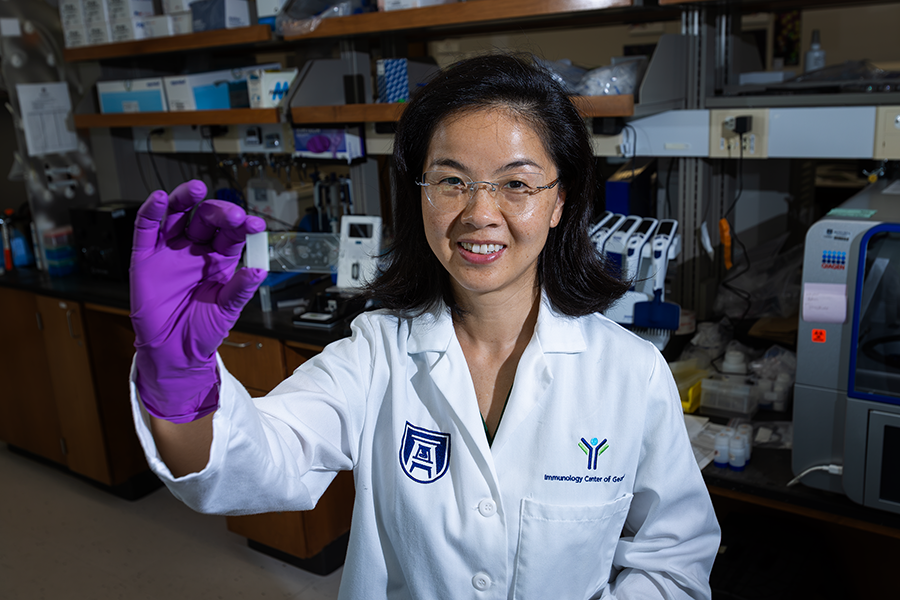
A new review by Yanfang “Peipei” Zhu, PhD, an assistant professor in the Department of Biochemistry and Molecular Biology and researcher at the Immunology Center of Georgia, part of the Medical College of Georgia at Augusta University, and her collaborators examines the remarkable adaptability of neutrophils and their increasingly recognized roles in health and disease.
The review, “Neutrophils as chameleons of tissue inflammation and host-pathogen interactions,” was recently published in Blood, the flagship journal of the American Society of Hematology. Zhu coauthored the review with Sergio D. Catz, PhD, of The Scripps Research Institute, and Ben A. Croker, PhD, of the University of California San Diego. The article synthesizes recent discoveries across the field, looking at how neutrophils are actually far more versatile and influential in health and disease.
“This review provides a comprehensive synthesis of recent advances in neutrophil biology, integrating developmental, tissue-specific and functional perspectives into a unified framework for understanding neutrophil heterogeneity,” Zhu said. “It highlights emerging concepts in neutrophil progenitor biology, tissue adaptation, cancer immunology and therapeutic targeting, while identifying key knowledge gaps that will guide future research.
“By bridging fundamental immunology with translational applications, the article serves as an important reference for investigators studying inflammation, infection, cancer and immune-mediated diseases,” she continued. “More broadly, it advances the health sciences by promoting new strategies to manipulate neutrophil responses for improved diagnosis and treatment of diverse human diseases.”
In the review, the authors describe neutrophils as “chameleons” because they are able to adapt to different environments. Neutrophils found in the lungs, skin, mouth, brain or tumors can look and act differently, responding to signals from the surrounding tissue. This realization shows that neutrophils play important roles not only in infections, but also in chronic inflammatory diseases, autoimmune disorders and cancer.
“The goal is to move beyond simply identifying different neutrophil populations and understand how their functional states are established, shaped by the tissue environment and altered during disease – and how this knowledge can be translated into new therapeutic strategies.”
Yanfang “Peipei” Zhu, PhD
Advances in single-cell and other high-resolution technologies have revealed an increasingly complex picture of neutrophil states across the bone marrow, blood and other tissues. This emerging complexity is important because neutrophils do much more than attack invading microbes. They can produce cytokines and chemokines that influence other immune cells, generate reactive oxygen species, release antimicrobial proteins from specialized granules and produce neutrophil extracellular traps, or NETs. These mechanisms are essential components of host defense, but when improperly regulated, they can also contribute to tissue injury and chronic inflammation.
“Over the past decade, we’ve discovered tremendous neutrophil heterogeneity through single-cell technologies, but identifying transcriptional clusters is only the beginning,” Zhu said. “The critical next step is determining which of these states are biologically meaningful, how they arise during development, how tissue environments shape them, and which are therapeutically actionable. For example, many neutrophil-mediated contradictory effects were reported in cancer, such as being anti-tumoral or pro-tumoral. Why is that? How is the current neutrophil heterogeneity affecting our understanding of their functional states? Can we expect to use this knowledge and lead the future discovery towards clinical actions?”
The review examines how neutrophils and their precursors develop, how they interact with their surrounding environments, and how their functions can change in different tissues and disease settings. It also highlights the importance of neutrophil granules and their contents, which are generated during neutrophil development and subsequently released by mature cells.
“Neutrophils have a powerful arsenal of effector mechanisms,” she said. “The same mechanisms that allow them to protect us from infection can, under different circumstances, contribute to tissue damage or disease. Understanding what determines these different outcomes is one of the major challenges in neutrophil biology.”
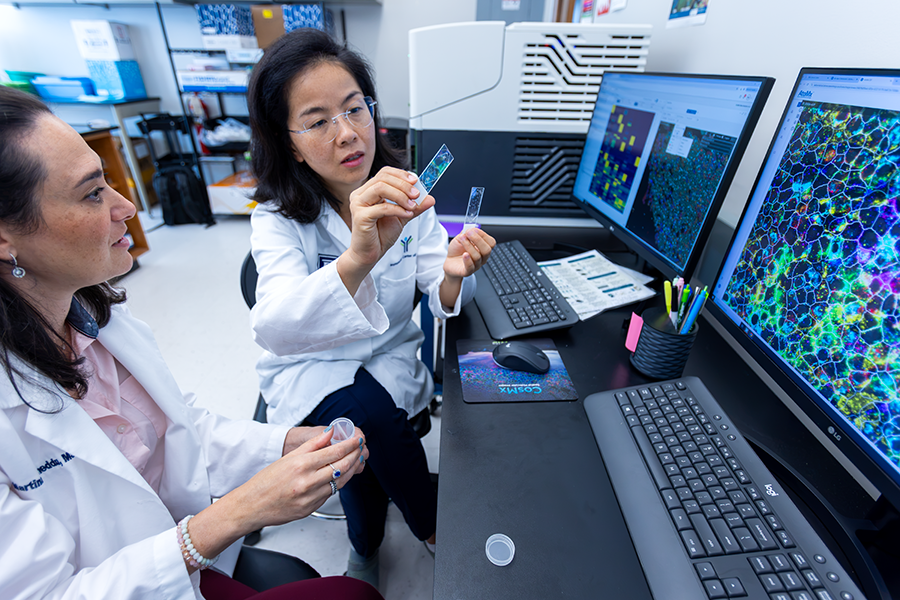
The authors discuss growing evidence that neutrophil diversity is relevant to chronic inflammatory diseases, cancer and other conditions. In tumors, for example, different neutrophil populations and functional states have been associated with both anti-tumor and tumor-promoting activities.
The review highlights the need to better understand what drives these divergent behaviors rather than treating neutrophils as a single, uniform population. This distinction may be particularly important for developing future therapies. Because neutrophils are essential for host defense, broadly eliminating them could have unintended consequences. A better understanding of neutrophil heterogeneity could eventually allow researchers to selectively modulate harmful functions while preserving the cells’ protective activities.
“I see this review as establishing a roadmap for the next phase of neutrophil research,” Zhu said. “The goal is to move beyond simply identifying different neutrophil populations and understand how their functional states are established, shaped by the tissue environment and altered during disease – and how this knowledge can be translated into new therapeutic strategies.”
Zhu’s laboratory is pursuing these questions in cancer, focusing on how neutrophil progenitors and their progeny transition between anti-tumor and immunosuppressive states during tumor progression. By integrating single-cell and spatial transcriptomics with genetically engineered mouse models, her team aims to identify the molecular signals that govern these transitions and determine how they can be therapeutically targeted while preserving essential neutrophil functions in host defense.
The review reflects a broader shift in how scientists view neutrophils – from relatively uniform, short-lived first responders to a highly diverse and adaptable lineage whose functions are shaped by development, tissue environment and disease. For Zhu, this evolving understanding creates new opportunities to harness the versatility of neutrophils to better understand disease and develop more precise therapeutic strategies.


 Denise Parrish
 Wil Petty
 Jennifer Hilliard Scott
 Staff
Staff