 Augusta University
 Delaney Freistuhler
During the spring semester, 20 AU students are enrolled in Service Learning in Tax and have completed IRS-required certifications.
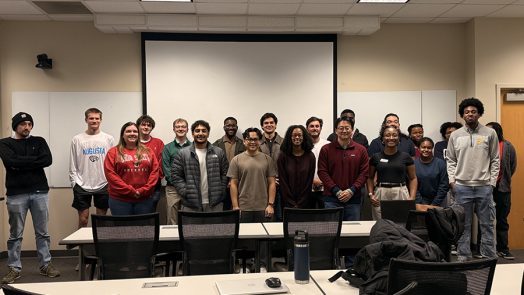

During the spring semester, 20 AU students are enrolled in Service Learning in Tax and have completed IRS-required certifications.
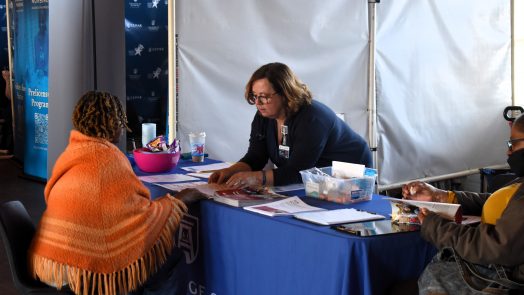
The College of Nursing hosted two days of community events, specifically providing healthcare to employees of Horizon and adults enrolled in the Healthy Grandparents Program.

“Our staff and Board of Directors look forward to welcoming the runners and spectators at the Summerville Campus for our annual signature event," says Michelle Pippin.
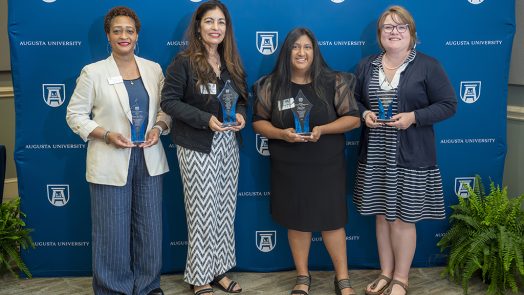
“I've dedicated 19 years to championing public health in dentistry and bringing awareness to the dental underserved Georgia communities," says Ketarya Hunt-Bass.
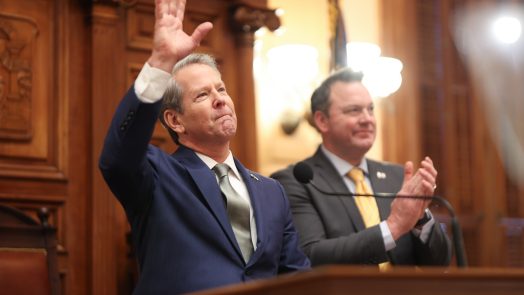
The state is investing $2 billion more in higher education than when Kemp first took office in 2019.

Following the success of last year’s legislative session, Augusta University President Russell T. Keen and the Government Relations team have a lot to celebrate.
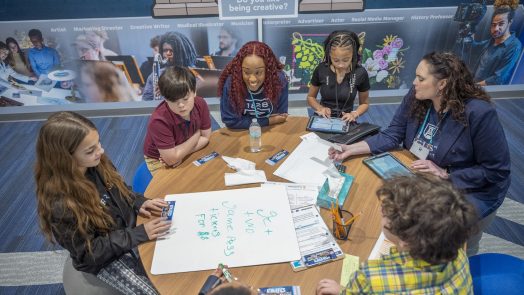
"Together, we are strengthening our communities while advancing the mission of Augusta University," says AU President Russell T. Keen.
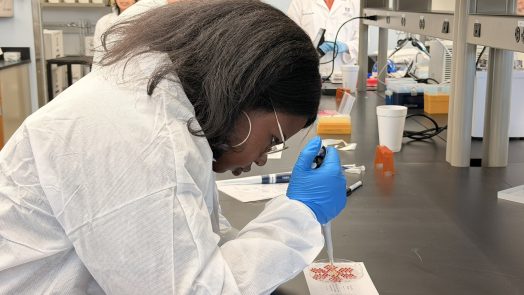
These programs are part of a broader effort to kindle interest in biomedical careers and give young learners authentic exposure to the techniques scientists rely on.
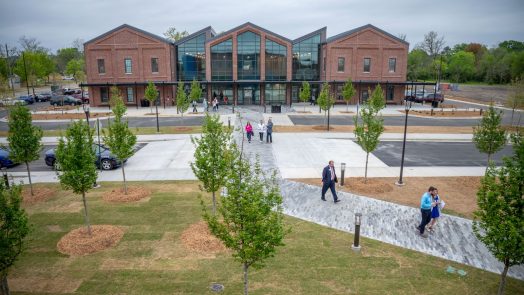
The HUB received the $200,000 award in acknowledgement of its program that serves high school students and their families to help meet their physical and social needs.

“This is a wonderful and enjoyable event. Our guys love it, and I love it as a coach as well," says Dip Metress.

"My specialty area is maternal-child health, and I do a lot of work with maternal mortality prevention,” says Marlo Vernon, PhD.
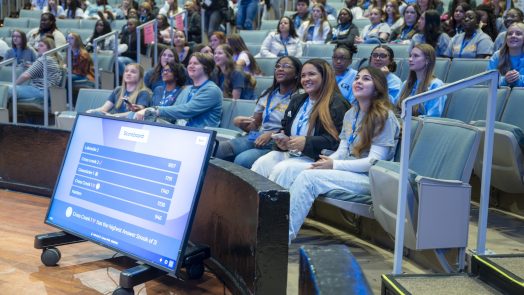
“Do not allow anyone to talk you out of being a teacher. The blessings that you get are far greater than the challenges that you'll face," says Judi Wilson, EdD.
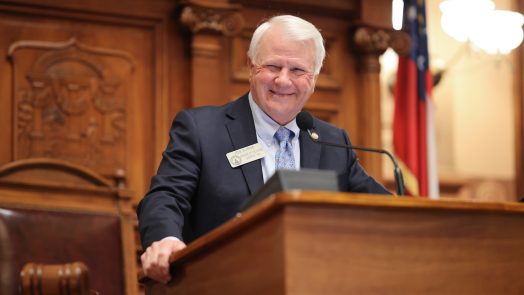
House Speaker Rep. Jon Burns will deliver the keynote address at Augusta University’s Undergraduate Commencement on Dec. 11.
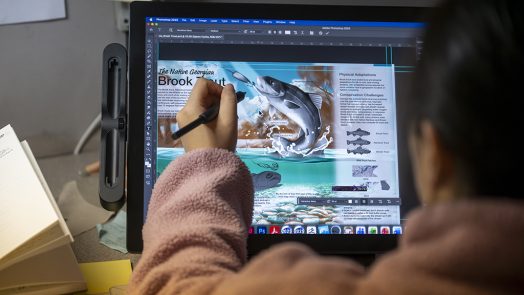
Augusta University's partnership with Georgia DNR collaboration lasted six weeks, and the finished illustrations will be used throughout the state.
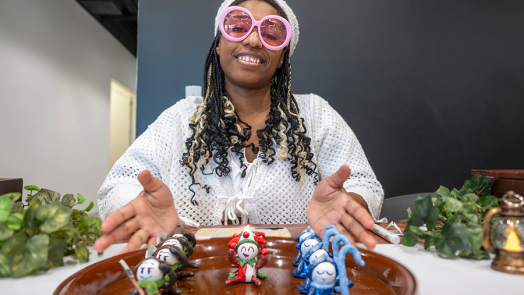
"We are grateful for the overwhelming show of support from our campus and community for this first-time event," says Tina Baggott.
“These awards highlight the meaningful partnerships and impactful work happening here at AU and in the community," says Amanda Richardson.

“The Hull Cup came about from meeting with several Columbia County business educators on how we can engage more of their business students,” says Mark Thompson, PhD.

"Events like STEMFest strengthen the bridge between education and industry,” says Danny Etheredge.
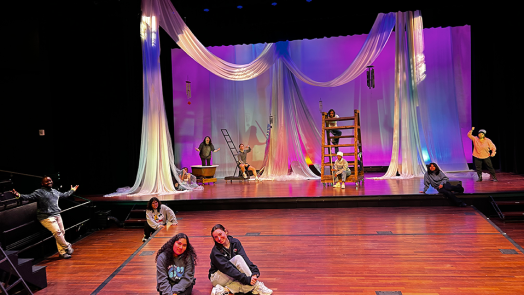
“Ultimately, to me, the message is reminding people we hold the power to be the protagonists, the good guys, in our own life,” says Melanie Kitchens O’Meara, PhD.
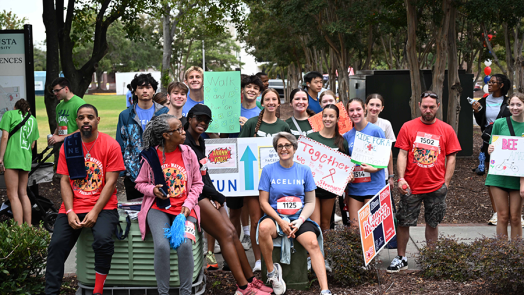
"It was wonderful seeing so many coming together to celebrate the people participating in PaceDay 2025," says Jorge E. Cortes, MD.
 Nina Sligar
 Milledge Austin
 Paige Tucker
 Stacey Eidson
 Chris Curry
 Britney Pooser
 Miguelangelo Hernandez