Augusta University
 Stacey Eidson
During the inaugural Public Health Day at the State Capitol on Feb. 4, Augusta University received two grants totaling $66,000 to combat the opioid epidemic and prevent overdoses in the local community.
The two grants are funded by the Georgia Opioid Crisis Abatement Trust, which was established in 2022 to receive and manage the state’s share of the national opioid settlements over an 18-year period.
“The opioid crisis has devastated countless families in Georgia and across our nation, and these grants represent an important step toward saving lives in our own community,” said Augusta University President Russell T. Keen. “As Georgia’s only public academic health center, Augusta University has a responsibility to educate citizens about opioid misuse and critical interventions, such as Narcan, which can mean the difference between life and death. Investments like these strengthen our ability to respond to this crisis and are reflective of our commitment to better serve the people of Georgia now and in the years ahead. We are grateful to the Georgia Department of Behavioral Health and Developmental Disabilities Commissioner Kevin Tanner and the Georgia Opioid Crisis Abatement Trust Board for their continued support.”
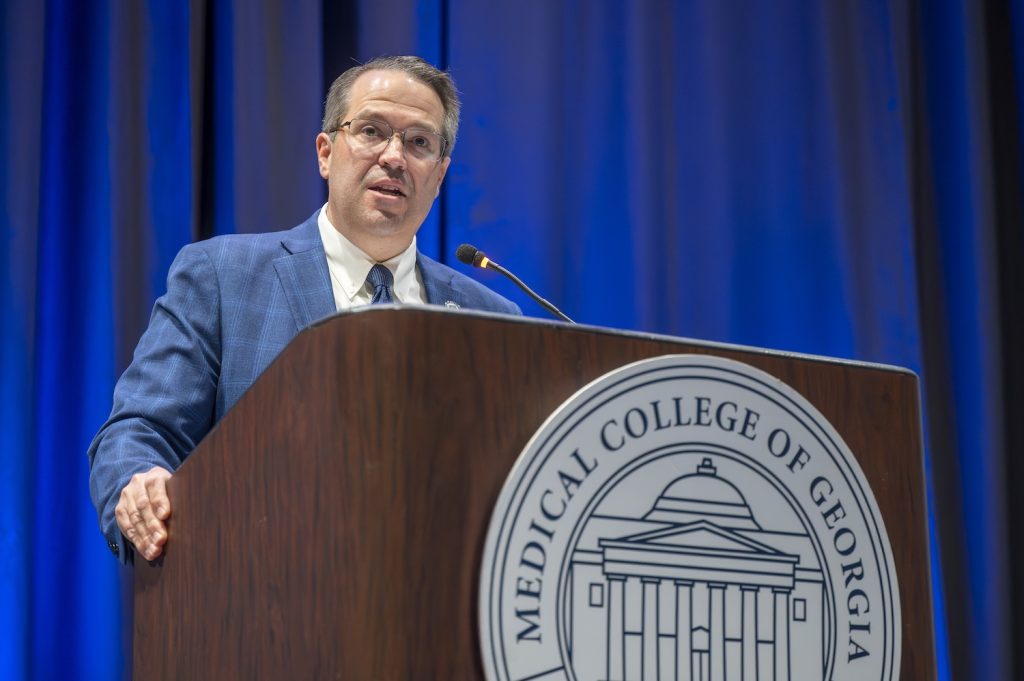
“The opioid crisis has devastated countless families in Georgia and across our nation, and these grants represent an important step toward saving lives in our own community.”
Augusta University President Russell T. Keen
Teresa Waters, PhD, dean of the School of Public Health at Augusta University, said the national opioid settlement funds have led to real, life-saving action across the state.
“Fatal overdoses in our state continue to be driven by fentanyl and other synthetic opioids contaminating the drug supply,” she said. “Between 2019 and 2022, overdose deaths in Georgia rose by 76%. Even more alarming, fentanyl‑involved deaths increased by more than 300% during that same period.”
However, Waters said there is hope for the future because of the impact of Narcan, the FDA-approved, over-the-counter nasal spray used to rapidly reverse opioid overdoses by blocking the effects of drugs like fentanyl, heroin and oxycodone. Narcan works in minutes, making it a critical, easy-to-use tool for bystanders or caregivers, she said.
“Narcan saves lives,” Waters said. “According to the Centers for Disease Control and Prevention, drug overdose deaths nationwide declined by nearly 24% for the 12 months ending in September 2024. Here in Georgia, the decline was roughly 22%. These are the lowest numbers the country has seen in any 12-month period since June 2020. This progress shows what is possible when communities have access to the right tools at the right time.”
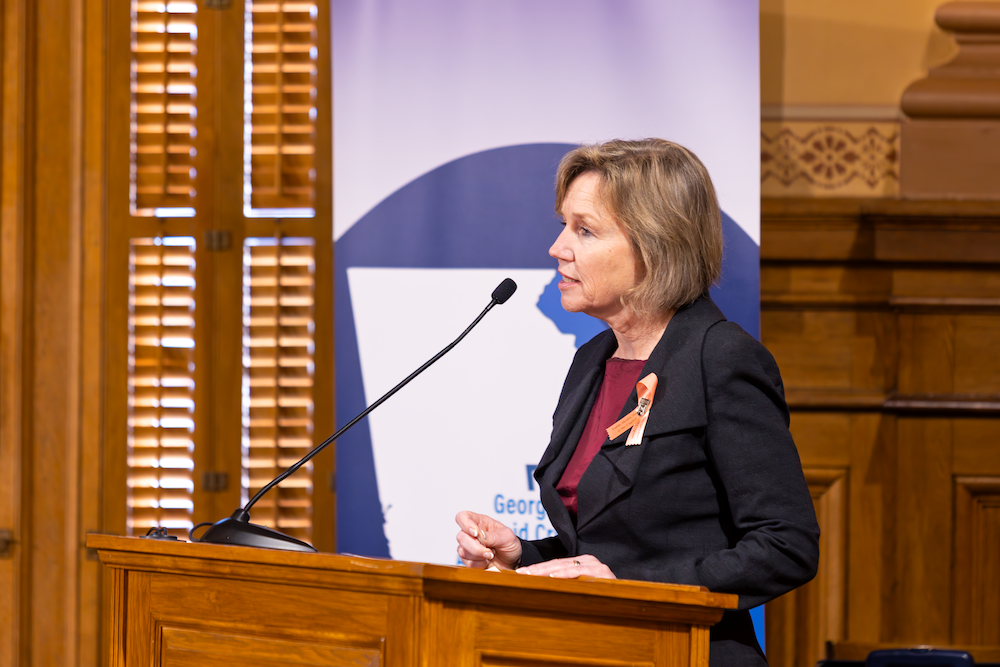
“Narcan saves lives. According to the Centers for Disease Control and Prevention, drug overdose deaths nationwide declined by nearly 24% for the 12 months ending in September 2024. Here in Georgia, the decline was roughly 22%. These are the lowest numbers the country has seen in any 12-month period since June 2020.”
Teresa Waters, PhD, is the dean of the School of Public Health at Augusta University
For that reason, Waters said Augusta University is grateful for the two Trust-funded grants which will provide immediate help to those who need it most.
“The first grant of more than $37,000 will allow us to place 40 Narcan overdose‑reversal boxes in bars, restaurants and nightclubs across Richmond County, along with 50 fentanyl test‑strip boxes in local vape shops,” she said. “These resources will sit directly in the places where they are most likely to be needed, giving people a chance to intervene in a critical moment.”
The second Trust‑funded grant – nearly $29,000 – will support a partnership between Augusta University, the Office of Critical Event Preparedness and Response and Student Health Services.
“Together, we will place similar boxes across all four AU campuses,” Waters said. “Our students will receive training on how and when to use the boxes, recognizing risk and responding effectively in an emergency.”

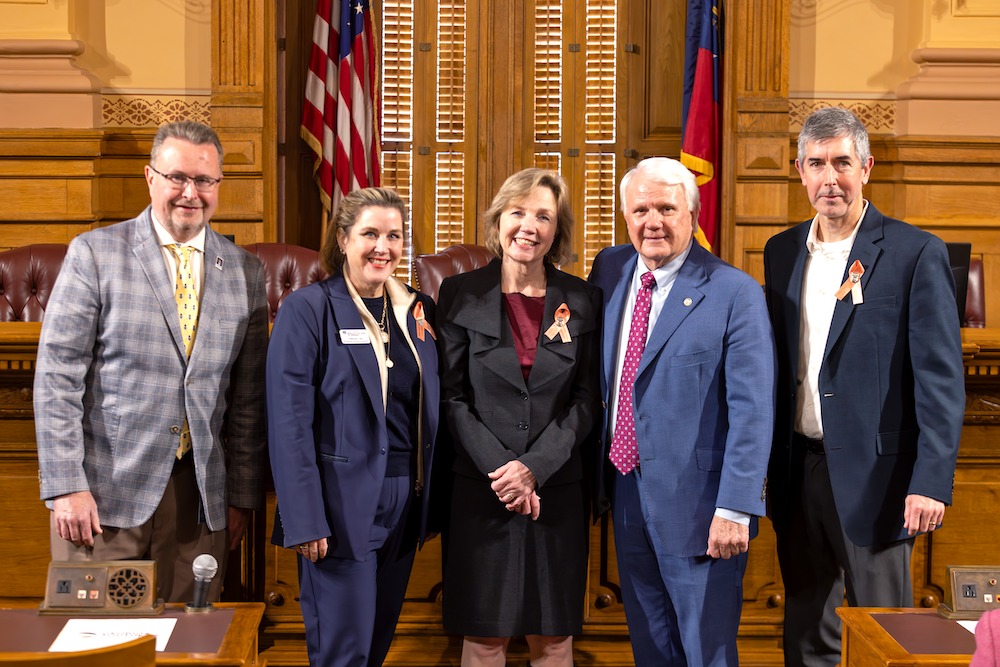
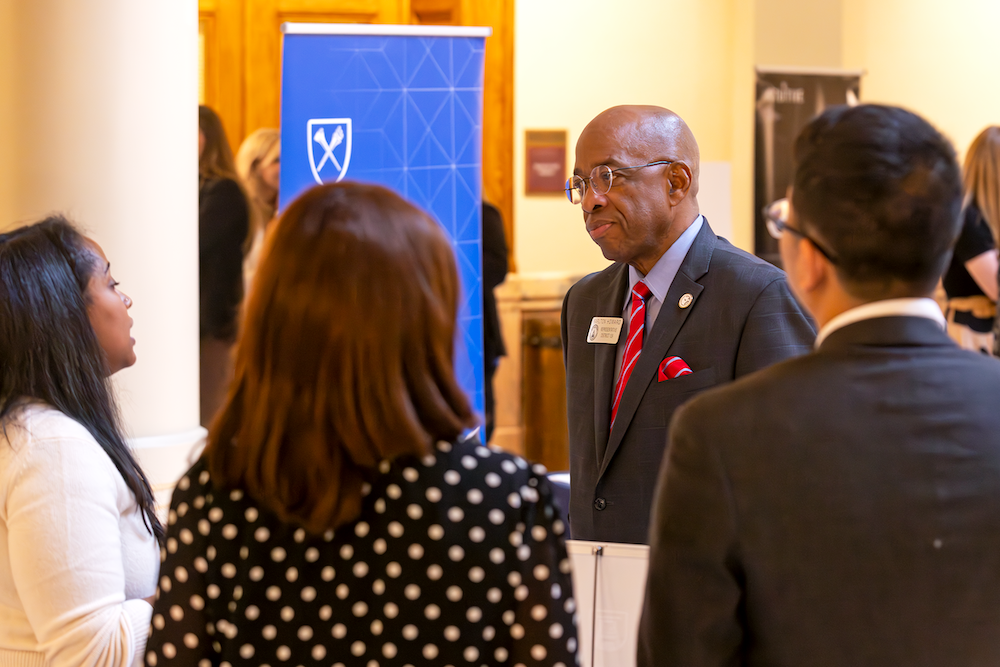
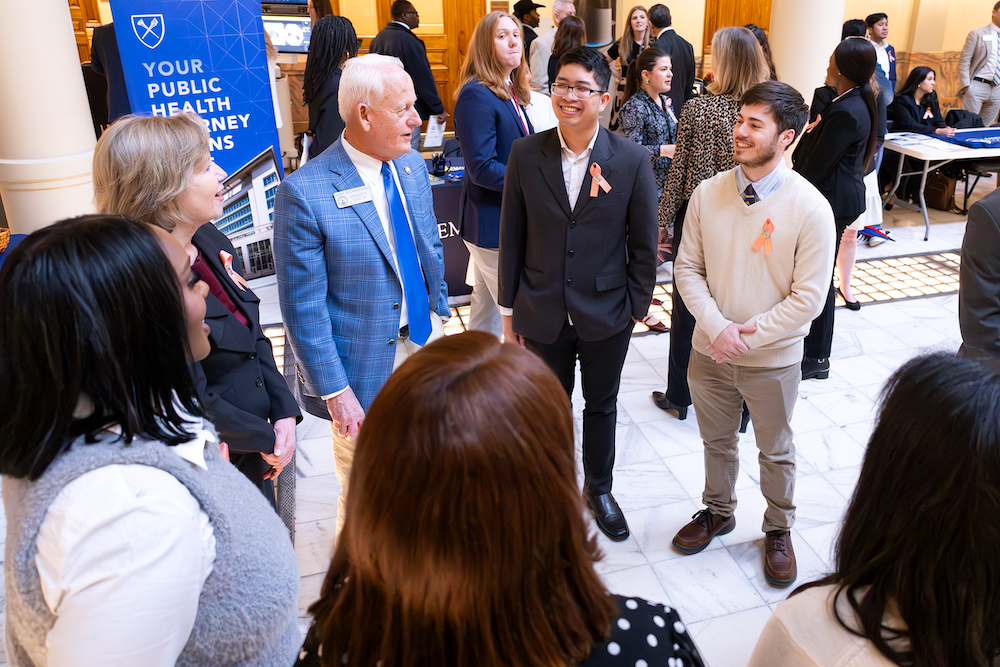
Tanner, commissioner of the Georgia Department of Behavioral Health and Developmental Disabilities, said he is proud of Augusta University’s continued focus on the total well-being of its students and the health of the entire state.
“Whether it’s a direct family member, a neighbor, a friend, a colleague, all of us have had someone touched by the opioid epidemic, and we also know that behind all the numbers and statistics we talk about is a life story,” Tanner said. “It’s an individual. And that person has meaning.”
Waters also thanked Aaron Johnson, PhD, associate dean for Research and Community Engagement in the School of Public Health at AU, for his leadership in securing these grants, and Catherine Clary, JD, the director of philanthropy for the Medical College of Georgia at Augusta University, who was instrumental in building the partnerships with CEPaR and Student Health.
“The Trust’s investment enables Augusta University to translate research, data and clinical expertise into practical, visible, life‑saving solutions,” Waters said. “Their focus on evidence-based, community-level interventions is exactly what Georgia needs to continue reducing harm and saving lives.”
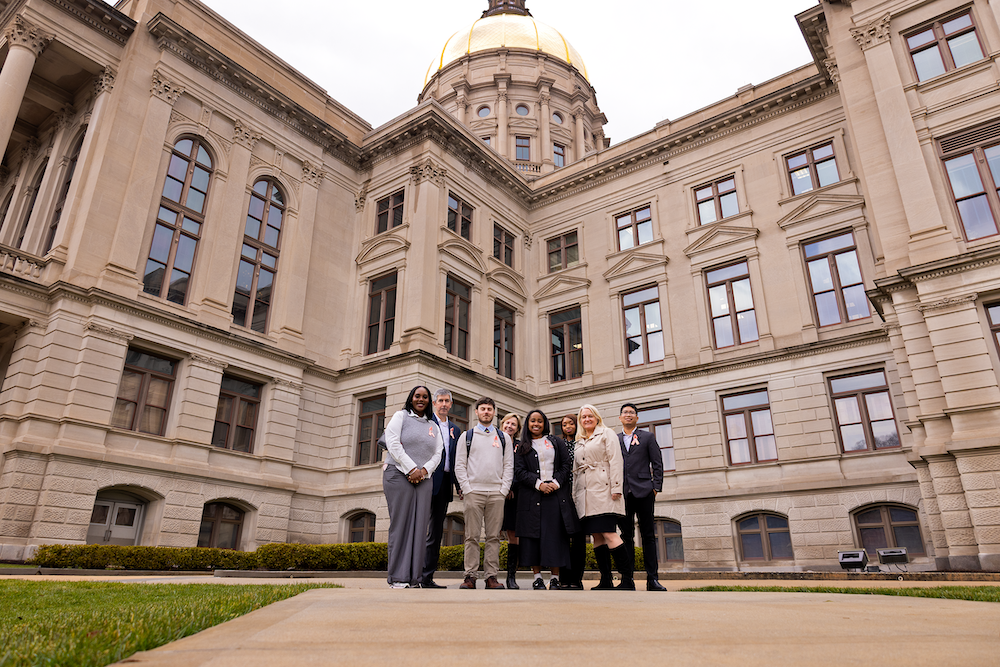
“Hearing different perspectives and having conversations with fellow students and representatives made the experience both meaningful and motivating.”
Khang Cao, an Augusta University student seeking a master’s degree in data science
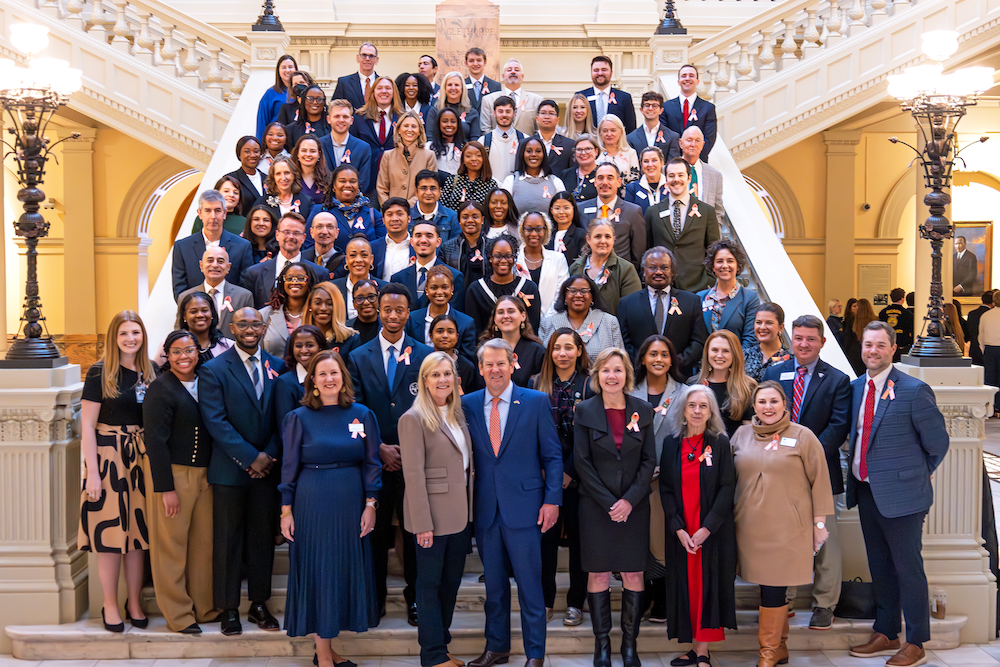
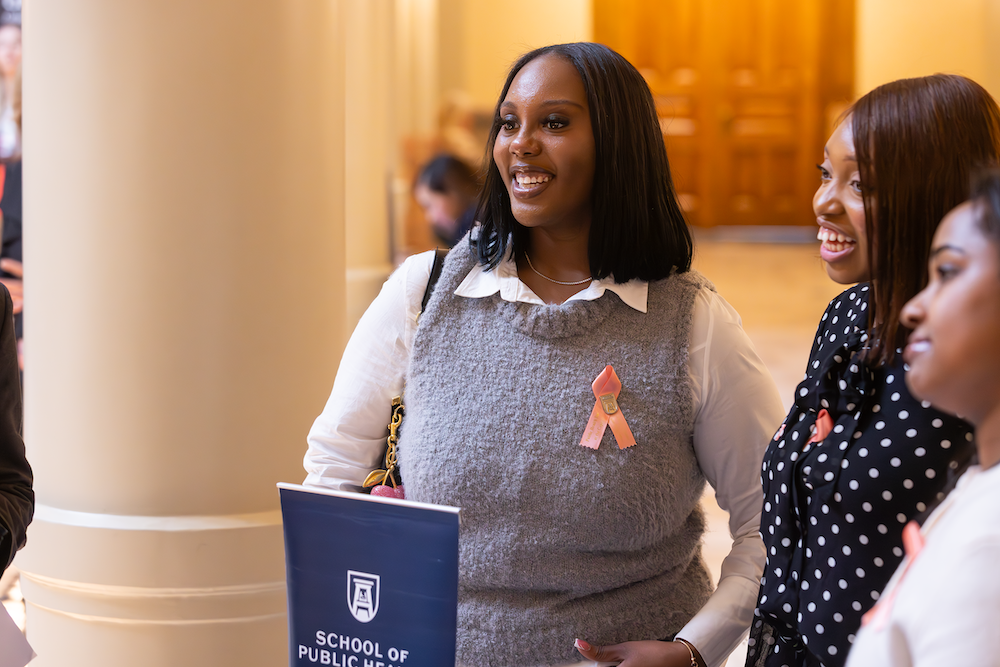
Also, during the inaugural Public Health Day at the Capitol, several students from the School of Public Health at Augusta University had the opportunity to meet with members of the local legislative delegation, listen to a panel discussion with representatives of the Department of Public Health and the Department of Community Health, converse with public health students from other universities and have their photo taken with Georgia Gov. Brian P. Kemp and First Lady of Georgia Marty Kemp.
“I really enjoyed the opportunity to represent SPH and Augusta University in Public Health Day at the Capitol,” said Khang Cao, who is seeking a master’s degree in data science at AU. “Hearing different perspectives and having conversations with fellow students and representatives made the experience both meaningful and motivating.”
For weekly updates on all legislative news, Government Relations invites those interested to subscribe to the Capitol Connection, an online newsletter that provides a legislative recap, budget updates and other details about the week at the Georgia Statehouse.

 Miguelangelo Hernandez
 Valerie Emerick