 Augusta University
 Lindsey Morris
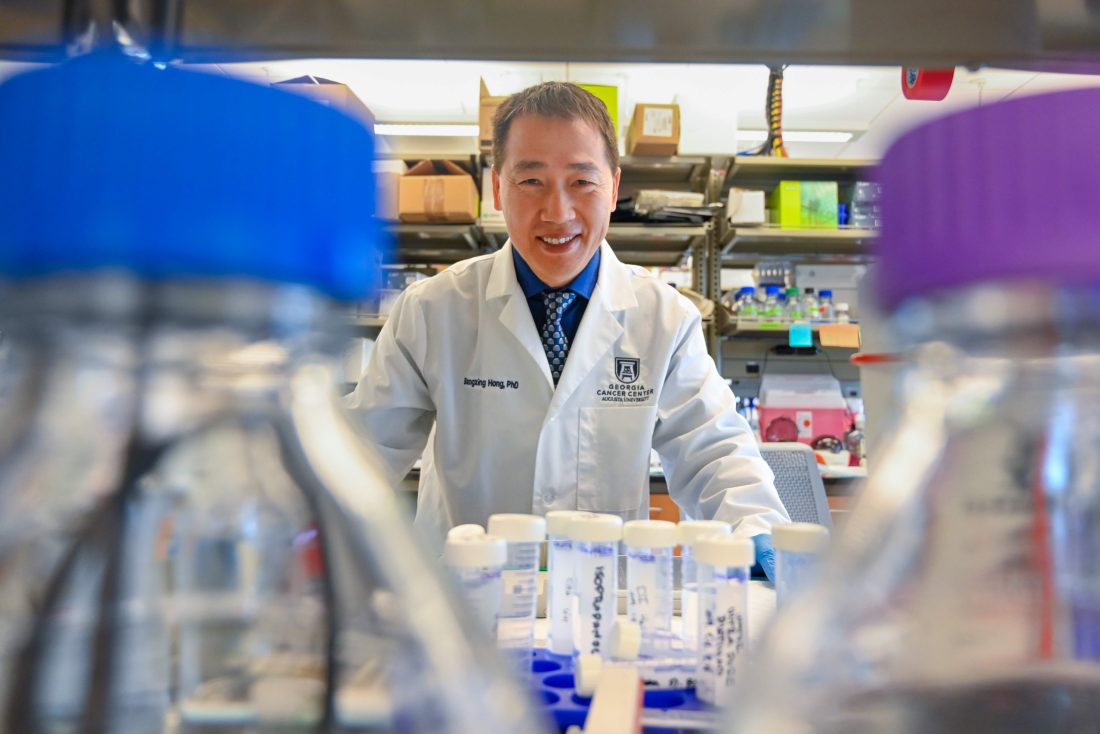
Growing up, one often has an idea of what career they will have. A veterinarian, a senator, a teacher, or, for Bangxing Hong, PhD, a physicist.
In China, where Hong is from, the primary entrance exam for college is the Gaokao. The exam’s purpose is to assess a student’s readiness for higher education and is used to determine their admission to a program and major.
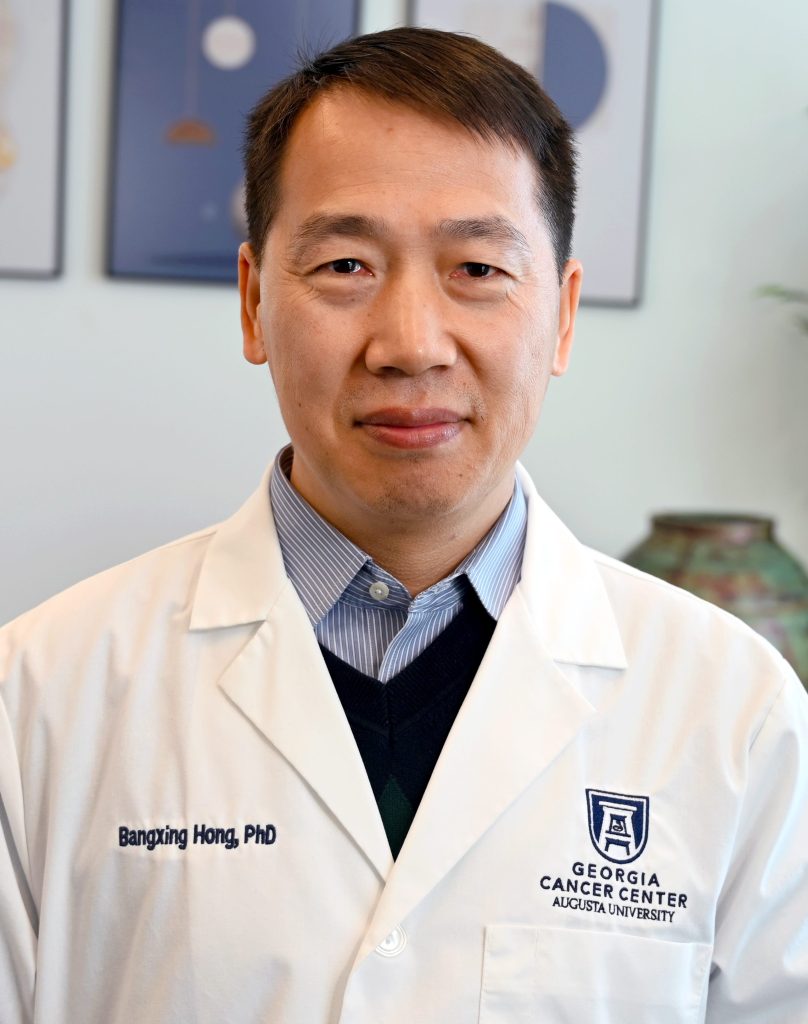
“I had a strong interest in physics and hoped to study it in college; however, no university admitted me to a physics program. I was instead offered admission to Anhui University’s Public Health program, and decided to pursue it,” said Hong, an assistant professor in the Department of Pathology at the Georgia Cancer Center and Medical College of Georgia at Augusta University.
Hong did not hold much passion for biology or medicine when he started college, though this gradually changed as he continued his education. He found great interest in biology classes that had a heavy emphasis on experimentation.
“I came to appreciate and eventually love the remarkable science behind biology and medicine,” he said.
After graduation, Hong decided to pursue graduate study, as he wanted to move to a larger city and continue to follow his new passion of research, instead of practicing medicine. He was accepted into Sun Yat-sen University in Guangzhou, Guangdong, China, where he completed both his master’s and PhD degrees.
Hong’s research was in molecular virology, a subfield of microbiology that studies biological viruses. Specifically, his program focused on the dengue virus, a viral infection that is common in tropical and subtropical climates and is spread by mosquitoes. Common symptoms include a fever, body aches, nausea, and rashes, which typically clear up in one to two weeks. While it is rare, severe cases can cause hospitalization or death.
“The most rewarding aspect of being a researcher here is the freedom to pursue research that truly interests me and is supported by both the Cancer Center and the University through financial resources and a collaborative environment.”
Bangxing Hong, PhD
His work with the dengue program resulted in three peer-reviewed publications and allowed him the opportunity to gain experience with molecular virology. This experience served him well during both rounds of his post-doctoral training, the first being at the University of Southern California, the second at the University of Texas MD Anderson Cancer Center.
“During my post-doc, I dove into the field of cancer immunotherapy and cancer immunology, which uses very similar mechanisms as my graduate studies,” Hong said. “I developed virus-based immunotherapeutic approaches for the treatment of solid tumors, including glioblastoma.”
After his post-doc, Hong accepted a position at the University of Texas Health Science Center at Houston, where he continued his work on glioblastoma, which are grade four brain tumors.
“A brain tumor is a bit different than other solid tumors, just as the brain is different than other organs. Many patients do not respond well to chemotherapy or radiation. Due to a lack of better treatment approaches, the survival rate is low,” he said.
Brain cancer is relatively rare, affecting an estimated 24,820 people in 2025, according to the American Cancer Society, with a 33% survival rate spanning five years.
In 2023, Hong accepted an assistant professor position at AU. In 2024, he received the Georgia Cancer Center Outstanding Young Investigator Award.
“The most rewarding aspect of being a researcher here is the freedom to pursue research that truly interests me and is supported by both the Cancer Center and the University through financial resources and a collaborative environment,” he said.
His current research focuses on the development of oncolytic virotherapy-based immunotherapies for incurable solid tumors, including glioblastoma and medulloblastoma. An important part of this research is understanding how brain cells communicate with immune cells that have moved into the tumor. This communication, called neuro-immune crosstalk, can be a key area for treatment, but not just for cancer.
“This research is connecting the field of cancer to the field of neuroscience and could lead to successful treatment discoveries for other diseases of the brain, including Alzheimer’s and dementia,” said Hong.
According to the Department of Health, over 130,000 Georgians are estimated to have Alzheimer’s disease or related dementia, with rates expected to increase by 46% in the next decade. The work done in Hong’s lab could lead to a way to combat this increase and bring the overall number of cases down across the globe.
On top of his work as a researcher, Hong is also a mentor for many AU graduate students. Recently, one of his students, Hailey Garner, received a fellowship grant from Alex’s Lemonade Stand.
“It is a proud moment to watch your students ignite and grow their passion for research, even more so when they excel,” Hong said. “They are the future of research, and it is an honor to have a hand in their journey.”


 Stacey Eidson
 Tim Rausch
 Paige Tucker
 Hannah Litteer